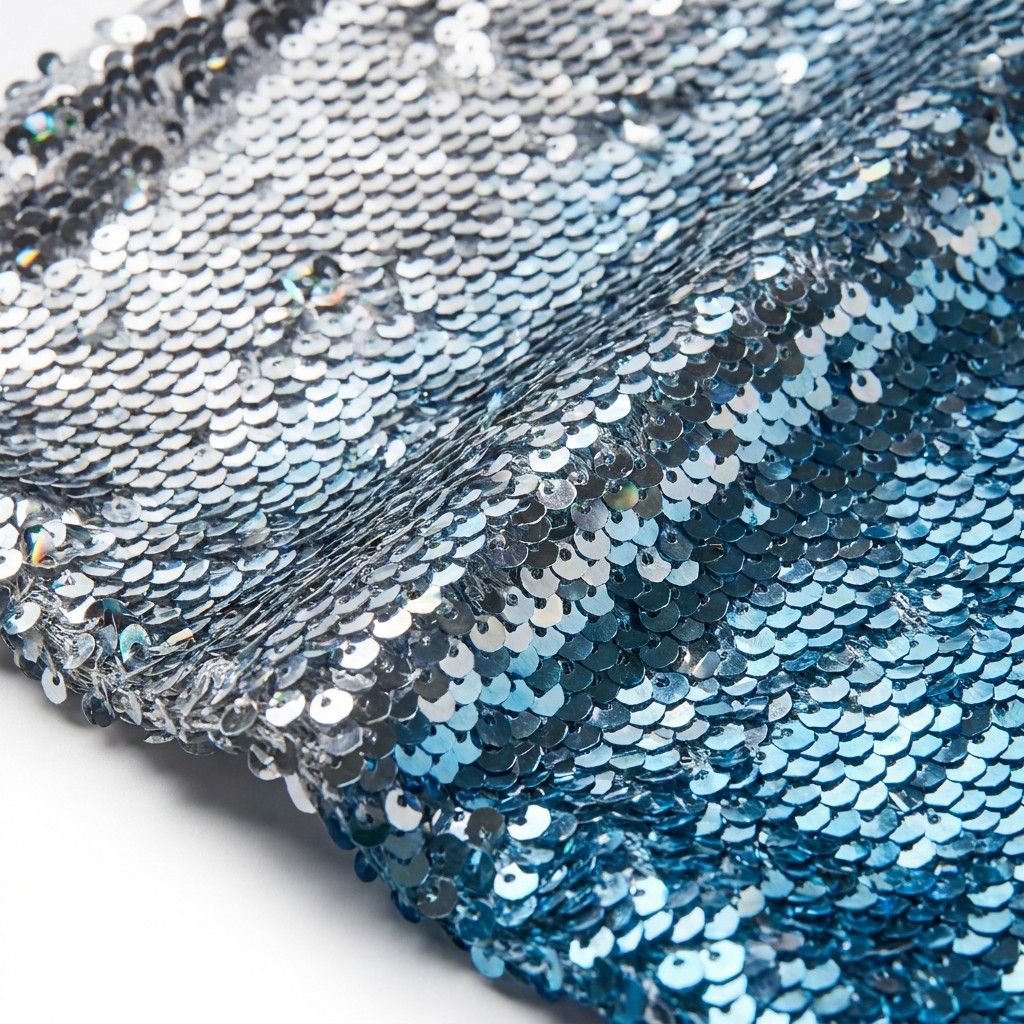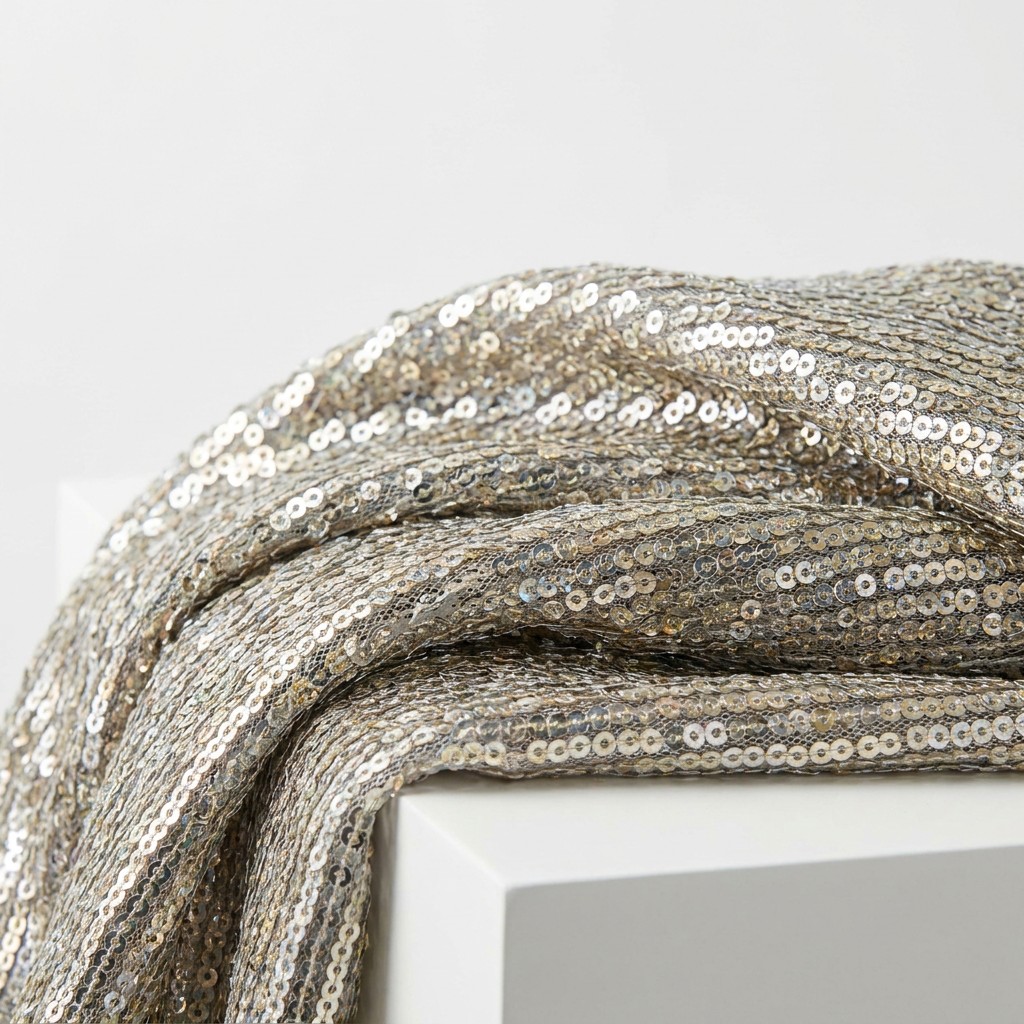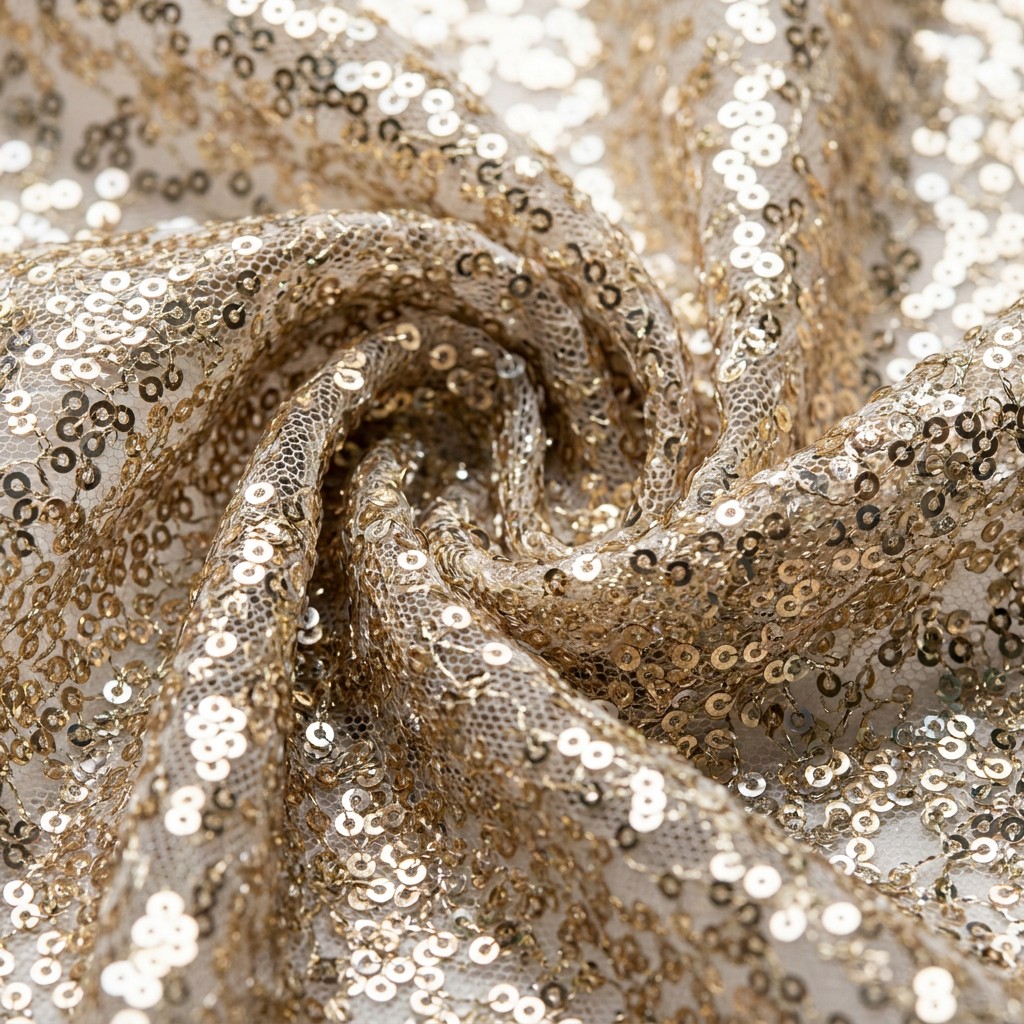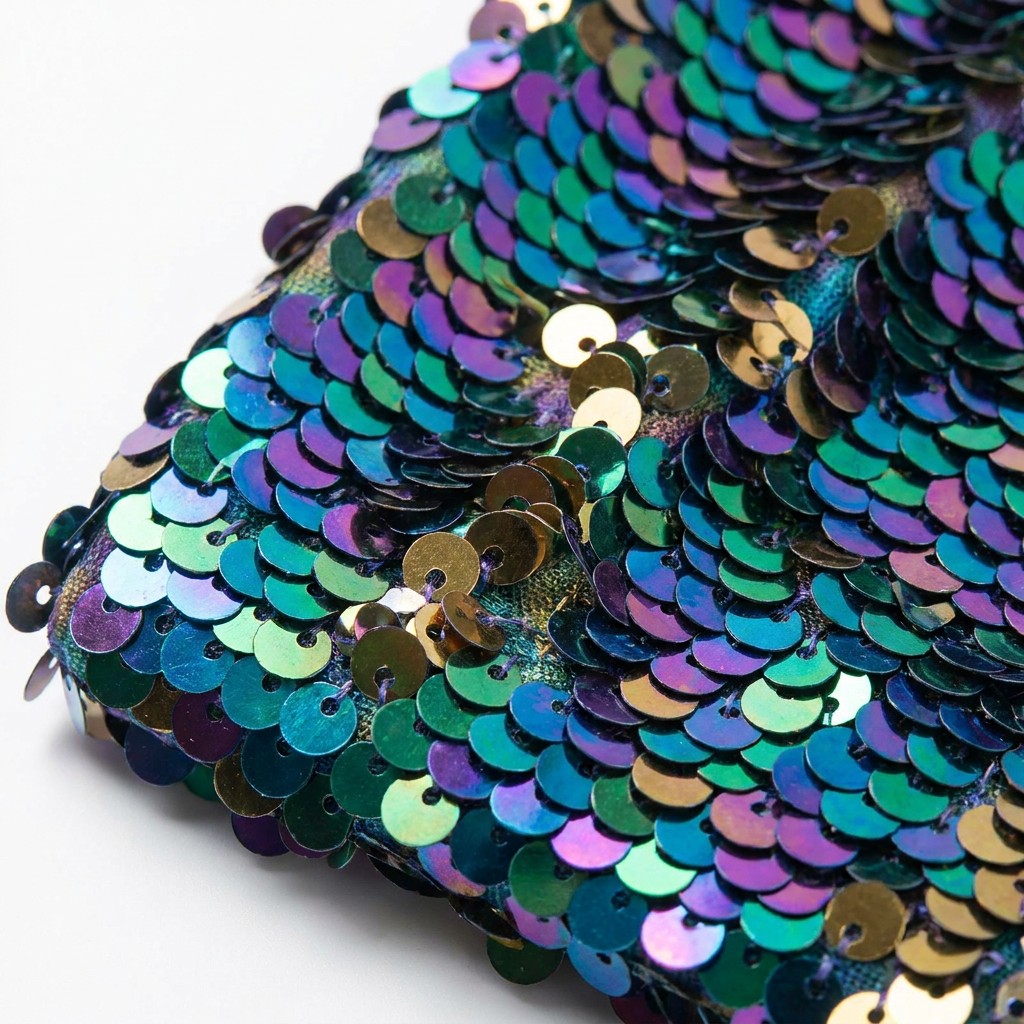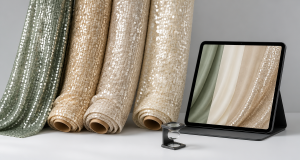
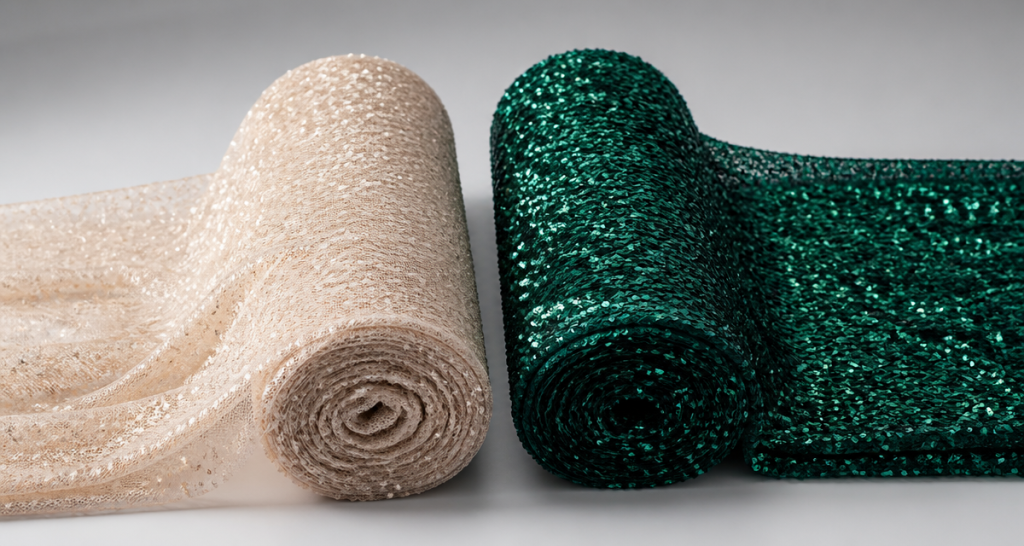
Sequin fabric pilling resistance is the ability of a sequinned surface to stay smooth when it rubs against other materials. For B2B buyers, that one property decides whether a bulk order still looks premium after folding, packing, and wear - or turns fuzzy, dull, and tired. Pilling is measurable, so you can specify it long before you confirm a bulk order.
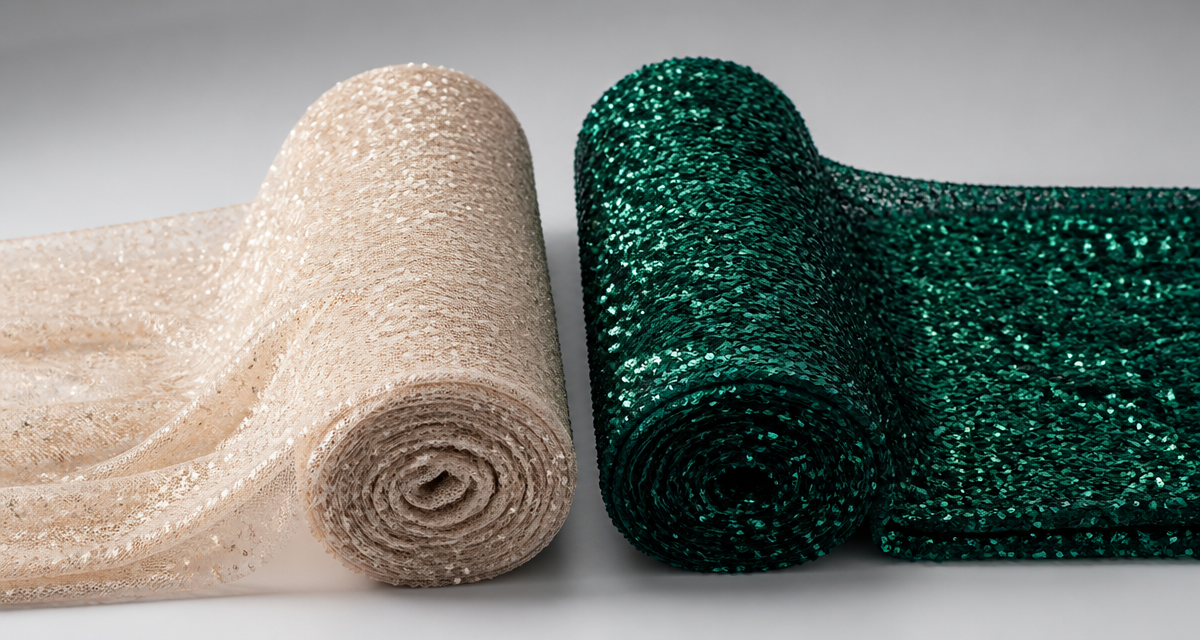
Key Takeaways
- Pilling on sequin fabric has three sources: the base cloth, the sequin film, and the attachment method.
- Request an abrasion test report instead of a verbal promise of "durable" quality.
- Compare base cloth, sequin thickness, and attachment style side by side before bulk.
- Add pilling to your sample review sheet and your pre-shipment checklist, not only to the first sample.
- Lock the test method, rub count, and grading scale so supplier quotes stay comparable.
What Is Sequin Fabric Pilling?
Pilling is the formation of small fiber balls and lifted edges on a fabric surface after repeated rubbing. On a plain woven fabric, pilling is mostly fuzz. On sequin fabric, two failures happen at once: base fibers migrate and ball up, and sequin edges lift, crack, or shed.
That combination makes sequin fabric pilling different from pilling on wool or fleece. A buyer who only checks sparkle under studio light will miss it, because pilling appears after movement, not on a flat swatch. It is a performance property, not a visual one.
Why Pilling Resistance Matters in B2B Trade
Pilling drives returns. A garment that looks clean in the sample room can look worn after a single event. For wholesalers, that turns into chargebacks. For brands, it turns into negative reviews that no marketing budget can repair.
The risk is highest in three categories: fitted eveningwear, dancewear, and high-contact decorative items such as cushions and event drapery. In each case, the fabric rubs against itself, against skin, or against a hard surface for hours at a time.
Pilling also interacts with other specifications. A denser fabric may resist abrasion better but change the drape you approved, so read this article with our guide to sequin fabric weight open beside it. Base cloth choice matters just as much; see how to choose sequin fabric base cloth.
How Sequin Fabric Pilling Is Tested
You cannot judge pilling by touch alone. Ask the supplier to run a standard abrasion test and to record the result in writing. The steps below keep results comparable between suppliers and between lots.
- Agree the test method. Martindale abrasion (ISO 12947 / ASTM D4970) and the pilling box (ISO 12945-1) are the two common references. Choose one and state it in the specification.
- Cut matched samples. Use the same sequin size, color, and base cloth as the order, not a stock swatch kept in a drawer.
- Condition the samples. Standard textile conditioning removes humidity differences between a dry factory floor and a humid destination port.
- Run an agreed number of rubs. Fix the rub count in the specification so every supplier runs the same test on the same basis.
- Grade the surface. Grade against the standard scale, from 1 (heavy pilling) to 5 (no visible change), and record the base and sequin condition separately.
- Photograph and file the result. Keep before-and-after photos with the batch reference so repeat orders can be checked against the original approval.
Reading the Result: What a Good Report Looks Like
A strong report shows its work. It names the method, the specimen count, the conditioning, and the grade, and it separates base cloth performance from sequin performance. A weak report says "passed" with no numbers and no photos.
Treat a single number as a starting point, not a verdict. What matters for bulk is consistency: two lots of the same specification should grade within one point of each other. If lot two drops two points below lot one, the material has changed even if the paperwork says otherwise.
Sequinned Surfaces Compared for Pilling Risk
| Fabric build | Typical pilling risk | Common end use | What to confirm |
|---|---|---|---|
| Fine mesh base + 3mm flat sequin | Low to medium | Lightweight dresses, tops | Mesh denier and sequin film thickness |
| Stretch knit base + 5mm sequin | Medium | Dancewear, fitted garments | Elastane content and recovery |
| Georgette or chiffon base + 3-5mm sequin | Medium | Bridal, eveningwear | Yarn twist and finishing |
| Dense satin base + 5-9mm sequin | Low | Eveningwear, decor | Attachment tightness |
| Embroidery plus sequin combination | Varies | Statement pieces | Stitch density and backing |
Stretch bases deserve extra attention. Abrasion plus stretch can loosen sequins faster, which is why many buyers treat stretch recovery as a paired test with pilling.
Fields to Check on a Pilling Report
When a report arrives, scan these fields before you compare suppliers:
- Test standard and method name
- Number of rubs or cycles
- Sample size, orientation, and number of specimens
- Conditioning time and conditions
- Grading scale and the final grade
- Separate notes for base cloth and sequin surface
- Before-and-after photographs
- Batch or lot reference
- A cross-check with wash care performance after cleaning
Five Pilling Myths That Cost Buyers Money
- "Heavier fabric never pills." Weight helps, but a thick base with loose attachment still sheds sequins.
- "Gold and silver always behave the same." Coating and film differ, so test the exact color.
- "The first sample is proof for the whole order." Bulk needs its own test on a production cutting.
- "A smooth swatch means no pilling." Flat swatches hide edge lifting that appears only after rubbing.
- "One number fits every market." A high-contact market needs a stricter grade than a display-only product.
How to Reduce Pilling Risk Before Bulk
- Lock the base cloth. Fix yarn, density, and finishing so surface behavior does not drift between lots.
- Choose sequin film carefully. Thicker, well-cut film resists edge cracking better than thin film.
- Control attachment. Tighter, consistent attachment holds sequins flat and reduces lifting. Stitch density has a direct effect here, as our stitch density guide explains.
- Match backing to end use. A soft backing supports the base and reduces friction from the inside.
- Standardize packing. Define folding so sequins do not rub against each other in transit; this links directly to good packing and shipping practice.
- Re-test on bulk. Run the same abrasion test on a bulk cutting and compare it with the approved sample.
Writing Pilling Into Your RFQ and Spec Sheet
Add three lines to your specification: the test method, the minimum acceptable grade, and the sampling rule. Then repeat those lines in the RFQ so every supplier quotes against the same requirement.
This simple step makes quotes comparable and gives you a written basis for a claim if bulk performance falls short. Pair it with a clear RFQ structure so nothing is left to interpretation.
FAQ
Does sequin fabric pill the same way wool does?
No. Wool pills mainly from fiber migration. Sequin fabric pills from fiber migration plus sequin edge lifting, so you should grade the base and the sequin surface separately.
Which test should I request for sequin fabric pilling?
Choose one abrasion method and keep it fixed across suppliers. Most buyers use Martindale (ISO 12947 / ASTM D4970) or the pilling box (ISO 12945-1). Consistency matters more than the method itself.
Can pilling be fixed after bulk production?
Rarely. Light surface finishing may help, but lifted sequins and cracked film cannot be fully restored. Prevention at the base cloth and attachment stage is the practical answer.
Does pilling change with sequin color?
Color itself does not cause pilling, but different dyeing and coating processes can change film flexibility. Always test the exact color you plan to buy.
How does GSM affect pilling resistance?
Higher GSM usually means a firmer base that holds sequins more steadily, but a heavy base with weak attachment can still fail. Treat GSM as one input and abrasion testing as the proof.
Make Pilling Resistance a Specification, Not a Hope
Sequin fabric pilling resistance belongs in your written specification, next to GSM, width, and color. Define the test method, agree the rub count, and record the grade for every lot. That turns a subjective complaint into a measurable standard.
When you review samples, add pilling to the same checklist you use for sample approval and pre-shipment inspection, so no property is checked in isolation.
Get Sequin Fabric Samples for Your Next Order
Test surface performance, color, and hand feel on your own base cloth, sequin size, and color reference before you commit to bulk. Yunfan Textile produces decorative and sequin fabric for B2B buyers worldwide.
Source direct on Alibaba - request bulk pricing, specifications, and production details in one place.
Request Sequin Fabric Samples and share your target GSM, width, sequin size, and color reference.
Talk to Morris directly:
Email: morris@yunfantextile.com
WhatsApp: +86 156 3752 5803
WhatsApp: +86 175 1619 6727