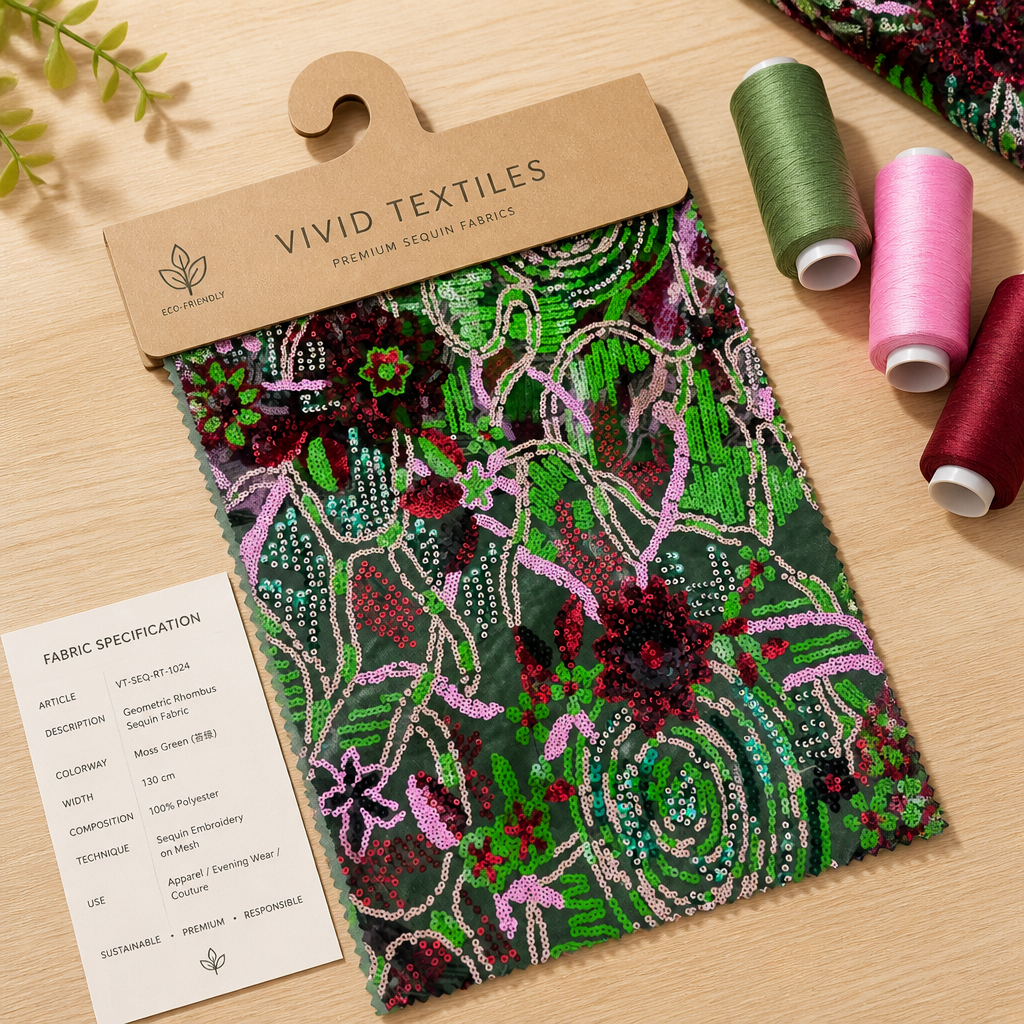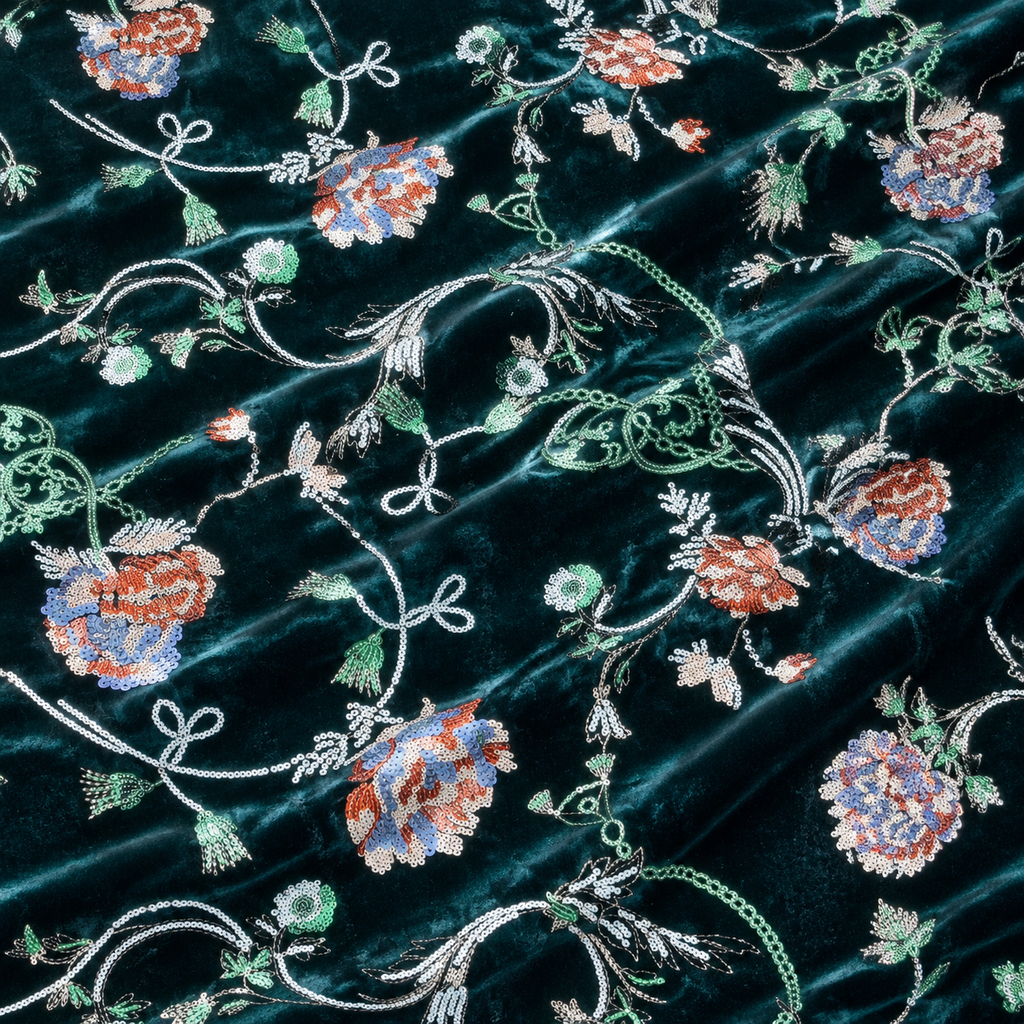
gradient sequin dye bleeding can damage a fashion range when acidic perspiration mobilises colour at the sequin and backing interface. This technical guide defines testing, fixation, coating, and approval controls for multi-tone PET sequin fabric.
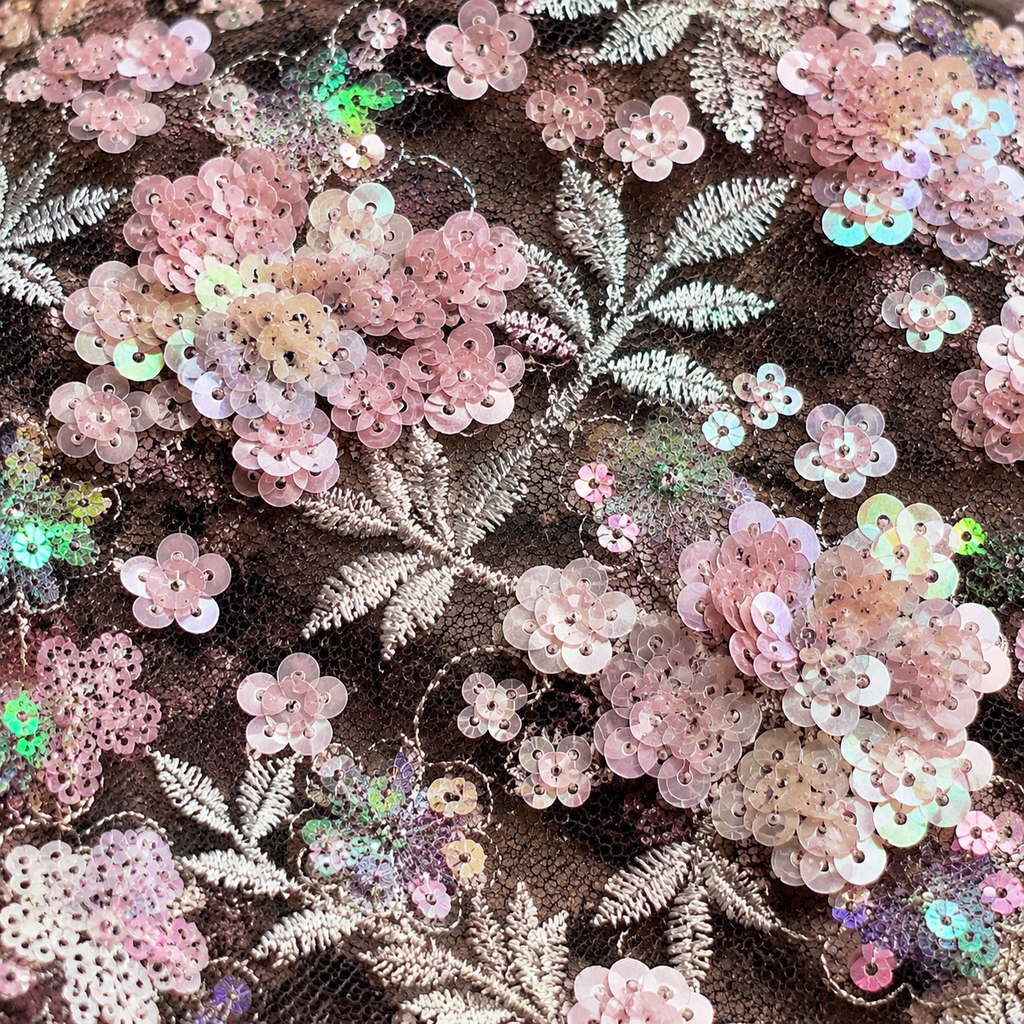
Why gradient sequin dye bleeding occurs
A gradient combines several colour depths in one visual repeat. Dark zones contain more colourant, while pale zones expose the backing more clearly. Sweat, body oils, heat, and rubbing can move unfixed dye from one zone to another. The buyer may see a cloudy halo rather than a simple shade change.
AATCC 15 and ISO 105-E04 help simulate acidic perspiration. Use the production construction, not a flat fabric substitute. Measure colour change and staining on the adjacent multifibre strip. Document pH, liquor ratio, pressure, temperature, contact time, and drying conditions. Therefore, the inspector should record the result against the approved specification.
AATCC 15 and ISO 105-E04 testing
AATCC 15 and ISO 105-E04 help simulate acidic perspiration. Use the production construction, not a flat fabric substitute. Measure colour change and staining on the adjacent multifibre strip. Document pH, liquor ratio, pressure, temperature, contact time, and drying conditions.
A cationic polyamine fixer can improve dye retention when its chemistry matches the fibre and dye class. Apply it evenly, then control curing. An over-strong treatment can stiffen the cloth or alter the sequin gloss. Therefore, approve hand feel and colour appearance together with fastness. Therefore, the inspector should record the result against the approved specification.
Fixation chemistry and sealed surfaces
A cationic polyamine fixer can improve dye retention when its chemistry matches the fibre and dye class. Apply it evenly, then control curing. An over-strong treatment can stiffen the cloth or alter the sequin gloss. Therefore, approve hand feel and colour appearance together with fastness.
A crosslinked polyurethane pore-sealing finish can reduce liquid access to weak interfaces. It must remain flexible enough for folding and sewing. Check coating weight, cure temperature, surface friction, and visual haze. A clear film that becomes cloudy can make a clean colour test commercially unacceptable. Therefore, the inspector should record the result against the approved specification.
Grey scale tolerance for B2B approval
A crosslinked polyurethane pore-sealing finish can reduce liquid access to weak interfaces. It must remain flexible enough for folding and sewing. Check coating weight, cure temperature, surface friction, and visual haze. A clear film that becomes cloudy can make a clean colour test commercially unacceptable.
Use a grey scale and define Grade 4.5+ as the target for staining where the product specification requires it. Inspectors should compare the centre, transition, and pale edge of the gradient. Repeat the test after abrasion because a worn coating may expose different pathways. Therefore, the inspector should record the result against the approved specification.
A practical colour approval workflow
Use a grey scale and define Grade 4.5+ as the target for staining where the product specification requires it. Inspectors should compare the centre, transition, and pale edge of the gradient. Repeat the test after abrasion because a worn coating may expose different pathways.
For B2B approval, issue a shade card with light source, viewing angle, sequence code, and signed result. Keep one wet-test specimen and one dry control. A 200 yards MOQ should include enough material for colour trials, cutting, fit checks, and a retained production standard. Therefore, the inspector should record the result against the approved specification.
Planning a 200 yard MOQ
For B2B approval, issue a shade card with light source, viewing angle, sequence code, and signed result. Keep one wet-test specimen and one dry control. A 200 yards MOQ should include enough material for colour trials, cutting, fit checks, and a retained production standard.
A gradient combines several colour depths in one visual repeat. Dark zones contain more colourant, while pale zones expose the backing more clearly. Sweat, body oils, heat, and rubbing can move unfixed dye from one zone to another. The buyer may see a cloudy halo rather than a simple shade change. Therefore, the inspector should record the result against the approved specification.
Next, compare the centre and edge under neutral light. In addition, retain a signed sample and a digital report for every lot. This evidence supports faster claims review and clearer repeat ordering.
The quality control category and sequin fabric category provide useful internal references. Meanwhile, buyers should define width, GSM, colour, packaging, and inspection timing before production.
First, confirm the material composition and construction. Next, test the complete finished system. Therefore, do not approve a component in isolation. In addition, use the same conditioning room for every comparison. Finally, sign the report before dispatch. Clear records reduce rework and help a buyer explain requirements to a factory. Moreover, a retained master protects colour, handle, and performance. As a result, both teams can resolve variation with measured evidence rather than opinion.
First, confirm the material composition and construction. Next, test the complete finished system. Therefore, do not approve a component in isolation. In addition, use the same conditioning room for every comparison. Finally, sign the report before dispatch. Clear records reduce rework and help a buyer explain requirements to a factory. Moreover, a retained master protects colour, handle, and performance. As a result, both teams can resolve variation with measured evidence rather than opinion.
First, confirm the material composition and construction. Next, test the complete finished system. Therefore, do not approve a component in isolation. In addition, use the same conditioning room for every comparison. Finally, sign the report before dispatch. Clear records reduce rework and help a buyer explain requirements to a factory. Moreover, a retained master protects colour, handle, and performance. As a result, both teams can resolve variation with measured evidence rather than opinion.
First, confirm the material composition and construction. Next, test the complete finished system. Therefore, do not approve a component in isolation. In addition, use the same conditioning room for every comparison. Finally, sign the report before dispatch. Clear records reduce rework and help a buyer explain requirements to a factory. Moreover, a retained master protects colour, handle, and performance. As a result, both teams can resolve variation with measured evidence rather than opinion.
First, confirm the material composition and construction. Next, test the complete finished system. Therefore, do not approve a component in isolation. In addition, use the same conditioning room for every comparison. Finally, sign the report before dispatch. Clear records reduce rework and help a buyer explain requirements to a factory. Moreover, a retained master protects colour, handle, and performance. As a result, both teams can resolve variation with measured evidence rather than opinion.
First, confirm the material composition and construction. Next, test the complete finished system. Therefore, do not approve a component in isolation. In addition, use the same conditioning room for every comparison. Finally, sign the report before dispatch. Clear records reduce rework and help a buyer explain requirements to a factory. Moreover, a retained master protects colour, handle, and performance. As a result, both teams can resolve variation with measured evidence rather than opinion.
First, confirm the material composition and construction. Next, test the complete finished system. Therefore, do not approve a component in isolation. In addition, use the same conditioning room for every comparison. Finally, sign the report before dispatch. Clear records reduce rework and help a buyer explain requirements to a factory. Moreover, a retained master protects colour, handle, and performance. As a result, both teams can resolve variation with measured evidence rather than opinion.
First, confirm the material composition and construction. Next, test the complete finished system. Therefore, do not approve a component in isolation. In addition, use the same conditioning room for every comparison. Finally, sign the report before dispatch. Clear records reduce rework and help a buyer explain requirements to a factory. Moreover, a retained master protects colour, handle, and performance. As a result, both teams can resolve variation with measured evidence rather than opinion.
First, confirm the material composition and construction. Next, test the complete finished system. Therefore, do not approve a component in isolation. In addition, use the same conditioning room for every comparison. Finally, sign the report before dispatch. Clear records reduce rework and help a buyer explain requirements to a factory. Moreover, a retained master protects colour, handle, and performance. As a result, both teams can resolve variation with measured evidence rather than opinion.
First, confirm the material composition and construction. Next, test the complete finished system. Therefore, do not approve a component in isolation. In addition, use the same conditioning room for every comparison. Finally, sign the report before dispatch. Clear records reduce rework and help a buyer explain requirements to a factory. Moreover, a retained master protects colour, handle, and performance. As a result, both teams can resolve variation with measured evidence rather than opinion.
First, confirm the material composition and construction. Next, test the complete finished system. Therefore, do not approve a component in isolation. In addition, use the same conditioning room for every comparison. Finally, sign the report before dispatch. Clear records reduce rework and help a buyer explain requirements to a factory. Moreover, a retained master protects colour, handle, and performance. As a result, both teams can resolve variation with measured evidence rather than opinion.
Source direct on Alibaba - request bulk pricing, specifications, and production details in one place.
View Yunfan Textile on AlibabaRequest Sequin Fabric Samples and share your target GSM, width, sequin size, and colour reference.
Talk to Morris directly:
Email: morris@yunfantextile.com
WhatsApp: +86 156 3752 5803
WhatsApp: +86 175 1619 6727