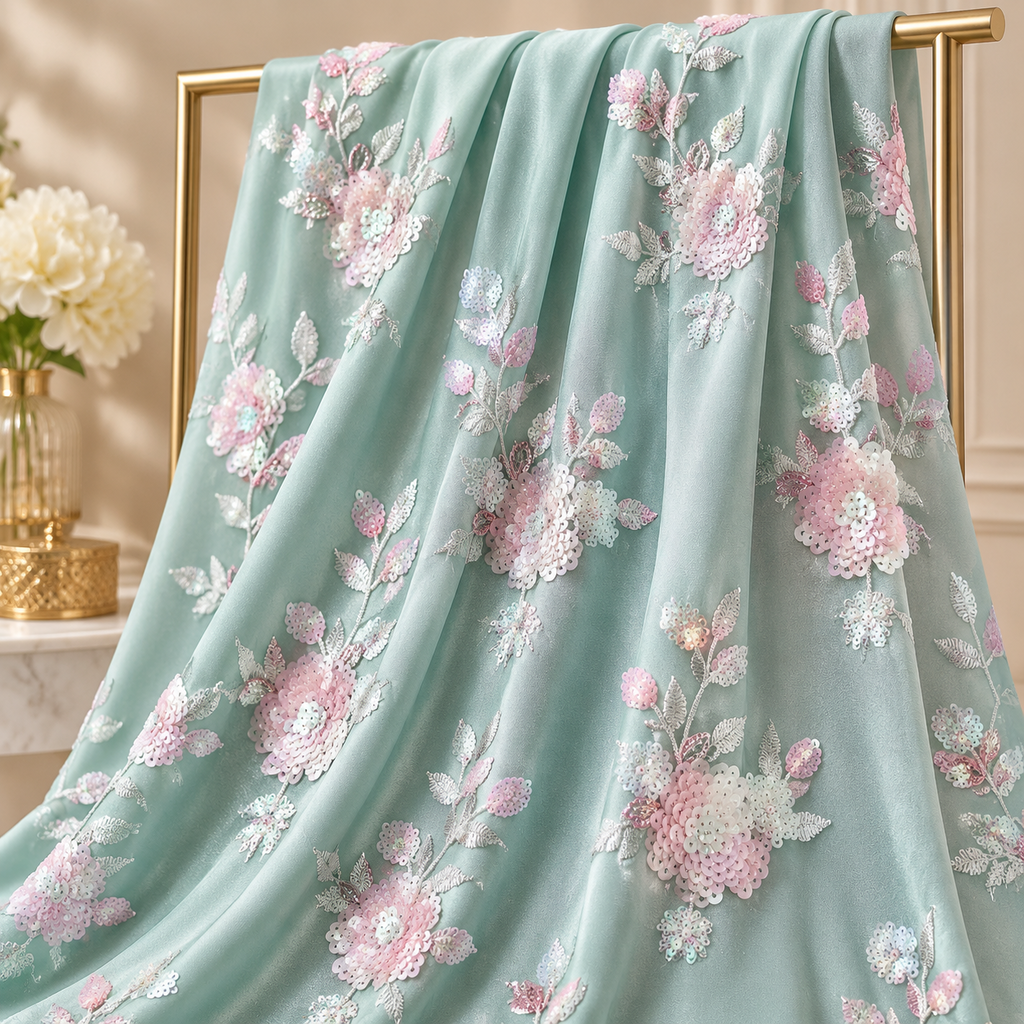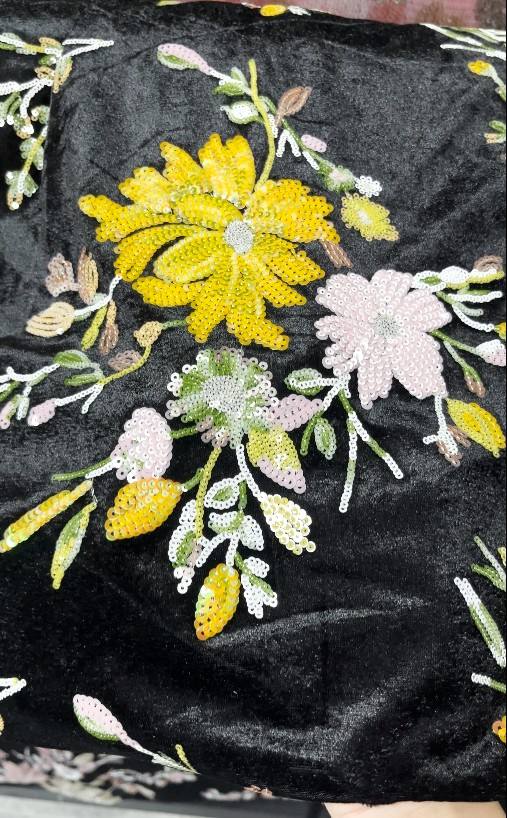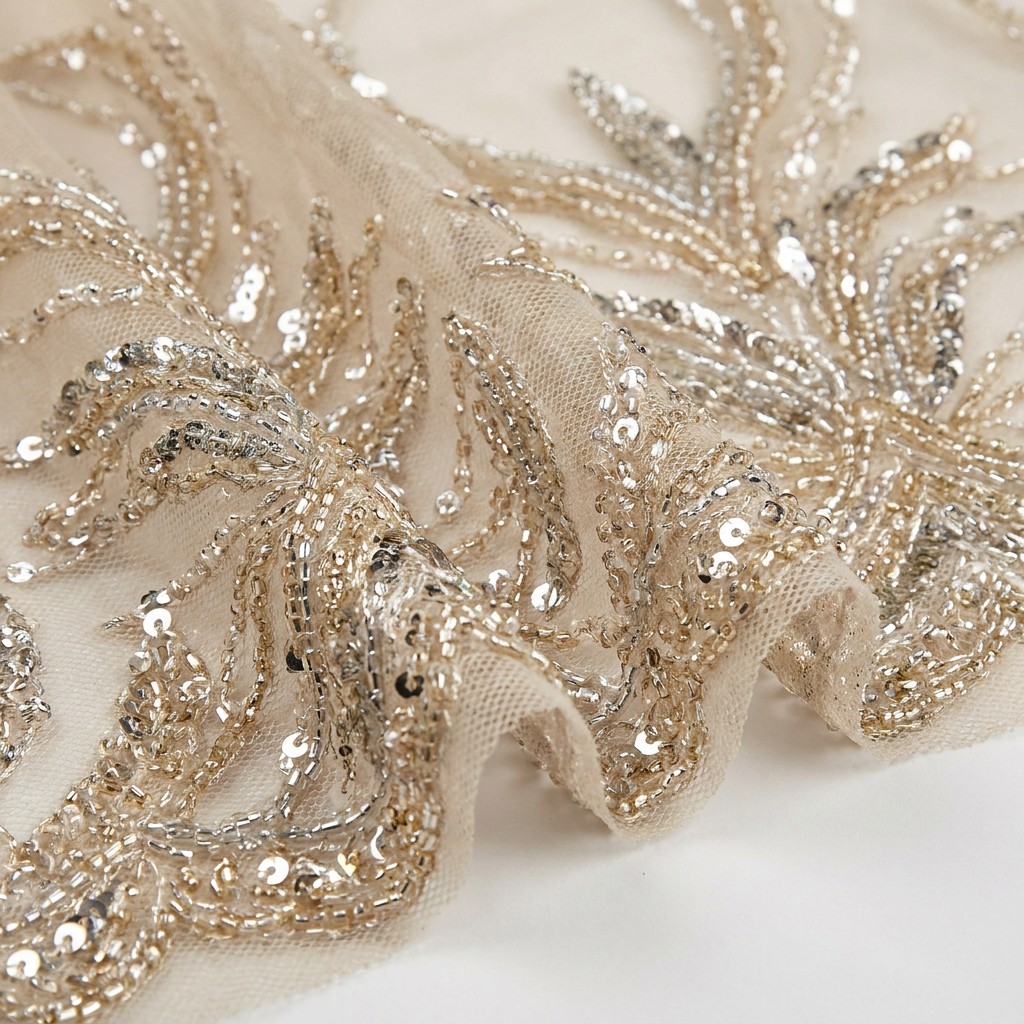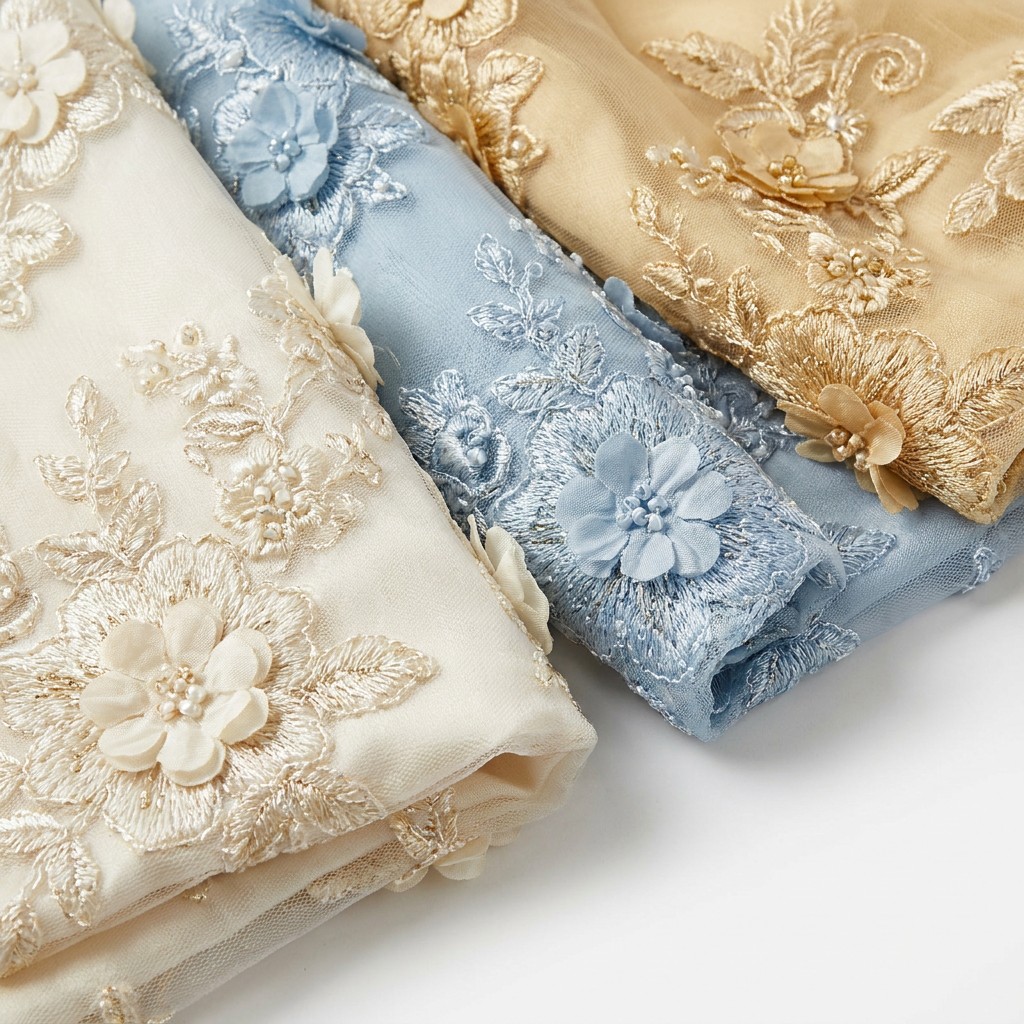
beaded organza seam slippage is a structural risk when heavy 3D flowers and tube beads load a fine ground fabric. This B2B guide helps bridal and couture buyers control a 450–700 GSM organza programme from sample approval to shipment.
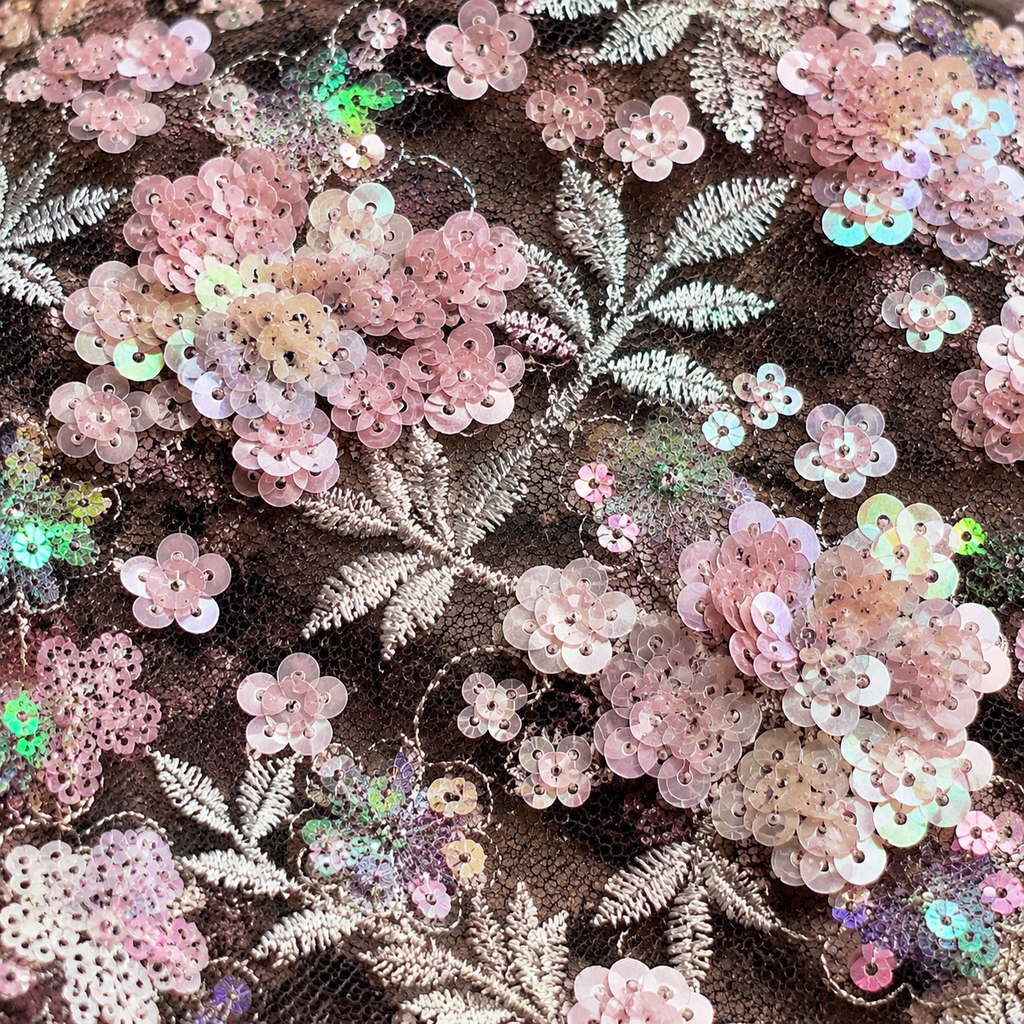
Why beaded organza seam slippage starts
Heavy embellishment creates a concentrated load around every stitch. The organza ground carries that load through a small number of warp and weft intersections. Under crosswise tension, those intersections move apart before the thread breaks. That movement appears as an open seam, a ladder, or a mesh tear.
ASTM D434 and ISO 13936-1 provide practical seam-slippage methods. Condition specimens first, then record the applied force, opening distance, seam allowance, stitch density, and fabric direction. Test both the decorated centre and the quieter margin because embroidery can change local stiffness. Therefore, the inspector should record the result against the approved specification.
Testing seam opening and tensile strength
ASTM D434 and ISO 13936-1 provide practical seam-slippage methods. Condition specimens first, then record the applied force, opening distance, seam allowance, stitch density, and fabric direction. Test both the decorated centre and the quieter margin because embroidery can change local stiffness.
A bias-cut reinforcement distributes force across more yarn paths. Place a narrow organza or stable tape under the seam, and keep the tape inside the allowance. The insert must flex with the garment. A rigid strip can create a new stress boundary beside the flowers. Therefore, the inspector should record the result against the approved specification.
Reinforced bias construction for couture
A bias-cut reinforcement distributes force across more yarn paths. Place a narrow organza or stable tape under the seam, and keep the tape inside the allowance. The insert must flex with the garment. A rigid strip can create a new stress boundary beside the flowers.
A French seam encloses the raw edge and protects the ground from direct abrasion. A four-thread overlock joins and wraps the edge quickly. However, the best choice depends on thickness, bead clearance, seam allowance, and the atelier pressing method. Run both methods on a real production panel. Therefore, the inspector should record the result against the approved specification.
French seams and four-thread overlock comparison
A French seam encloses the raw edge and protects the ground from direct abrasion. A four-thread overlock joins and wraps the edge quickly. However, the best choice depends on thickness, bead clearance, seam allowance, and the atelier pressing method. Run both methods on a real production panel.
The workshop should inspect thread tension, skipped stitches, broken beads, open flowers, seam width, and edge tearing. Inspectors should pull across the seam by hand before the formal test. That simple screen finds unstable areas early and prevents a beautiful sample from hiding a weak construction. Therefore, the inspector should record the result against the approved specification.
Couture workshop acceptance protocol
The workshop should inspect thread tension, skipped stitches, broken beads, open flowers, seam width, and edge tearing. Inspectors should pull across the seam by hand before the formal test. That simple screen finds unstable areas early and prevents a beautiful sample from hiding a weak construction.
For a 200 yards MOQ, reserve panels for machine trials, fitting, wash simulation, and retained standards. Mark the roll direction and the decorated repeat. Record the approved GSM range, bead count, flower height, width, and seam test result on the purchase specification. Therefore, the inspector should record the result against the approved specification.
A reliable 200 yard production plan
For a 200 yards MOQ, reserve panels for machine trials, fitting, wash simulation, and retained standards. Mark the roll direction and the decorated repeat. Record the approved GSM range, bead count, flower height, width, and seam test result on the purchase specification.
Heavy embellishment creates a concentrated load around every stitch. The organza ground carries that load through a small number of warp and weft intersections. Under crosswise tension, those intersections move apart before the thread breaks. That movement appears as an open seam, a ladder, or a mesh tear. Therefore, the inspector should record the result against the approved specification.
Next, compare the centre and edge under neutral light. In addition, retain a signed sample and a digital report for every lot. This evidence supports faster claims review and clearer repeat ordering.
The quality control category and sequin fabric category provide useful internal references. Meanwhile, buyers should define width, GSM, colour, packaging, and inspection timing before production.
First, confirm the material composition and construction. Next, test the complete finished system. Therefore, do not approve a component in isolation. In addition, use the same conditioning room for every comparison. Finally, sign the report before dispatch. Clear records reduce rework and help a buyer explain requirements to a factory. Moreover, a retained master protects colour, handle, and performance. As a result, both teams can resolve variation with measured evidence rather than opinion.
First, confirm the material composition and construction. Next, test the complete finished system. Therefore, do not approve a component in isolation. In addition, use the same conditioning room for every comparison. Finally, sign the report before dispatch. Clear records reduce rework and help a buyer explain requirements to a factory. Moreover, a retained master protects colour, handle, and performance. As a result, both teams can resolve variation with measured evidence rather than opinion.
First, confirm the material composition and construction. Next, test the complete finished system. Therefore, do not approve a component in isolation. In addition, use the same conditioning room for every comparison. Finally, sign the report before dispatch. Clear records reduce rework and help a buyer explain requirements to a factory. Moreover, a retained master protects colour, handle, and performance. As a result, both teams can resolve variation with measured evidence rather than opinion.
First, confirm the material composition and construction. Next, test the complete finished system. Therefore, do not approve a component in isolation. In addition, use the same conditioning room for every comparison. Finally, sign the report before dispatch. Clear records reduce rework and help a buyer explain requirements to a factory. Moreover, a retained master protects colour, handle, and performance. As a result, both teams can resolve variation with measured evidence rather than opinion.
First, confirm the material composition and construction. Next, test the complete finished system. Therefore, do not approve a component in isolation. In addition, use the same conditioning room for every comparison. Finally, sign the report before dispatch. Clear records reduce rework and help a buyer explain requirements to a factory. Moreover, a retained master protects colour, handle, and performance. As a result, both teams can resolve variation with measured evidence rather than opinion.
First, confirm the material composition and construction. Next, test the complete finished system. Therefore, do not approve a component in isolation. In addition, use the same conditioning room for every comparison. Finally, sign the report before dispatch. Clear records reduce rework and help a buyer explain requirements to a factory. Moreover, a retained master protects colour, handle, and performance. As a result, both teams can resolve variation with measured evidence rather than opinion.
First, confirm the material composition and construction. Next, test the complete finished system. Therefore, do not approve a component in isolation. In addition, use the same conditioning room for every comparison. Finally, sign the report before dispatch. Clear records reduce rework and help a buyer explain requirements to a factory. Moreover, a retained master protects colour, handle, and performance. As a result, both teams can resolve variation with measured evidence rather than opinion.
First, confirm the material composition and construction. Next, test the complete finished system. Therefore, do not approve a component in isolation. In addition, use the same conditioning room for every comparison. Finally, sign the report before dispatch. Clear records reduce rework and help a buyer explain requirements to a factory. Moreover, a retained master protects colour, handle, and performance. As a result, both teams can resolve variation with measured evidence rather than opinion.
First, confirm the material composition and construction. Next, test the complete finished system. Therefore, do not approve a component in isolation. In addition, use the same conditioning room for every comparison. Finally, sign the report before dispatch. Clear records reduce rework and help a buyer explain requirements to a factory. Moreover, a retained master protects colour, handle, and performance. As a result, both teams can resolve variation with measured evidence rather than opinion.
First, confirm the material composition and construction. Next, test the complete finished system. Therefore, do not approve a component in isolation. In addition, use the same conditioning room for every comparison. Finally, sign the report before dispatch. Clear records reduce rework and help a buyer explain requirements to a factory. Moreover, a retained master protects colour, handle, and performance. As a result, both teams can resolve variation with measured evidence rather than opinion.
First, confirm the material composition and construction. Next, test the complete finished system. Therefore, do not approve a component in isolation. In addition, use the same conditioning room for every comparison. Finally, sign the report before dispatch. Clear records reduce rework and help a buyer explain requirements to a factory. Moreover, a retained master protects colour, handle, and performance. As a result, both teams can resolve variation with measured evidence rather than opinion.
Source direct on Alibaba - request bulk pricing, specifications, and production details in one place.
View Yunfan Textile on AlibabaRequest Sequin Fabric Samples and share your target GSM, width, sequin size, and colour reference.
Talk to Morris directly:
Email: morris@yunfantextile.com
WhatsApp: +86 156 3752 5803
WhatsApp: +86 175 1619 6727