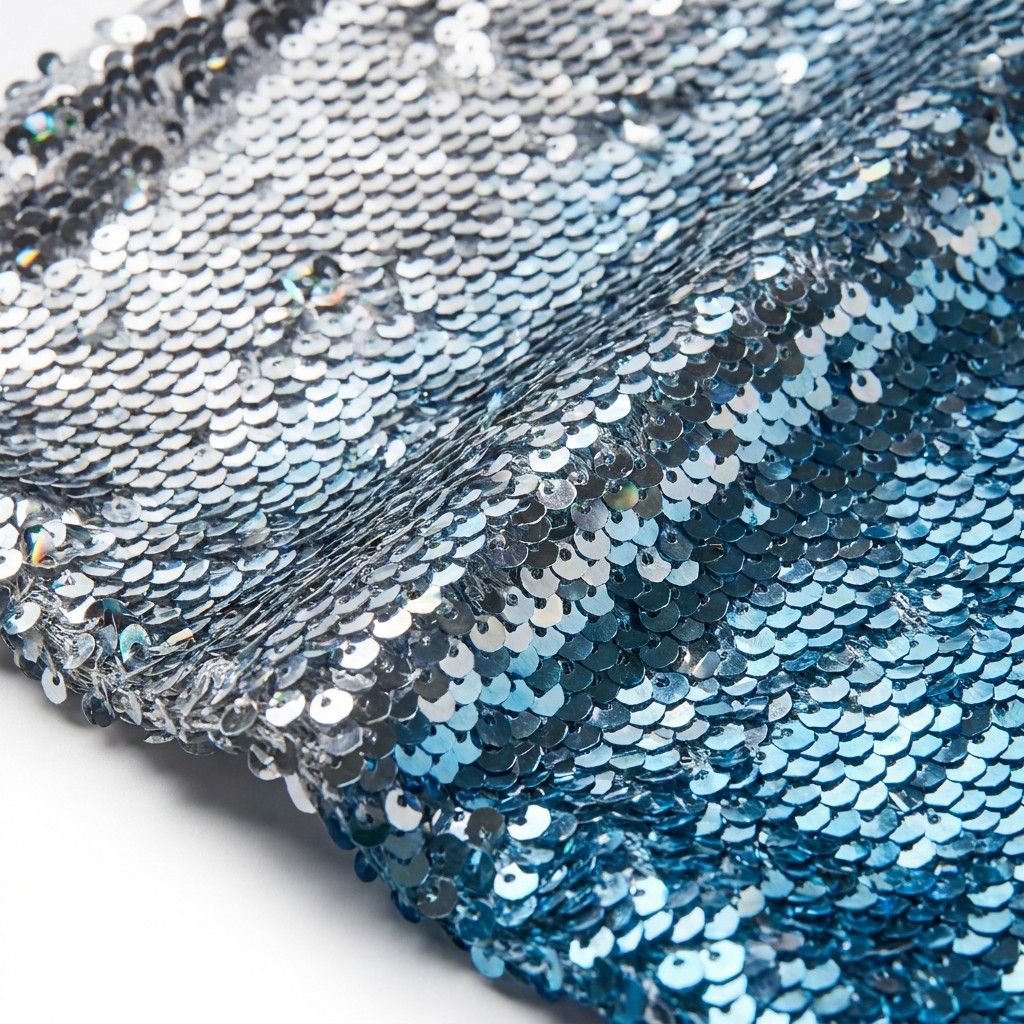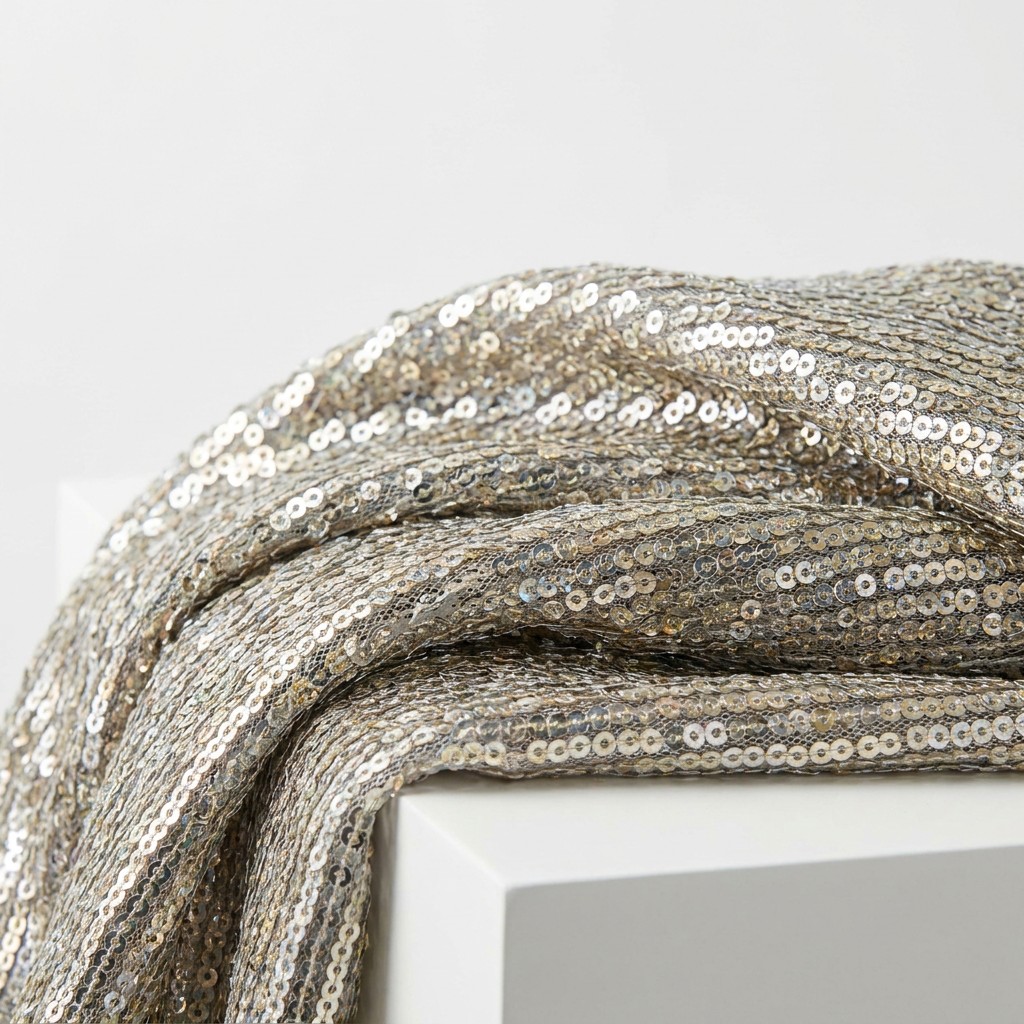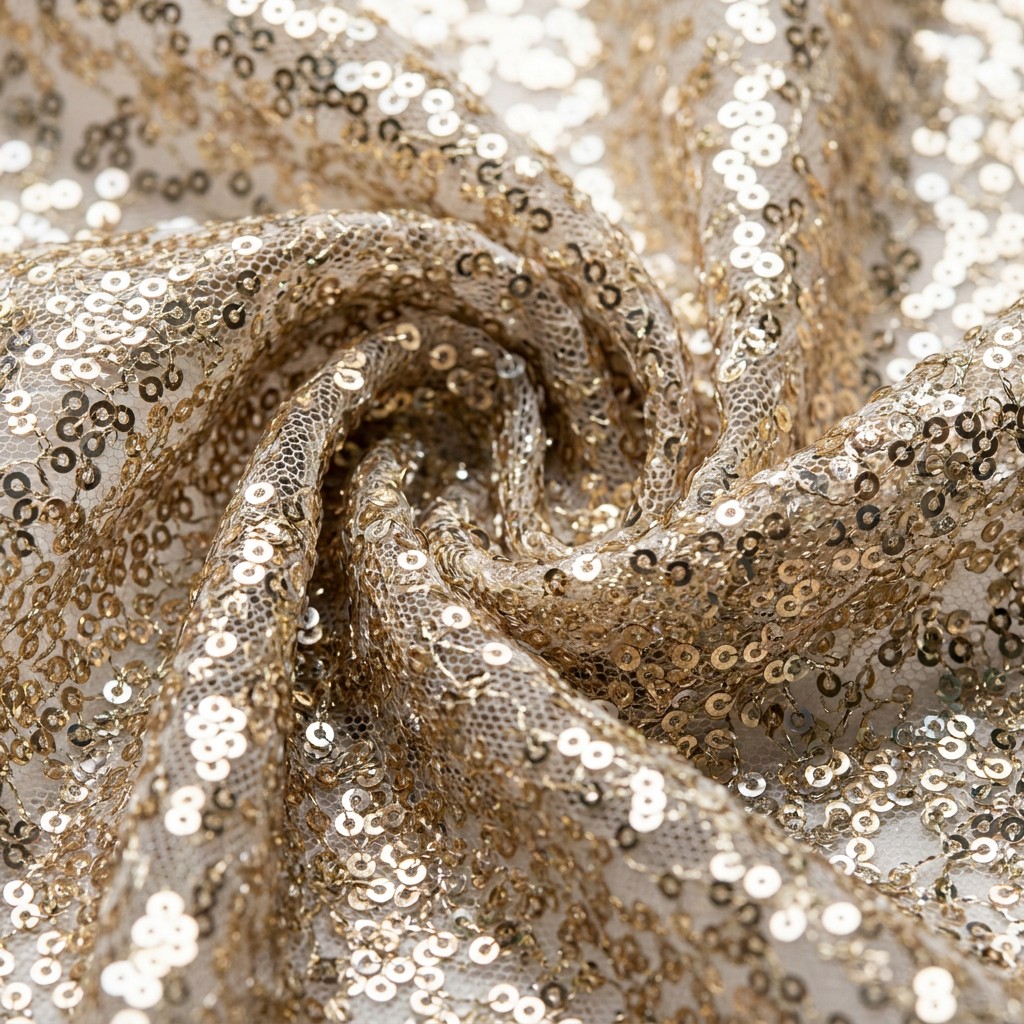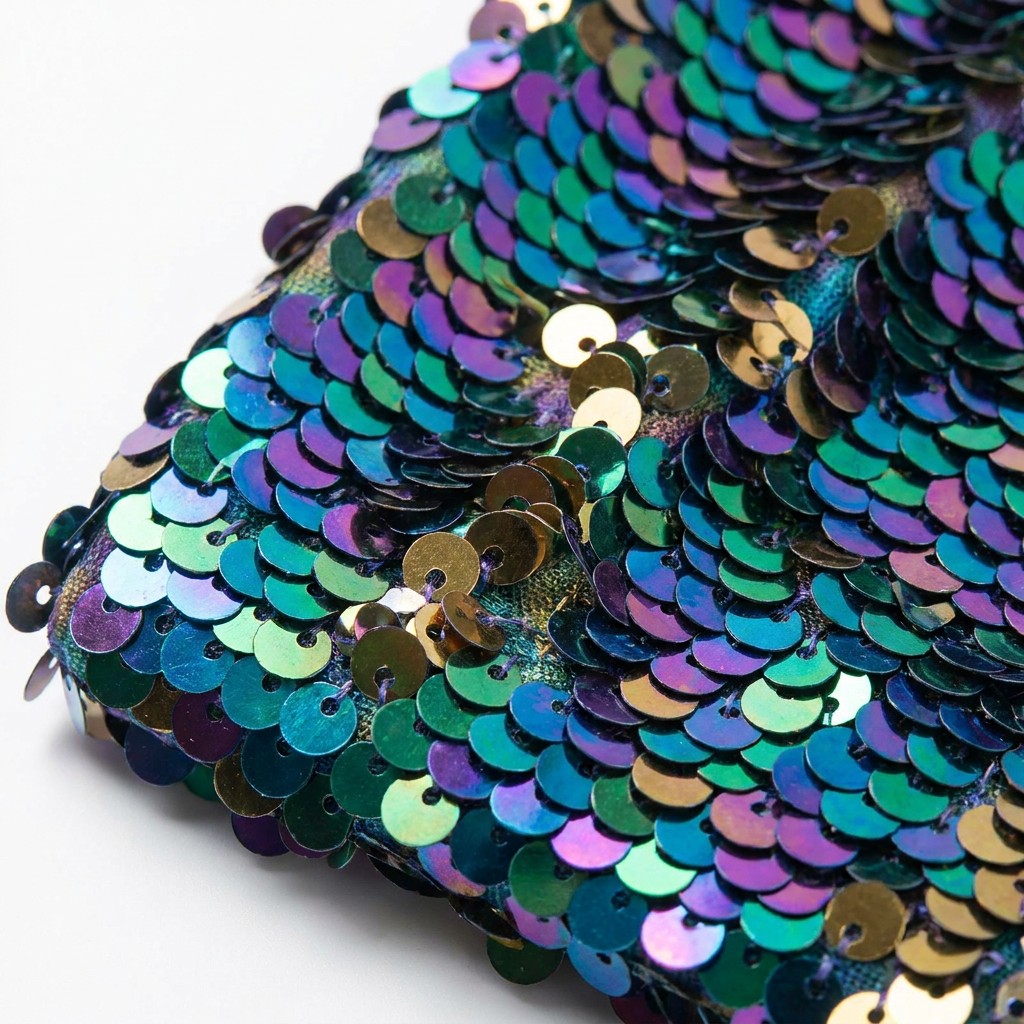
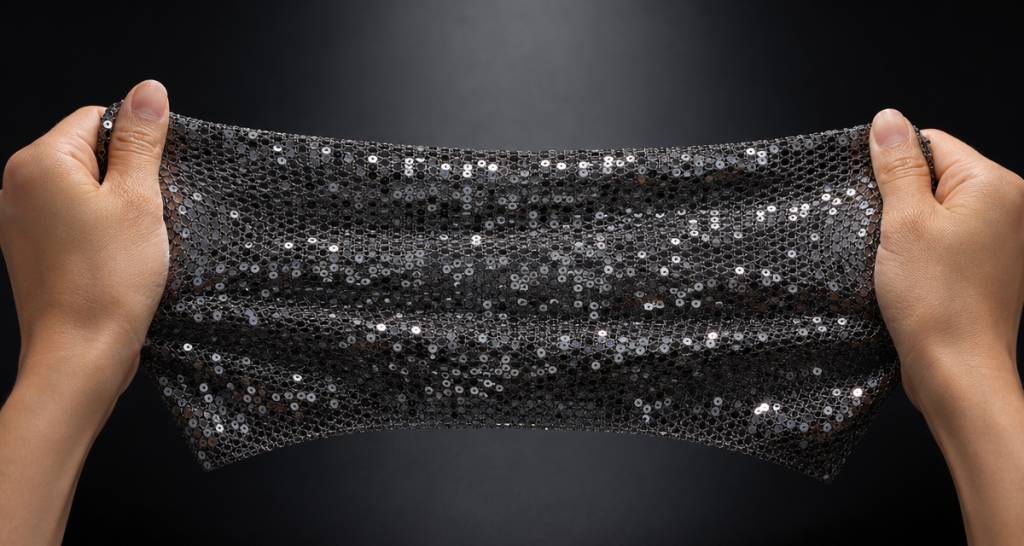
Decorative fabric stretch recovery is the ability of a sequinned or embroidered fabric to return to its original length and width after being stretched. Recovery is measured as a percentage of the stretch that comes back within an agreed time, and it is the property that decides whether a fitted garment keeps its shape after wear, packing, and dry cleaning. Buyers who specify recovery before sampling avoid the most expensive failure in decorative fabric sourcing: a dress that fits on day one and sags by week three.
Key Takeaways
- Stretch recovery is a percentage, so it must always be quoted with the stretch percentage it came from.
- Sequins and embroidery limit recovery because the embellishment does not stretch with the base.
- Test recovery at the same tension, dwell time, and recovery time every time.
- Cut panels after relaxation, not straight off the roll, or the garment will grow in the wash.
- Write recovery, stretch, and relaxation time into the specification, not into a chat message.
What Decorative Fabric Stretch Recovery Means in Practice
Stretch recovery is the proportion of an applied extension that the fabric gives back once the tension is released. A fabric that stretches to 40 percent and recovers 36 percent has a recovery rate of 90 percent. A fabric that stretches to 40 percent and recovers 26 percent has 65 percent recovery, and that difference shows up as bagging at the knee, hip, and elbow.
Two numbers must always travel together: the stretch percentage and the recovery percentage. A stretch figure alone tells you how far the fabric can move. The recovery figure tells you whether it comes back. When a supplier sends only one of the two, ask for the other before you compare quotations.
How Sequins and Embroidery Change Recovery
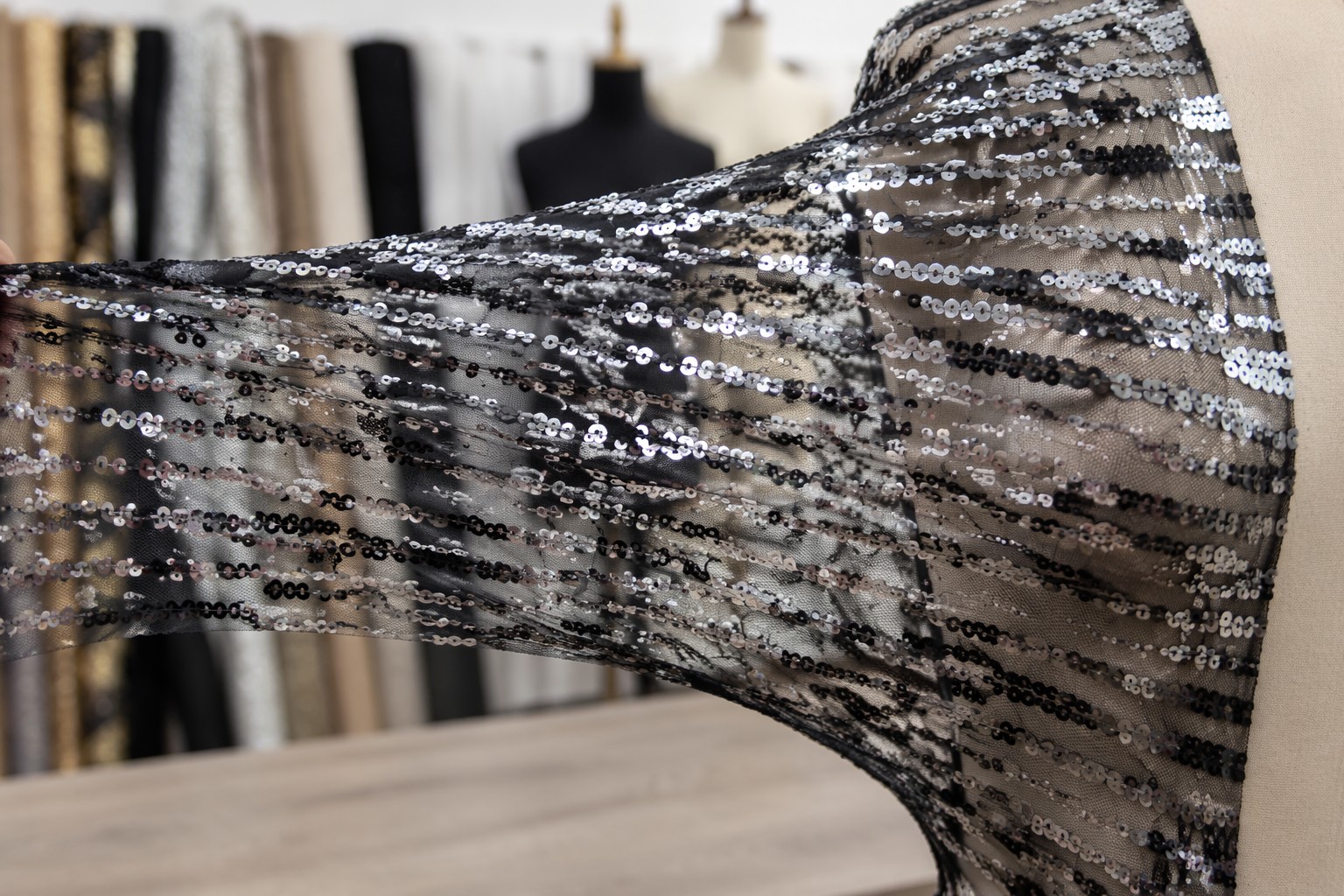
A decorative fabric is a composite. The mesh or knit base provides the elasticity, while sequins, thread, and backing resist it. Three interactions matter most.
- Stitch locking. Dense embroidery creates hundreds of small anchors that reduce how freely the base can move.
- Sequin orientation. Sequins sewn in a rigid line block movement along that line and push stretch into the axis at 90 degrees.
- Backing stiffness. A bonded backing raises dimensional stability and lowers recovery comfort, because the bond holds the fabric open.
The practical consequence is that a decorative fabric rarely matches the recovery of its bare base. Order the composite, test the composite, and treat the base data as a starting point only.
How to Test Stretch Recovery on a Swatch
Use one consistent method so that results from different suppliers stay comparable.
- Condition the swatch flat for at least four hours in the room where you will test.
- Cut a strip of fixed width and mark a gauge length in the centre, away from the selvedge.
- Apply the agreed load slowly until the target stretch percentage is reached and hold it for the agreed dwell time.
- Release the load without letting the strip snap back.
- Measure the marked length again after the agreed recovery time, usually 30 minutes and again after 24 hours.
- Divide the recovered extension by the applied extension and record the result as a percentage.
- Repeat on three strips from different positions across the width and report the lowest figure, not the average.
Step five is the step buyers skip. Recovery is time dependent, and a fabric that looks perfect after one minute may continue to creep for a full day.
Recovery Comparison Table for Common Constructions
| Construction | Stretch behaviour | Recovery behaviour | Best suited to |
|---|---|---|---|
| Micro-sequin on stretch mesh | Moderate to high | Good | Fitted dresses, dancewear |
| Standard sequin on stretch mesh | Moderate | Moderate | Eveningwear with seams |
| Dense all-over sequin with backing | Low | Low to moderate | Structured bodices |
| Embroidered non-stretch base | Very low | Not applicable | Panels, overlays, decor |
Use the table to narrow options, then confirm the actual figures on your own construction. Options and reference ranges are discussed further in sequin size selection for fashion collections.
Where Recovery Fails in Production
Cutting before relaxation
Fabric that is cut straight off the roll with tension still inside will relax after cutting, and the panel will grow. Combine a relaxation step with the checks in checking fabric width and usable yield for sequin collections.
Sewing with the wrong needle and thread
A rigid thread and a blunt needle puncture the base and create permanent holes that never recover. The techniques in reducing snagging risk when sewing sequin fabric apply to recovery as well.
Wet finishing without a controlled drying step
Wet processing relaxes the base and can change recovery. Confirm what happens to the swatch after the wash or dry-clean cycle your end consumer will use, and record the change.
Repeat orders drifting
Base yarn lots and heat-set settings change between orders. Keep the approved swatch and its measured recovery on file, as described in keeping sequin fabric quality consistent in repeat orders.
Stretch Recovery Checklist for a Purchase Order
Confirm that every field below appears on the approved specification sheet.
- Base construction and denier
- Stretch percentage in both directions, with the test load used
- Recovery percentage, with dwell time and recovery time
- Relaxation requirement before cutting
- Width and weight after relaxed conditioning
- Seam and stitch type assumed for the end garment
- Care cycle used for the recovery re-test
- Reference sample number and approval date
Recovery, Growth, and Bagging: Three Field Measurements
Laboratory recovery data is useful only when it connects to what the consumer sees. Three field measurements make that connection.
Residual growth after wear
Residual growth is the permanent increase in a panel measurement after a defined period of wear or tension. Measure a marked area of the garment before wear, then again after the agreed period and after the first care cycle. Record the increase as a percentage of the original measurement. Growth of a few percent is normal in stretch constructions and should be declared in advance so the pattern can absorb it.
Bagging at stress points
Bagging is localised growth at the knee, elbow, hip, or seat, and it is the defect most often reported by end consumers. Photograph the stress point before and after wear under the same lighting and camera angle. A visual record supported by one measurement is far more persuasive in a supplier conversation than an opinion.
Shrinkage after the first wash
Thermal shrinkage and elastic recovery pull in opposite directions. A decorative fabric can recover well under tension and still shrink after the first wash. Test both and report both, using the measurement sequence described in decorative fabric shrinkage testing.
Keep the three measurements on one page per article code. When a repeat order arrives, compare the new page with the approved page. If residual growth, bagging, or shrinkage has moved, the base lot or the finishing settings have moved with it, and the buyer can raise the question before cutting rather than after shipping.
Finally, align the test conditions with your end market. A garment sold into a warm, humid climate behaves differently from one sold into a cold, dry climate, because moisture changes how the base yarn relaxes. State the condition you tested in, and state the condition you expect in use. That single line removes most recovery disputes before they begin.
Frequently Asked Questions
Does higher stretch always mean better recovery?
No. Some high-stretch fabrics recover poorly, and some low-stretch fabrics recover almost fully. Judge the pair of numbers together and always for the specific construction you will buy.
Can sequin fabric recover like a plain knit?
Rarely. The embellishment limits movement in the base, so expect lower recovery than the equivalent plain knit. Choose the construction to suit the pattern instead of forcing a decorative fabric into a shape it cannot hold.
How long should a recovery test last?
Measure at a short interval and again after 24 hours. The 24-hour figure is the one that predicts how the garment behaves in the wardrobe.
Should recovery appear on the sample approval sheet?
Yes. Record it together with the stretch figure and the test conditions, using the fields in the fabric sample review sheet for B2B approvals.
Conclusion
Decorative fabric stretch recovery is the difference between a garment that flatters and a garment that returns. Test it on the composite, quote both numbers, record the recovery time, and add a relaxation step before cutting. Recovery is cheap to measure at sampling and very expensive to discover after shipping.
Test recovery on real swatches. Tell us your base, your stretch target, and your end use, then click Request Sequin Fabric Samples to receive swatches with stretch and recovery data for each construction.
Contact: morris@yunfantextile.com
WhatsApp: +86 156 3752 5803
WhatsApp: +86 175 1619 6727