Before you place a bulk order for sequin fabric, the number that matters most is not the width printed on the spec sheet — it is the usable fabric yield. In practice, usable fabric yield is the width and length you can actually cut and use after you remove the selvedges, the edge zones with damaged or missing sequins, the pattern repeat, the direction of the sequins and any defects. Checking fabric width and usable yield before ordering tells you how much fabric a collection really needs and prevents the classic shortage that appears halfway through cutting.
However, many buyers only compare nominal width, which is the width the supplier states on the technical sheet. The two numbers are rarely the same on decorative sequin fabric, because sequin application, edge finishing and finishing treatments all change what you can realistically cut. Therefore, this guide walks you through the checks to run on a sample or a test roll so that your yield estimate is based on facts, not assumptions.
What Is Usable Fabric Yield for Sequin Fabric?
Usable fabric yield describes the amount of fabric that can actually be consumed by your pattern pieces after every unusable zone is removed. For sequin collections, four zones regularly reduce yield: the two selvedge edges, the edge area where sequins are sparse or missing, the end-of-roll sections that may be shaded or distorted, and any local defects that force a marker to skip a section.
For example, a roll that looks wide when you measure from selvedge to selvedge may still give you far fewer garment panels than expected if sequins are applied only up to a certain point from each edge. Next, compare the effective width against the width your marker actually needs. This comparison, not the nominal width, is what drives your fabric quantity and your budget.
Step-by-Step: How to Check Fabric Width and Usable Yield
Ask your supplier for a full-width sample or a short test roll before production. Then run these checks in the same order you will use during cutting:
- Measure the actual width. Unroll the fabric on a flat surface and measure at several points along the roll instead of trusting one reading from the end of the roll.
- Inspect both edges. Look at the selvedges and the area next to them for loose threads, missing sequins, exposed base fabric or a rough edge that cannot be sewn into a seam.
- Confirm the pattern repeat. Check the repeat along the length and across the width, including any motif or sequin placement pattern that has to match at the seam.
- Check the sequin direction. Confirm whether the sequins lie in one direction and whether cutting mirrored panels is possible without a second lay.
- Scan for defects. Hold the fabric against light and run your hand over the surface to find skipped sequin lines, broken threads, shading bands or stains.
- Write down the usable numbers. Record the usable width, the repeat, the edge allowance and the defect allowance so the cutting team plans with the same data.
What to record when you check the width
| Field | What to look for | Why it matters |
|---|---|---|
| Nominal width | Width stated on the supplier spec sheet | Used for quoting only; never the basis for cutting |
| Measured width | Actual readings taken along the roll | Reveals how consistent the roll really is |
| Edge zone | Unusable area on each side, including selvedge | Directly reduces the width available for your marker |
| Pattern repeat | Length and width of the repeating motif | Forces extra fabric for pattern matching at seams |
| Sequin direction | One-way or two-way lay on the cutting table | One-way fabric can increase fabric consumption |
| Defect allowance | Agreed tolerance for skips, shading and stains | Protects your quantity if the roll is not perfect |
How to Estimate Usable Fabric Yield from a Test Roll
Take the measurements you recorded and subtract, in order: the edge allowance on both sides, the allowance for pattern matching and the allowance for expected defects. The result is the width your marker can actually use. In addition, verify the length measurement method with the supplier, because some decorative fabrics are measured with tension and settle after unpacking.
Therefore, when you calculate fabric for a style, work from the usable width in meters rather than from a theoretical full-width figure. If you are new to this calculation, review how our team breaks down sequin fabric supplier quotes without missing hidden costs, because yield assumptions are one of the most common hidden cost items in decorative fabric sourcing.
Confirm Shrinkage and Distortion in Writing
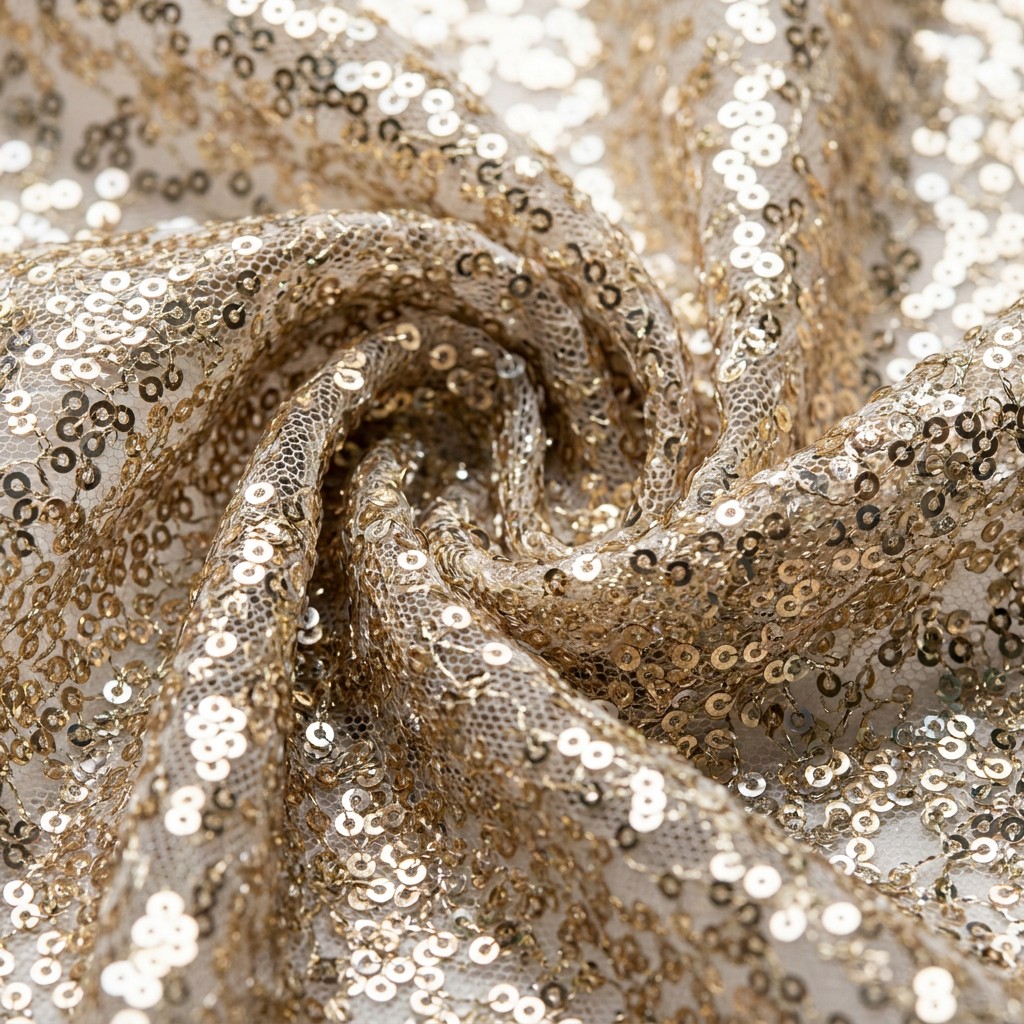
Sequin fabrics are composite products: a base textile, threads and sequins are combined and finished together. Each component can react differently to heat, tension and moisture. Shrinkage, bowing and skewing can appear during washing, steaming or even during long storage of the roll. However, no supplier can responsibly promise behavior on your specific garment without testing, so the correct step is to ask for a written confirmation of the finishing treatment and for a test on the actual production route.
Request that the supplier confirm, in writing, the finishing process and any shrinkage or distortion data measured on the same construction you will order. Never assume that data from a similar sequin fabric applies to your article. In practice, cutting a full garment prototype from the production-finish sample is the only reliable way to validate yield and behavior at the same time.
How Sequin Direction Affects Your Cutting Layout
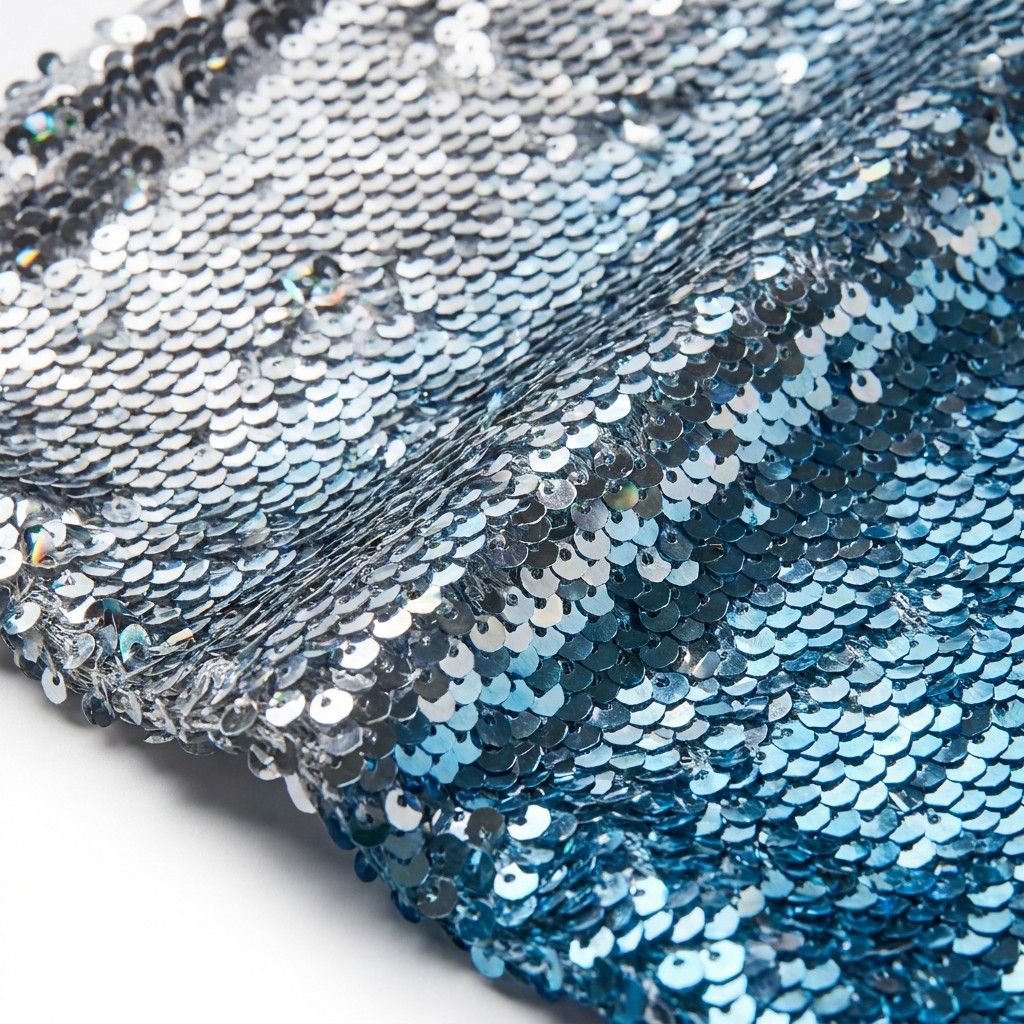
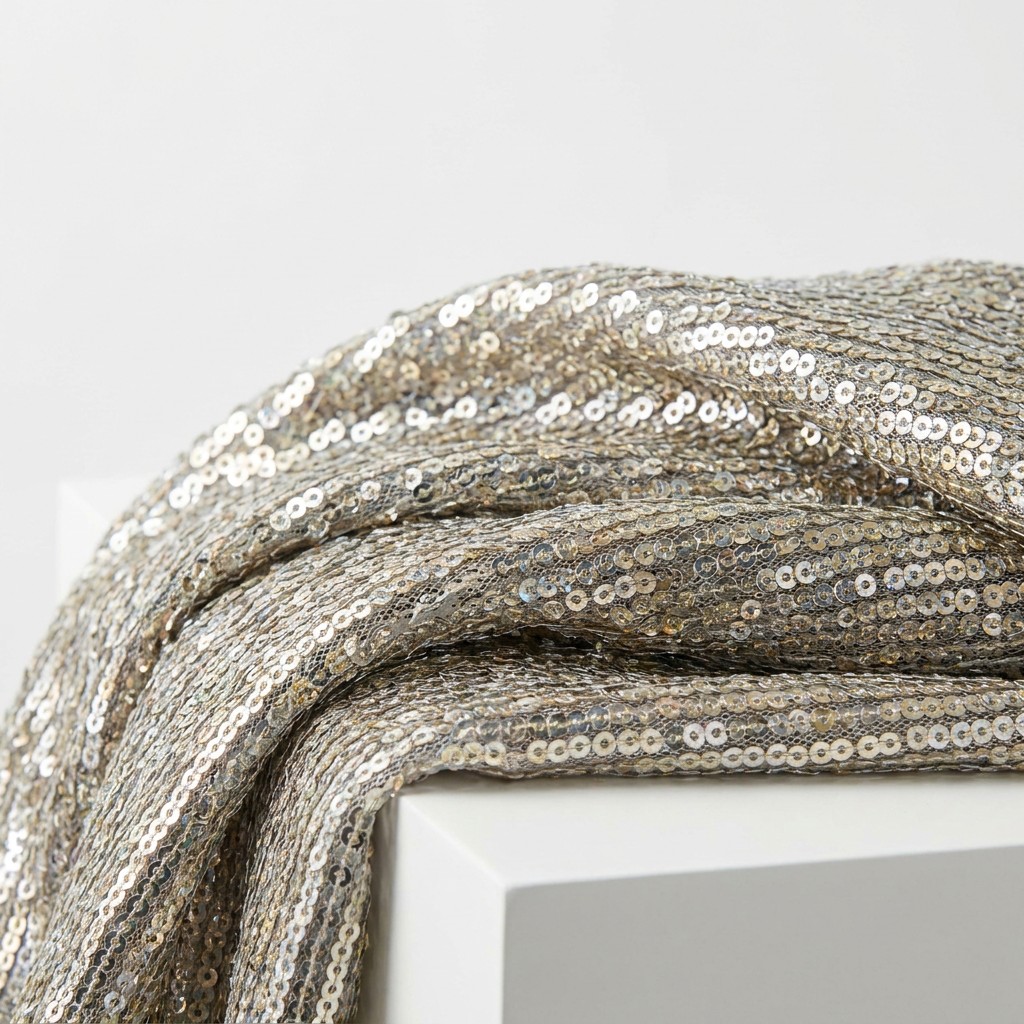
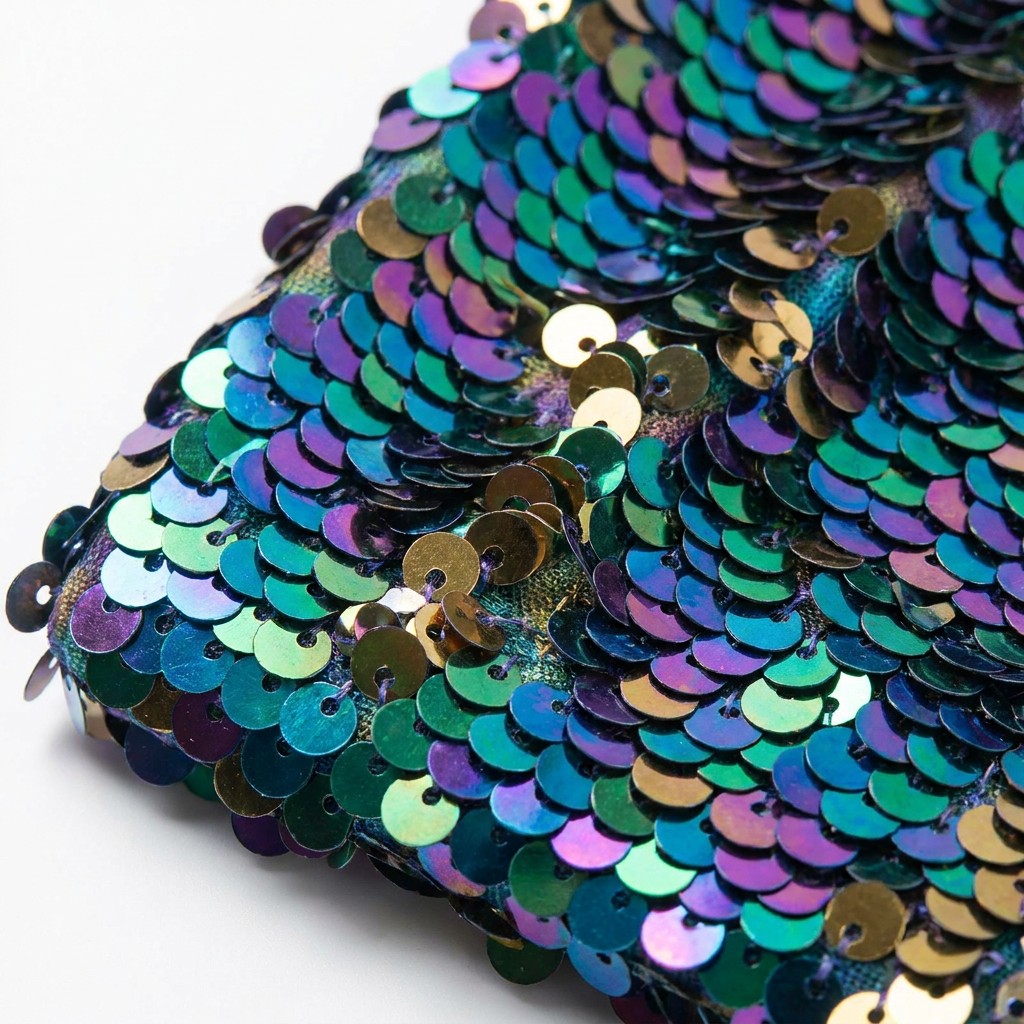
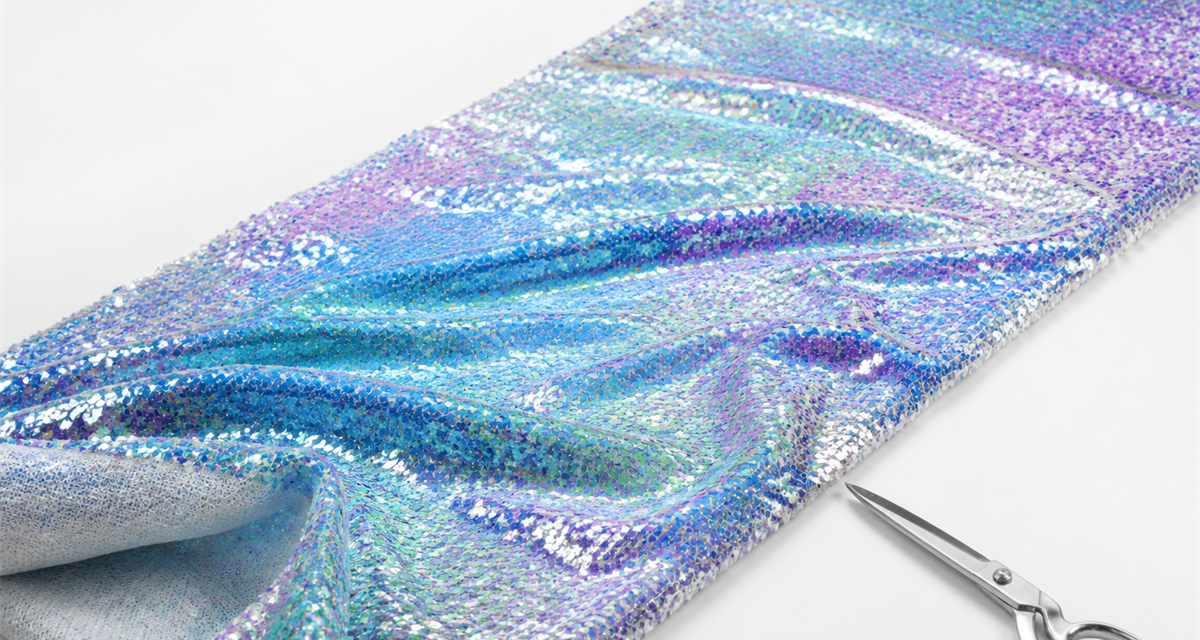
Many sequin fabrics have a clear direction: the sequins overlap like roof tiles, so the light catches them differently depending on the viewing angle. If your design needs every panel to reflect light in the same way, the fabric must be cut in one direction only. However, that single-direction lay wastes more fabric than a free lay, because pattern pieces cannot be nested in both directions.
For example, a dress with a full skirt cut from one-direction sequin fabric can consume noticeably more meters than the same dress cut from a two-way fabric. For this reason, always state the direction requirement in the tech pack and tell the cutting room before the marker is made. If you need help choosing between decorative options, our guide to lightweight mesh and decorative fabrics for layering explains how construction details change the way you cut and assemble.
Fields to Include When You Ask the Supplier for a Yield Estimate
To keep every quotation comparable, ask each supplier to fill in the same fields. Then you can check fabric width and usable fabric yield data side by side instead of comparing different assumptions:
- Nominal width and measured width per roll
- Usable width after edge allowance, in the same unit you cut in
- Repeat length and repeat width, including pattern-match allowance
- Sequin direction and recommended lay direction
- Shading or lot difference tolerance between rolls
- Defect allowance and the inspection standard applied
- Finishing data confirmed in writing, including any shrinkage or distortion test results
Next, ask how many meters each roll contains and how the meter count is verified. These fields keep the yield conversation factual and give your quality team a clear checklist for the delivery, similar to the points covered in our sequin fabric inspection points for bridal and stagewear orders.
Usable Fabric Yield FAQ for Sequin Buyers
What is the difference between nominal width and usable width?
Nominal width is the figure on the technical sheet, usually measured from selvedge to selvedge. Usable width is the part of the roll that can really be cut after removing the edges and any unusable zones. For sequin fabric, the difference can be significant, so you should always base your quantity calculation on the usable width confirmed by your supplier in writing.
Why does the sequin direction change the fabric quantity?
When sequins overlap in one direction, panels must be laid in that same direction so the light reflects consistently across the garment. A single-direction lay prevents the marker from nesting pieces in both directions, which increases fabric consumption compared with a two-way fabric. Therefore, confirm the direction with the supplier before you estimate usable fabric yield.
Should I test yield on a sample or on a full production roll?
A short test roll from the production route is better than a small hand sample, because it lets you measure width at several points, inspect both edges and check real defects. However, even a test roll should be treated as an estimate: final yield is confirmed when the actual production rolls are inspected at the factory before shipment.
B2B Bulk Orders & Wholesale Pricing
Explore Our Full Sequin & Decorative Fabric Range
Visit Our Alibaba Store →Request Sequin Fabric Samples
Tell us the style, the quantity you are planning and the yield checks you want to run, and we will arrange full-width samples or short test rolls from the production route so you can verify usable fabric yield before you commit to bulk.
Wendy Jessie
+86 156 3752 5803
+86 175 1619 6727
morris@yunfantextile.com
morris@yunfantextile.com