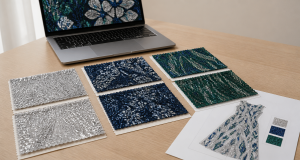
When you layer lightweight mesh, sequin, embroidered or beaded fabrics, settle the design brief before comparing materials: confirm the transparency and coverage each layer needs, the visual hierarchy between layers, acceptable weight, drape, dimensional stability, breathability, how each surface reacts to stage, flash or shop lighting, how the pieces will be sewn, and how the finished item will be cleaned and stored. These eight points decide which construction is worth sampling. This guide compares the four fabric families for B2B layering projects and explains the sourcing and approval route.
How the Eight Parameters Interact
Treat the parameters as one system: high coverage adds weight and stiffness, dense embellishment limits seam placement, very open mesh may need a lining for modesty, and a fabric that sews well can still snag or shed after wear and cleaning. Decide them together before sampling.
Mesh, Sequin, Embroidered and Beaded Fabric at a Glance
Use this table to shortlist families; it describes typical constructions, not guarantees.
| Dimension | Lightweight mesh | Sequin fabric | Embroidered fabric | Beaded fabric |
| Transparency | Open; set by mesh density | Set by arrangement and base | Motifs covered; base shows between | Motifs covered; base shows around |
| Light effect | Subtle sheen, transmits light | Broad, continuous sparkle | Soft thread shadow | Point-by-point highlights |
| Texture | Smooth knit or woven | Flat discs, raised edges | Raised thread motifs | Raised, dimensional beads |
| Drape | Soft and fluid | Stiffens as coverage rises | Stiffer at dense motifs | Stiffest near beadwork |
| Weight driver | GSM and openness | Sequin count and attachment | Thread density and base | Bead count, type, thread |
| Bulk risks | Snagging, edge curl | Loose sequins, snagging | Puckering, thread pulls | Dropped beads, heavy spots |
Two fabrics in the same family can sit at opposite ends of this scale, so confirm every shortlisted construction on a physical sample with a written specification.
Lightweight Mesh: Transparency, Stability and Breathability
Mesh is the skeleton of most layered looks. Choose openness by how much of the base layer should show: very open nets read as texture over a lining, while denser meshes read as translucent panels. Confirm composition, knit or woven structure, GSM, usable width and stretch direction. For the full specification route, see our guide to sourcing high-performance mesh fabric for B2B buyers. Fine mesh also needs an edge plan: cut edges can curl or ravel, and the fabric can snag against sequins or beads underneath. Test a stitched, hemmed sample before fixing the construction.
Sequin Fabric: Coverage, Light Effect and Edges
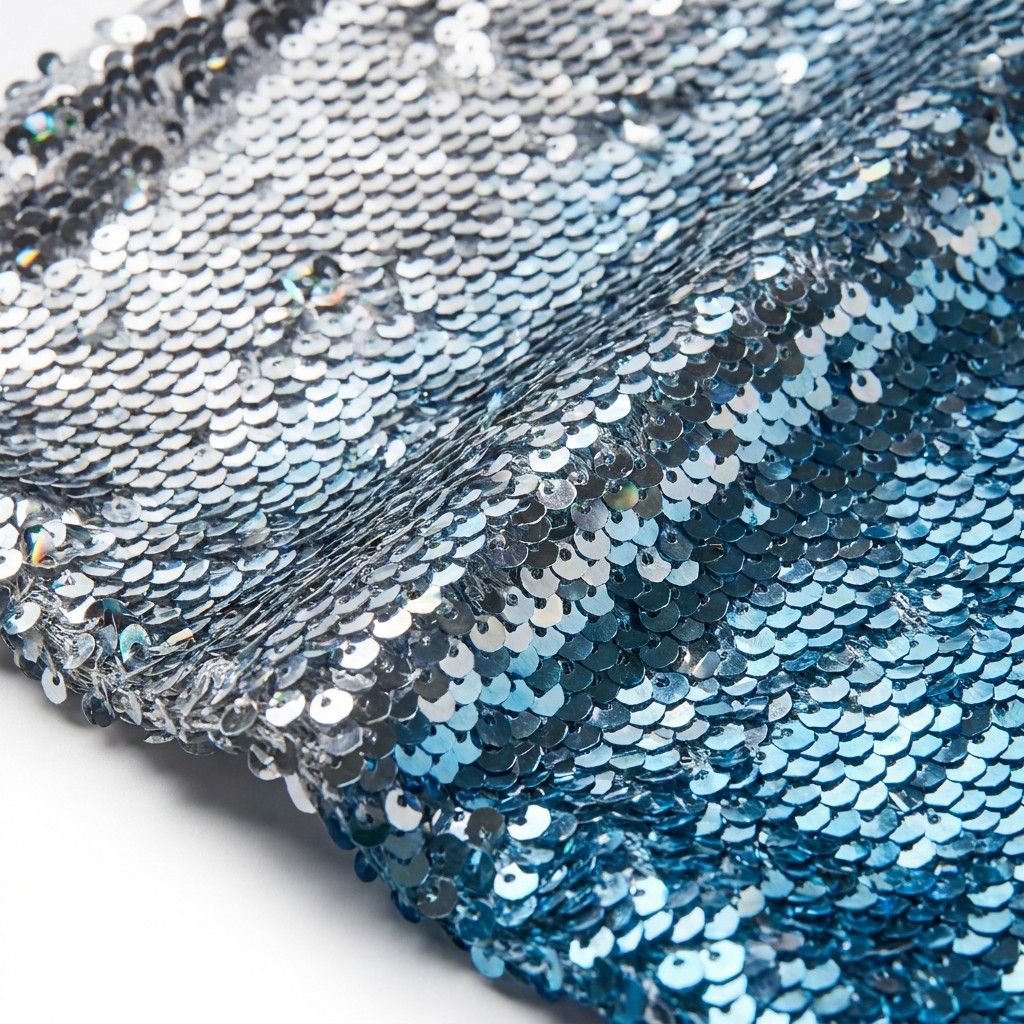
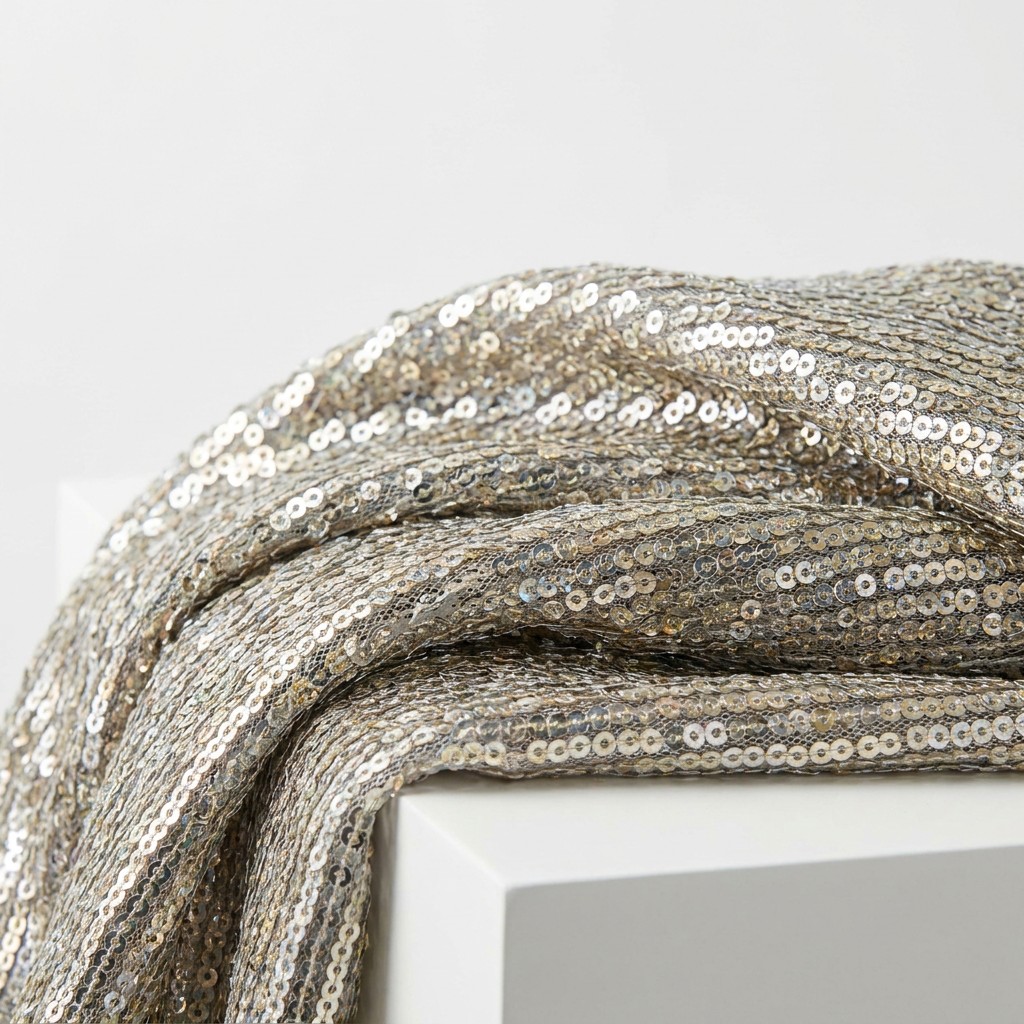
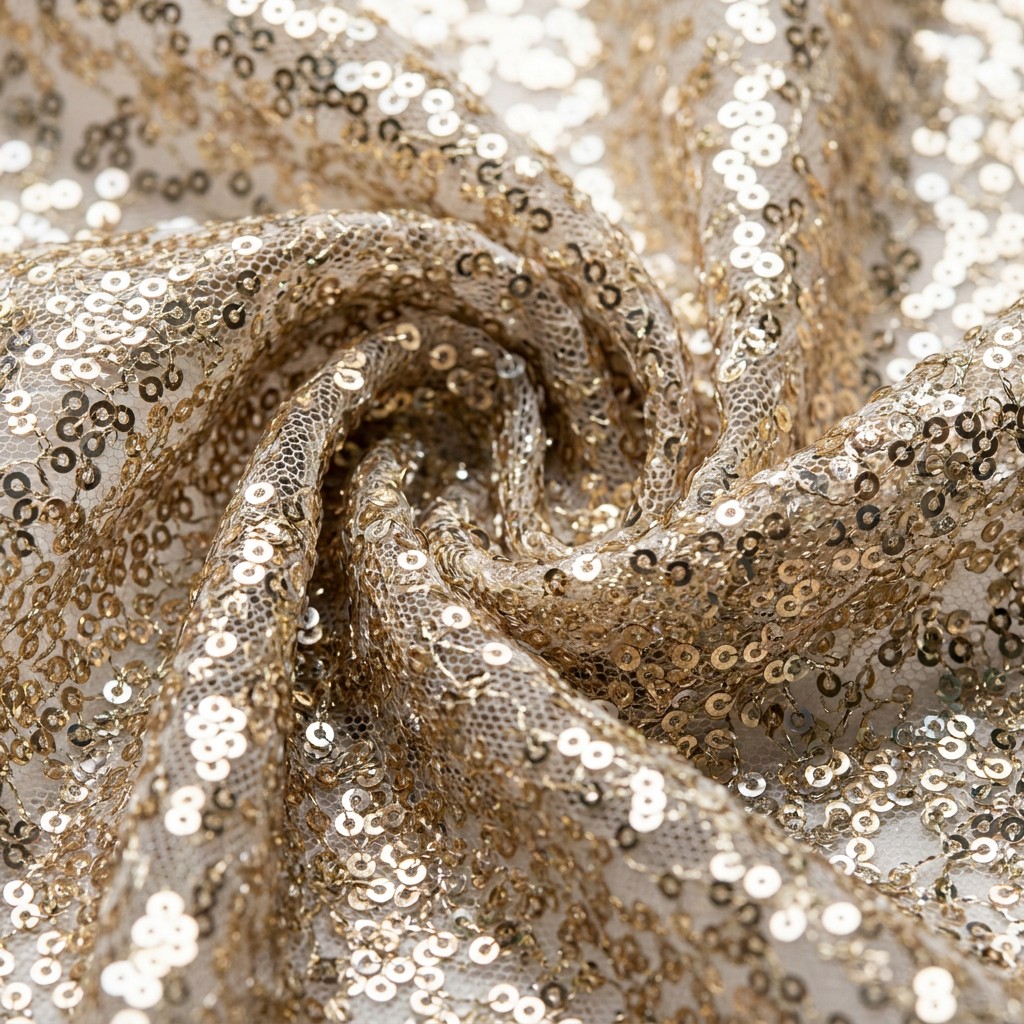
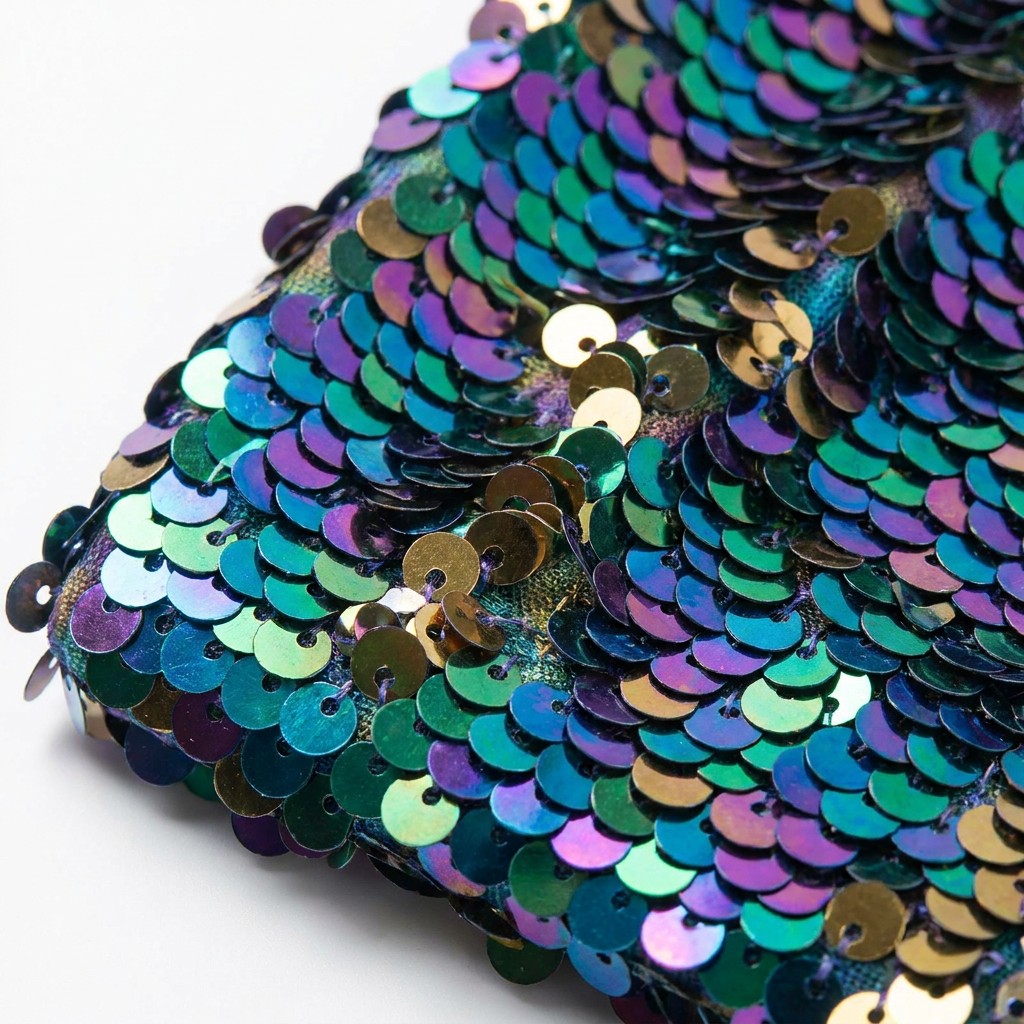
Plan the light effect early. Full coverage gives one continuous flash; spaced rows and scattered layouts let the base show and move between the discs. Sequin size changes the reading as much as the arrangement — our 3mm vs 5mm vs 18mm sequin fabric comparison shows how size shifts coverage, weight and stiffness. On mesh or tulle bases the fabric stays light enough for layering; on dense bases it becomes a stiff statement panel. Plan seams and edges before ordering: sequins at seams can catch needles, dull blades and shed dust, and loose discs are a common bulk complaint. Ask how the decoration is attached, how lines are inspected for loose or missing sequins, and how edges are finished.
Embroidered Fabric: Texture and Dimensional Stability
Embroidery builds controlled motifs with thread, giving a matte, dimensional texture that works in daylight and soft lighting. On an open mesh base, motifs cover the transparency locally while the fabric between them stays airy. Check the reverse side too: loose threads and backing can catch the base layer underneath and pull during wear. Stability is the main risk — dense stitch areas can pucker on lightweight bases, and motif edges can distort after cutting. Keep motifs away from planned seam lines and request a converted sample with the actual hem or edge treatment before approving.
Beaded Fabric: Weight, Drape and Dropped Beads
Beads add point-by-point sparkle and depth, but they concentrate weight where the beadwork sits. A panel that looks airy in a photo can drape stiffly around dense motifs, so judge beaded fabric on a hanging sample, not a flat swatch. Beads can drop at stress points, edges and seams, and raised beads can snag the layer they touch. Our sequin vs beaded fabric guide for wholesale collections compares shine, texture, drape and sewing behaviour side by side.
The Base Fabric Decides How the Layer Moves
Tulle and mesh give airy, see-through movement; knits add stretch and recovery; woven organza gives crisp, stable structure. Base colour also changes the read: on a dark base, gaps between sequins or beads disappear; on a light base they become part of the pattern. Confirm base composition, GSM, width and colour with the supplier, and request a strike-off on your intended base before fixing the specification.
Physical Samples and Converted Samples, Not Just Photos
Digital references cannot replace physical samples: screens do not reproduce transparency depth, drape, reflectivity, texture, embellishment security or behaviour on a sewing machine. Use digital development to shortlist, then request two levels of physical proof — a plain swatch of each construction and a converted sample hemmed, edge-finished or layered over the planned base or lining. Keep the approved sample, the written specification and the order together under one style reference.
Sourcing Process for Layered Decorative Fabrics
- Fix the layering brief: coverage, layer order, weight budget, care process and lighting.
- Shortlist constructions: start with mesh for airiness, add sequin, embroidery or beading for light effect and texture.
- Compare written specifications: composition, GSM, usable width, decoration type, density and attachment method.
- Request physical samples of every shortlisted construction, not only the favourite.
- Test converted samples: sew hems, finish edges and layer each over the planned base.
- Check light, drape and durability under the lighting of the show or shoot; shake and fold samples to check loose sequins or beads.
- Approve one sealed sample with a written standard before any bulk commitment.
Pre-Order Quality Checklist
- Transparency and coverage confirmed over the planned base colour
- Weight, drape and stretch match the pattern and the care process
- Base composition, GSM, usable width and roll length in writing
- Decoration type, density and attachment method recorded
- Edge behaviour checked on a converted sample: curl, ravel and finishing
- Surface durability: snagging, loose sequins and dropped beads tested by hand
- Sewing behaviour confirmed on your line or a converted sample
- Lighting check completed under stage, flash or shop light
For a deeper walkthrough, review our sequin fabric quality checks before bulk ordering.
Frequently Asked Questions
Which fabric family gives the lightest layered effect?
Lightweight mesh, because openness keeps weight and stiffness low. Sequin, embroidered and beaded fabrics stay light only when coverage and motif density are modest and the base is fine. Confirm the real GSM on a sample rather than assuming from the name.
Can transparency be judged from digital references?
No. Screens cannot reproduce how much base layer shows through once a lining or second fabric sits behind the mesh. Layer a physical sample over the planned base and check it in the lighting you will use.
How do I reduce loose sequins and dropped beads in bulk?
Ask how the decoration is attached and how the supplier inspects for missing pieces at the end of the line, then shake, rub and fold a sample corner yourself. Agree on an acceptable level in writing before production.
What is a converted sample and why do I need one?
It is a sample produced the way the final product will be made — with the planned hem, seam, edge finish or lining layer. It reveals snagging, puckering, curl and decoration loss that a bare swatch cannot show.
Can I layer sequin or beaded fabric directly over mesh?
Yes, with planning. Gaps between discs or beads let the mesh and base colour show through, so confirm coverage first, and check that sequin edges and raised beads do not snag the mesh during wear and cleaning.
How should I compare two suppliers for the same layered look?
Send both the same written brief, ask each for a specification covering composition, GSM, width, base and decoration details, then evaluate identical physical samples under the same lighting against the same checklist.
Source Sequin Fabrics Directly for B2B Collections
Explore factory-direct sequin, embroidered and decorative textile options for fashion, event and custom collections.
Request Sequin Fabric Samples
Ready to evaluate mesh, sequin, embroidered and beaded constructions for a layered collection? Yunfan Textile supports global B2B buyers with decorative fabric development. Submit your application, base fabric, fabric type, colour, estimated quantity, finishing and testing requirements through our official consultation page, and the team will confirm a practical sampling route for your brief.
Yunfan Textile B2B Contact
Website: https://www.yunfantextile.com/
B2B Contact: Wendy Jessie
WhatsApp/WeChat: +86 156 3752 5803
WhatsApp/WeChat: +86 175 1619 6727
Email: morris@yunfantextile.com
Email: morris@yunfantextile.com
Summary: Layered decorative looks start with a design brief, not a fabric name. Decide coverage, weight, drape, stability, breathability, light effect, sewing and care first, compare mesh, sequin, embroidered and beaded constructions against written specifications, and approve physical and converted samples before bulk ordering.
SEO keywords: lightweight mesh fabric layering, mesh fabric for layering, sequin fabric for layering, decorative fabric wholesale, B2B fabric sourcing.