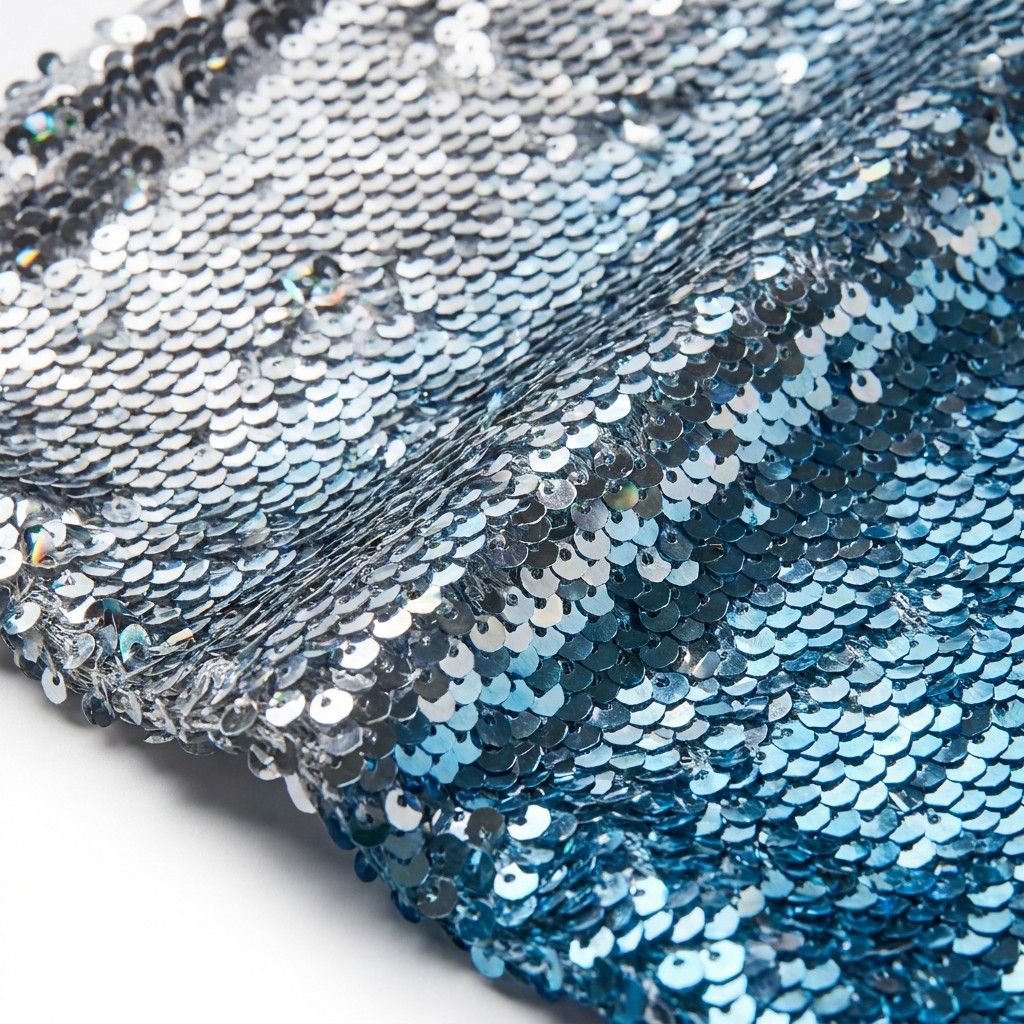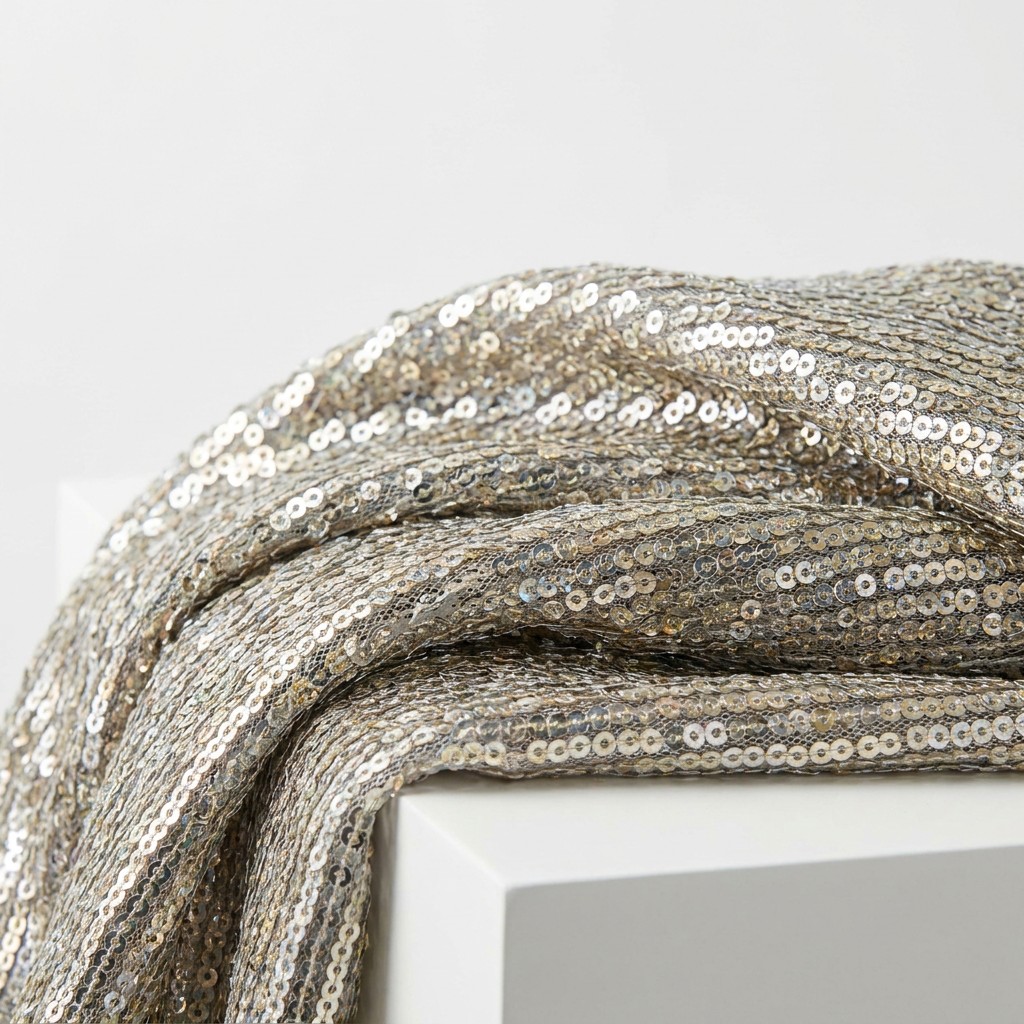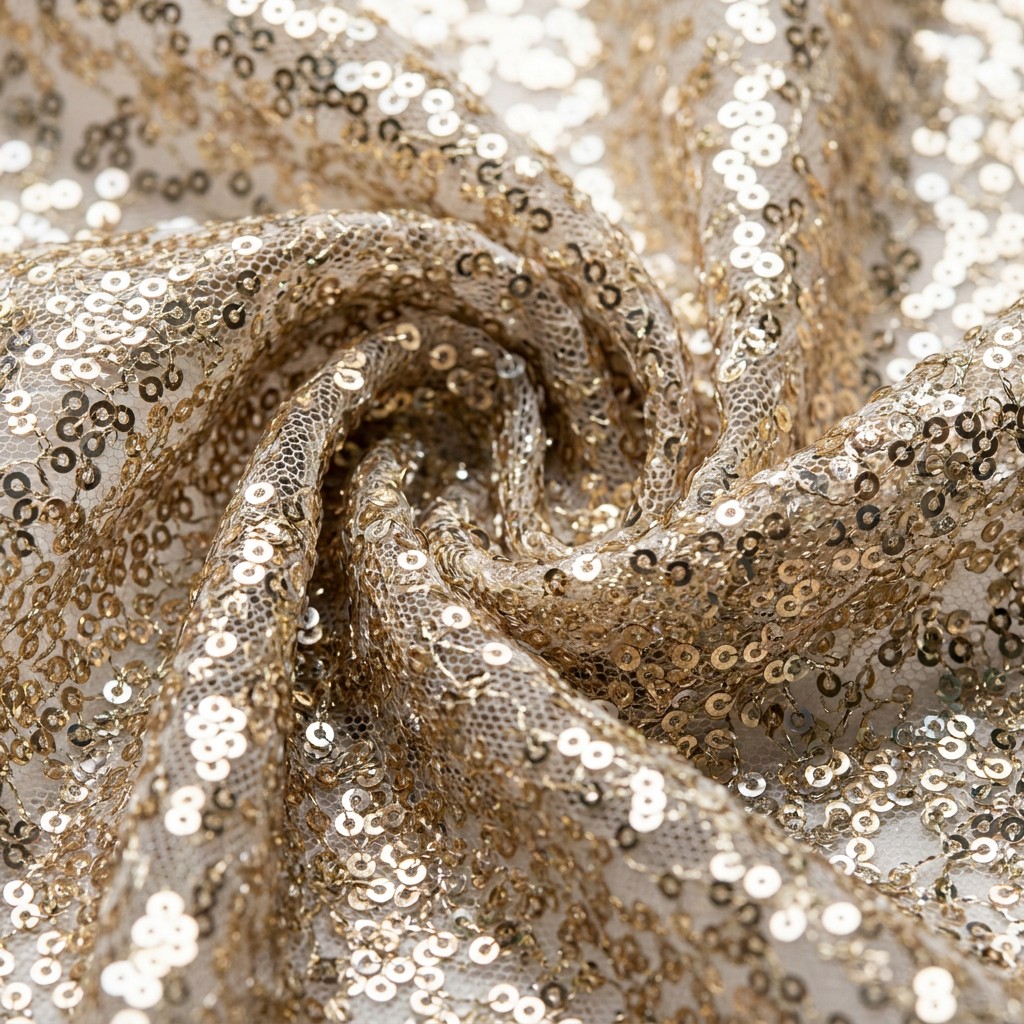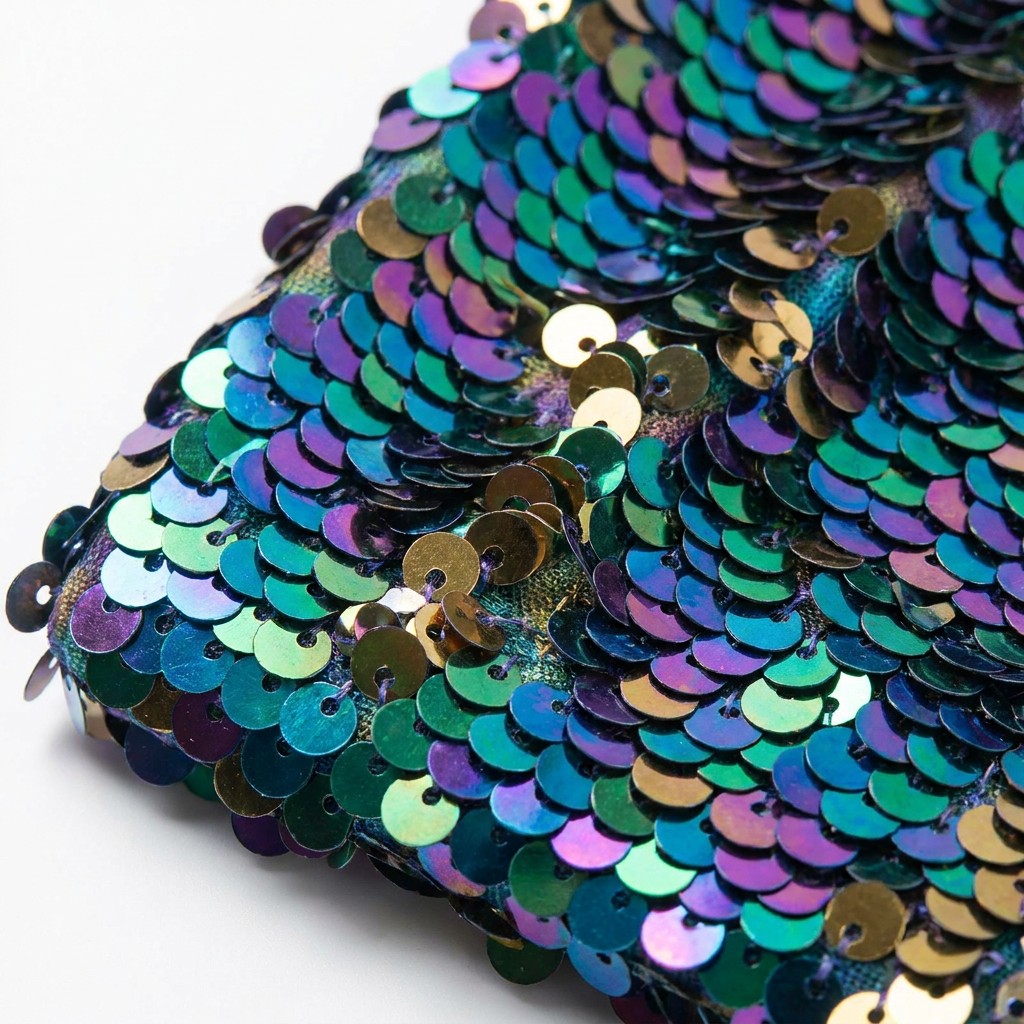
Before you commit to a bulk sequin fabric order, check quality in five areas: specifications (GSM, width, sequin size and base fabric), appearance consistency (colour, lustre and sequin arrangement), colourfastness and durability (shade retention, loose sequins and snagging), production performance (cutting, sewing and handling), and sample-to-written-standard alignment. Every check is verifiable with the supplier before production begins. This guide explains what to inspect, which questions to ask, and how to turn one approved swatch into a repeatable bulk standard.
Why Quality Checks Matter Before Bulk Sequin Orders
Sequin fabric is decorative first, structural second. Small differences in sequin size, spacing, backing or thread change drape, seam matching and cutting yield. When those differences appear after the bulk order is cut, the cost belongs to the buyer — not to the sampling stage. Checking quality before ordering means agreeing on a clear, measurable standard so both sides can confirm the same product.
Five Quality Checks Before Bulk Ordering
1. Specifications: Sequin Size, Arrangement and Base Fabric
Start with the physical specification sheet, not the photo. Confirm the sequin size (diameter and shape), sequin material (PET, PVC, metal or bio-based options), how sequins are attached (glued, sewn, or embroidered), and the arrangement — full coverage, scattered, or spaced rows.
The base fabric matters as much as the sequin itself. Ask for the base composition (polyester, nylon, mesh, tulle or organza), GSM, usable width, roll length, and any backing or coating. Two fabrics that look identical in a photo can have very different hand feel, drape, stretch and cutting behaviour.
2. Appearance Consistency Across Rolls and Batches
Sequins reflect light, so shade and lustre differences are easy to see — and easy to miss. Ask the supplier how they control colour consistency between dye lots, batches and rolls. Compare samples under the same light source you will use for production, and check the sequin direction and spacing across the width and along the roll.
For a large order, request roll numbers, batch numbers and a bulk approval sample before full production, and confirm how the supplier handles shade tolerance and roll separation.
3. Colourfastness and Durability
Confirm the fastness tests relevant to your end use — washing, rubbing, light and perspiration — and ask which test methods the supplier follows. Sequin fabrics also need a surface durability check: loose sequins, snagging, peeling edges and changes after bending or folding are common defect points.
Do a simple hand test: rub the surface, bend and fold the corner, and shake the fabric to check for detached sequins. Ask the supplier how they inspect for loose or missing sequins at the end of the line. For a deeper view of test categories and quality documentation, see our performance fabric testing and quality documentation guide.
4. Production Performance: Cutting, Sewing and Handling
Quality is also how the fabric behaves in your factory. Confirm cutting behaviour, edge stability, how the fabric feeds under a needle, and whether sequins break or shed during sewing. Ask whether the supplier can provide guidance for cutting, packing or storage.
Hand feel and drape matter too. A sequin mesh for a dress panel needs more flexibility than a flat sequin organza for a table runner. Describe the final product so the recommended construction matches the real application.
5. Samples and Written Standards
A swatch in your hand is the beginning of the standard, not the whole standard. Ask the supplier to confirm, in writing: composition, GSM, width, roll length, sequin details, colour reference, acceptable shade tolerance, packing method and any inspection points. Keep the approved sample, the specification and the purchase order together under one style reference.
Ask how bulk production will be checked — where the inspection points are, whether a pre-production sample is provided, and how non-conforming rolls are handled. A written standard before production makes later disagreements easier to resolve.
A Scannable Pre-Order Quality Checklist
- Sequins: size, shape, material, colour, attachment method confirmed
- Arrangement: full cover, spaced or embroidered pattern and direction agreed
- Base fabric: composition, GSM, width, roll length, backing and coating recorded
- Hand feel and drape: sample matches the intended end use
- Durability: loose sequins, snagging and peeling checked by hand and by supplier QC
- Colourfastness: relevant tests and test methods confirmed with the supplier
- Batch consistency: shade tolerance, roll and batch marking agreed
- Written standard: approved sample + specification + purchase order kept together
- Inspection plan: pre-production sample and inspection points confirmed
For a full list of quality control points, review our pre-shipment inspection checklist for embroidered and sequin fabric.
Sample Approval: How to Lock the Standard
Sample approval is a two-step process. First approve a development swatch that confirms the look and hand feel. Then, before bulk production, approve a pre-production or bulk approval sample that reflects the actual production construction. Both steps should use the same lighting, the same measurement method and the same reference documents.
When multiple colours are involved, create a simple approval table: colour, base fabric, sequin size, finish, GSM, width, sample date and approval status. This gives your purchasing and quality teams a record they can re-check at any time, including for repeat orders.
Why Digital Development Cannot Replace Physical Confirmation
Digital sampling and digital swatch libraries are excellent for narrowing options, comparing colours and presenting collections quickly. They cannot confirm hand feel, drape, reflectivity, transparency, sequin attachment or how the fabric behaves on the machine. Screen colour and physical colour are rarely identical.
Use digital development to shortlist, then approve a physical sample before any bulk commitment. Keep the approved physical swatch linked to the digital reference so the factory and the buyer share the same standard. For a practical workflow, see our guide to GRS recycled sequin fabric and digital sampling for B2B collections.
What to Confirm Before Bulk Production
- Confirm the final specification sheet in writing — every field, not just the headline numbers.
- Approve the pre-production sample before bulk cutting starts.
- Agree on shade tolerance, roll marking and batch separation.
- Confirm the inspection plan: which points are checked, and how non-conforming rolls are handled.
- Agree on packing, labelling and any special transport requirements.
- Ask for the production timeline and sample availability before the launch schedule is fixed.
If sustainability requirements are part of your brief, clarify recycled content, bio-based options and available documentation with the supplier. See our SS27 bio-based sequin fabric sourcing guide for sustainable event and fashion collection considerations.
Sequin Fabric Quality FAQ
What is the most common sequin fabric quality problem?
Loose or missing sequins is one of the most frequently reported issues, together with shade differences between rolls. Both can be reduced by agreeing on inspection points and a written standard before bulk production.
How can I check if sequins will fall off?
Shake the fabric gently, bend and fold the corner, and rub the surface with a finger or fingernail. Then ask the supplier how their end-of-line inspection checks for loose sequins and what their acceptable level is.
Is GSM the most important specification for sequin fabric?
No. GSM is one part of the specification. Sequin size, base construction, width and finishing also affect cost, drape and production behaviour, so confirm the full specification sheet rather than a single number.
Can I judge sequin fabric colour from a photo or digital swatch?
Digital references help with direction but cannot replace a physical swatch. Sequins are reflective, and colour, lustre and depth change with lighting, so always approve a physical sample under consistent lighting.
Should I request a pre-production sample before a large order?
Yes. A pre-production or bulk approval sample confirms the actual production construction, colour and finish before bulk cutting starts, and reduces the risk of approving a sample that differs from the bulk goods.
What should be in the written quality agreement?
Composition, GSM, width, roll length, sequin details, colour reference, shade tolerance, packing, inspection points and the process for non-conforming rolls. Keep it with the approved sample and the purchase order.
How do I check consistency between different rolls?
Ask for roll numbers and batch details, compare samples from the first, middle and final production sections under the same lighting, and agree on shade tolerance with the supplier in advance.
Request Sequin Fabric Samples
Yunfan Textile supports global B2B buyers with sequin, embroidered and decorative fabric development. To discuss your project, use our website consultation page and include your application, base fabric, sequin size, colour, estimated quantity, finishing and testing requirements, so the team can recommend a practical development and sampling route.
Use digital references to start, but confirm the final standard with physical samples. A clear specification, an approved sample and an agreed inspection plan are the three anchors of a confident bulk sequin fabric order.
Source Sequin Fabrics Directly for B2B Collections
Explore factory-direct sequin, embroidered and decorative textile options for fashion, event and custom collections.
Yunfan Textile B2B Contact
Website: https://www.yunfantextile.com/
B2B Contact: Wendy Jessie
WhatsApp/WeChat: +86 156 3752 5803
WhatsApp/WeChat: +86 175 1619 6727
Email: morris@yunfantextile.com
Email: morris@yunfantextile.com
Checking sequin fabric quality before bulk ordering protects your budget, your timeline and your product. Work through specifications, appearance consistency, colourfastness and durability, production performance, and sample-to-standard alignment — and keep every confirmation in writing.
SEO keywords: sequin fabric quality, sequin fabric inspection, sequin fabric supplier, bulk sequin fabric ordering, sequin fabric sample approval.