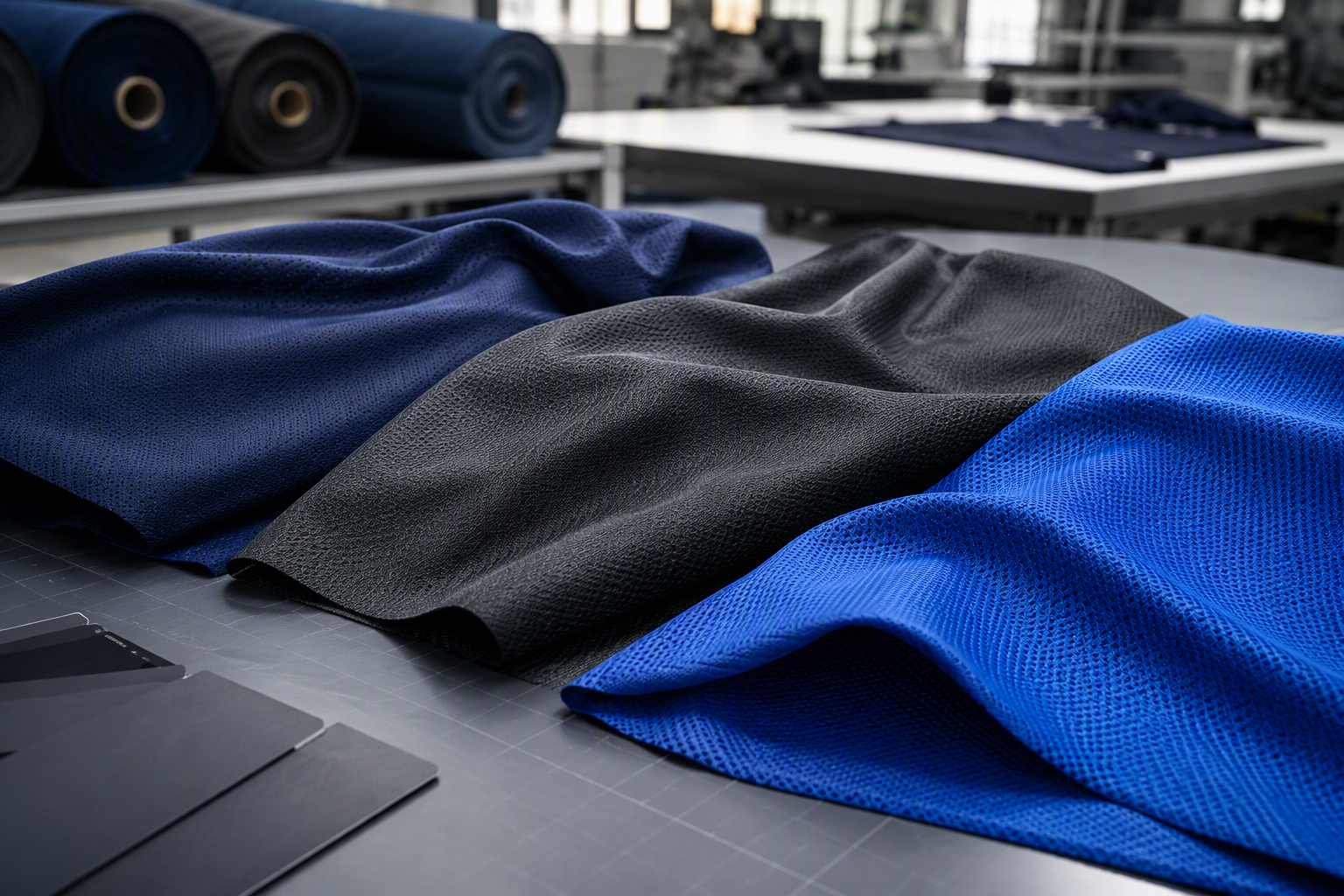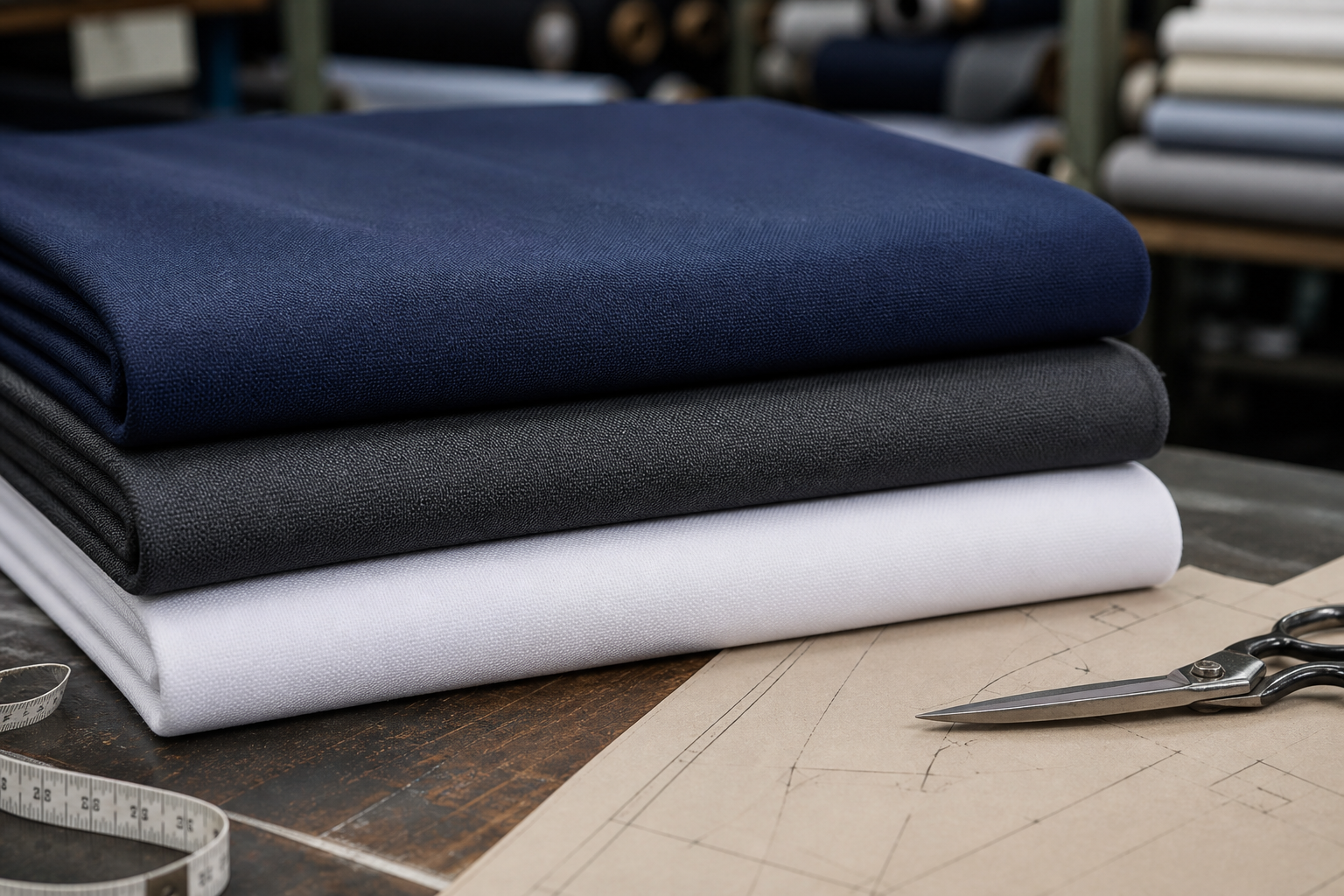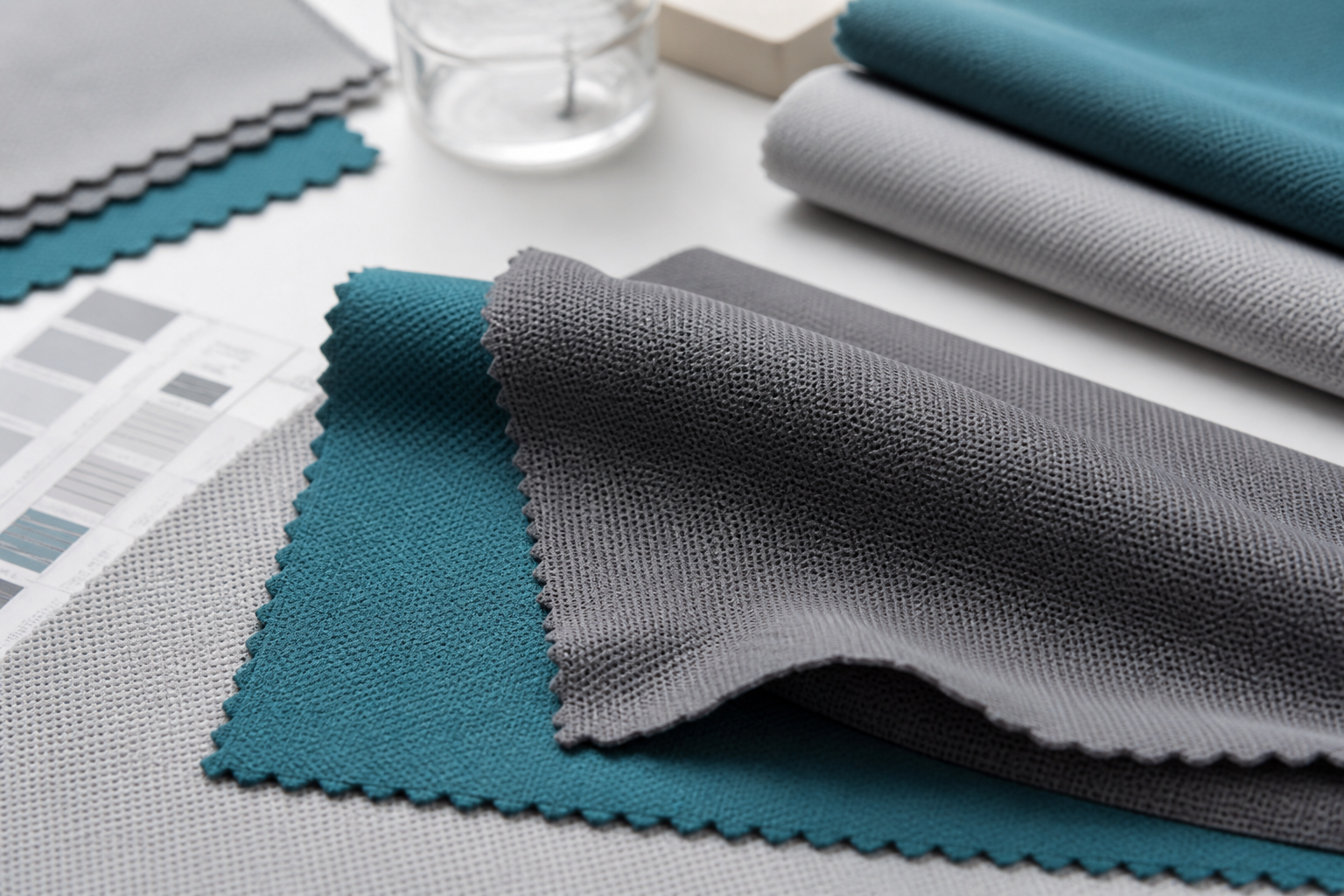
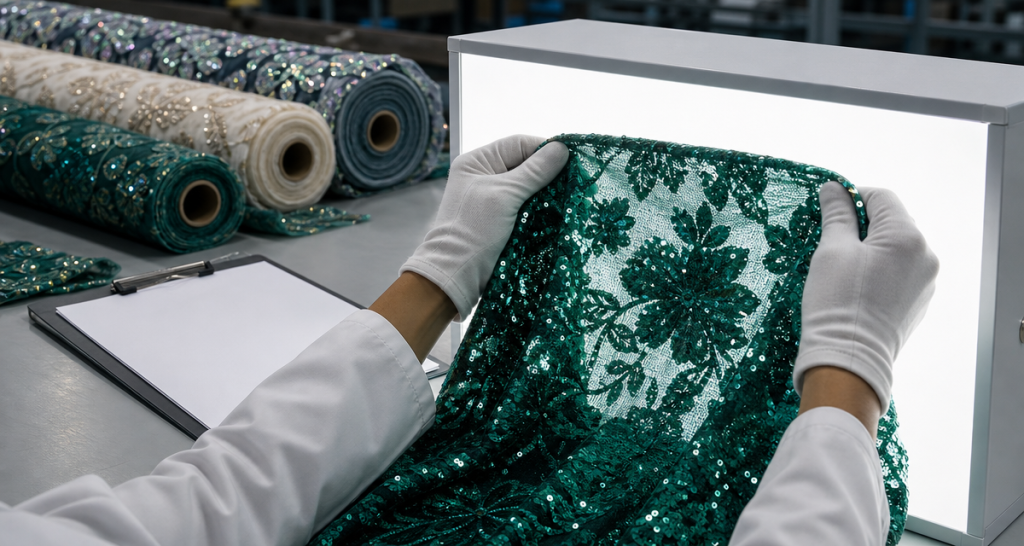
For wholesale buyers, approving a fabric sample is only the first step. Before an embroidered or sequin fabric order leaves the factory, the buyer needs a practical inspection process that compares the finished rolls with the approved standard. A clear pre-shipment checklist helps reduce avoidable disputes, protects the production schedule, and gives brands, distributors, and interior suppliers more confidence when ordering custom textile products from overseas.
1. Confirm the Fabric Specification
Start with the specification sheet and compare it with the approved sample. Check the fibre composition, GSM, usable width, base construction, stretch, transparency, hand feel, and finish. If the product includes embroidery, beads, sequins, appliqué, or metallic thread, record the relevant surface details as part of the same reference. The inspection team should know which values are critical and which small variations may be accepted for the project.
GSM and usable width are especially important for costing and production planning. A width difference can change cutting yield, while a weight difference may affect garment structure, drape, lining requirements, shipping calculations, or the performance of a finished home textile product. These checks should be measured consistently rather than judged only by touch.
2. Check Colour and Batch Consistency
Compare the bulk fabric with the approved colour reference under consistent lighting. Inspect the first, middle, and final sections of the roll for shade variation, printing differences, dye-lot changes, and uneven finishing. For sequin and embroidered fabrics, also check whether thread, mesh, backing, and decorative elements are visually coordinated.
When a project includes multiple rolls or colourways, keep the approval swatch and colour reference together with the inspection record. Photographing the roll label and reference sample can help connect the physical inspection to the purchase order, especially when several styles are being produced at the same time.
3. Inspect Stitching, Sequins, and Surface Details
- Embroidery: Check motif alignment, stitch density, thread tension, missing stitches, loose threads, puckering, skipped areas, and edge definition.
- Sequins and beads: Check attachment, spacing, direction, missing pieces, sharp edges, loose elements, and the consistency of the reflective surface.
- Base fabric: Look for holes, stains, snags, slubs, weak areas, uneven mesh, and damage caused during finishing or handling.
- Pattern repeat: Compare motif scale, repeat distance, placement, and the relationship between decorative zones and usable width.
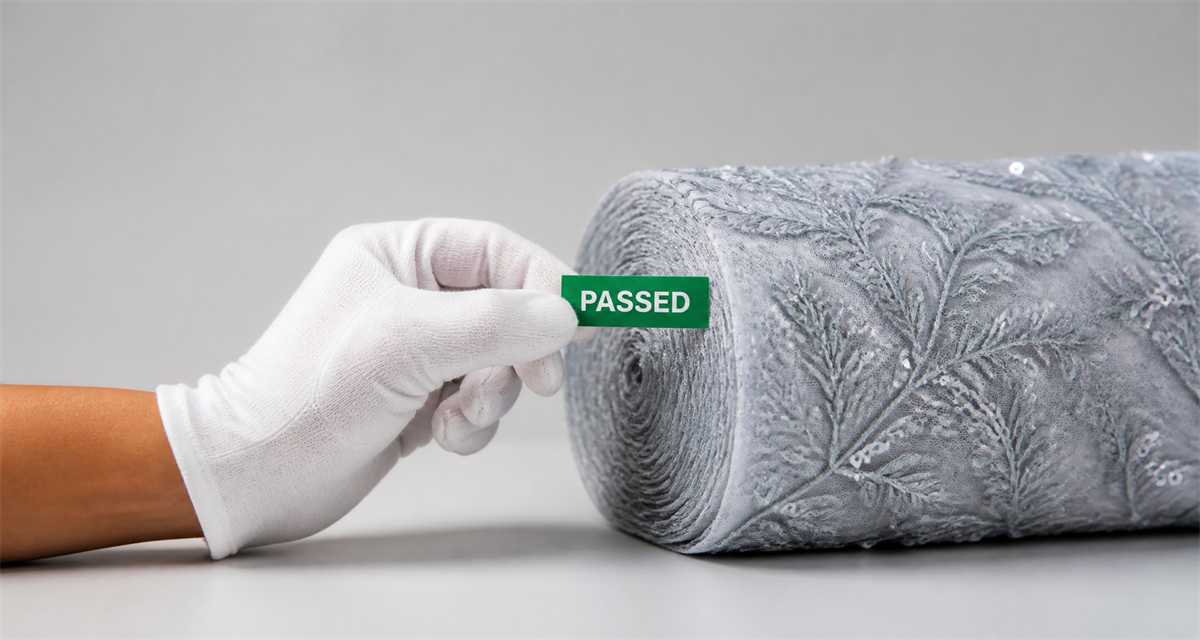
- Roll condition: Check winding, folding, labels, length marking, protective packaging, and whether the fabric is ready for transport and storage.
4. Review Packaging and Shipping Information
Packaging should protect the decorative surface from compression, moisture, abrasion, and contamination. Confirm roll identification, quantity, carton or pallet marks, packing method, and the documents required by the buyer. If the fabric has sequins, beads, raised embroidery, or a delicate finish, discuss whether extra protective layers or a specific winding direction are needed.
Before loading, reconcile the inspected quantity with the purchase order and packing list. The buyer should receive clear information about roll numbers, lengths, total quantity, gross weight, and any approved partial shipment. This reduces confusion when the goods arrive at a warehouse or are distributed across several production sites.
5. Create a Shared Approval Record
A strong inspection record should include the purchase order, approved sample, specification sheet, colour reference, inspection checklist, photographs, defect notes, corrective actions, and final release decision. If a deviation is accepted, record it in writing instead of relying on a message that may be difficult to find later. This shared record gives the buyer, factory, merchandiser, and quality team the same production reference.
Yunfan Textile supports global B2B buyers with embroidered, sequin, mesh, velvet, printed, home textile, and decorative fabric development. Our team can discuss specifications, sample approval, custom colours, production checkpoints, inspection requirements, and repeat-order quality control for apparel, bridal, stage, hospitality, and interior projects.
Source Directly from Our Alibaba Store
Browse factory-direct embroidered and sequin fabric options and request samples for your next order.
Request B2B Fabric Samples and Inspection Support
To discuss embroidered or sequin fabric sourcing, use our website consultation page. Include the target application, fabric type, preferred specifications, estimated quantity, and delivery market so our team can recommend a suitable development and inspection route.
Yunfan Textile B2B Contact
Website: https://www.yunfantextile.com/
B2B Contact: Wendy Jessie
WhatsApp/WeChat: +86 156 3752 5803
WhatsApp/WeChat: +86 175 1619 6727
Email: morris@yunfantextile.com
Email: morris@yunfantextile.com
Pre-shipment inspection is most effective when it begins with a clear specification and ends with a documented release decision. By checking fabric parameters, decorative details, colour consistency, packaging, and roll information, B2B buyers can improve communication and protect the quality of the finished textile program.
SEO keywords: pre-shipment inspection fabric, embroidered fabric quality control, sequin fabric inspection checklist, B2B textile supplier quality, wholesale fabric inspection.