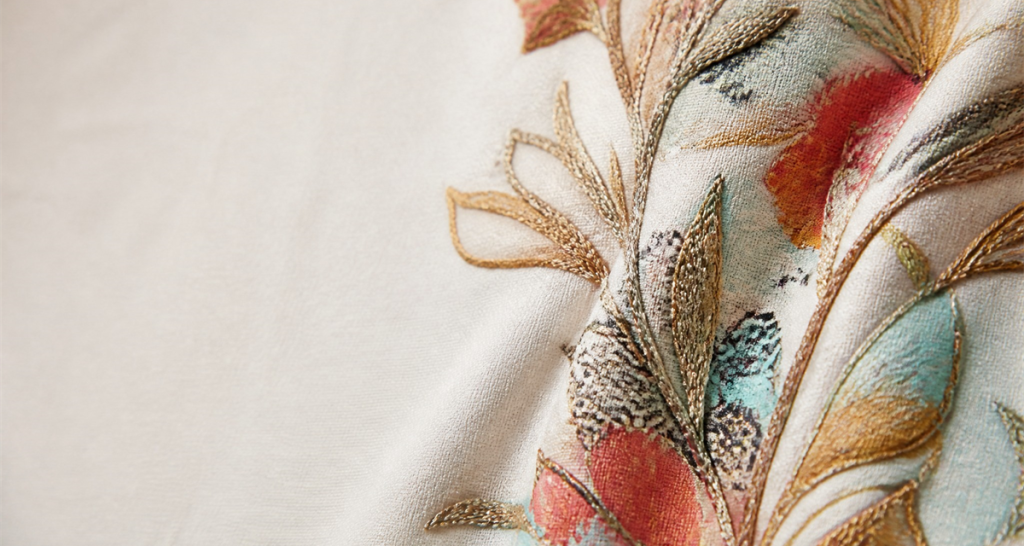
Digital print and 3D embroidery are increasingly being combined to create textile surfaces with both graphic precision and physical depth. For fashion brands, bridal labels, costume suppliers, hospitality studios, and premium home textile distributors, this fusion can turn a conventional fabric into a stronger collection statement. The commercial challenge is to control the relationship between the printed artwork, the embroidery structure, the base fabric, and the production method before moving to a bulk order.
Why Print and 3D Embroidery Work Together
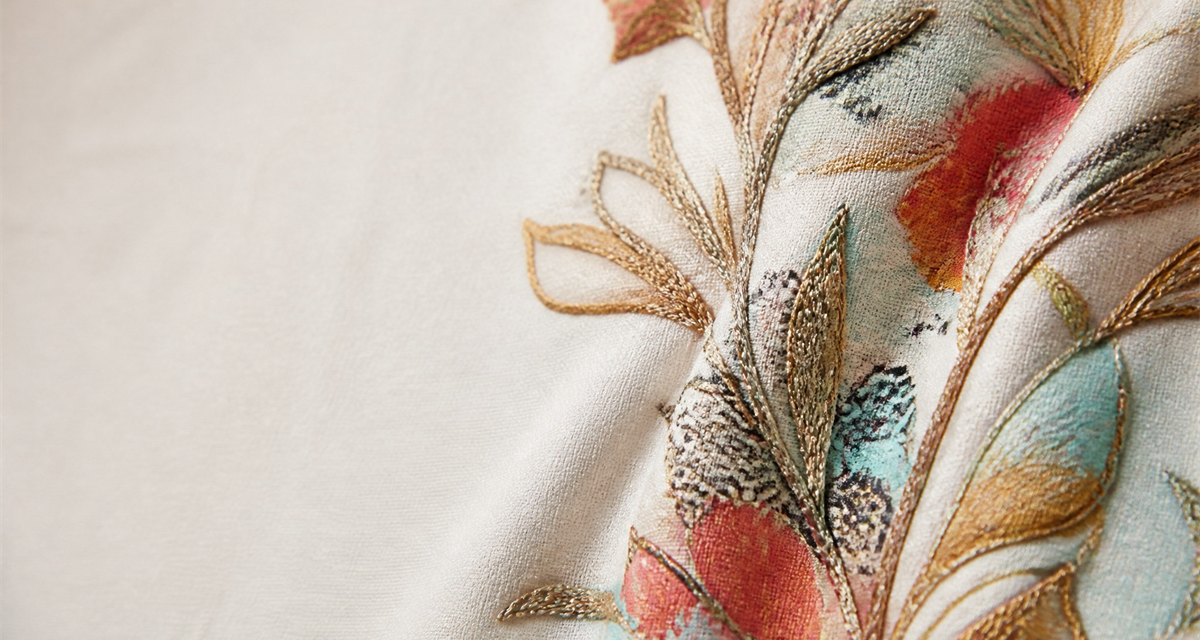
Digital printing can create gradients, detailed colour placement, photographic references, and repeat patterns that are difficult to achieve with thread alone. Three-dimensional embroidery can then add raised petals, borders, beads, sequins, satin stitches, or textured highlights. Used together, the two processes can build a layered surface for eveningwear, bridal fabric, decorative panels, cushions, curtains, stage costumes, and retail displays.
For B2B buyers, the key is to define the visual hierarchy. The print may act as a background, while the embroidery highlights selected motifs. Alternatively, the embroidery may be the main structure with printed colour used to extend the pattern. A clear artwork brief helps the factory determine stitch density, thread direction, colour sequence, and the order of printing and embroidery.
Specifications to Confirm Before Sampling
- Artwork and repeat: Confirm the file format, repeat size, colour references, registration, and the areas that require raised embroidery.
- Base fabric: Record composition, GSM, usable width, stretch, transparency, drape, and stability. The base must support both the printed image and the embroidery tension.
- Embroidery structure: Specify thread type, stitch density, height, appliqué, bead or sequin additions, and the required edge definition.
- Colour approval: Review a printed strike-off and an embroidered sample under consistent lighting. Printed colour and thread colour may not appear identical.
- Hand feel and flexibility: Check whether the combined surface remains suitable for cutting, sewing, folding, packing, and the intended end use.
- Repeat-order control: Keep an approved physical sample and written reference for print position, thread colours, motif scale, GSM, width, and acceptable variation.
How to Build a Reliable Development Workflow
Begin with a production brief that includes the end use, target market, estimated quantity, colour direction, dimensions, delivery market, and timing. Add a low-resolution artwork preview with notes showing the printed zones, raised zones, and any areas that must remain flexible. If the project includes multiple colourways, identify which elements remain fixed and which elements can change.
Request a physical sample rather than approving the concept from a digital image alone. Review the print sharpness, colour balance, motif alignment, embroidery relief, reverse-side appearance, loose threads, puckering, and the transition between flat and raised areas. For apparel, test the sample through representative seams and curves. For home textile or display applications, review drape, edge treatment, repeat alignment, and packing requirements.
Quality control should compare the bulk fabric with the approved standard at several points in the roll. Inspect the first production section, middle section, and final section for colour shift, print registration, embroidery density, missing stitches, stains, holes, and width variation. A documented inspection checklist makes it easier for the buyer and factory to resolve issues before shipment.
Yunfan Textile supports global B2B buyers with custom embroidery, sequin, printed, mesh, velvet, home textile, and decorative fabric development. Our team can discuss artwork preparation, base fabric selection, sample approval, custom colour direction, technical specifications, and repeat-order quality control for apparel, bridal, stage, hospitality, and interior projects.
Source Directly from Our Alibaba Store
Browse factory-direct embroidered and decorative textile options and request samples for your next collection.
Request Custom Print and Embroidery Samples
To discuss digital print and 3D embroidery fusion fabric, use our website consultation page. Include the artwork direction, target application, preferred base fabric, estimated quantity, and delivery market so our team can recommend a practical development route.
Yunfan Textile B2B Contact
Website: https://www.yunfantextile.com/
B2B Contact: Wendy Jessie
WhatsApp/WeChat: +86 156 3752 5803
WhatsApp/WeChat: +86 175 1619 6727
Email: morris@yunfantextile.com
Email: morris@yunfantextile.com
Print and 3D embroidery fusion works best when the creative file and manufacturing specification are developed together. With a clear artwork brief, physical sample approval, stable base fabric, and measurable inspection points, buyers can turn a distinctive surface concept into a repeatable B2B textile program.
SEO keywords: digital print embroidery fabric, 3D embroidered fabric supplier, custom printed embroidery textile, fusion fabric manufacturer, B2B textile development.