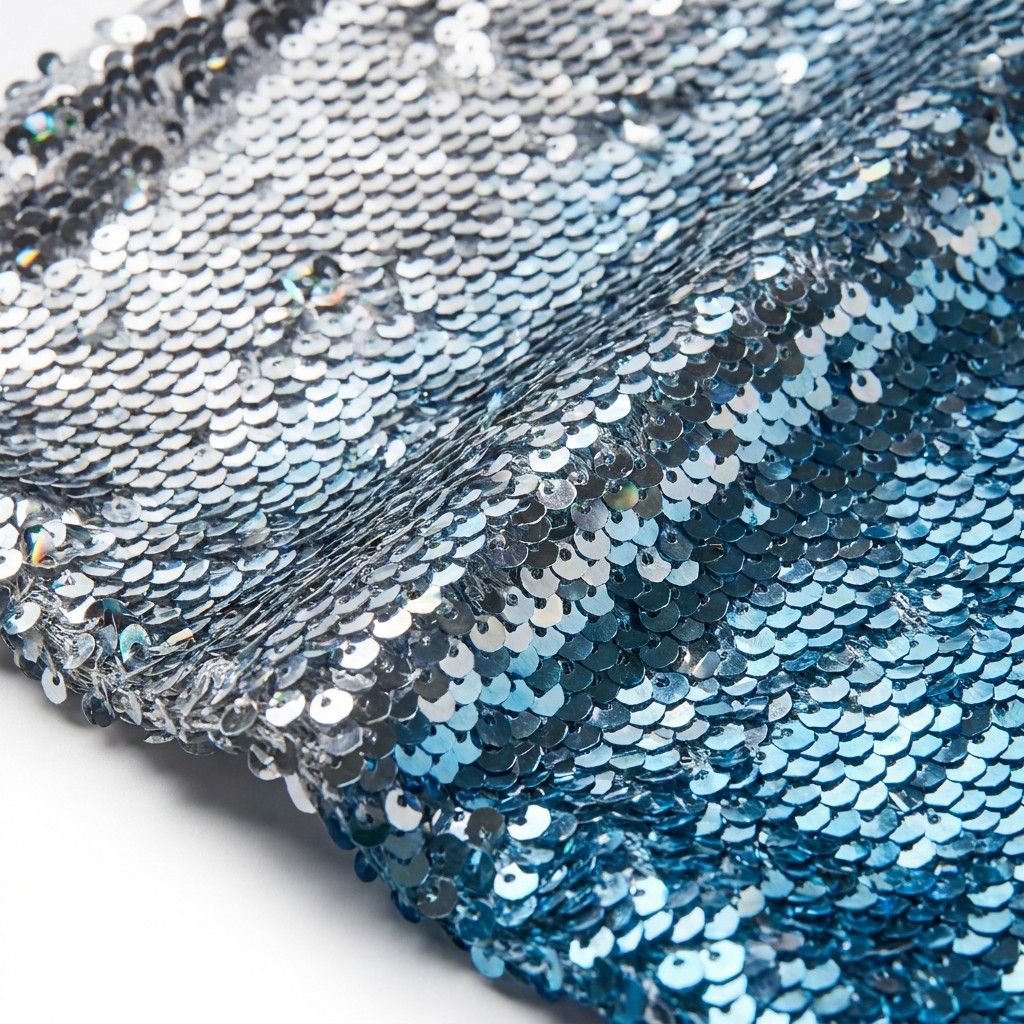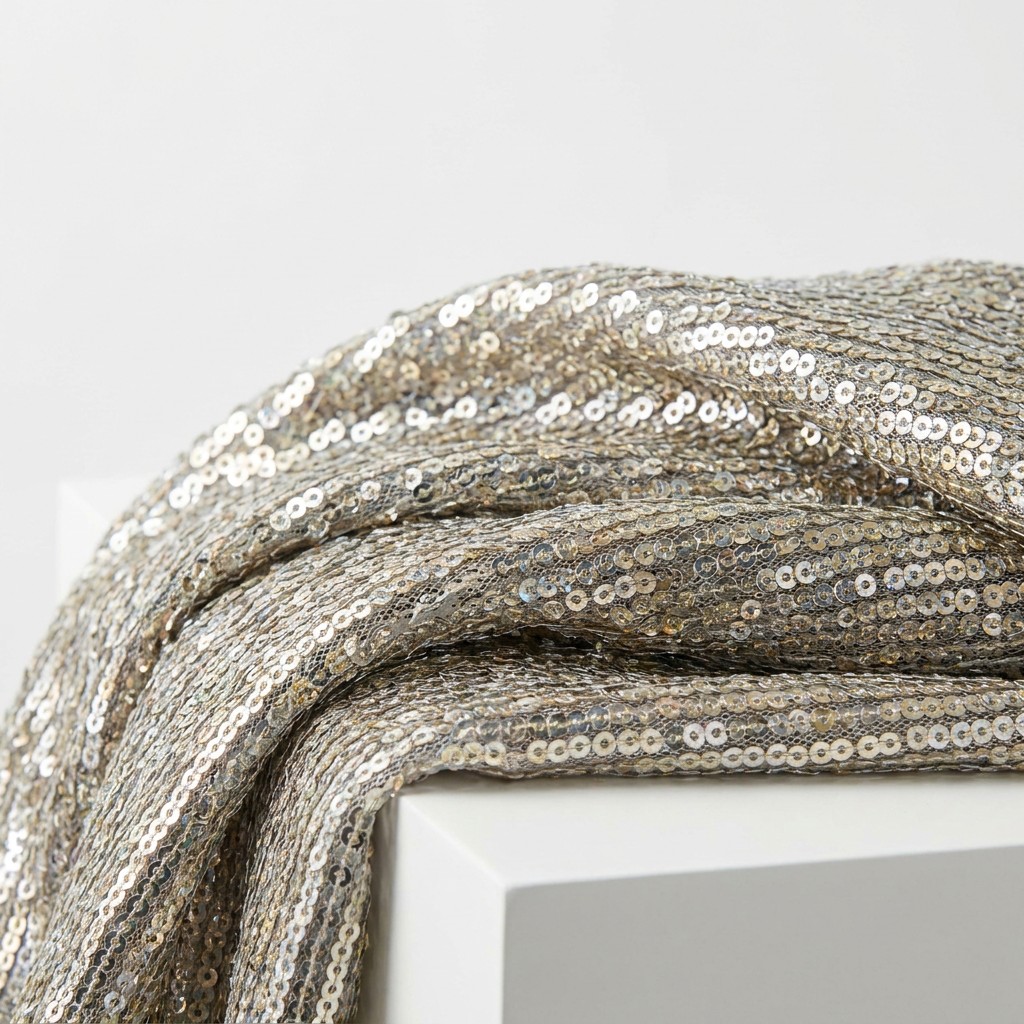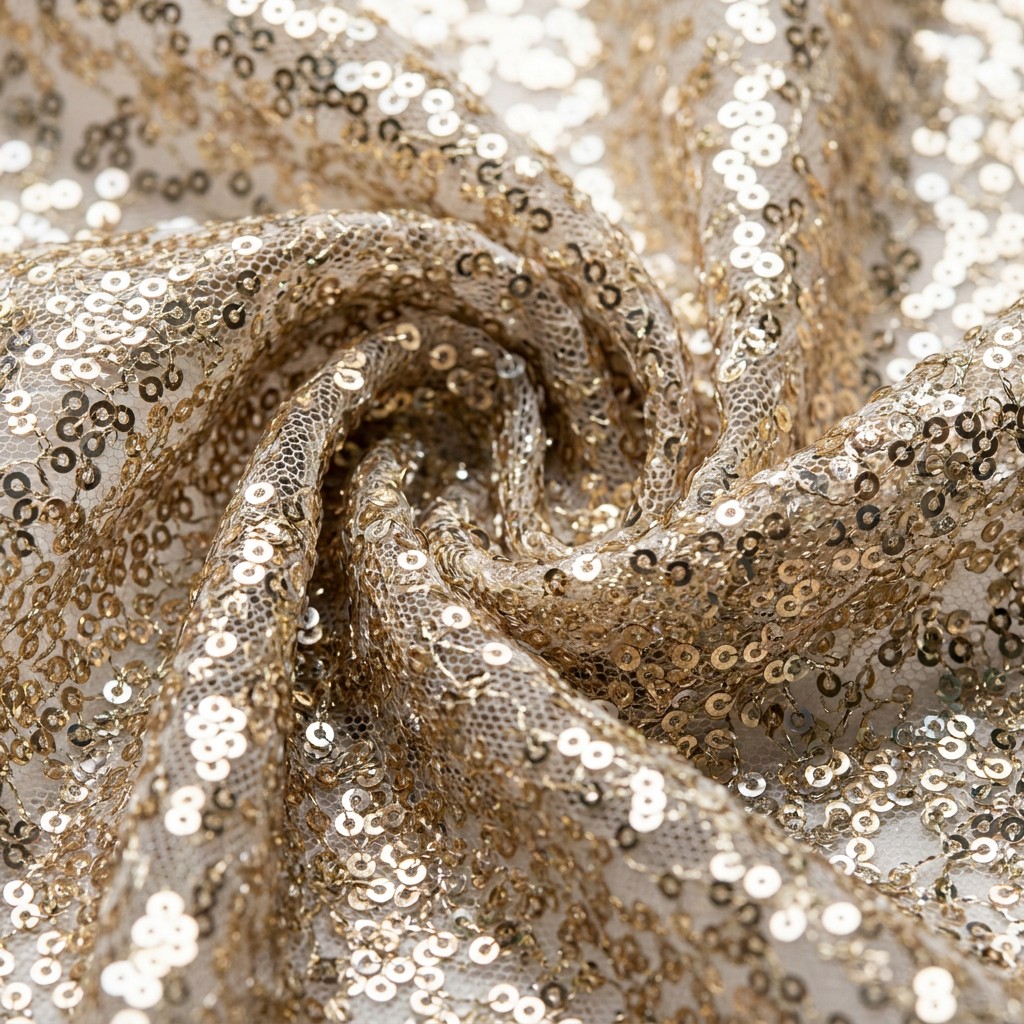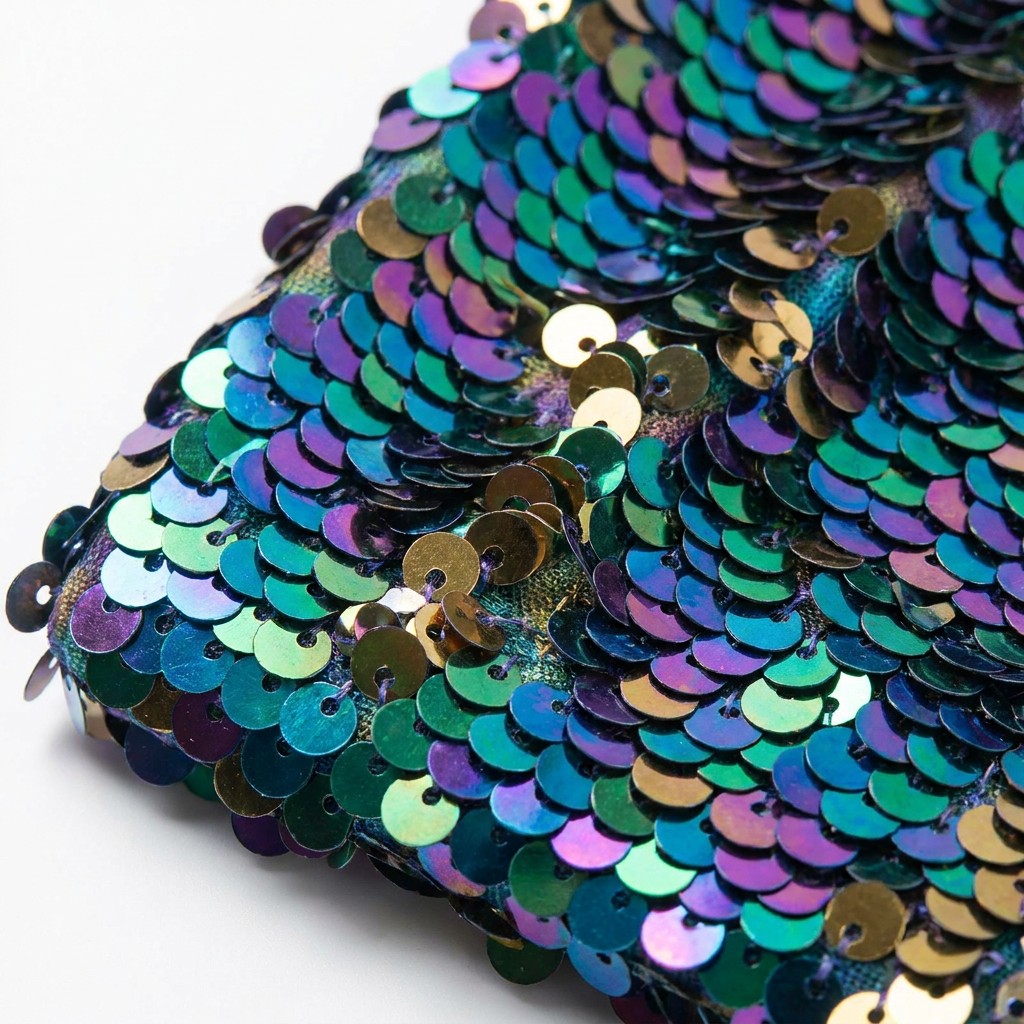
Sequin size alone does not determine sequin fabric quality. Buyers should choose 3mm, 5mm or 18mm sequins by combining visual effect, coverage, weight, softness and drape, sewing behaviour and the final end use. A 5mm flat sequin can be perfect for one garment and wrong for another, so judge the whole construction — sequin size, base fabric, arrangement and finishing — against your application before comparing suppliers. This guide explains how each size behaves and what to confirm before bulk orders.
What the Numbers Mean: 3mm, 5mm and 18mm Sequin Fabric
The millimetre figure is the diameter of a single flat sequin disc. It is a design and construction parameter, not a quality score. The same manufacturer can produce good fabric in all three sizes; the "best" size is the one that fits your product. Below are the general tendencies for each size — treat them as starting points, and confirm the actual construction with samples and a written specification.
3mm Sequin Fabric: Fine Shimmer and Detail
- Visual effect: a fine, dense sparkle that reads as texture and light rather than individual discs; ideal for detailed motifs and embroidered patterns.
- Density and coverage: more sequins per square centimetre, so coverage is high even with small gaps; fine scatter looks even.
- Weight and hand feel: at high density the fabric is heavier per metre and can feel stiffer, because more sequins and more thread are packed into the same area.
- Flexibility: full-coverage 3mm constructions flex less; they suit structured panels, bodices and cutwork better than flowing, draped pieces.
- Typical uses: stage costume details, trims, bridal embellishment, accessories and embroidered motifs.
5mm Sequin Fabric: The Balanced Workhorse
- Visual effect: individual discs are visible up close but the overall look stays elegant; it photographs and reads well under stage lighting.
- Density and coverage: a middle ground — suppliers can offer full coverage or spaced arrangements without extreme stiffness.
- Weight and hand feel: moderate; drape is easier to control and the fabric handles closer to standard decorative textiles.
- Flexibility: bends and sews well for panels, sleeves, bodices and full garment sections.
- Typical uses: wholesale fashion collections, evening wear, dress panels, stagewear and event décor.
18mm Sequin Fabric: Bold, Dramatic Statements
- Visual effect: large discs dominate the look with bold, high-impact light reflection; the sequin shape is unmistakable from a distance.
- Density and coverage: fewer sequins per area, so the base fabric shows through more; coverage depends heavily on arrangement and base colour.
- Weight and hand feel: lighter per square metre when scattered, but noticeably heavier and stiffer where discs are packed densely.
- Flexibility: large discs catch needles and edges can snag; cutting, sewing and seam placement need extra planning.
- Typical uses: statement gowns, stage curtains, backdrops, large decorative panels and event props — generally not the first choice for tight-fitting small garments.
These differences are directional, not guaranteed. Confirm density, weight and hand feel with the supplier before you commit.
How Base Fabric and Sequin Arrangement Change the Result
The sequin size is only half of the story. The same 5mm sequin can produce completely different fabrics depending on the base and the layout:
- Tulle and mesh bases: light, transparent, layered looks; sequin size and arrangement decide how much the base shows through.
- Knit bases: stretch and recovery for bodycon and performance-led pieces.
- Woven bases: structure and stability for tailored or decorative use.
- Arrangement: full coverage, spaced rows, random scatter and embroidered motifs each change coverage, weight, stiffness and price per metre.
- Attachment: sewn or embroidered attachments generally hold more securely than glued ones, but verify this for your specific construction.
Ask the supplier how the same size behaves on different bases before fixing your spec. Our guide to choosing sequin fabric for wholesale collections walks through this step by step.
Visual Effect, Coverage and Weight at a Glance
| Characteristic | 3mm | 5mm | 18mm |
|---|---|---|---|
| Visual effect | Fine, dense shimmer | Balanced, camera-friendly shine | Bold, dramatic, large discs |
| Coverage per area | High | Medium to high | Lower; base shows more |
| Weight and stiffness | Heavier when dense | Moderate | Lighter when scattered; heavy when dense |
| Flexibility and sewing | Stiffer at full cover | Most versatile | Large discs catch needles; plan seams |
| Typical end uses | Details, trims, motifs | Fashion, stage, events | Statement gowns, backdrops, décor |
Values are directional comparisons for typical constructions. Confirm the real GSM, density and hand feel on a sample.
A Numbered Decision Flow for Buyers
- Define the end use first: garment, costume, accessory, curtain or décor — each favours a different construction.
- Choose the visual effect: fine texture, balanced shine or bold statement.
- Balance coverage, weight and drape for your pattern and silhouette.
- Match the base fabric: light mesh for movement, knit for stretch, woven for structure.
- Check sewing and durability: needle behaviour, snagging and loose sequins for your production line.
- Shortlist constructions and request physical samples of each size on your preferred base.
- Approve one sealed sample and a written specification before any bulk commitment.
Specifications and Documents to Confirm with Suppliers
Before you compare prices, ask each supplier to confirm in writing:
- Sequin size (diameter and tolerance), shape, material and finish
- Attachment method: sewn, embroidered or glued
- Arrangement and density: sequins per square centimetre or coverage percentage
- Base fabric composition, GSM, usable width and roll length
- Colour reference and shade tolerance between rolls and batches
- Packing, labelling and any finishing or coating
Also ask which quality documents they can provide, such as a written specification sheet, loose-sequin and colour fastness test reports (if available), and inspection records. Our quality checks before bulk ordering explain which points matter most and how to verify them.
Why Digital Images Cannot Replace Physical Samples
Photographs and digital swatches are useful for shortlisting, but they cannot show hand feel, drape, reflectivity, transparency, sequin attachment or behaviour on the sewing machine. Screen colour and physical colour are rarely identical, especially with reflective surfaces. Use digital development to narrow your options, then always approve a physical sample before bulk. Our GRS recycled sequin and digital sampling guide covers how to run this workflow for B2B collections.
Approve a Physical Sample and a Written Standard Before Bulk
- Request a strike-off or sample yardage of the exact construction.
- Approve colour, sequin size, arrangement, hand feel and drape against your reference.
- Keep the approved sample, the written specification and the purchase order together under one style reference.
- Agree on inspection points and how non-conforming rolls will be handled.
- For large orders, plan a pre-shipment inspection of embroidered and sequin fabric before dispatch.
Frequently Asked Questions
Does a bigger sequin size mean better quality?
No. Sequin size is a design choice, not a quality ranking. Quality depends on attachment security, base fabric, density consistency, finishing and the written specification.
Is 5mm sequin fabric the best size for most garments?
5mm is versatile, but "best" depends on the end use. A fine-detail costume may need 3mm, while a statement gown or backdrop may call for 18mm. Judge against your application, not a general rule.
Is 3mm sequin fabric heavier than 18mm?
At similar coverage density, 3mm needs far more sequins per square centimetre, which tends to add weight and stiffness. The final weight also depends on arrangement and base fabric — confirm the GSM with the supplier.
Can 18mm sequin fabric be used for stage costumes?
Yes, for statement pieces where the bold scale is wanted. For tight or movement-heavy costumes, check sewing behaviour, snagging and comfort on a sample first.
Which sequin size looks best on camera?
5mm usually gives a balanced, readable shine, but lighting and distance matter. Evaluate samples under the same light you will use for the show or shoot.
Can I judge sequin fabric from photos?
No. Digital images cannot show hand feel, drape, reflectivity or attachment. Always request a physical sample before bulk.
What should I send to a supplier when requesting samples?
Your application, base fabric preference, sequin size, colour, estimated quantity, finishing and testing requirements. The more detail you share, the more relevant the samples.
Source Sequin Fabrics Directly for B2B Collections
Explore factory-direct sequin, embroidered and decorative textile options for fashion, event and custom collections.
Request Sequin Fabric Samples
Ready to evaluate 3mm, 5mm or 18mm sequin fabric for a wholesale collection? Yunfan Textile supports global B2B buyers with sequin, embroidered and decorative fabric development. Submit your application, base fabric, sequin size, colour, estimated quantity, finishing and testing requirements through the official consultation page, and the team will confirm the next steps with you.
Submit your requirements here: Yunfan Textile Consultation Page
Yunfan Textile B2B Contact
Website: https://www.yunfantextile.com/
B2B Contact: Wendy Jessie
WhatsApp/WeChat: +86 156 3752 5803
WhatsApp/WeChat: +86 175 1619 6727
Email: morris@yunfantextile.com
Email: morris@yunfantextile.com
Summary: Choosing between 3mm, 5mm and 18mm sequin fabric is an end-use decision, not a quality ranking. Compare visual effect, coverage, weight, drape, sewing behaviour and base construction on real samples, confirm specifications in writing, and approve a physical standard before bulk ordering.
SEO keywords: sequin fabric size, 3mm sequin fabric, 5mm sequin fabric, 18mm sequin fabric, sequin fabric wholesale, sequin fabric supplier