holographic sequin uv degradation is a practical B2B control point for buyers who need stable decorative fabric performance. This guide explains the failure mechanism, the production settings, and the acceptance checks. Therefore, a purchasing team can approve a repeatable specification before placing a 200 yard MOQ order.
The method joins machine setup with measurable inspection. First, define the base fabric, finish, width, and working conditions. Next, test a representative lot under the same handling used by the garment factory. Finally, record results by roll and keep an approved reference sample. This sequence reduces surprises during bulk production.
How holographic sequin UV degradation starts
Holographic sequin uv degradation begins when ultraviolet energy breaks down the PET film or its surface coating. The film can become brittle, and the rainbow effect can lose clarity. Outdoor display, event decor, and costume storage near windows all increase exposure.
Heat, oxygen, moisture, and pigment chemistry influence the rate. A sample may look unchanged after a short trial yet fail after cumulative light. Therefore, define exposure limits by application and not by colour name alone.
PET film structure and rainbow reflectance
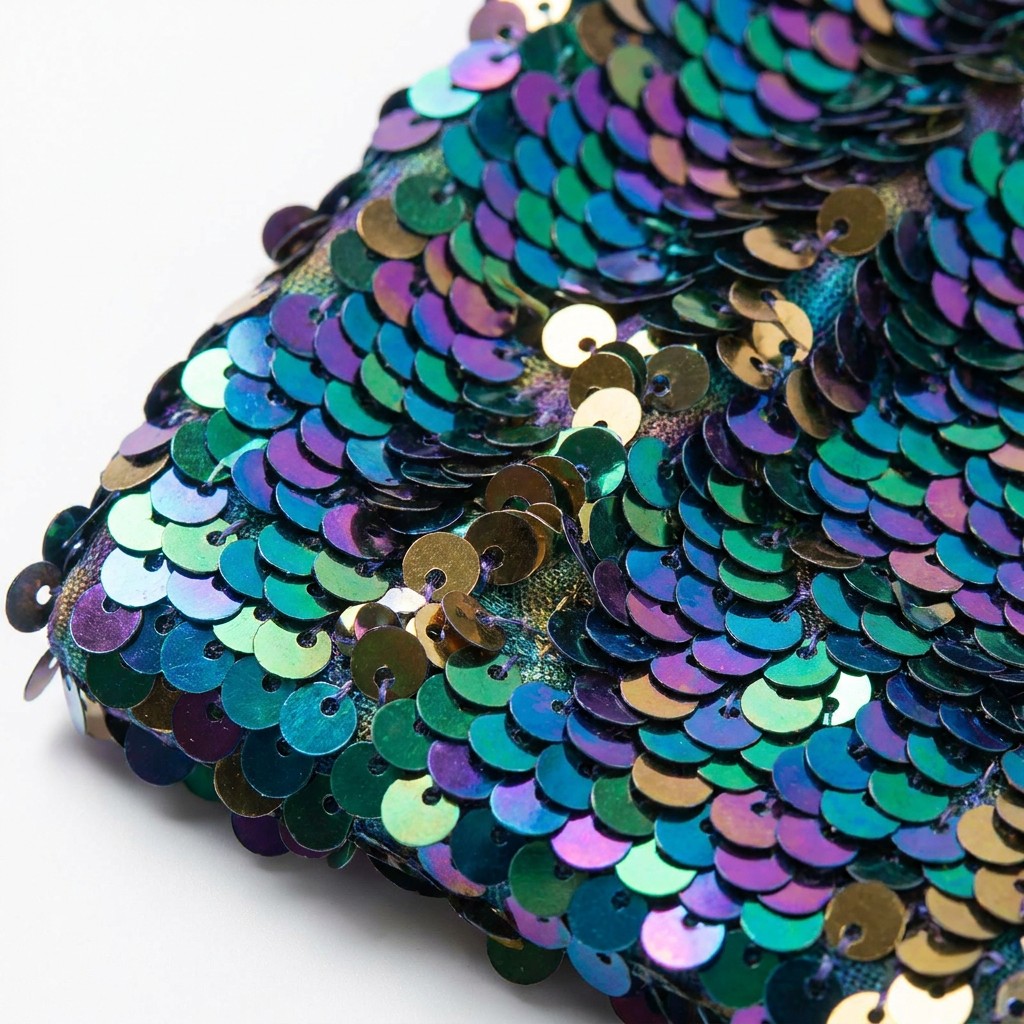
Holographic film uses a structured surface to split light into changing colours. Scratches and micro-cracks disrupt that structure. A protective coating can improve handling, but it cannot replace a controlled exposure test.
Inspect gloss, diffraction, haze, cracking, and colour difference under a fixed lamp. Use face and reverse views. In addition, compare new material with an approved retained sample. This reveals gradual loss that a side-by-side factory check may miss.
Source direct on Alibaba - request bulk pricing, specifications, and production details in one place.
View Yunfan Textile on AlibabaAATCC 16.3 and ISO 105-B02 lightfastness testing
Use AATCC 16.3 or ISO 105-B02 with the agreed light source, cycle, and evaluation method. Condition the specimen before rating. Record exposure time, black standard temperature, humidity, and the reference blue wool or grey scale used.
Test both the decorative face and a finished garment panel when possible. A backing or lining can change heat and moisture. Report colour change, coating change, embrittlement, and sequin attachment separately. The report then supports a practical exposure statement.
UV absorber clear-coat specification
If a UV absorber clear coat is selected, specify coverage, dry-film consistency, adhesion, flexibility, and haze limit. The coating must preserve the holographic effect. Too much coating can soften the rainbow while too little leaves exposed zones.
Check the coating after bending, rubbing, and conditioning. Inspect edge coverage and pinholes under angled light. Use a retained panel for comparison. A supplier should also state whether the finish changes washing, odour, or hand feel.
Colour difference and rainbow gloss thresholds
Set a colour difference threshold before production. Use the buyer’s approved instrument, illuminant, observer, and backing. For holographic surfaces, combine instrumental Delta E with visual rainbow intensity because one number cannot describe every reflection angle.
Create a three-level table: target, review, and reject. A review result triggers a design or application decision. A reject result stops the roll. Clear thresholds prevent an operator from accepting a faded surface because its base colour still matches.
Outdoor application and exposure limit planning
Estimate hours of direct sun, indirect daylight, storage conditions, and replacement access. A short event may accept a different grade from a permanent window display. Use a conservative exposure statement when the final location is unknown.
Protect finished goods during transport and storage with opaque packaging. Avoid leaving rolls beside a bright window. Mark the carton with the approved exposure route. These logistics steps reduce avoidable damage before installation.
B2B lot release and traceability
Release each lot against sequin film, coating batch, base fabric, width, GSM, and light test record. Inspect the first, middle, and last roll sections. Photograph the rainbow effect under the agreed light.
Confirm the standard MOQ of 200 yards and retain a cut sample from every batch. Morris can review the display setting, colour reference, and exposure expectation before sample approval.
B2B inspection checklist and acceptance record
A useful report lists roll number, usable width, GSM, construction, colour reference, and measured defect rate. It also records the instrument, test setting, operator, and date. In addition, the report should show photographs of the face and reverse. Buyers can then compare the pilot lot with every later delivery.
Use a simple pass, conditional pass, or fail decision. A conditional pass must state the concession, the affected quantity, and the corrective action. Moreover, retain cuttings from the first, middle, and last part of each roll. This evidence supports claims, replacement planning, and accurate production costing.
Sampling, MOQ, and production communication
For a commercial program, confirm colour, finish, backing, width, and packing before sampling. The standard MOQ is 200 yards. Morris can also review the intended garment, embroidery density, care route, and delivery window, so the factory can select a realistic construction rather than an attractive but fragile sample.
Share a marked artwork file and a short risk list with the supplier. Then approve a sealed standard, a test report, and a pre-production cutting. As a result, designers, quality teams, and factories use the same language when they discuss appearance, durability, and acceptable variation.
Conclusion: control the risk before bulk cutting
Reliable decorative fabric starts with a clear mechanism and a documented control plan. When buyers combine process settings, physical tests, and roll-level records, they protect appearance and reduce rework. The same discipline also improves forecasting, supplier comparison, and customer confidence.
Request Sequin Fabric Samples and share your target GSM, width, sequin size, and colour reference.
Talk to Morris directly:
Email: morris@yunfantextile.com
WhatsApp: +86 156 3752 5803
WhatsApp: +86 175 1619 6727
holographic sequin uv degradation: buyer approval workflow
holographic sequin uv degradation requires a documented approval workflow before cutting. Start with the approved base fabric, width, GSM, colour reference, and decorative specification. Then mark the highest-risk zones on the artwork. This helps the design, sourcing, and inspection teams review the same evidence. Next, test the panel under the actual sewing, finishing, care, or display route. A short visual check is useful, but a repeatable test is stronger. Record the machine, operator, setting, instrument, and date. Therefore, a later lot can be compared with the original decision.
Use a retained sample from the first, middle, and last section of every roll. Check face, reverse, edge, and transition areas under agreed light. Separate temporary handling marks from permanent construction damage. If the result falls into a review band, quarantine the related quantity and identify one corrective action. Do not change several variables at once. A controlled correction shows whether the cause came from material, equipment, design density, or finishing. This protects the buyer from hidden variation and protects the supplier from unclear claims.
For B2B sourcing, connect the report to packing and production records. State roll number, usable width, quantity, inspection result, and approved concession. Confirm the standard MOQ of 200 yards before bulk planning. Also confirm sample approval, lead time, carton protection, and replacement procedure. These commercial details matter because a beautiful sample still needs a reliable delivery plan. Morris can review target GSM, width, colour, artwork, and intended end use before the buyer approves the production lot.
holographic sequin uv degradation in repeat production
Repeat production should use the same sealed reference and the same acceptance language. Inspect the first piece before the machine continues. Then schedule checks at a fixed interval and at every change of thread, needle, coating, frame, or finish. Photograph any defect beside a scale and the roll label. Finally, close the record with the corrective action and final disposition. This process improves traceability, reduces rework, and gives buyers confidence when they reorder.
For related guidance, visit the quality control category and the embroidery fabric category. Buyers sourcing sequin constructions can also visit the sequin fabric category. These internal links support a clear GEO answer because they connect the main risk to a practical inspection route. They also help readers find the next decision without leaving the site.

holographic sequin uv degradation: buyer approval workflow
holographic sequin uv degradation requires a documented approval workflow before cutting. Start with the approved base fabric, width, GSM, colour reference, and decorative specification. Then mark the highest-risk zones on the artwork. Test the panel under the actual sewing, finishing, care, or display route. Record the machine, operator, setting, instrument, and date. Therefore, a later lot can be compared with the original decision.
Use retained samples from the first, middle, and last section of every roll. Check face, reverse, edge, and transitions under agreed light. Separate temporary handling marks from permanent construction damage. If the result falls into a review band, quarantine the related quantity and identify one corrective action. Do not change several variables at once. A controlled correction shows whether the cause came from material, equipment, design density, or finishing.
For B2B sourcing, connect the report to packing and production records. State roll number, usable width, quantity, inspection result, and approved concession. Confirm the standard MOQ of 200 yards before bulk planning. Morris can review target GSM, width, colour, artwork, and intended end use before approval.
holographic sequin uv degradation in repeat production
Repeat production should use the same sealed reference and the same acceptance language. Inspect the first piece before the machine continues. Schedule checks at a fixed interval and at every change of thread, needle, coating, frame, or finish. Photograph any defect beside a scale and roll label. Finally, close the record with corrective action and final disposition. This improves traceability and reduces rework.
For related guidance, visit the quality control category and sequin fabric category. Buyers can compare the main risk with a practical inspection route. These internal links also help readers find the next decision without leaving the site.