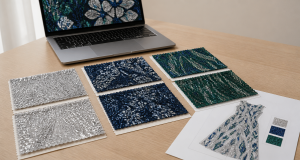
Fabrics for dancewear, performance wear and stage costumes should be chosen from the requirements, not the sparkle. Fix movement and stretch first — how far the body moves and how much recovery the fabric must return — then breathability, weight, opacity and coverage, the embellishment and how lighting will hit it, how the garment will be sewn, and how it will be washed and reused. Once those are written down, mesh, sequin, embroidered and beaded constructions can be compared fairly. This B2B guide covers all three scenarios and ends with a comparison table, a selection process, a sourcing checklist and FAQs.
Start With the End Use: Three Scenarios
Dancewear. Leotards, unitards and dance skirts sit close to the body through full range of motion. Stretch and recovery dominate: the fabric must follow a split or a battement and return without bagging. Dancers sweat and wash garments often, so breathability, opacity at full stretch and fastness to washing are functional requirements.
Performance wear. Competition, cheer and show-team garments are worn for high-intensity routines under lights. Weight must stay low so nothing pulls or slides, edges must not curl, and trims must not catch on other dancers. A scratchy sequin edge becomes unbearable by the third routine, so comfort is part of the specification.
Stage costumes. Costumes are read from a distance under theatrical light, so coverage, silhouette and light response come before hand feel. Full-coverage sequins, dense embroidery and beaded fringe are chosen for how they catch spotlights and camera flash, yet a costume is a working garment: it must survive quick changes, touring and repeated shows, and a sequin or bead dropped on stage is a public defect.
Decoration Drives the Fabric: Mesh, Sequin, Embroidery, Beadwork
Compare decoration families, not single swatches. Stretch mesh is the workhorse for fitted layers; tulle builds volume; sequin fabric adds surface shimmer; embroidery places controlled motifs; beadwork delivers heavy, dimensional ornament. The same base carries each differently.
| Fabric type | Typical behaviour | Typical use | Confirm with the supplier |
|---|---|---|---|
| Power mesh / stretch mesh (knit) | Two- or four-way stretch, recovery, light and breathable | Leotards, bodysuits, performance tops, linings | Stretch and recovery, opacity at full stretch, edge curl |
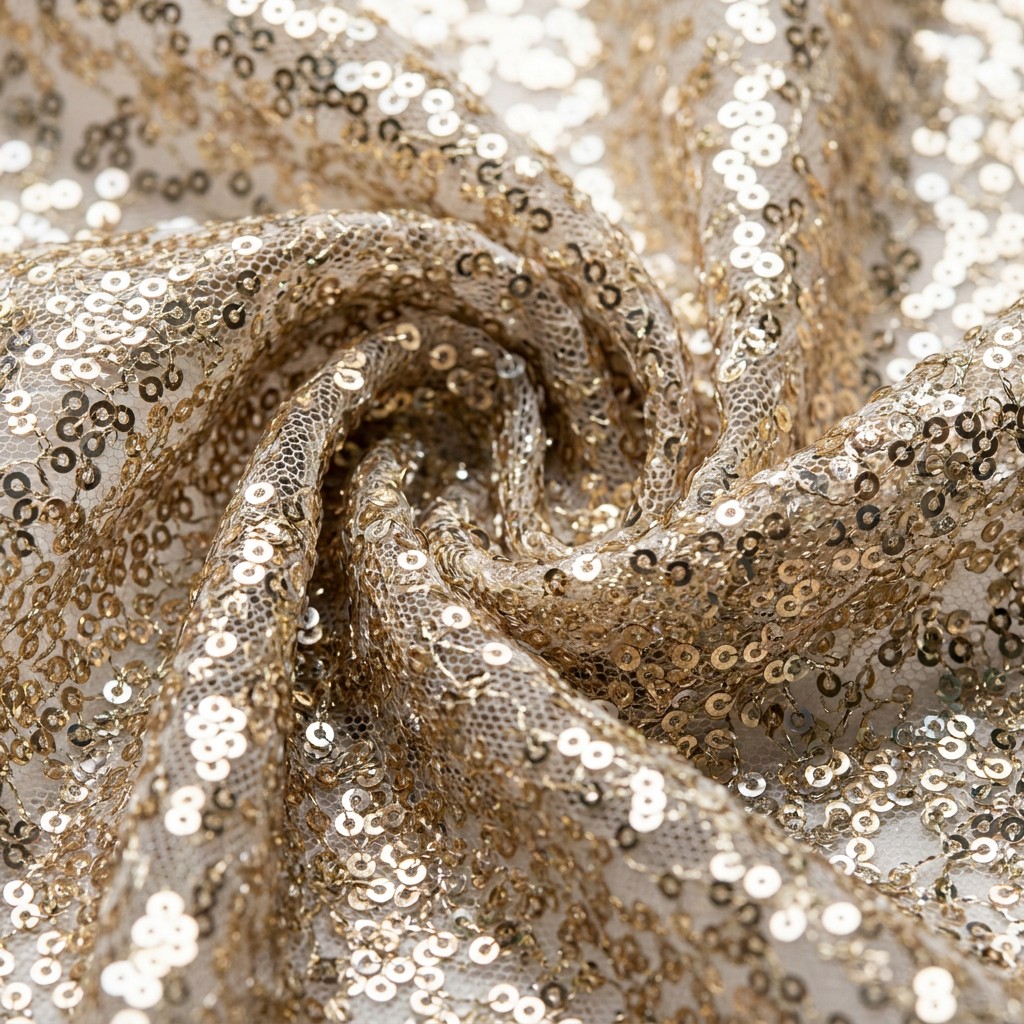
| Tulle and fine net | Open, transparent, airy, holds volume in layers | Skirts, overlays, stage layers, light sequin scatter | Snag resistance, how decoration stiffens the open ground |
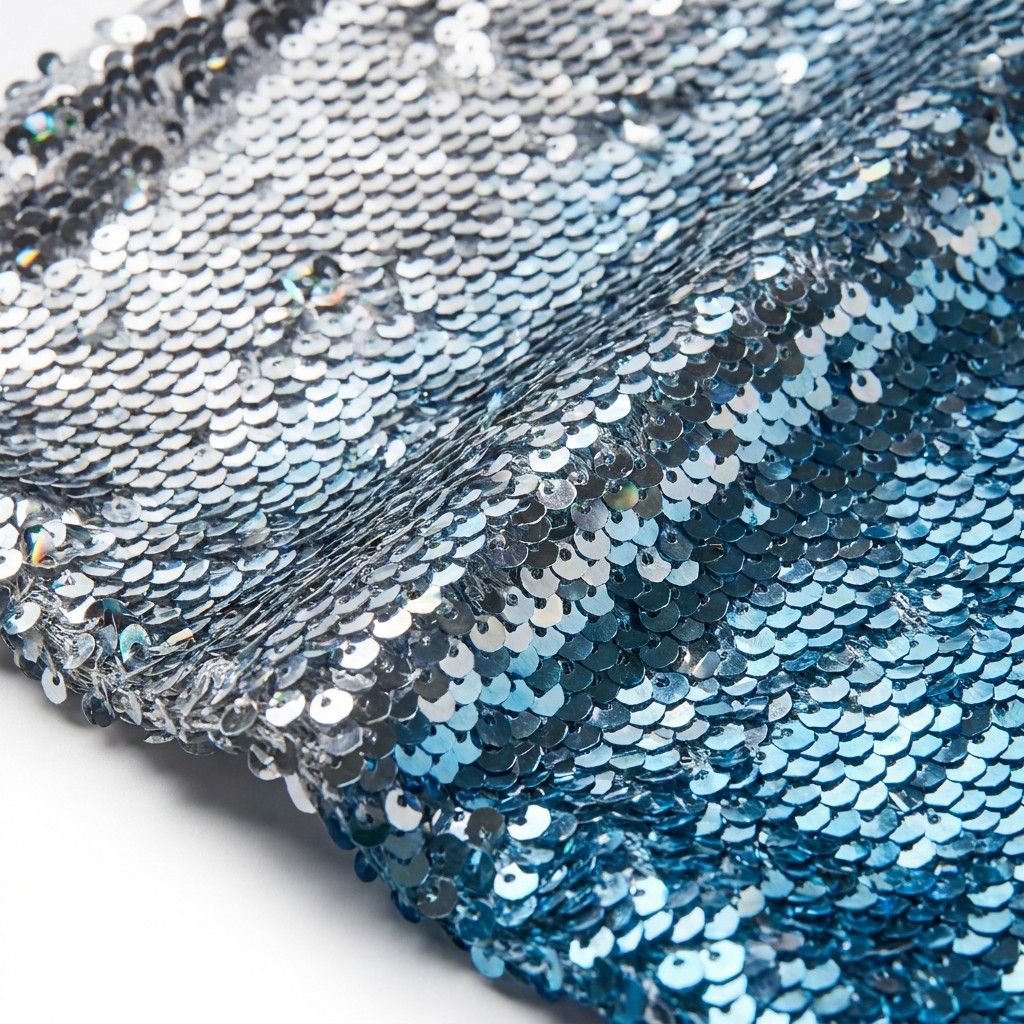
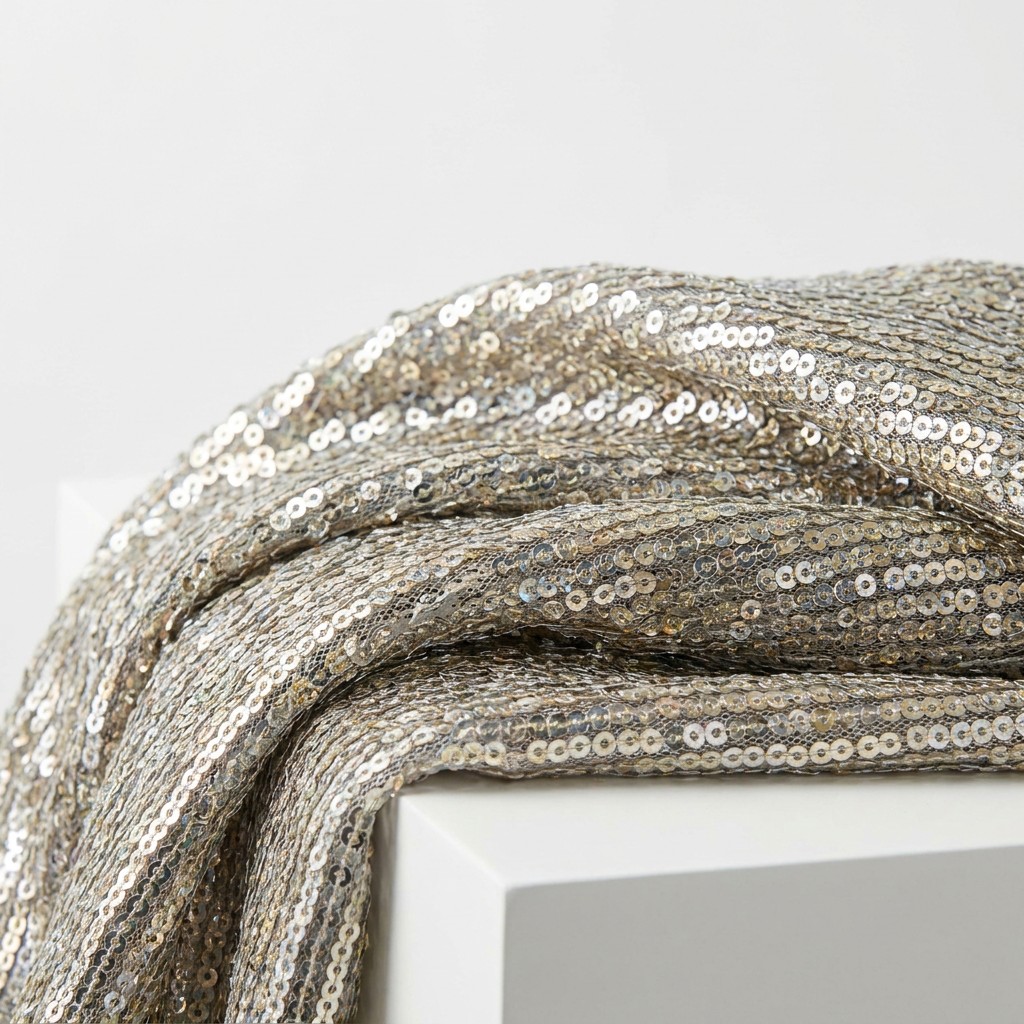
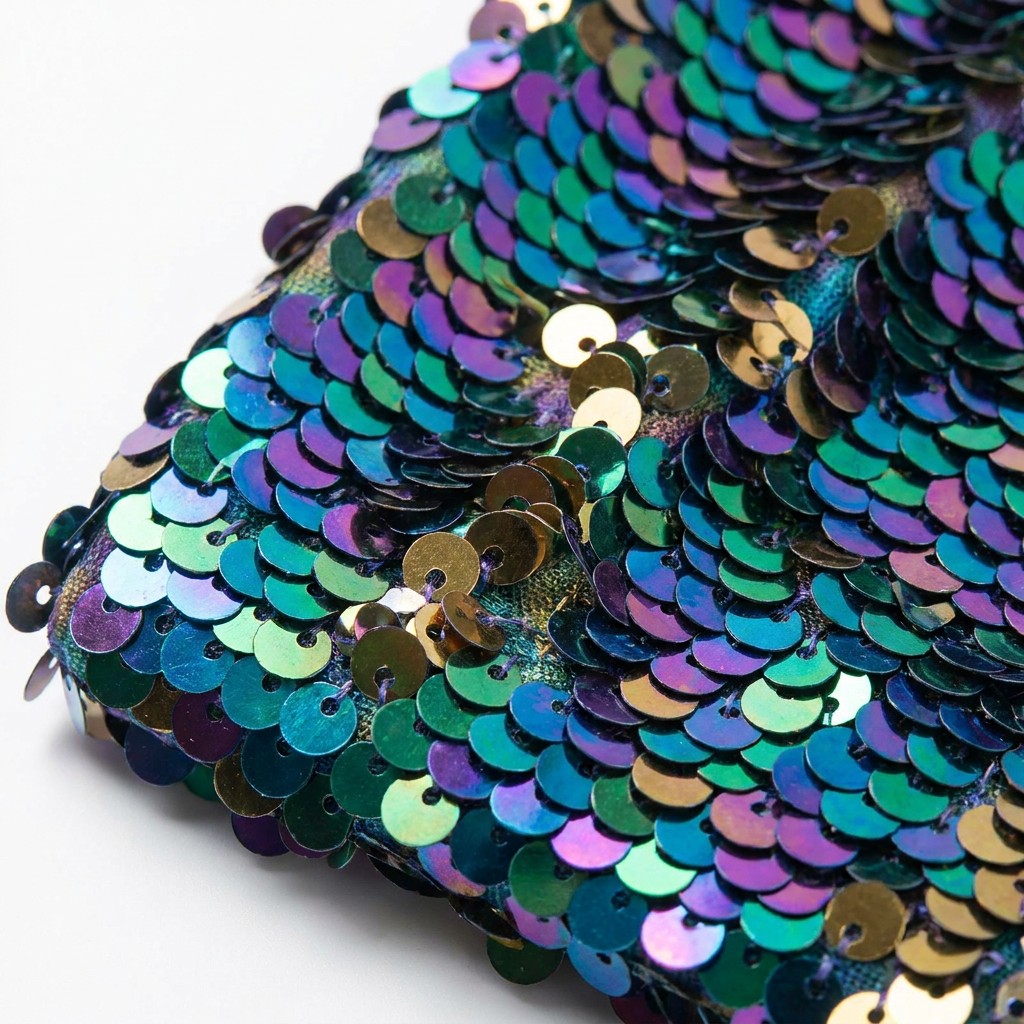
| Sequin fabric | Reflective; weight and stiffness rise with coverage | Costume panels, bodices, competition accents | Sequin size and arrangement, attachment, loose-sequin level |
| Embroidered fabric | Controlled thread motifs; stable when properly backed | Logos, branded dancewear, costume details | Backing, how embroidery limits stretch, thread fastness |
| Beaded fabric | Heavy, dimensional ornament, high light impact | Costume trim, fringe, headpieces, collars | Bead attachment and thread quality, bead loss in sewing and wear |
Sequin size alone changes the outcome: 3mm reads as fine texture, 5mm balances visibility with flexibility, and 18mm makes bold statements but adds stiffness and sewing risk. See how 3mm, 5mm and 18mm sequin fabrics compare for fitted garments versus statement panels.
Movement First: Stretch, Recovery and the Base Fabric
Stretch is not recovery. A mesh can stretch easily yet stay loose after repeated wear, ruining the fit of a leotard. Ask for stretch percentage in both directions, test recovery by stretching and releasing a sample, and confirm how dense sequins or embroidery reduce stretch where they sit. The base fabric decides drape, transparency and stability: open tulle stiffens under heavy sequin coverage, a knit base follows the body but can distort in the embroidery hoop, and a woven base holds tailored panels. For decorated performance fabrics, read our guide to choosing a base fabric for sequin and embroidery applications before fixing the specification.
Hand Feel, Drape, Transparency and Comfort
Two fabrics of equal GSM can hang very differently, and a decorated panel moves nothing like a flat swatch. Ask for a hanging sample of the actual construction and judge how it falls at the hip and hem. Transparency is a design and compliance call: stage coverage rules apply, and fitted garments must stay opaque at full stretch or be lined. Where sequins or beads touch skin, plan a lining and test comfort on a real sample — irritation after ten minutes shows only in wear.
What Fails in Performance: Snagging, Loose Sequins, Dropped Beads
Open meshes snag on zips and other dancers; sequin edges catch needles; beads shed when thread or attachment is weak. Test the surface the way performers use it: rub it, fold and bend the corner, shake a decorated sample, pull gently at sequins and beads. Ask how end-of-line inspection controls loose sequins and what level is acceptable. Our guide to checking sequin fabric quality before bulk ordering covers specifications, appearance consistency, fastness, production performance and sample-to-standard alignment.
Colour Fastness, Care and Repeat Orders
Dancewear is washed frequently, costumes are cleaned between shows, and performance wear meets sweat, heat and stage effects. Confirm the fastness tests that matter — washing, rubbing, light and perspiration — and which methods the supplier follows. Ask whether reports exist for your exact construction. Agree shade tolerance between rolls and batches so a black mesh reorder still matches, and confirm care instructions in writing, including heat sensitivity of sequins and beads.
Samples and Standards: Digital Helps, Physical Approves
Digital swatches and photos shortlist well but cannot show hand feel, drape, reflectivity, transparency, attachment security or sewing behaviour, and screen colour rarely matches physical colour. Approve physically before bulk.
Request a strike-off of the exact construction, ideally the same decoration on two or three bases so you can compare them hanging. Before bulk, approve a pre-production sample reflecting the real production construction, and lock the standard in writing: composition, GSM, width, roll length, sequin size and arrangement, colour reference, shade tolerance, finishing, packing and inspection points. Keep the approved sample, specification and purchase order under one style reference. When preparing the enquiry, use our guide to preparing an RFQ for custom sequin fabric.
Sourcing Checklist
- Application written down: garment type, dance or show style, stage or screen, number of shows and wash cycles
- Movement targets: stretch and recovery in both directions, confirmed by repeated hand testing
- Comfort and coverage: opacity at full stretch, lining plan, breathability under lights, skin contact of decoration
- Decoration fixed: mesh, sequin, embroidery or beadwork, with placement, density and attachment method
- Base fabric confirmed: composition, construction, GSM, width, roll length, behaviour under decoration
- Durability checked by hand: snagging, loose sequins, bead loss, edge curling, seam behaviour
- Colour and care agreed: colour reference, shade tolerance, fastness tests, care instructions in writing
- Physical sample approved: strike-off for development, pre-production sample before bulk
- Written standard kept: approved sample, specification and purchase order under one style reference
- Inspection plan agreed: where goods are checked, how non-conforming rolls are handled
Frequently Asked Questions
What do I specify first for dancewear fabric?
Movement, recovery, breathability, opacity and care. A leotard fails on fit if the fabric does not stretch and return, so write the movement requirements down before comparing decoration or price.
Can sequin fabric work for fitted dancewear?
Yes, with planning. Sequin coverage adds weight and stiffness and limits stretch, so confirm the base fabric, sequin size and arrangement against the pattern and test seams and comfort on a sample.
Why do sequins or beads fall off?
Attachment method, thread quality and inspection all matter. Rub, bend, shake and pull gently on a sample, and ask the supplier what their acceptable loose-sequin level is and how it is checked.
Is a digital swatch enough to approve a costume fabric?
No. Digital references cannot show hand feel, drape, reflectivity, transparency or attachment security. Shortlist digitally, then approve a physical sample under the lighting you will perform in.
Does embroidery remove stretch from stretch mesh?
Embroidered areas usually lose some stretch, and puckering risk rises without proper backing and stabilising. Ask how the motif is hooped and backed on your base and test a strike-off.
What belongs in a written bulk standard?
Composition, GSM, width, roll length, decoration details, colour reference and shade tolerance, finishing, packing, care instructions and inspection points, kept with the approved sample and order.
How do I check snag risk before ordering?
Rub the surface against itself, a zip and a sequin edge; fold and bend corners; check open meshes around raised decoration. Then confirm edge finishing and whether a lining is recommended.
Source Sequin Fabrics Directly for B2B Collections
Explore factory-direct sequin, embroidered and decorative textile options for fashion, event and custom collections.
Request Sequin Fabric Samples
Before you lock a specification for dancewear, performance wear or stage costumes, compare physical samples of your shortlisted constructions. Yunfan Textile supports global B2B buyers with sequin, embroidered and decorative fabric development. Submit your application, base fabric, stretch direction, colour, estimated quantity, finishing and testing requirements through the official consultation page, and the team will confirm the next steps with you.
Submit your requirements here: Yunfan Textile Consultation Page
Yunfan Textile B2B Contact
Website: https://www.yunfantextile.com/
B2B Contact: Wendy Jessie
WhatsApp/WeChat: +86 156 3752 5803
WhatsApp/WeChat: +86 175 1619 6727
Email: morris@yunfantextile.com
Email: morris@yunfantextile.com
Summary: Fabric sourcing for dancewear, performance wear and stage costumes is an application decision. Fix movement, stretch, breathability, weight, opacity, coverage, embellishment, lighting, sewing and care requirements first, compare mesh, sequin, embroidered and beaded constructions on physical samples, and approve a written standard before bulk ordering.
SEO keywords: dancewear fabric supplier, dancewear fabric, performance wear fabric, stage costume fabric, sequin fabric for costumes, stretch mesh fabric wholesale, decorated performance fabric