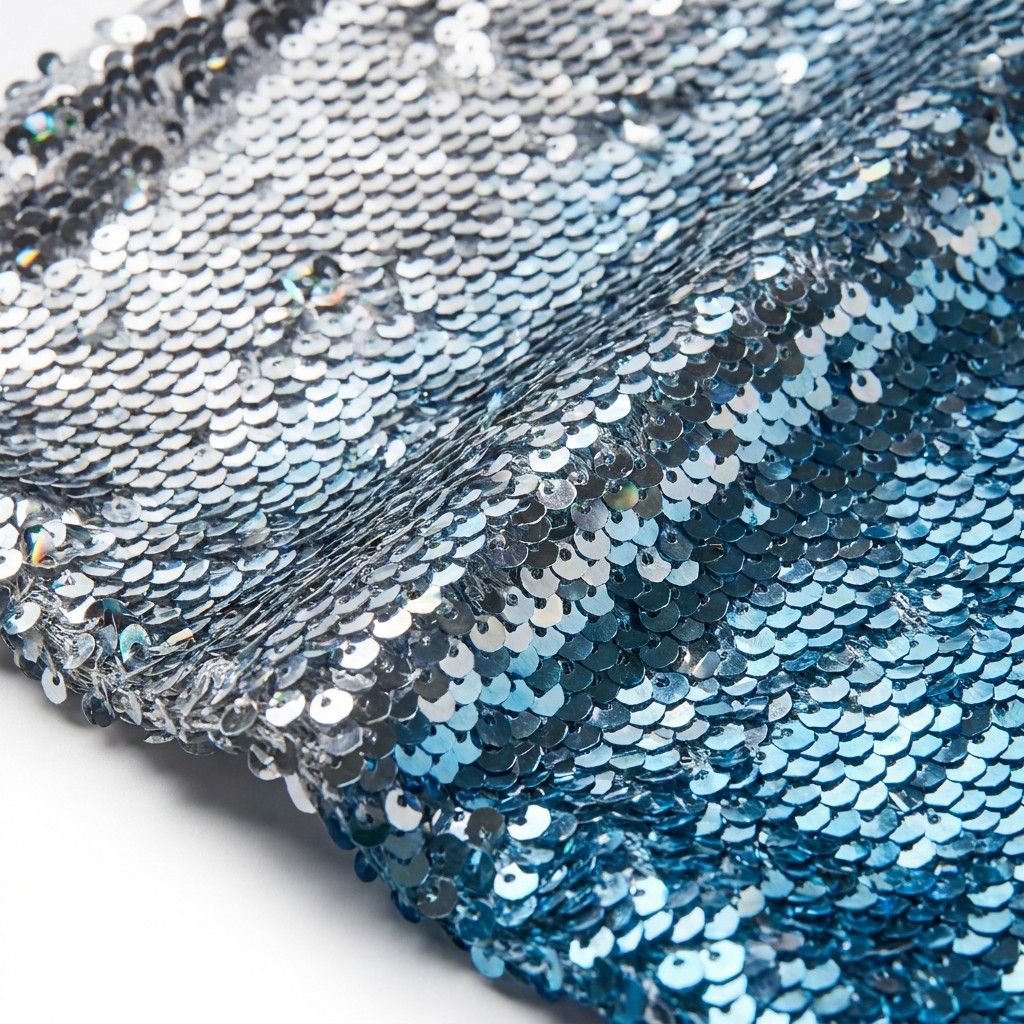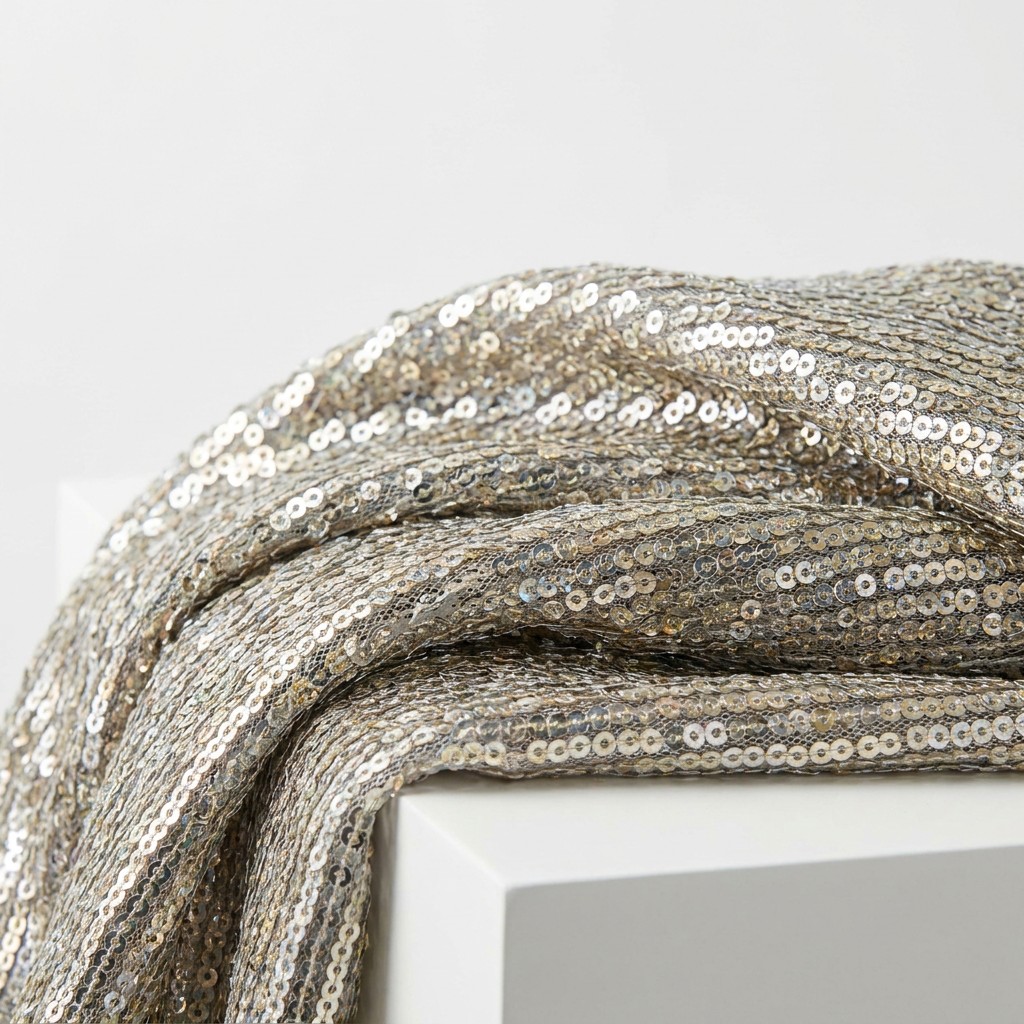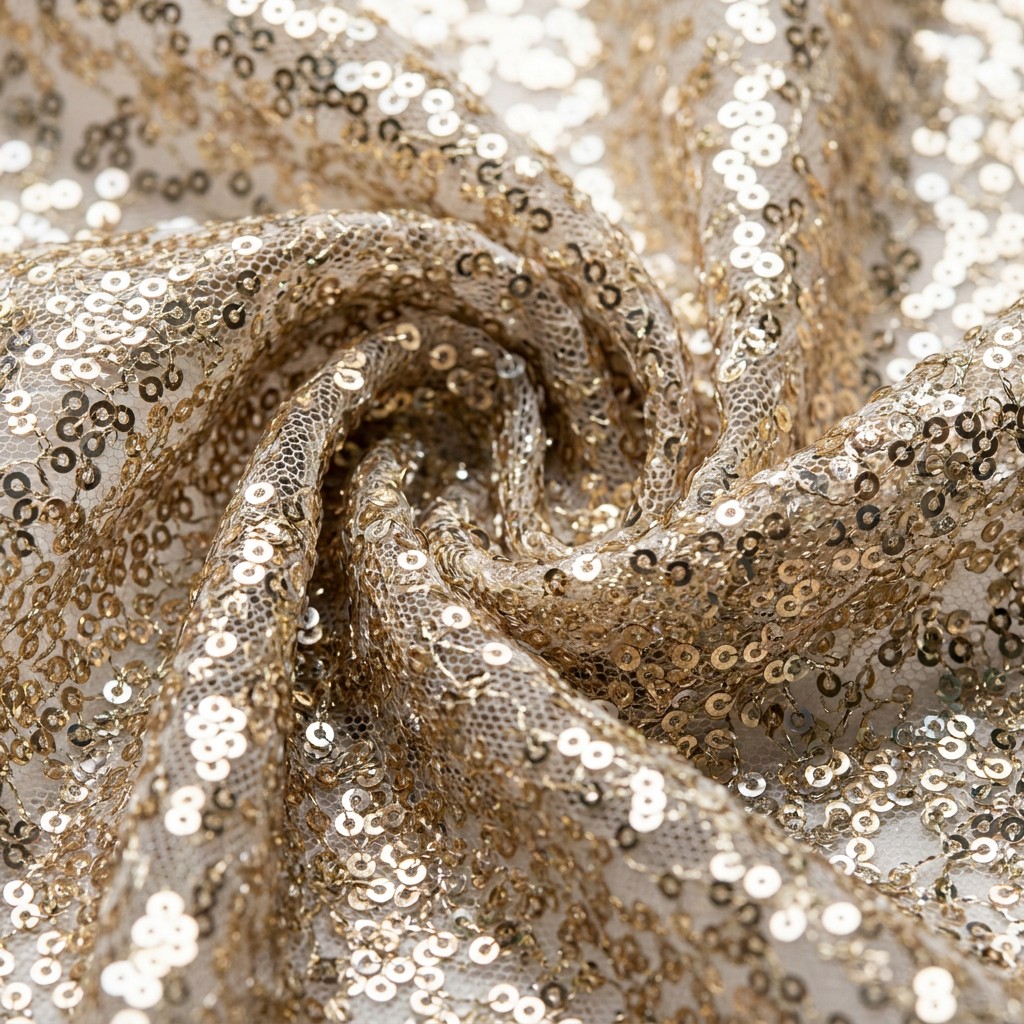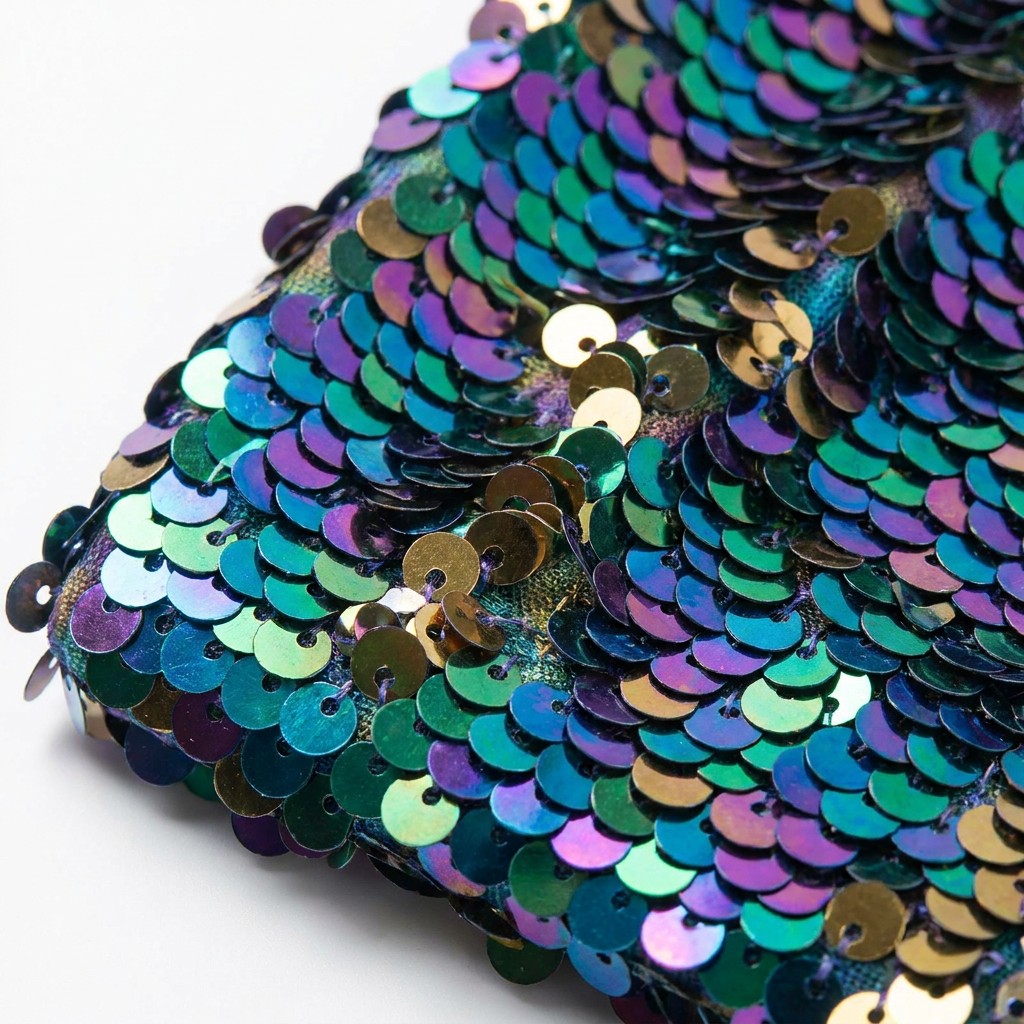
Choosing the base fabric for a sequin or embroidered product is a specification decision, not a last-minute detail. The right base combines your end use, the weight of the sequins or embroidery, the drape you need, dimensional stability, flexibility, the way the piece will be sewn or decorated, and its care and washing requirements. There is no single best base: the same decoration behaves differently on tulle, mesh, knit and woven grounds. This guide explains how the base drives weight, hand feel, drape, transparency, breathability, decoration load, edge curling, snagging and finishing, and what to confirm with suppliers before you sample.
How the base fabric affects weight, hand feel and drape
The base carries the decoration and decides how the finished fabric moves. Decorative weight comes from the combination of base plus sequins, thread and embroidery, so the same 200 GSM base can feel completely different with full-coverage 3mm sequins versus a light spaced motif.
- Tulle and open mesh bases tend to be light and airy. They support floaty, layered silhouettes, but heavier sequin coverage or dense embroidery adds stiffness because the decoration is concentrated on an open ground.
- Knit and stretch bases feel soft and flexible and follow the body. They suit fitted stagewear and dancewear, and the decoration typically limits some of the natural stretch.
- Woven bases such as satin, taffeta-type or cotton constructions feel firmer and more structured. They hold tailored panels and crisp seams better.
- Organza and crisp sheers sit between the two: structured yet transparent, often used for stiff, sculpted costume details.
GSM alone does not predict hand feel or drape. Two bases of equal weight can hang very differently, and a flat swatch cannot show how a decorated panel will move. Ask the supplier for a hanging sample of the actual construction before you lock the specification.
Dimensional stability: stretch, recovery and shrinkage
Stability is how much the base holds its shape during cutting, sewing, decoration and wear. Knit bases can stretch during embroidery hooping or along a seam if they are not stabilised, while woven bases generally hold their dimensions better but still shrink depending on fibre and finishing. Tulle and mesh bases can distort when handled on the cutting table.
Treat these as directional tendencies, not guarantees. Confirm with the supplier how the specific base behaves: stretch percentage and recovery where relevant, expected shrinkage range, and any pre-treatment or finishing already applied. If your end use needs movement, ask how the decoration changes the stretch of the decorated area.
Transparency, breathability and lining decisions
Open tulle, mesh and sheer woven bases are transparent, which affects both the look and the construction: linings, underlayers and seam finishing become part of the design. Denser woven bases are more opaque and easier to line, while breathability usually falls as density and decoration coverage rise.
For stage and event garments worn under hot lights or during long performances, ask how the base and the decoration breathe together, and whether the style needs a lining between sequins or embroidery and the skin. Confirm opacity, lining requirements and comfort on a real sample rather than from a photo.
How the base carries sequins and embroidery
The base must withstand repeated needle penetrations and hold the thread tension of dense embroidery or the weight of attached sequins. An open tulle can suit fine sequin scatter and light motifs, while heavy, high-density embroidery usually needs a more stable woven ground or an appropriate backing so the motif does not pucker.
Confirm how the decoration is attached - sewn, embroidered or glued - and whether the supplier recommends the same sequin size and arrangement on your chosen base. Sequin size changes coverage and weight on the same base, and our 3mm vs. 5mm vs. 18mm sequin fabric guide explains how each size behaves on different grounds. If you are weighing sequin against beaded or embroidered decoration for the same product, our sequin fabric vs. beaded fabric comparison covers the base-related trade-offs.
Stitching and sewing behaviour
Seams, hems and edge finishes are where base choice shows up first in production. Knit and mesh edges can curl when cut, open bases can snag on machine feet and other panels, and sequin edges can catch needles. Ask the supplier for cutting and sewing guidance for the exact construction, including needle, thread and seam finishing recommendations, and run a sample through your own production line before bulk.
Edge curling, snagging and finishing
- Edge curling is common on knit and some mesh bases. Plan hem and seam finishes that control the edge, and confirm how the supplier finishes rolls and edges.
- Snagging is a risk on open tulle and mesh, especially around sequin edges and raised embroidery. Confirm edge finishing, whether a lining is recommended, and how the fabric behaves in layered styling and transport.
- Final finishing matters as much as the base itself: anti-snag or stiffening finishes, backing or coating, and any heat sensitivity of the base or sequins affect washing and ironing guidance. Confirm the finishing and care instructions in writing.
These behaviours are directional for typical constructions. Verify edge behaviour, snag resistance and finishing options on a physical sample of your exact specification.
Sequin and embroidery base fabrics at a glance
| Base type | Typical hand feel and drape | Commonly chosen for | Confirm with your supplier |
|---|---|---|---|
| Tulle (nylon or polyester) | Light, open, transparent; soft movement | Floaty evening looks, layered trims, fine sequin scatter | Composition, stretch direction, snag resistance, edge finishing |
| Stretch mesh / power mesh (knit) | Flexible with two- or four-way stretch; follows the body | Fitted stagewear, dancewear, body-conscious styles | Recovery after stretch, how embroidery limits stretch, needle behaviour |
| Organza or crisp woven sheer | Firm and structured but transparent; holds shape | Structured panels, sculpted costume details | Fibre content, fraying at cut edges, needle hole visibility |
| Satin or taffeta-type woven | Smooth, opaque, structured surface | Tailored panels, gown sections, event décor | GSM, seam slippage, shrinkage, heat sensitivity of finish |
| Cotton or poly-cotton woven | Opaque, stable, print-friendly hand | Embroidered apparel, uniform and workwear details | Shrinkage, recommended washing method, base colour fastness |
Values are typical, directional behaviours for common constructions, not guarantees. Confirm composition, GSM, usable width and hand feel on a physical sample of your exact build.
A numbered process for choosing the base fabric
- Define the end use: garment type, costume, event product or décor item.
- Decide the decoration: sequin size and coverage, or embroidery density and stitch type.
- Estimate the load: how heavy and stiff the decoration is versus how light the base can be.
- Set your targets for drape, hand feel, transparency, stability and flexibility.
- Shortlist base categories that can realistically carry the decoration for that end use.
- Ask the supplier to develop strike-offs of the same decoration on two or three bases and compare them hanging.
- Approve one sealed sample with a written specification covering composition, GSM, width, roll length, finishing and care before bulk.
What to confirm with suppliers before sampling
- Base composition and construction: fibre content, knit or woven, GSM, usable width and roll length.
- Decoration details: sequin size, material, finish and attachment method, or embroidery density, thread and backing.
- Behaviour targets: stretch and recovery, expected shrinkage, curling at edges, snag risk and finishing options.
- Care and compliance: recommended washing or dry-cleaning method, and any fastness or other test reports the supplier can provide for the exact construction.
Put every point in writing so quotes and samples are compared on the same fields. Our guide to preparing an RFQ for custom sequin fabric lists the fields that matter most, and our sequin fabric quality checklist for bulk ordering covers how to verify the finished construction before you commit.
If you are shortlisting base constructions for a sequin or embroidery collection, the Yunfan Textile team supports global B2B buyers with base development, strike-offs and specification checks. Share your application, base preference, sequin or embroidery type, colour and estimated quantity so the discussion starts from your actual brief.
Frequently Asked Questions
Is there one base fabric that works for every sequin or embroidery design?
No. End use, decoration weight, drape, stability, flexibility, sewing method and care requirements all change the right answer. Compare samples of the same decoration on different bases before deciding.
Which base suits heavy, dense sequin coverage?
A more stable base generally carries dense coverage better, because open grounds add stiffness as decoration is concentrated on them. Confirm the GSM, hand feel and sewing behaviour on a hanging sample of the exact construction.
Can embroidery be applied to stretch mesh or power mesh?
Yes, but the decorated area usually loses some stretch, and puckering risk rises without proper stabilising. Ask the supplier how the embroidery is hooped and backed on that specific base, and test a sample.
Why does the same sequin fabric feel different on tulle than on a knit base?
The base decides the mechanical behaviour: tulle is open and airy, a knit base stretches and recovers, and a woven base is firmer. The same sequins sit on top, so movement, hand feel and drape follow the base.
Does the base fabric decide how the fabric should be washed?
Both base and decoration matter. Confirm the recommended washing or dry-cleaning method, heat sensitivity and any shrink expectation for the exact construction, and ask which test methods the supplier follows.
How do I check transparency and drape before ordering?
On a physical, hanging sample. Photos cannot show opacity, movement or how a decorated panel falls. Shortlist digitally, then approve a real sample under the light you will use.
Do I need to plan for edges curling on decorative bases?
Knit and some mesh bases can curl at cut edges. Plan hem and seam finishes that control the edge, and confirm with the supplier how finished rolls and edges are handled.
Source Sequin Fabrics Directly for B2B Collections
Explore factory-direct sequin, embroidered and decorative textile options for fashion, event and custom collections.
Request Sequin Fabric Samples
Before you fix a base fabric for sequin or embroidery, compare physical samples of your shortlisted constructions. Yunfan Textile supports global B2B buyers with sequin, embroidered and decorative fabric development; the team can discuss base options, strike-offs and specifications with you.
Submit your application, base fabric, sequin or embroidery type, colour, estimated quantity, finishing and testing requirements through the official consultation page, and the team will confirm the next steps with you.
Submit your requirements here: Yunfan Textile Consultation Page
Yunfan Textile B2B Contact
Website: https://www.yunfantextile.com/
B2B Contact: Wendy Jessie
WhatsApp/WeChat: +86 156 3752 5803
WhatsApp/WeChat: +86 175 1619 6727
Email: morris@yunfantextile.com
Email: morris@yunfantextile.com
Summary: Choosing a base fabric for sequin and embroidery is an end-use decision, not a style preference. Match the base to your product type, decoration weight, drape, stability, flexibility, sewing method and care plan, confirm every specification in writing, and approve a physical sample before bulk ordering.
SEO keywords: base fabric for sequin, base fabric for embroidery, sequin fabric base, sequin fabric supplier, embroidery fabric wholesale, stage costume fabric