Sequin fabric is usually the faster route when a wholesale collection needs continuous shimmer, flexible coverage and quick visual development, while beaded fabric tends to be the better choice when the design calls for dimensional texture, visible weight and a concentrated decorative focus. Neither option is universally superior: the final decision depends on the end garment or event product, hand feel, weight, drape, sewing behaviour, quality control and budget and delivery requirements. Confirm each point with the supplier on real samples, and treat the general tendencies below as starting points rather than guarantees.
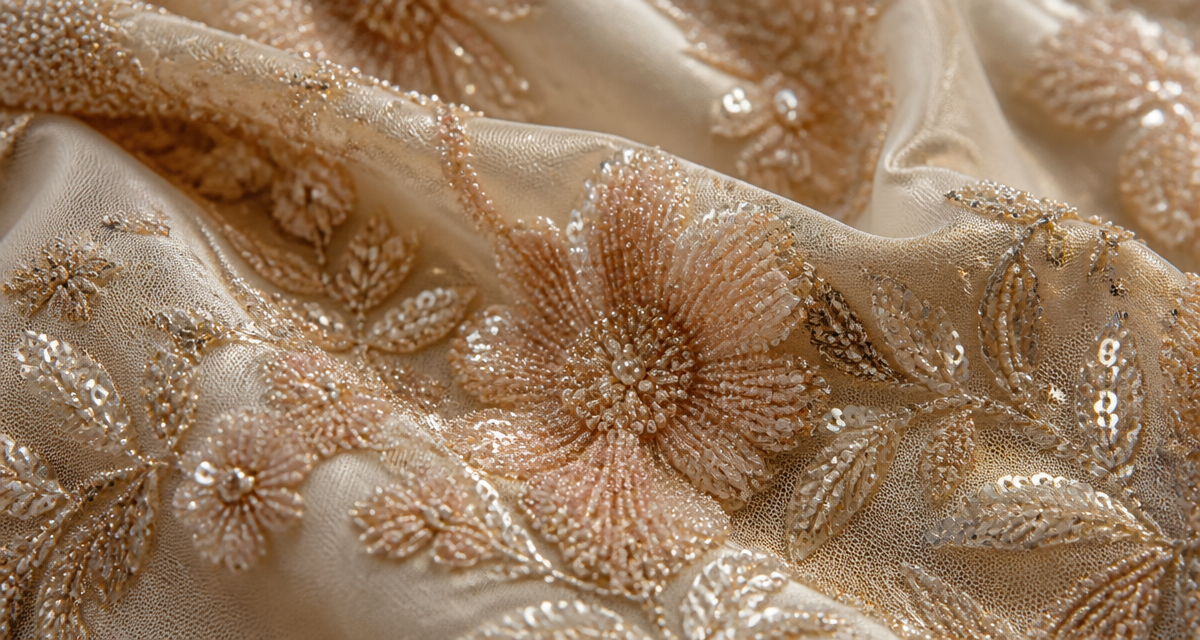
Appearance and Shine: Continuous Glow vs. Point-by-Point Sparkle
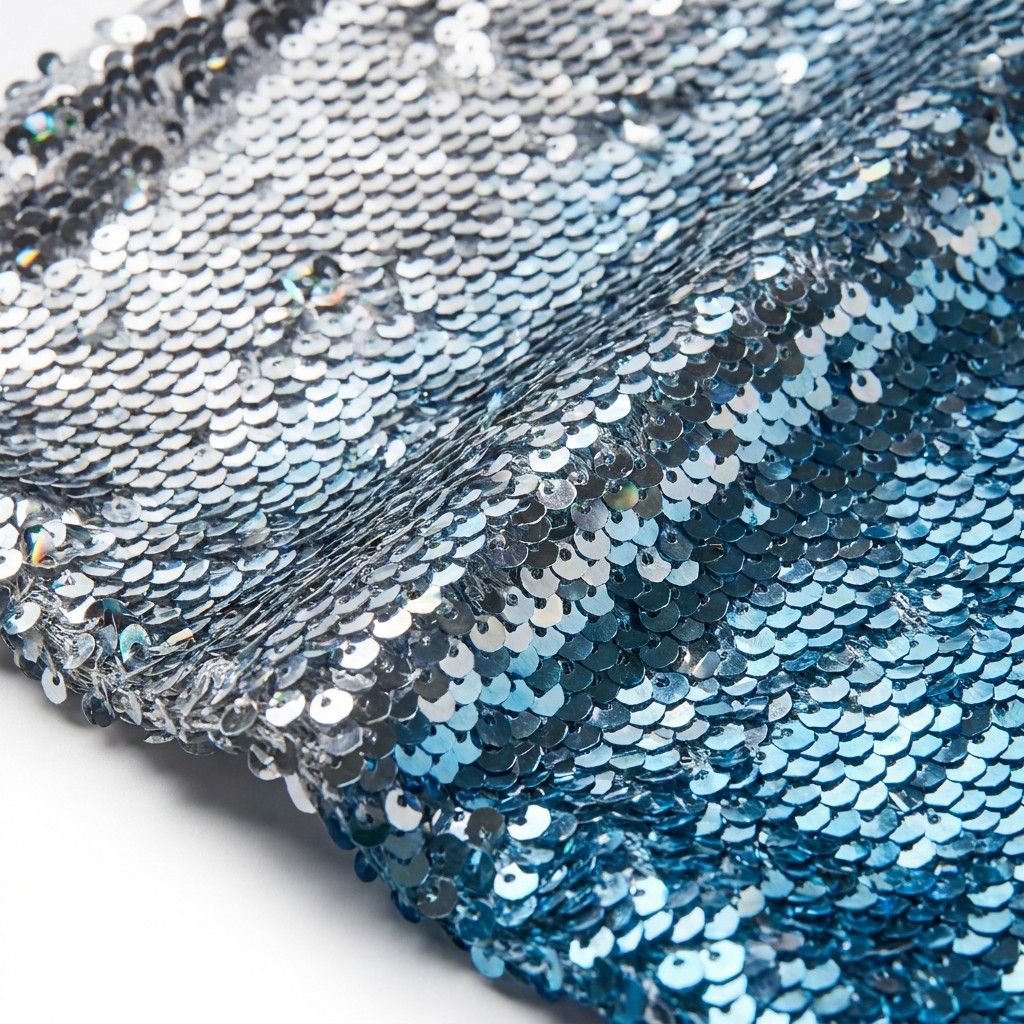
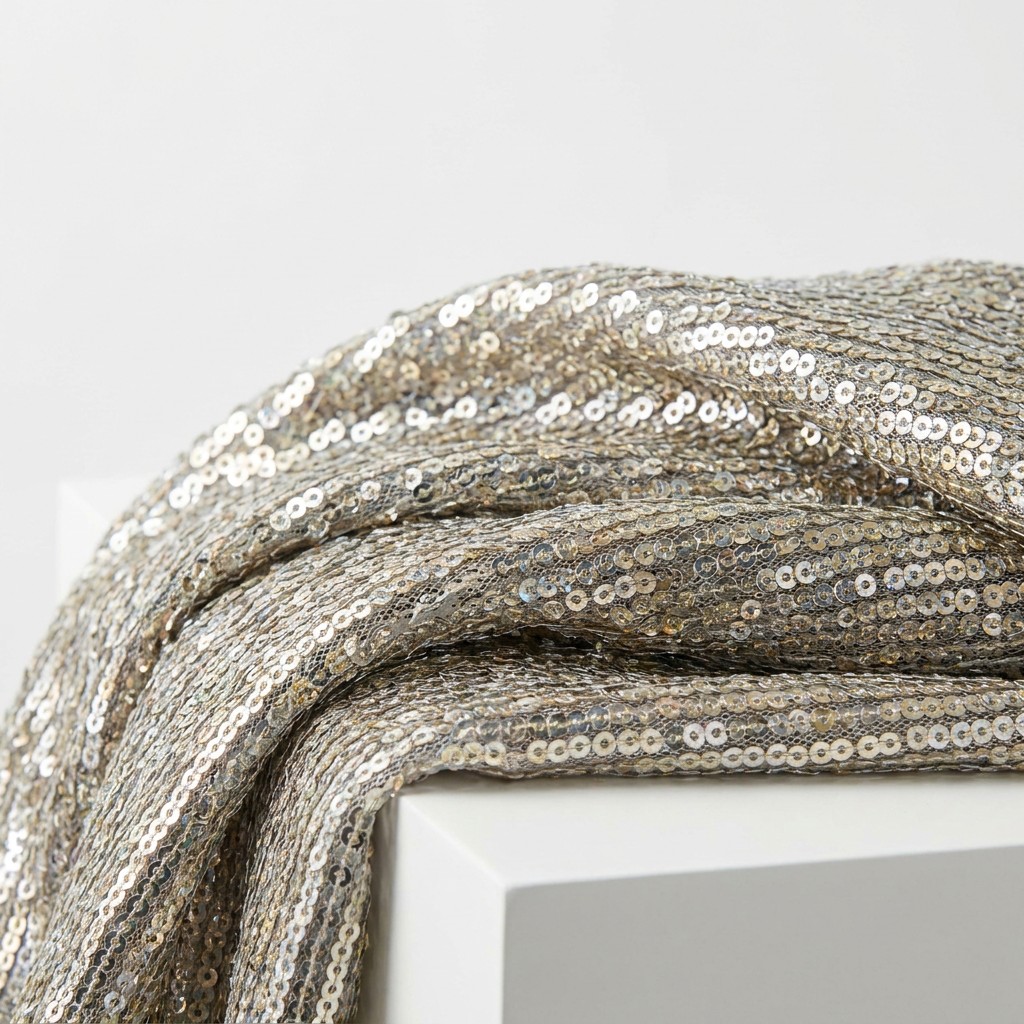
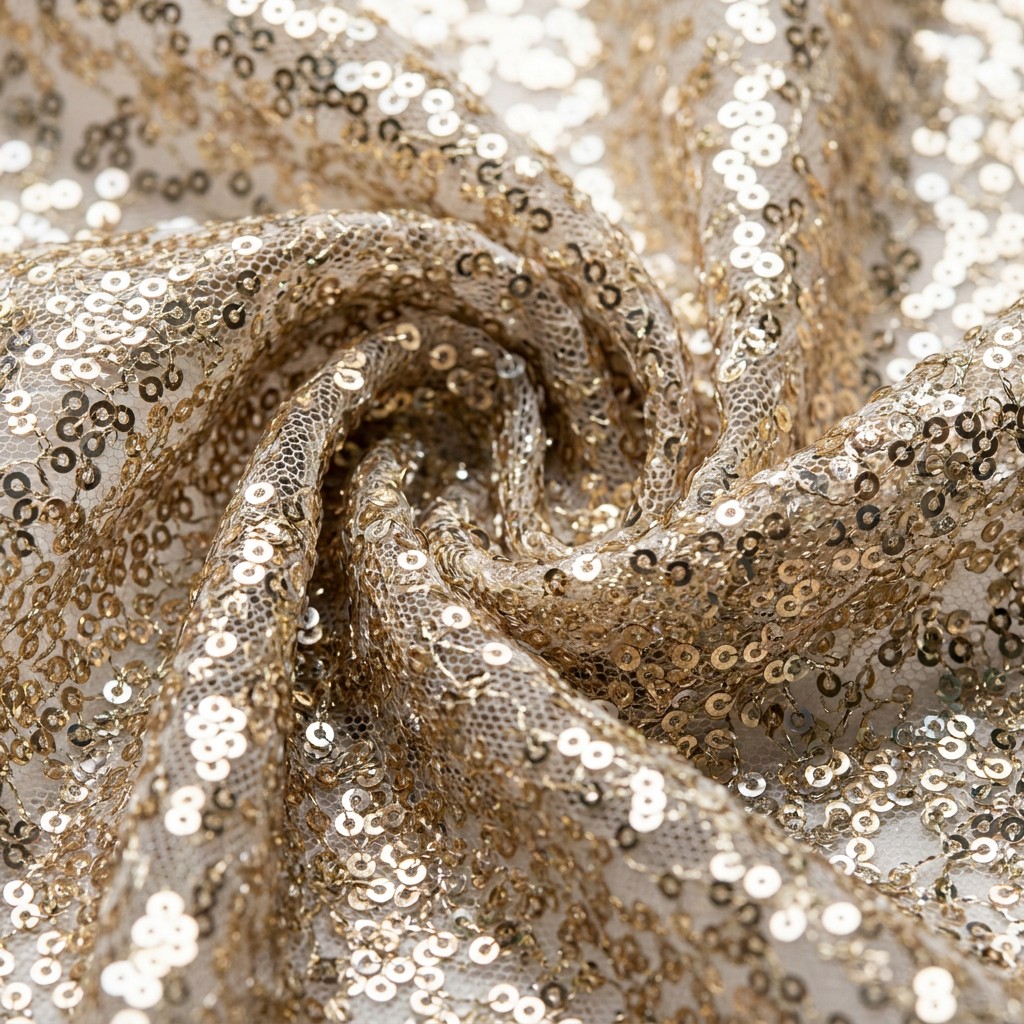
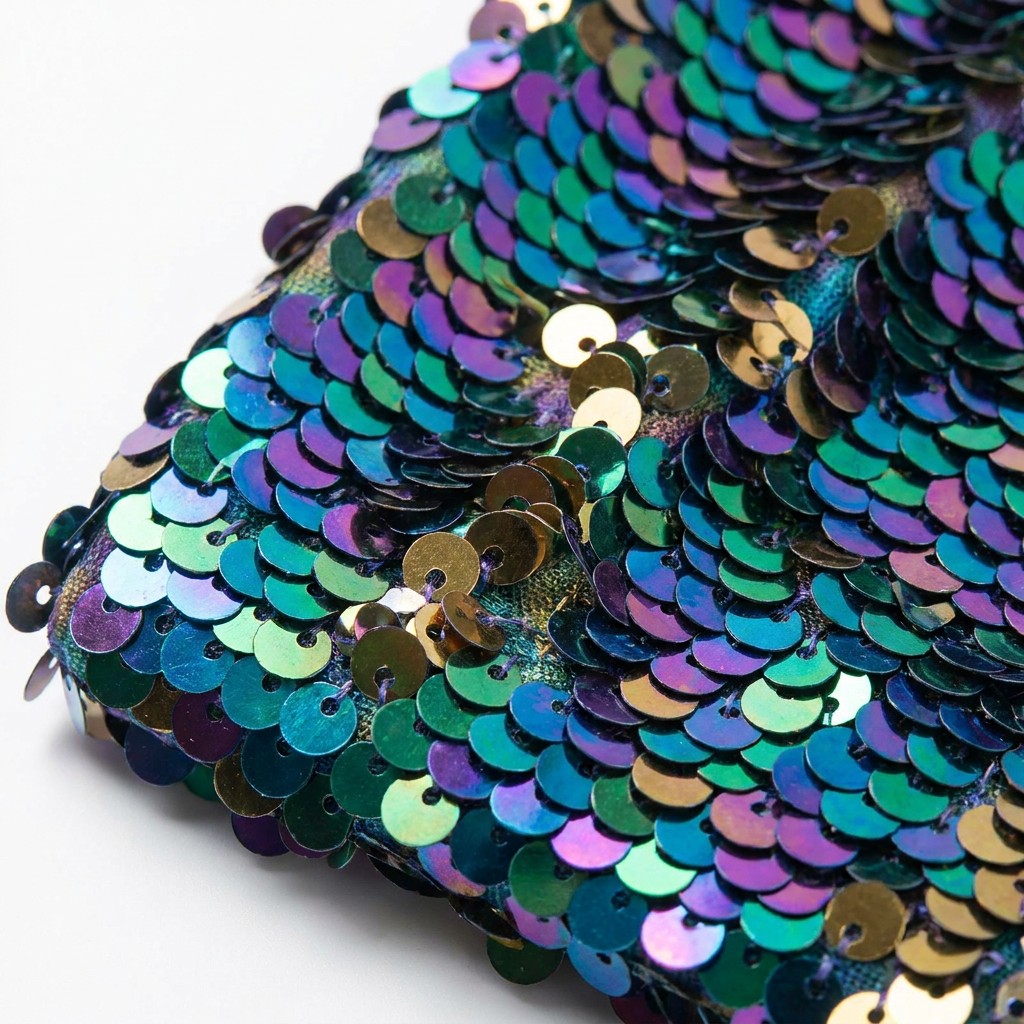
Flat sequin fabric reads as one broad, continuous sheet of light. The discs sit close together and catch the same light at similar angles, which is why sequin garments flash evenly under stage lamps and camera flashes. If the goal is a uniform, high-impact shine across a full panel, sequin constructions deliver that look faster and more predictably.
Beaded fabric works differently. Seed beads, bugle beads, glass or acrylic beads each catch light individually, creating small highlights that move as the fabric moves. The result is dimensional depth: motifs, flowers and borders stand out from the base instead of merging into a single glow. Ask the supplier how the bead finish, colour and base fabric interact under the lighting you will actually use, because the same construction can look different on stage and under shop lighting.
Weight, Hand Feel and Drape
Both families are decorative textiles, so weight and drape are decided by coverage density and base fabric, not by the category alone. A densely covered sequin mesh can be heavy and stiff; a spaced sequin organza can be light and floaty. Beaded embroidery adds the weight of thread plus beads, so heavily beaded motifs are usually heavier and stiffer around the pattern area, with softer fabric between motifs.
Confirm the actual GSM, usable width and hand feel on a hanging sample rather than a flat swatch. Drape cannot be judged from a photo, and the same weight can behave very differently on tulle, mesh, knit or woven bases.
Flexibility and Sewing Behaviour
Sequin fabric is generally more predictable to cut and sew, but full-coverage panels flex less and needles can hit the edges of discs, which dulls blades and produces sequin dust. Beaded fabric is usually stiffer where beadwork sits, and raised beads can catch needles and threads; seams may need to be placed around motifs, and lining is often required where beadwork touches the skin.
Ask the supplier for cutting and sewing guidance, needle recommendations and seam finishing advice for each construction, and test a sample on your own production line before fixing the specification.
Base Fabric and Arrangement Decide the Result
The base carries the decoration and decides how the fabric moves. Light mesh and tulle give airy, layered looks; knit bases add stretch and recovery; woven bases provide structure for tailored pieces. Arrangement matters just as much: full coverage, spaced rows, random scatter and embroidered motifs all change weight, drape and cost per metre.
- Sequin fabric: confirm disc size, shape, material and finish. If you are comparing sizes, our 3mm vs. 5mm vs. 18mm sequin fabric guide explains how each size behaves on different bases.
- Beaded fabric: confirm bead type, size, stitch density, motif placement and whether the beading is embroidered or hand-applied.
- Both: request the written specification covering base composition, GSM, width, roll length and attachment method before comparing prices.
Typical Applications for Wholesale Buyers
- Fashion brands and evening wear: softer bases with moderate sequin coverage for movement; beaded trims or necklines where a single decorative focus is wanted.
- Bridal: beaded motifs on tulle for dimensional detail; fine sequin for subtle shimmer. Check comfort, weight and how the fabric behaves with corsetry.
- Stagewear and costume: dense sequin coverage for continuous flash under stage light; beaded texture where the audience is close enough to see it.
- Event suppliers and decor: confirm drape, edge finishing and snag resistance, plus how the fabric handles cleaning, folding and transport between events.
Sequin Fabric vs. Beaded Fabric: Quick Comparison
| Dimension | Sequin fabric | Beaded fabric |
|---|---|---|
| Shine | Broad, continuous glow | Point-by-point sparkle |
| Texture | Mostly flat profile | Raised, dimensional motifs |
| Weight | Varies with density; heavy at full cover | Usually heavier around beadwork |
| Drape | Stiffer at dense coverage | Stiffer near motifs, softer between |
| Sewing | Predictable; watch needle hits | Beads can catch needles; plan seams |
| Typical uses | Stage, fashion panels, full shimmer | Bridal detail, statement motifs, texture |
These are directional comparisons for typical constructions. Confirm weight, density and hand feel on a physical sample for your exact spec.
A Sourcing Decision Flow for Buyers
- Define the end use first: garment type, event product or decor item.
- Set the visual goal: continuous shine or dimensional texture.
- Balance hand feel, weight and drape against your pattern and silhouette.
- Shortlist constructions on the base fabric that suits your product.
- Request physical samples of each shortlisted construction.
- Approve one sealed sample together with a written specification.
- Plan quality checks and inspection points before bulk dispatch.
For a step-by-step approach to shortlisting and comparing suppliers, see our guide to choosing sequin fabric for wholesale fashion collections.
Samples, Quality Documents and Written Standards
Ask each supplier for a strike-off or sample yardage of the exact construction, and request their standard quality documentation: specification sheet, colour reference and any test reports they hold. If no reports are available, budget for independent lab testing on bulk lots. Before production, keep the approved sample, the written specification and the purchase order together under one style reference so both sides judge against the same standard. Our sequin fabric quality checklist for bulk ordering lists the points that matter most.
Common Risks to Manage in Bulk Production
- Loose sequins and dropped beads: shake, rub and fold a sample corner, then ask how the supplier inspects for missing pieces at the end of the line and what acceptable level they quote.
- Snagging and abrasion: raised beads and sequin edges can catch other garments and trims in layered styling; confirm edge finishing and any abrasion data.
- Colour fastness: request fastness to light, water and perspiration for both the base and the embellishment, and ask which test methods are used.
- Roll-to-roll consistency: agree on shade tolerance, roll marking and density checks, and for large orders plan a pre-shipment inspection of embroidered and sequin fabric before dispatch.
Why Digital Images Cannot Replace Physical Samples
Photographs and digital swatches are useful for shortlisting colours and motifs, but they cannot show hand feel, drape, reflectivity, transparency or how the decoration is attached, and they cannot predict behaviour on a sewing machine. Reflective surfaces are especially difficult to reproduce on screen. Use digital development to narrow your options, then always approve a physical sample before any bulk commitment.
How Yunfan Textile Can Support Your Sourcing Decision
Yunfan Textile supports global B2B buyers with sequin, embroidered and decorative fabric development. If you are comparing sequin and beaded constructions for a collection, the team can discuss specifications, sample approval, custom colours and production checkpoints with you. Share your application, base fabric, sequin or bead size, colour, estimated quantity and finishing requirements so the discussion starts from your actual brief.
Frequently Asked Questions
Is sequin fabric always lighter than beaded fabric?
No. Weight depends on coverage density and base fabric. A densely covered sequin panel can be heavier than a lightly beaded construction. Compare GSM and hand feel on samples instead of assuming by category.
Which option reads better under stage light?
Sequin fabric generally gives a broader, more uniform flash, while beaded fabric reads as texture and depth at closer range. The right answer depends on the distance of the audience and the lighting plan, so evaluate samples under your real conditions.
Do sequins or beads fall off during sewing and wear?
Both can shed if the attachment is weak. Ask the supplier how sequins and beads are attached, what loose-piece level they accept, and which inspection checks are done at the end of the line.
Can beaded fabric be used for fitted garments?
Yes, but heavy or dense beadwork adds stiffness and weight, so confirm stretch, seam placement and lining requirements with the supplier and test the garment fit on a sample.
What should I send to a supplier when requesting samples?
Your application, base fabric preference, sequin or bead size, colour, estimated quantity, finishing and testing requirements. The more detail you share, the more relevant the samples you receive.
Can I decide between sequin and beaded fabric from photos?
No. Photos cannot show hand feel, drape, weight, reflectivity or attachment security. Shortlist digitally, then approve a physical sample before bulk ordering.
What should be in the written standard before bulk?
Composition, GSM, width, roll length, sequin or bead details, attachment method, colour reference, shade tolerance, packing and inspection points. Keep it with the approved sample and the purchase order.
Source Sequin Fabrics Directly for B2B Collections
Explore factory-direct sequin, embroidered and decorative textile options for fashion, event and custom collections.
Request Sequin Fabric Samples
Ready to compare sequin and beaded fabric for a wholesale collection? Yunfan Textile supports global B2B buyers with sequin, embroidered and decorative fabric development. Submit your application, base fabric, sequin or bead size, colour, estimated quantity, finishing and testing requirements through the official consultation page, and the team will confirm the next steps with you.
Submit your requirements here: Yunfan Textile Consultation Page
Yunfan Textile B2B Contact
Website: https://www.yunfantextile.com/
B2B Contact: Wendy Jessie
WhatsApp/WeChat: +86 156 3752 5803
WhatsApp/WeChat: +86 175 1619 6727
Email: morris@yunfantextile.com
Email: morris@yunfantextile.com
Summary: Choosing between sequin and beaded fabric is an end-use decision, not a quality ranking. Compare shine, texture, weight, drape, sewing behaviour and base construction on real samples, confirm specifications in writing, and approve a physical standard before bulk ordering.
SEO keywords: sequin vs beaded fabric, beaded fabric wholesale, sequin fabric wholesale, wholesale fashion fabric, stage costume fabric