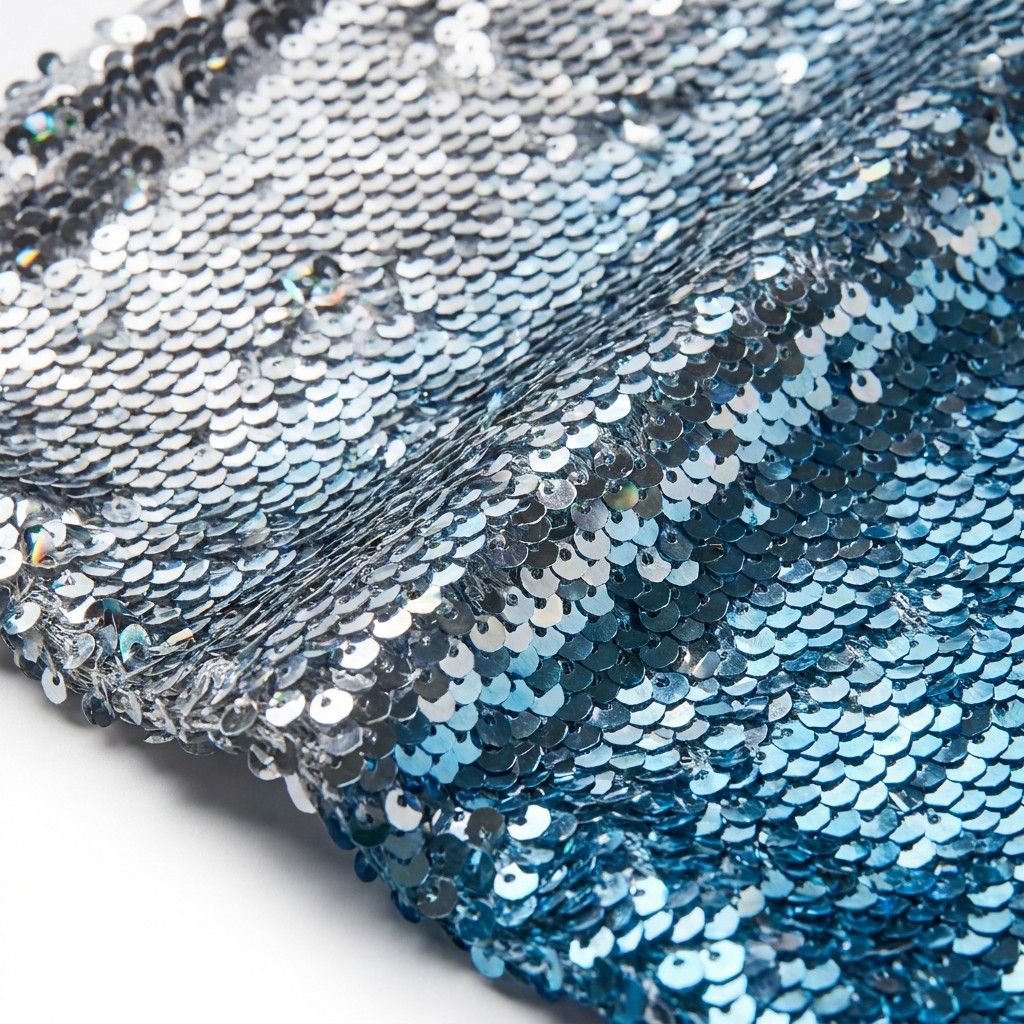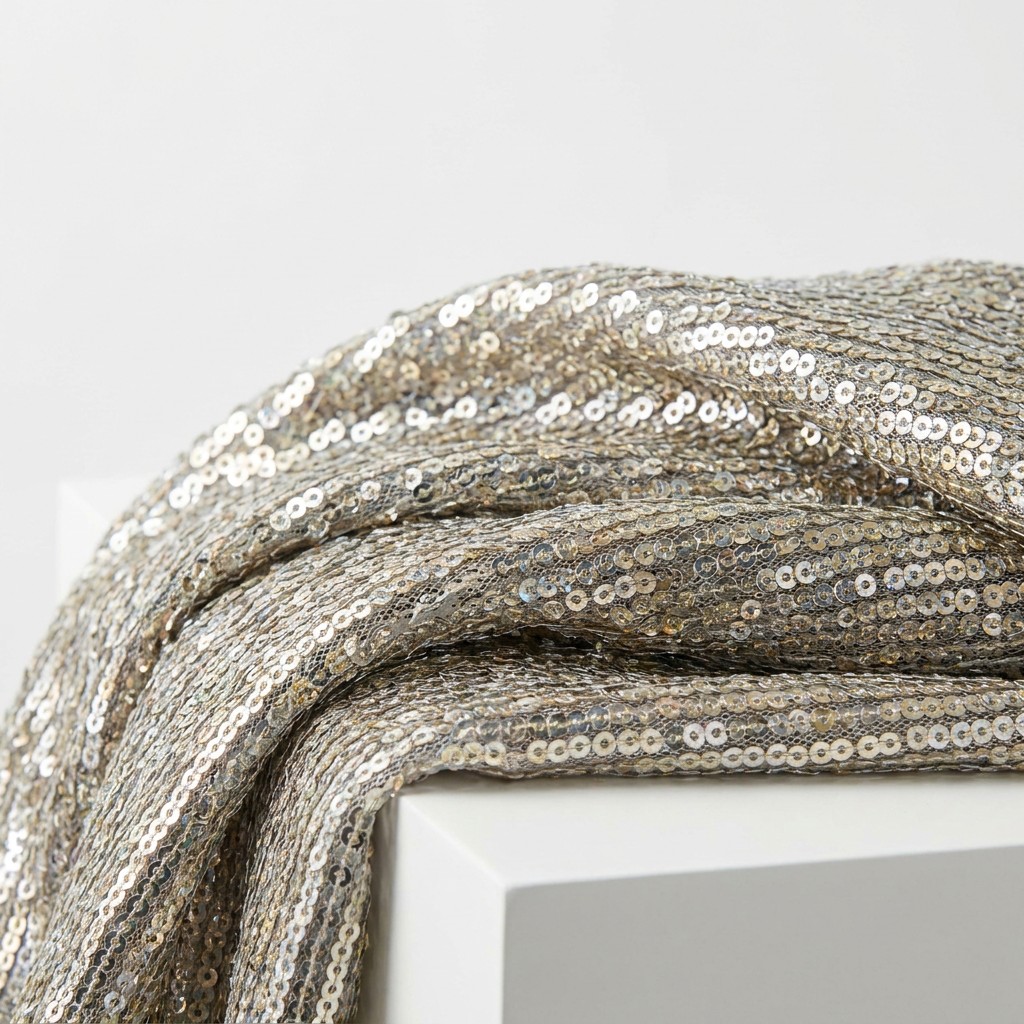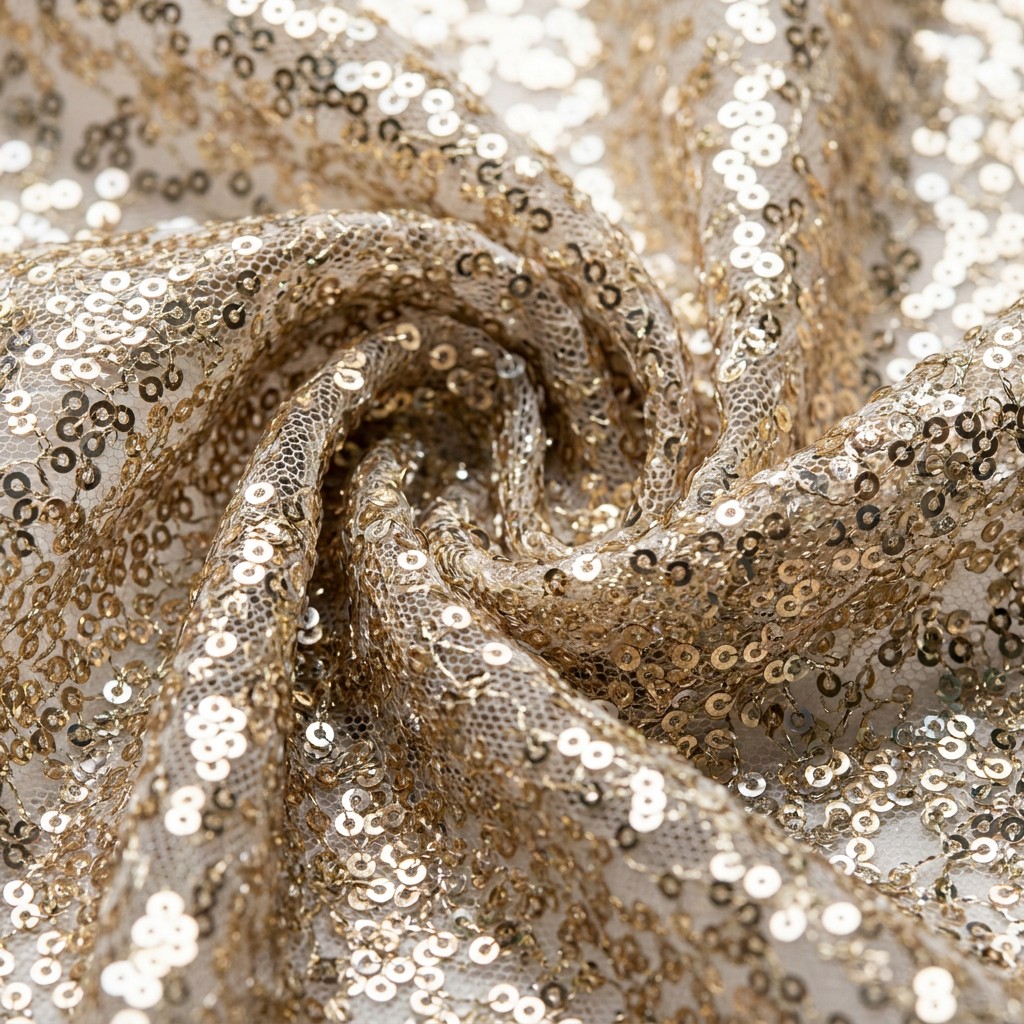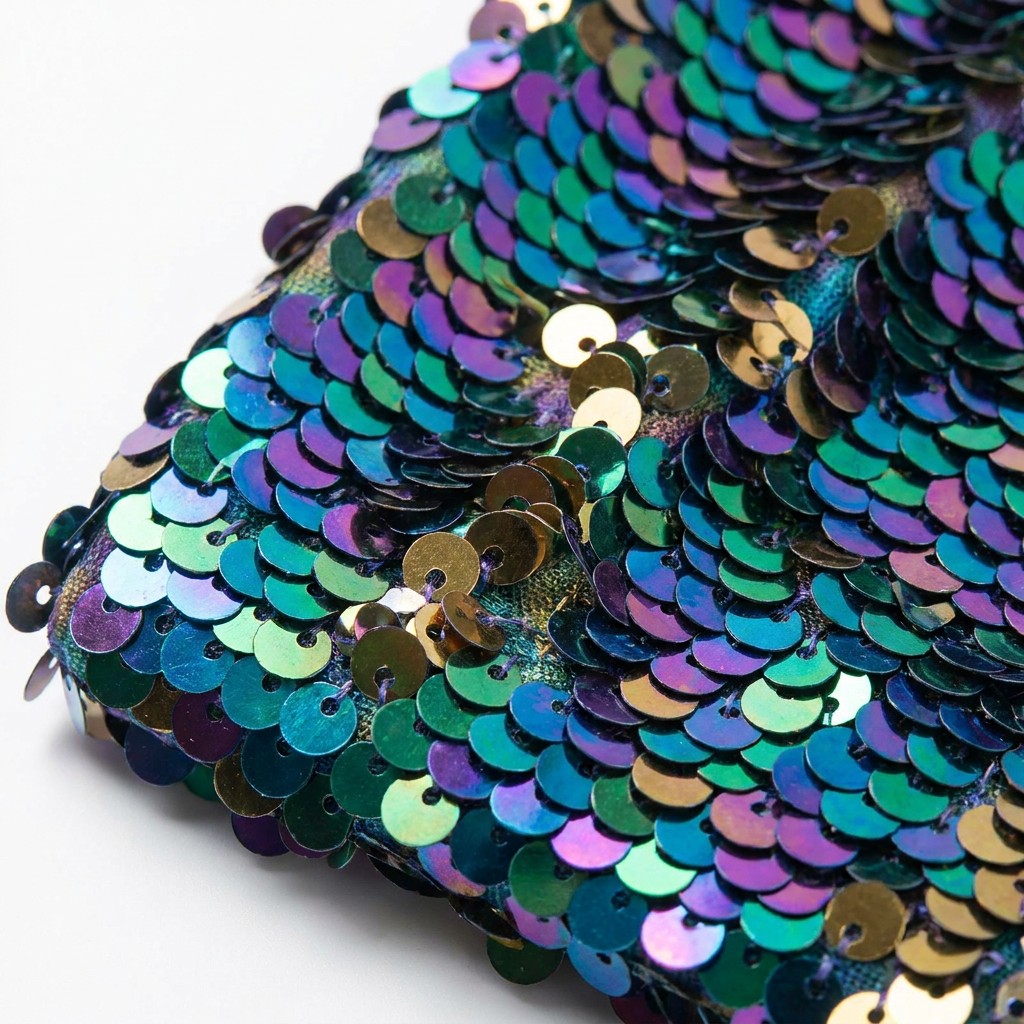
Sequin fabric weight is the mass of the finished, sequin-covered fabric, normally written as grams per square meter (GSM) or grams per linear yard. It is measured after embroidery and finishing, so the figure includes the mesh base, the sequins, the thread, and any backing. For B2B buyers, sequin fabric weight drives three numbers on the costing sheet: fabric price per yard, freight per carton, and cuttable yardage per roll. This guide explains how to read weight data, how to verify it on a counter sample, and what to write into a specification so that bulk matches the approved swatch.
Key Takeaways
- Measure sequin fabric weight after finishing, never on the bare mesh.
- GSM is stable across widths; grams per linear yard is not, because it depends on width.
- Sequin size, sequin density, mesh denier, and backing are the four main weight drivers.
- A small weight drift between sample and bulk changes cost, drape, and cut yield at the same time.
- Specify weight as a target with a tolerance and a stated test method, not as a single number.
What Sequin Fabric Weight Actually Measures
Sequin fabric weight is the total mass of one unit of finished fabric, counting mesh, sequins, thread, and any bonded backing. Because it is a mass per unit area, GSM stays comparable between mills and between widths. Grams per linear yard is a commercial figure, and it falls as soon as the delivered width falls.
Two clarifications prevent most disputes. First, weight is not thickness: a dense micro-sequin surface can weigh the same as a sparse large-paillette surface while feeling completely different. Second, weight is not the same as sequin count. A 5 mm sequin covers about three times the area of a 3 mm sequin, so the same coverage uses fewer, heavier pieces.
Buyers should therefore ask for three linked values in every quotation: GSM, gram per linear yard, and the width at which that gram-per-yard figure was taken. Without the width, the second number cannot be checked.
What Adds Weight to Sequinned Fabric
Four construction choices move the weight more than anything else.
- Sequin size. Fine 3 mm micro-sequins sit lighter on the surface. Large paillettes add grams quickly because each piece carries more material.
- Sequin density. Density is the number of sequins per unit area. A dense, fully covered surface weighs more than an open pattern with visible mesh between motifs.
- Mesh base denier. A 20D mesh is lighter than a 40D mesh, which is lighter than a 50D heavy mesh. The base is a smaller share of total weight, but it sets the floor.
- Backing and finishing. A bonded knit backing, a heat-set finish, or a foil layer each adds weight per square meter.
A simple way to see the effect: take your sequin size and density and estimate the sequin mass per square meter, then add the mesh mass from its denier and construction. The result explains why two fabrics that look similar in a photo can sit at very different points on a freight quotation.
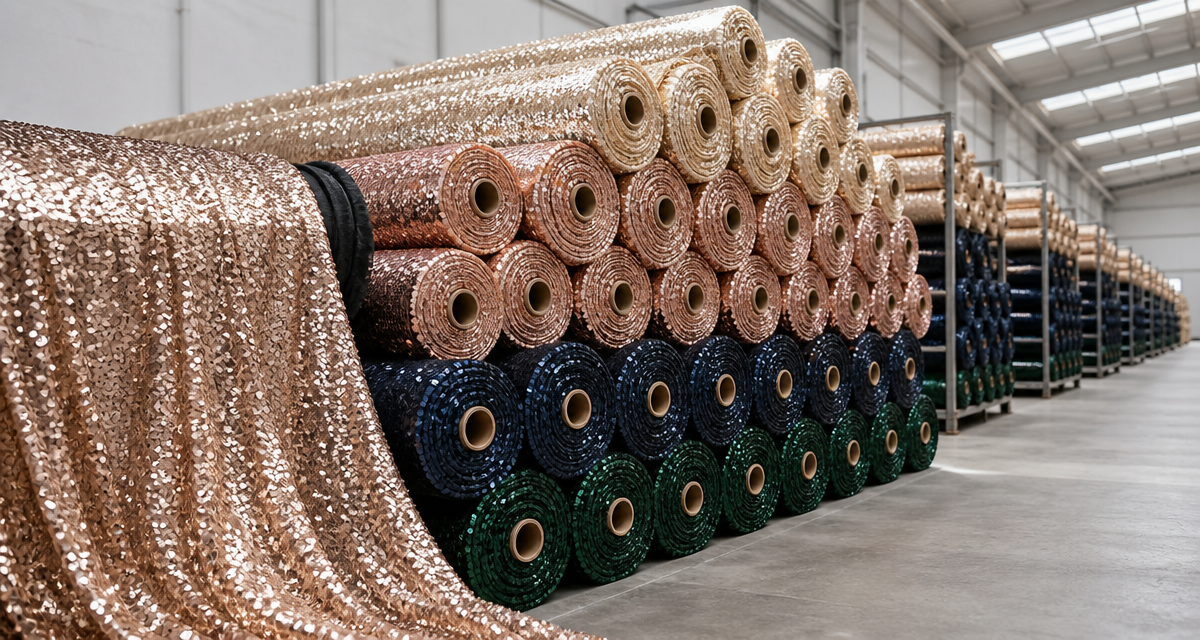
Reference Sequinned Fabric Weight Ranges
The table below gives the ranges buyers usually see. Treat them as a starting point for a conversation, because every mill's construction differs.
| Construction family | Typical weight band | Typical use |
|---|---|---|
| Micro-sequin on fine mesh | Light band | Lining panels, overlays, childrenswear |
| Standard 5 mm sequin on 40D mesh | Mid band | Eveningwear, dancewear, party dresses |
| Dense all-over sequin with backing | Heavy band | Bridal, red-carpet, structured bodices |
| Large paillette on heavy mesh | Heaviest band | Stage costume, event decor, backdrops |
Ask your supplier to confirm the exact GSM and gram per linear yard for the construction you are considering, at the width you will receive.
How to Measure Sequin Fabric Weight on a Sample
Follow the same sequence every time so that results stay comparable.
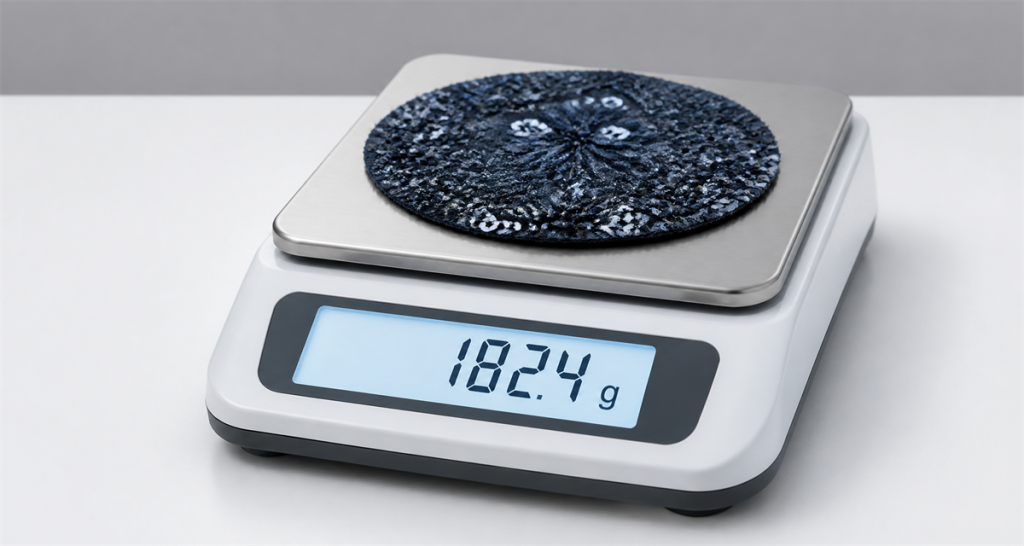
- Condition the sample for 24 hours in a stable, moderate-humidity room.
- Cut three circular swatches of a known area from the left, centre, and right of the width.
- Weigh each swatch on a calibrated balance and record to two decimal places.
- Convert each result to GSM and note the spread between the three positions.
- Cut one full linear yard at the delivered width and weigh it for the commercial figure.
- Record the measured width on the same sheet as the weight.
- Compare against the approved reference sample and log the variance.
Step four matters more than most buyers expect. A fabric that is heavy at the selvedge and light in the centre will cut and drape unevenly, even when the average weight looks correct.
Where Weight Changes Your Commercial Numbers
Freight and landed cost
Heavier fabric means heavier cartons. Carton weight decides volumetric versus actual weight charging, so a mid-band sequin fabric can cost materially more to ship than a light band fabric of the same length. Our guide on calculating the real cost of wholesale sequin fabric shows how to fold this into a landed cost sheet.
Yield and cutting
Weight is the fastest sanity check on roll yield. If the roll weight and the gram per linear yard do not agree with the length on the label, the label is wrong. Combine this check with the width method in checking fabric width and usable yield for sequin collections.
Silhouette and structure
Heavier sequin fabric holds a sculpted line and resists collapsing at the bust and hip. Lighter sequin fabric follows the body and layers more easily over a lining. The drape behaviour described in sequin fabric drape testing and control is largely a function of this weight decision.
Weight Specification Checklist for a Purchase Order
Before you sign a purchase order, confirm that the specification sheet carries every field below.
- Article code, colour name, and colour reference number
- Sequin size, shape, and finish
- Sequin density or pattern coverage
- Mesh base denier and construction
- Weight in GSM, with target and tolerance
- Weight in grams per linear yard, with the width at which it applies
- Width and width tolerance
- Roll weight tolerance per carton
- Test method and conditioning conditions
- Reference sample number and approval date
When these ten fields are complete, weight stops being a verbal promise and becomes a measurable line item. Include them in your request for quotation, as described in writing a sequin fabric RFQ for a 200 yard B2B order.
Weight Versus Other Sequinned Fabric Specifications
Weight is only one line in a specification, and it should never travel alone. Pair it with the fields that change how the number behaves in production.
- Width. Gram per linear yard is meaningless without width. Two rolls of identical fabric at different widths produce different gram-per-yard figures.
- Stretch. A stretch mesh base relaxes after cutting. Confirm the relaxed weight and the relaxed width, not only the tensioned figures.
- Sequin attachment. Weight rises with density, but attachment quality decides whether that mass stays in place through cutting, sewing, and wear.
- Backing. Bonded backings add weight and stability together, so an increase in GSM may come from the backing rather than the sequin surface.
- Colour and finish. Foil layers and coatings sit on top of the base and shift the final mass slightly, which is why a colour change should trigger a re-measure.
Record all five alongside the weight figure. When a buyer posts a weight change to the supplier with the reason attached, sampling cycles shorten and rework falls. When weight is quoted in isolation, every later difference becomes an argument about who measured wrong.
Frequently Asked Questions
Is sequin fabric weight the same as GSM?
No. GSM is one way to express sequin fabric weight, measured per square meter. Grams per linear yard is another way, measured per unit of length at a stated width. Use GSM to compare constructions and gram per linear yard to price and plan.
Does a heavier sequin fabric always cost more?
Usually the material cost rises, because more sequins and more mesh mass are consumed. Total cost also depends on sequin size, density, and finishing route, so compare quotes on the same specification. See sequin size selection for fashion collections for how size interacts with cost.
Can weight drift between the sample and bulk production?
It can. Sequin batches, mesh lot changes, and finishing settings all influence the final figure. Protect yourself by recording the approved sample weight, setting an agreed tolerance, and checking the first bulk roll against it.
Which weight suits eveningwear compared with stage costume?
Eveningwear usually sits in the light to mid band so the garment follows the body. Stage costume and event pieces often sit in the heavy band for presence and shape retention. Confirm the end use first, then choose the construction.
Conclusion
Sequin fabric weight is a controlled specification, not a description. Measure it after finishing, express it in GSM and gram per linear yard, attach the width, and agree a tolerance in writing. Do that and price, freight, and cut yield all become predictable. Do it late, and every difference shows up as a claim after shipment.
Compare real weights on real samples. Send your end use, target weight band, and colour direction, then click Request Sequin Fabric Samples to receive swatches with measured GSM and gram per linear yard for each construction.
Contact: morris@yunfantextile.com
WhatsApp: +86 156 3752 5803
WhatsApp: +86 175 1619 6727