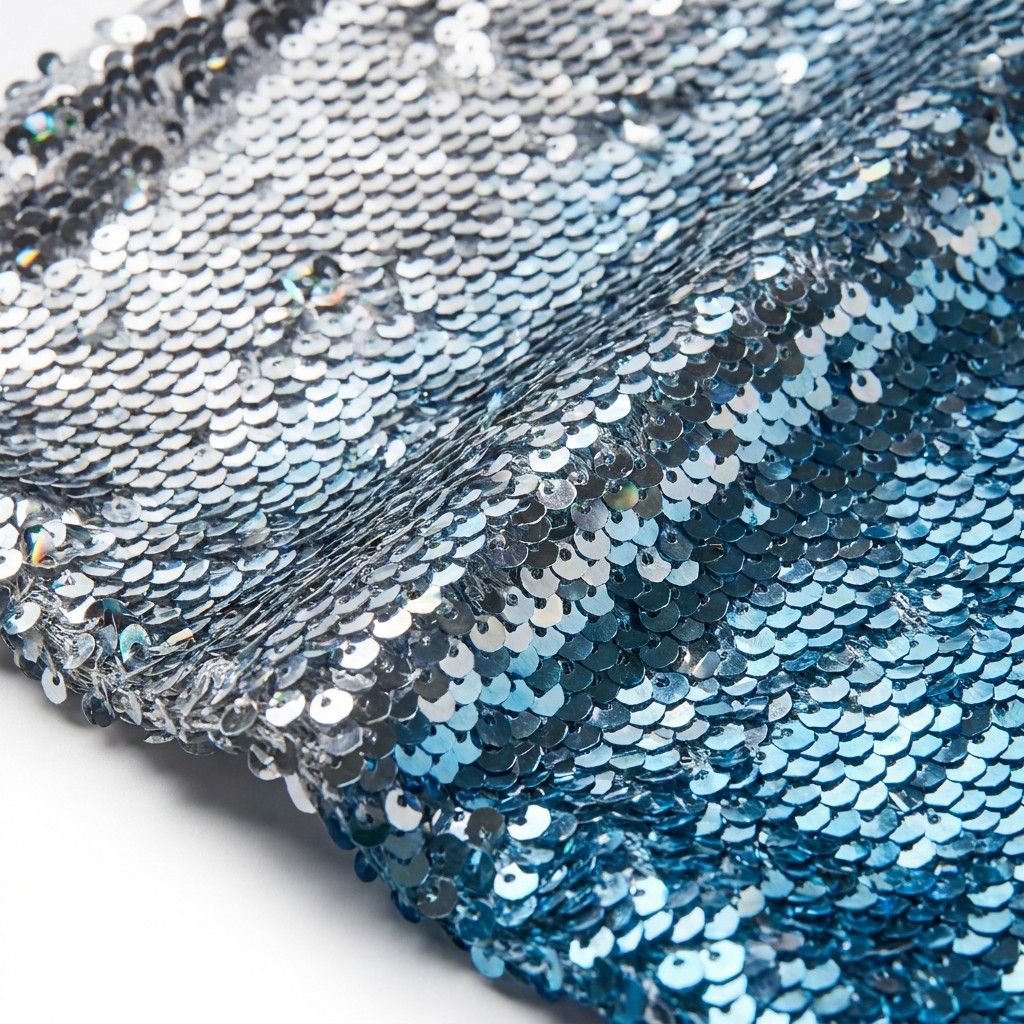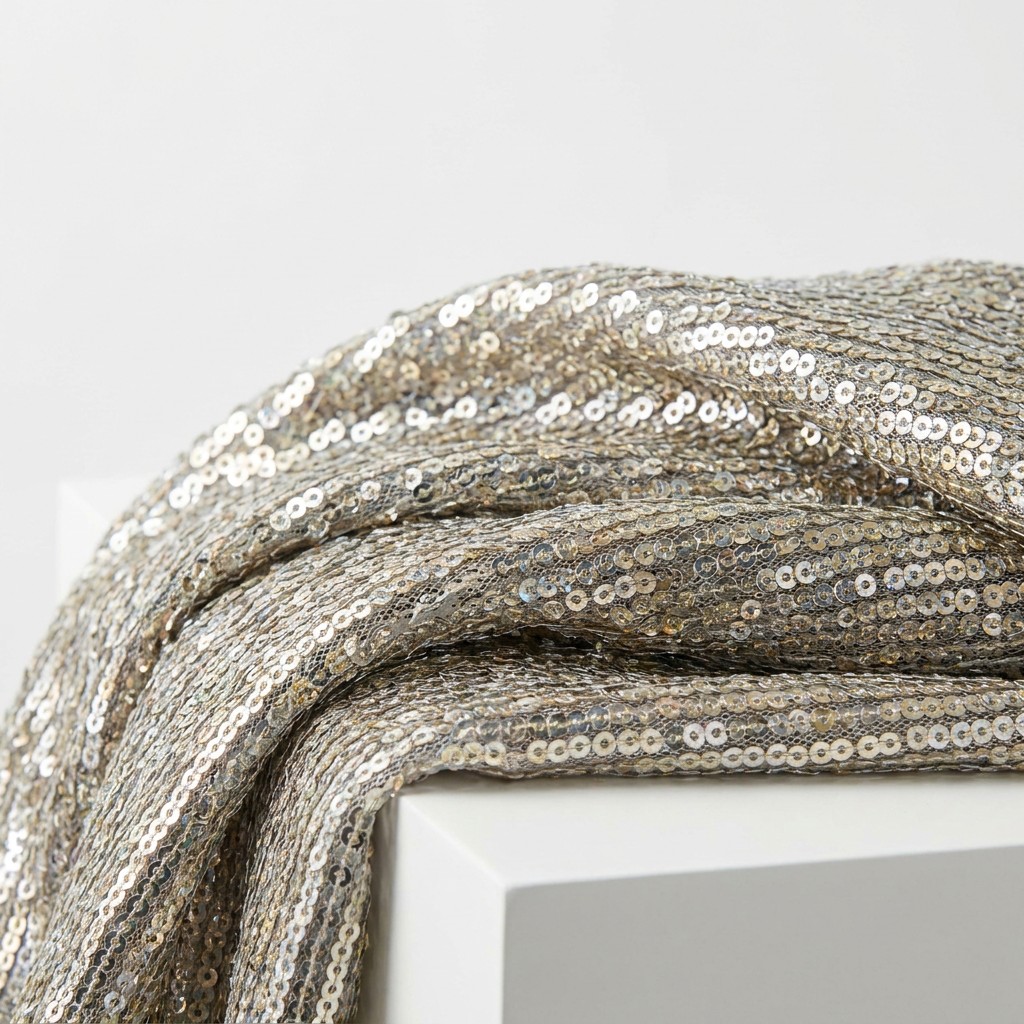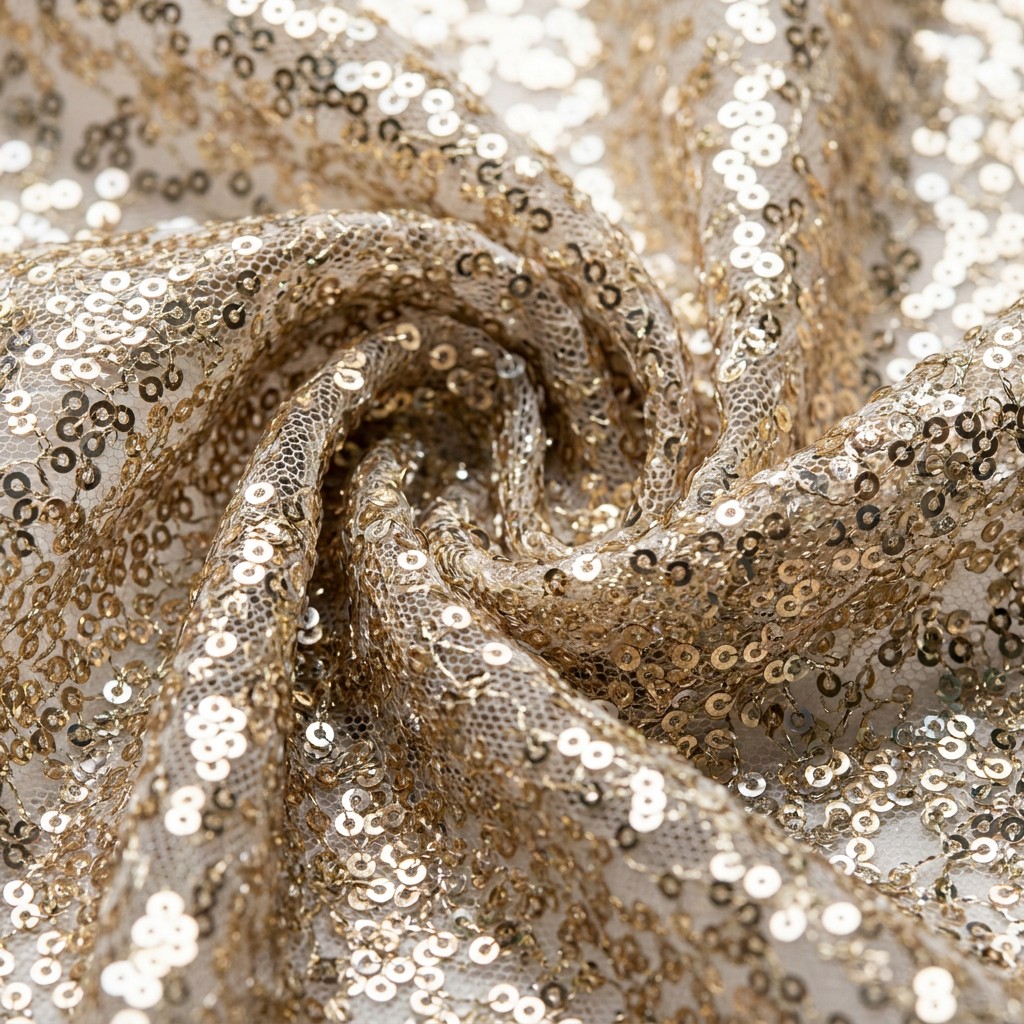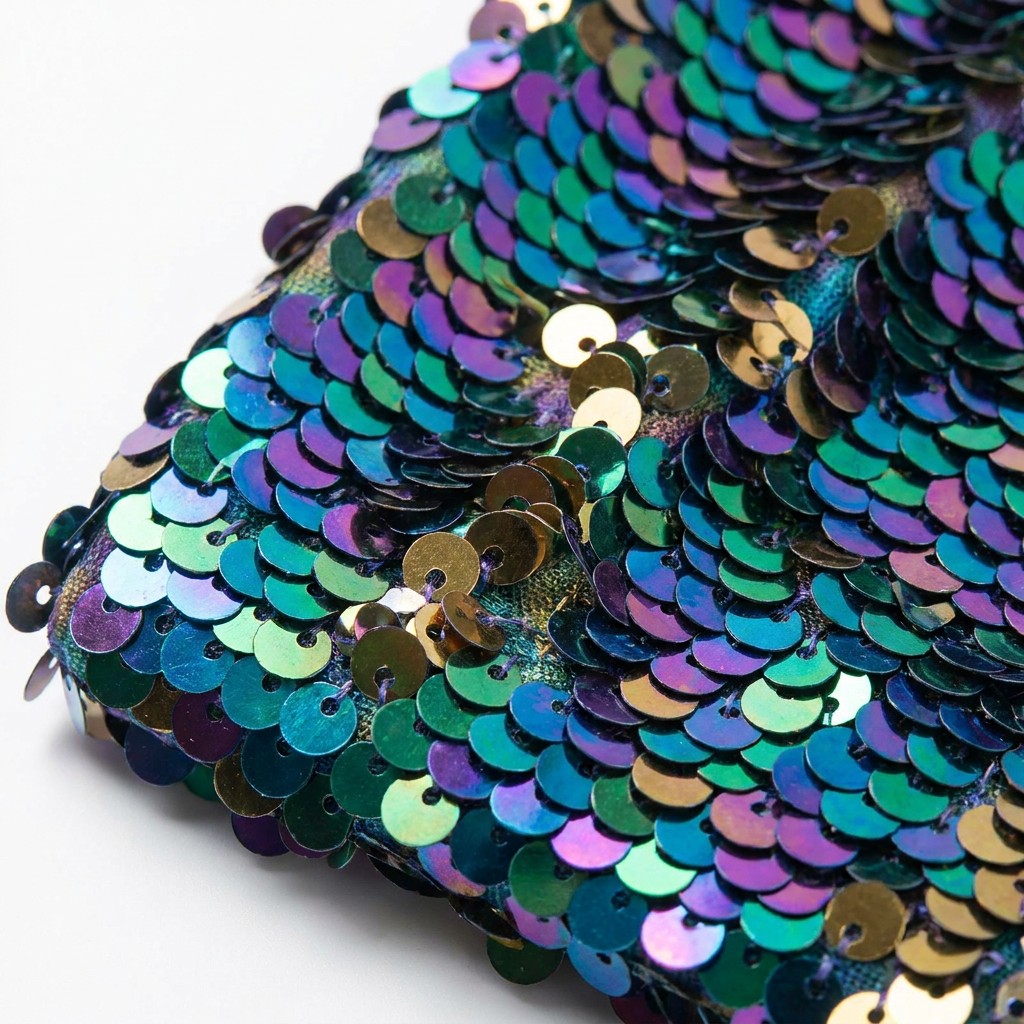
Quick answer: Sequin fabric drape is the way a sequinned cloth falls, folds and recovers under its own weight. To control sequin fabric drape before a bulk order, test three things on the exact base cloth and sequin size you plan to buy: how fast a hanging panel drops, how deep the folds sit, and how quickly the panel returns to flat. Record those three results beside your approved sample reference, then check the bulk lot against the same numbers.
Key Takeaways
- Sequin fabric drape is driven by base cloth weight, sequin size and stitch density — not by colour or finish.
- Test drape on a long cut panel, not on a swatch card. Sequin cloth only shows its true fall on panels of 60 cm or more.
- Write drape requirements into the spec sheet as measurable fields such as fold depth and recovery time, never as adjectives.
- Compare every bulk lot to the approved panel using the same support bar, the same drop height and the same lighting.
- Ask your supplier to submit a drape panel with every sample set, so fall and coverage can be reviewed together.
What Sequin Fabric Drape Means in Practice
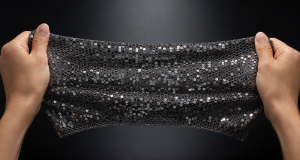
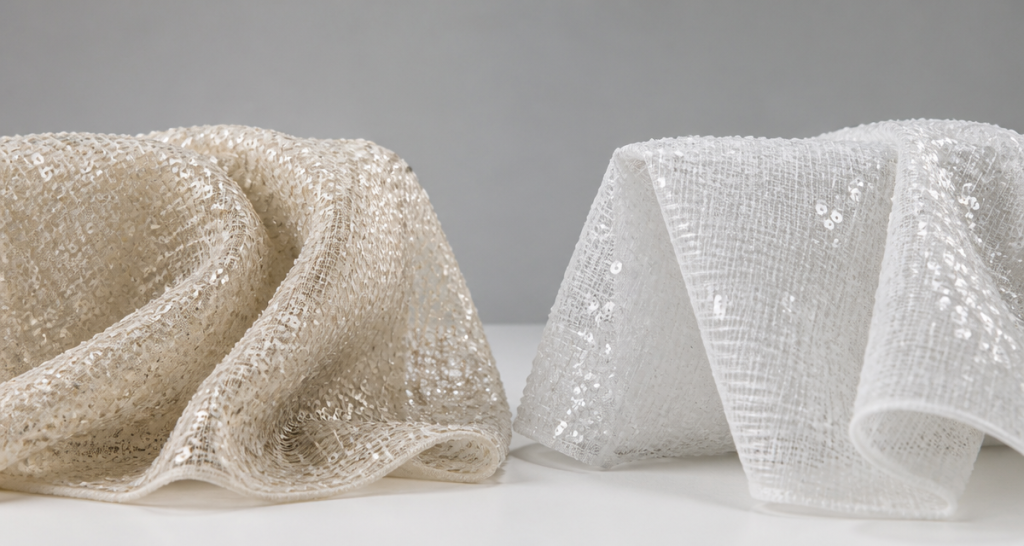
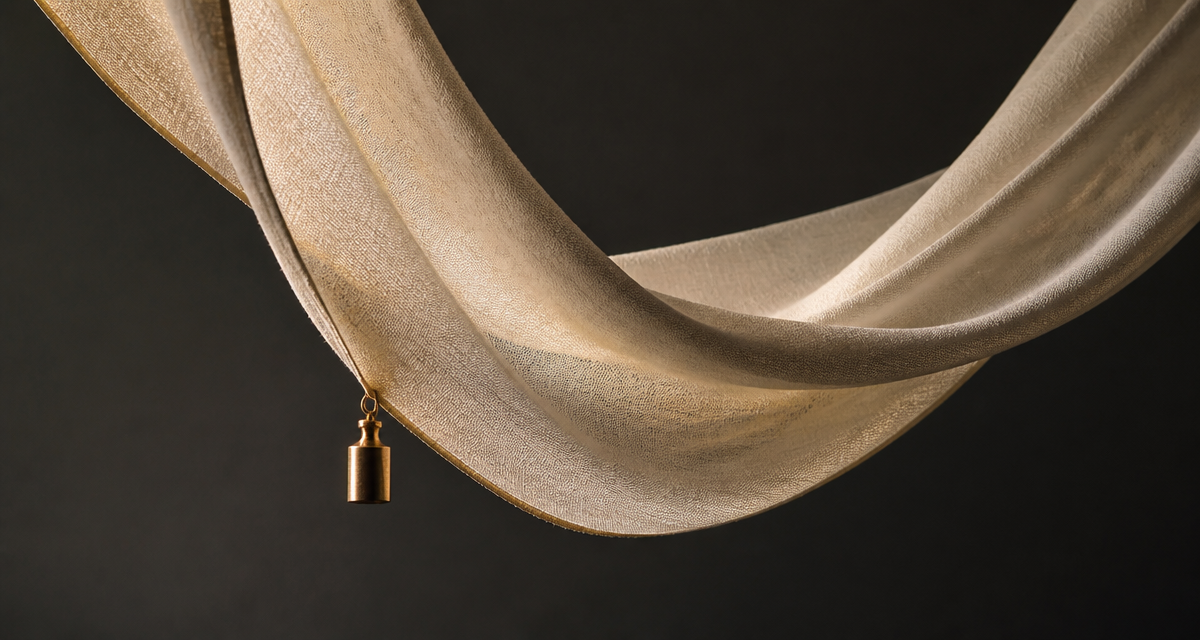
Sequin fabric drape is the combined behaviour of a sequinned textile as it hangs: how quickly it falls, how tightly it folds, and how much of its original flatness it recovers after the fold is released. The term covers movement, not just softness.
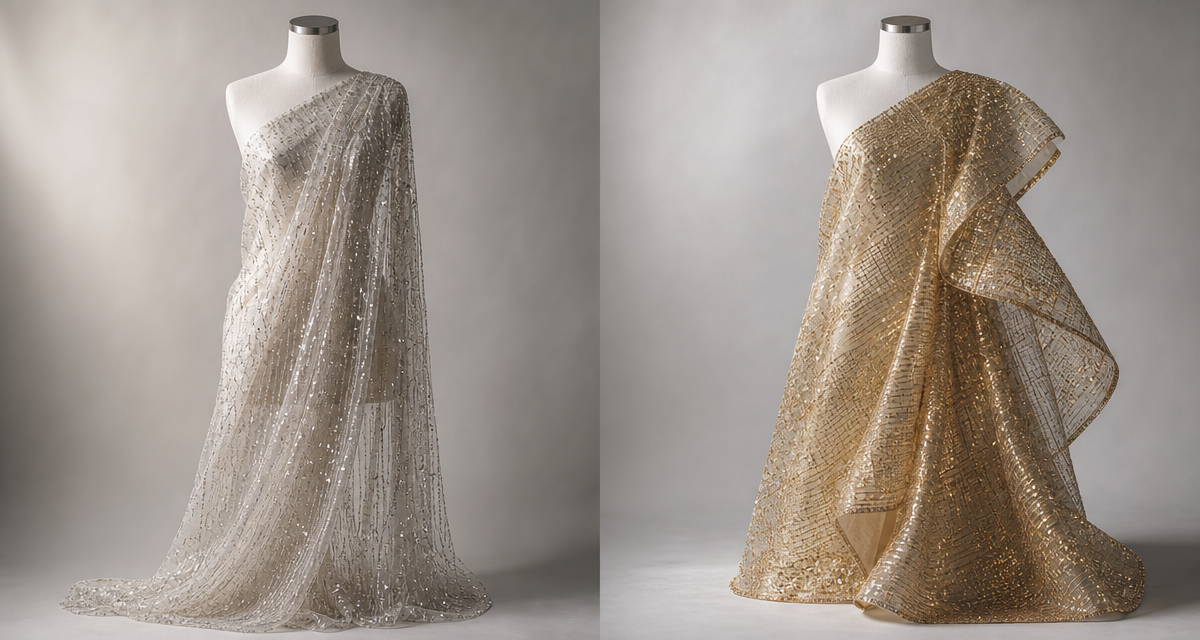
Drape decides how a finished garment reads on a body and in front of a camera. A deep, slow fall gives eveningwear its weight and its long vertical lines. A tight, springy fall keeps a costume skirt in a crisp shape on stage. Event backdrops sit between the two, because a panel that falls too fast looks limp on camera while a panel that stays stiff looks flat.
Drape also drives cost. Fabric that folds tightly uses less material to cover a given drop, so the same drape target can move the fabric requirement per garment by a noticeable margin. That is why buyers should settle drape before they settle price.
How to Test Sequin Fabric Drape Before You Order
A drape test does not need a laboratory. It needs a repeatable method, a fixed panel size and a written record. Follow these steps in order.
- Cut a full-width panel at least 60 cm long. Short swatches hide the weight of the sequin row and give a false reading.
- Hang the panel from a straight support bar. Clamp the top edge evenly so no corner pulls ahead of the rest.
- Photograph the fall from 90 degrees. Use the same camera distance and the same light for the sample and for the bulk lot.
- Measure fold depth. Hold a ruler to the deepest fold and note the number in centimetres.
- Time the recovery. Lift the panel, let it drop, and count how many seconds pass before the folds stop moving.
- Repeat with the bulk lot. Run the identical test and compare both numbers with your approved record.
Two buyers using the same panel and the same bar will reach the same conclusion. That shared method is what turns drape from an opinion into a specification.
Drape Control Sheet: Fields to Record
| Field | How to measure it | Why it matters |
|---|---|---|
| Base cloth | Name weight and construction | Sets the ceiling for how soft the panel can fall |
| Sequin size | Record in millimetres | Larger sequins add weight and reduce folding |
| Fold depth | Deepest fold in centimetres | Controls how much fabric a garment consumes |
| Recovery time | Seconds until movement stops | Separates a slow luxury fall from a springy look |
| Panel length | Fixed at 60 cm or more | Keeps sample and bulk results comparable |
| Lighting setup | Same lamp, same distance | Stops shadow from disguising a stiff panel |
Keep this sheet with the approved sample. It takes a few minutes to complete and it prevents weeks of dispute later.
What Changes Drape Between Sample and Bulk
Most drape complaints start with a sample that was made under different conditions from the bulk run. Four inputs explain nearly all of them.
Base cloth weight and finishing
A soft chiffon base falls in narrow, close folds. A crisp organza base holds wide, sculpted folds. If the base cloth is swapped between sampling and bulk, the fall changes even when the sequin spec stays identical. Read more in our guide to choosing base fabric for sequin and embroidery applications.
Sequin size and spacing
Bigger sequins carry more weight per square metre, so the panel falls faster but folds less often. Wider spacing removes weight and lets the base cloth behave more like plain fabric.
Stitch and thread
Tight stitching locks the sequins onto the mesh and stiffens the panel. Consistent thread tension across a long run keeps the fall even from the first metre to the last.
Storage and packing
Fabric that has been rolled tightly for weeks can fall differently on the first day after unpacking. Let the panel relax before you judge it, and note the rest time on the sheet.
Write Drape Requirements Into the Spec Sheet
Use measurable language. A spec line such as “soft drape” means something different to every supplier, so replace it with fields your team can check on arrival.
- Base cloth name, weight and construction.
- Sequin size in millimetres and rows per centimetre.
- Target fold depth in centimetres, with a tolerance band.
- Target recovery time in seconds.
- Panel length, bar height and light source used during approval.
- Reference photograph attached to the approved sample.
Once those six lines exist, a drape discussion becomes a comparison of two sets of numbers. That is far faster than arguing about how a fabric feels.
Source sequin fabric direct from the factory
Compare base cloths, sequin sizes and drape options with real production photos and specifications.
Drape for Garments and Drape for Event Panels
Garment drape and panel drape are judged differently, even though the test method is the same.
On a garment
On a body, drape has to survive movement. A cloth that hangs beautifully on a hanger can still stiffen across the hip once the garment is sewn and lined. Test the panel after construction, not only before it.
On event panels and backdrops
A backdrop is viewed against a wall under artificial light, so the priority shifts from flexibility to consistency across a wide width. Two lengths joined side by side must fall at the same rate, otherwise the seam shows in every photograph. Always check a joined panel rather than a single length.
Where both uses meet
In both cases the buyer is really asking one question: will this cloth behave in production the way it behaved in the sample? A written drape sheet is what turns that question into an answer your team can verify on arrival.
Frequently Asked Questions
Does sequin fabric drape better on chiffon or organza?
Neither is better. Chiffon gives a soft, narrow fall that suits fluid eveningwear. Organza gives a wider, sculpted fold that suits structured silhouettes. Choose the base cloth that matches the shape you are building, then test the panel.
Why does my bulk lot hang stiffer than the approved sample?
The usual causes are a heavier base cloth, tighter stitching, a larger sequin size or a longer packing time. Run the same panel test on both and compare fold depth and recovery time before you raise a claim.
Can I improve drape without changing the sequin size?
Yes. Moving to a lighter or softer base cloth, or loosening the stitch setting slightly, will change the fall while the sequin returns on the surface stay the same. Confirm the change on a panel, because sequin seating can shift with thread tension.
How long should a drape test panel be?
Use at least 60 cm. Panels shorter than that do not carry enough sequin rows to show the true fall, and the difference between two cloths disappears.
Does drape affect fabric cost per garment?
It does. A panel that folds tightly covers more area with less material, so the same silhouette can need a different length per piece. Combine the drape sheet with a yield check, as described in our guide to fabric width and usable yield for sequin collections, and then run the numbers through the real cost of wholesale sequin fabric.
Request Sequin Fabric Samples
Request Sequin Fabric Samples and ask for a drape panel with every base cloth you are considering. Orders start from 200 yards, and sample sets can include several base options so you can run the panel test side by side.
Send your drape target, base cloth preference and sequin size to Morris at morris@yunfantextile.com. For a fast reply, message us on WhatsApp: +86 156 3752 5803 or +86 175 1619 6727. Share a reference photo of the fall you want, and we will match the base cloth and sequin spec to it.
Conclusion
Sequin fabric drape is a measurable property, not a matter of taste. Fix the panel length, the support bar and the lighting, record fold depth and recovery time, and keep those numbers beside your approved sample. Every later conversation then rests on shared data, and the garment you receive falls the way the one you approved did.