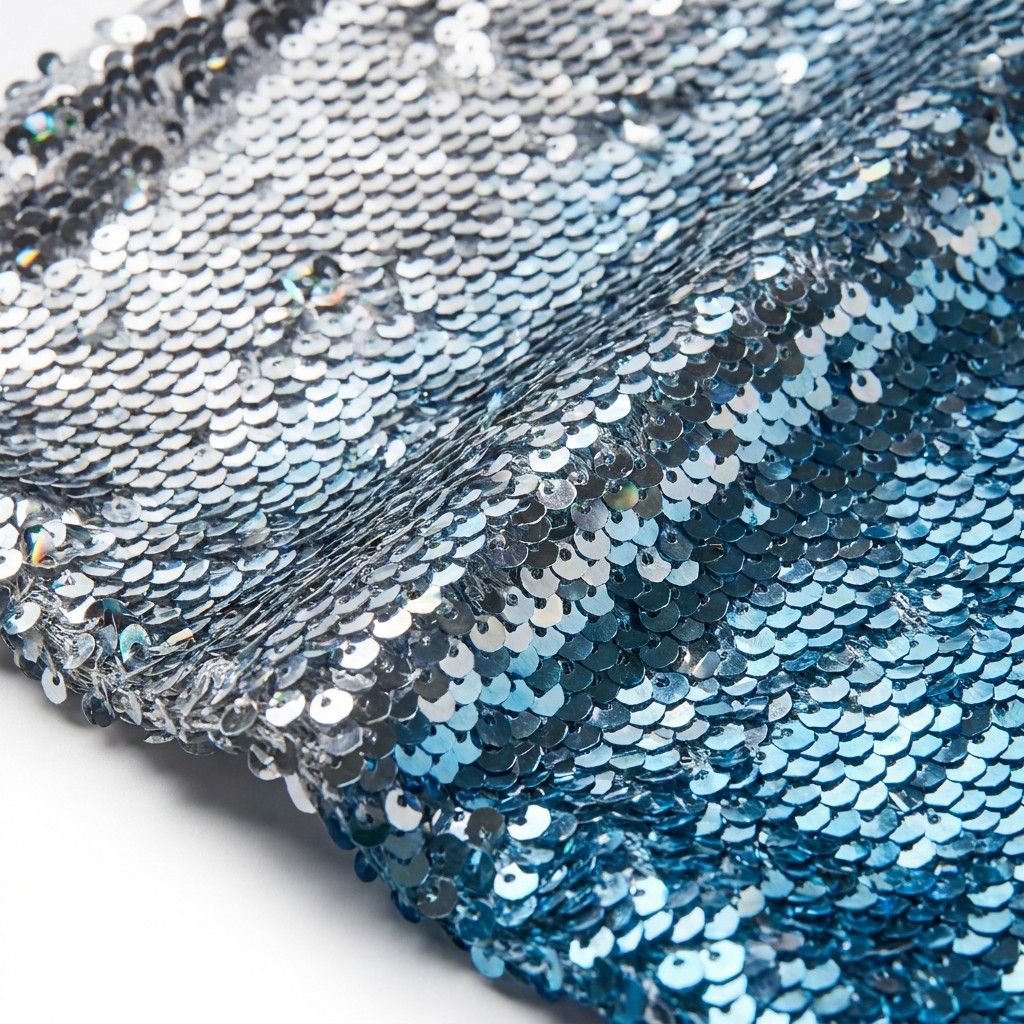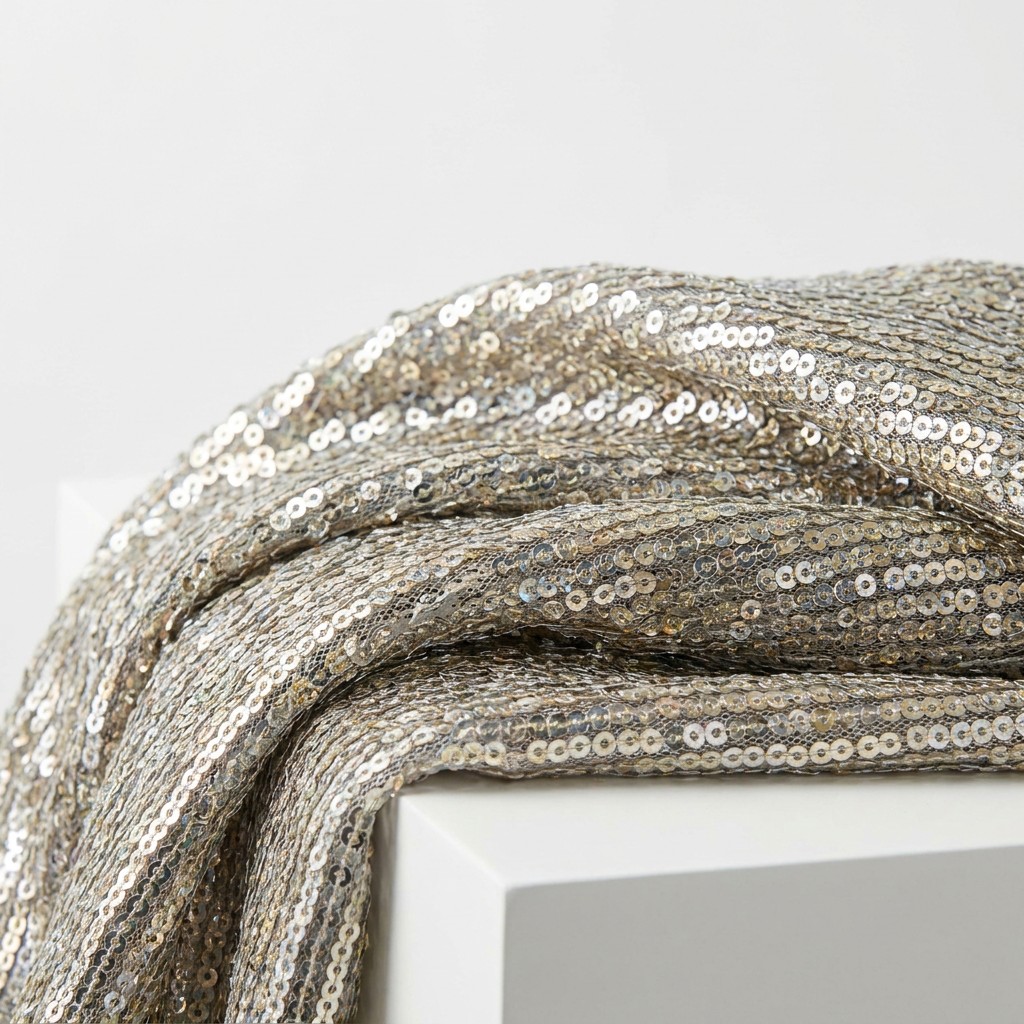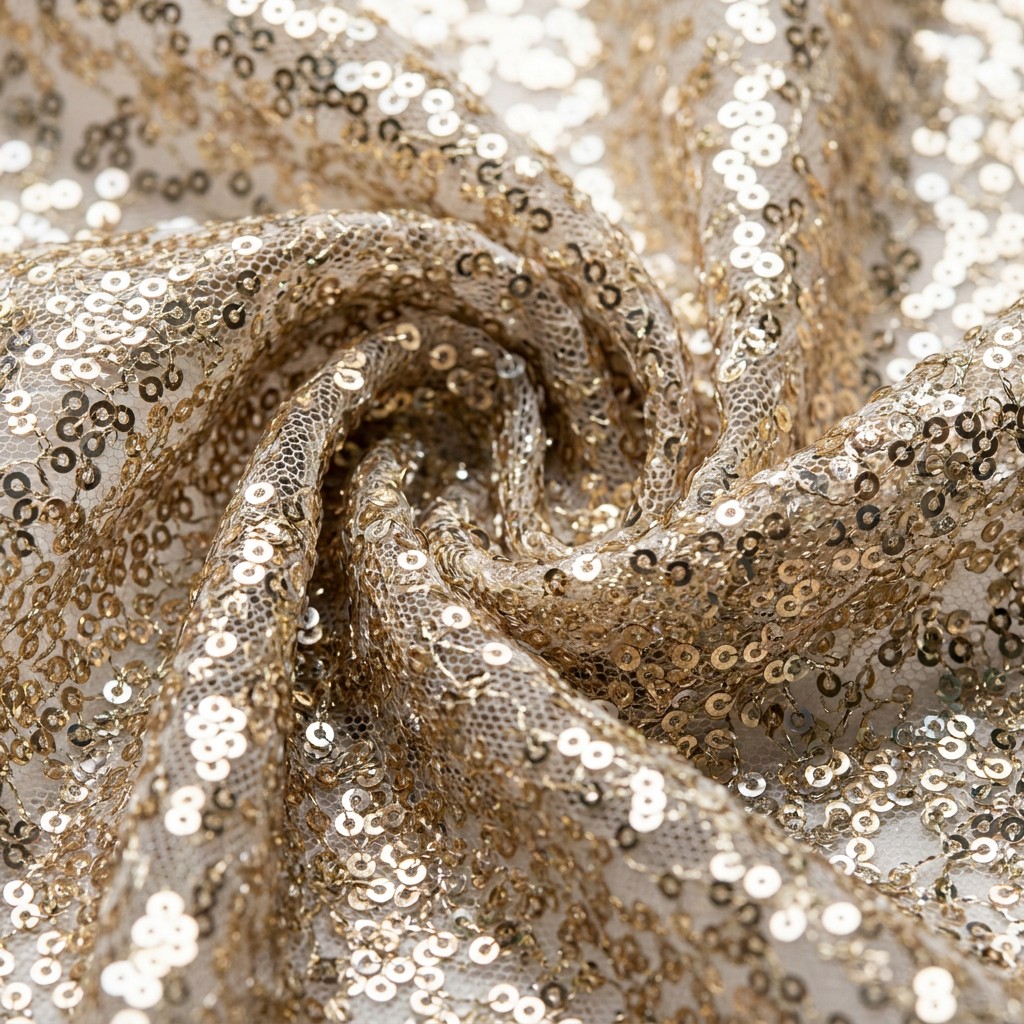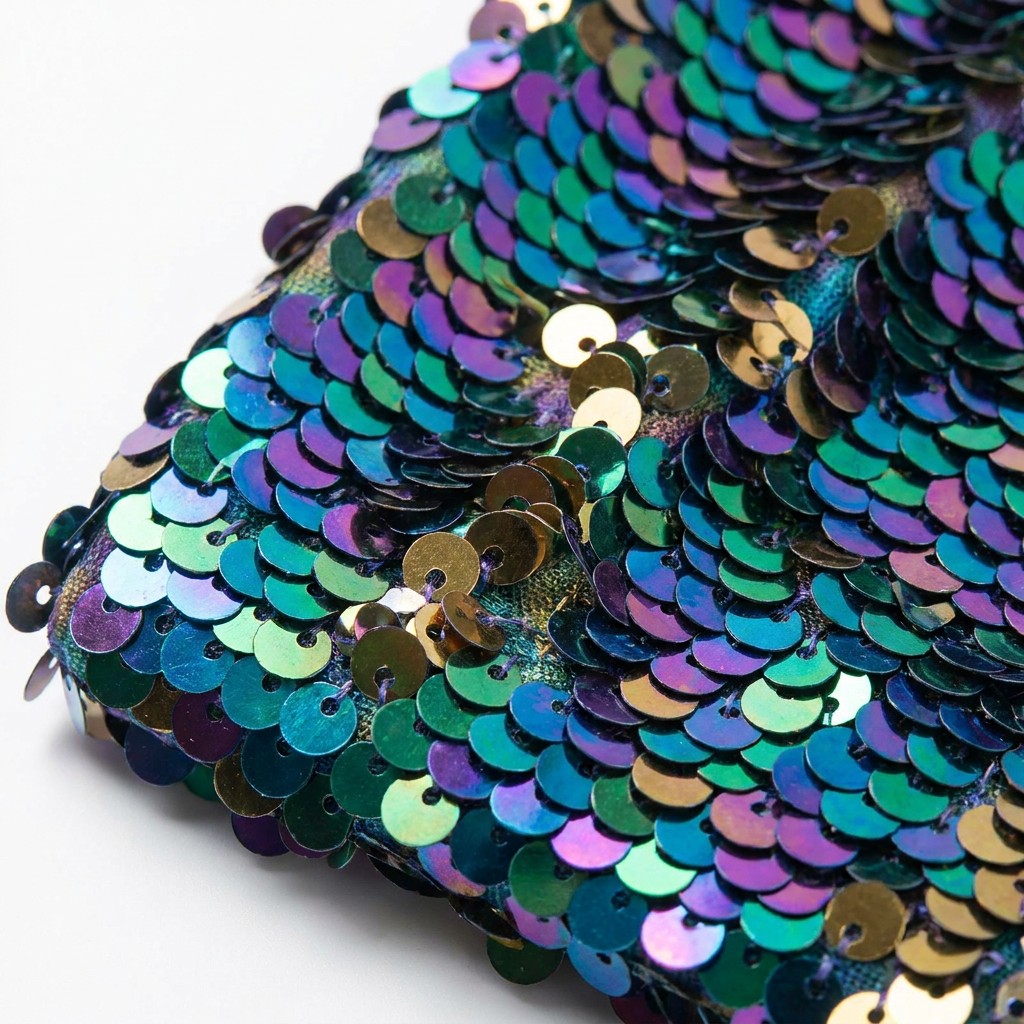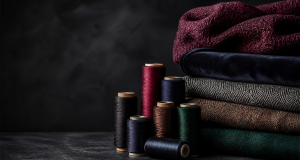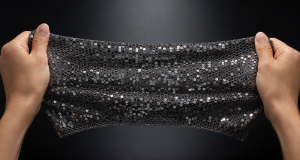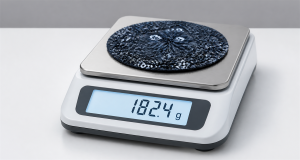
Sequin fabric backing is the layer that sits behind the sequin surface and carries the weight of every disc, thread and seam. It decides how a garment feels against bare skin, how the hem behaves after a long evening, and how much rework your production line absorbs. Choose it late, and you inherit scratchy armholes, sagging panels and seams that will not lie flat. Choose it early, and most comfort problems disappear before the first sample is cut.
Buyers often treat the backing as an afterthought and spend their attention on the sparkle instead. That habit is costly. The sequin surface is the part your customer sees, but the backing is the part their skin feels. This guide explains what a backing does, how to compare the options, and which checks to run before you approve a sample.
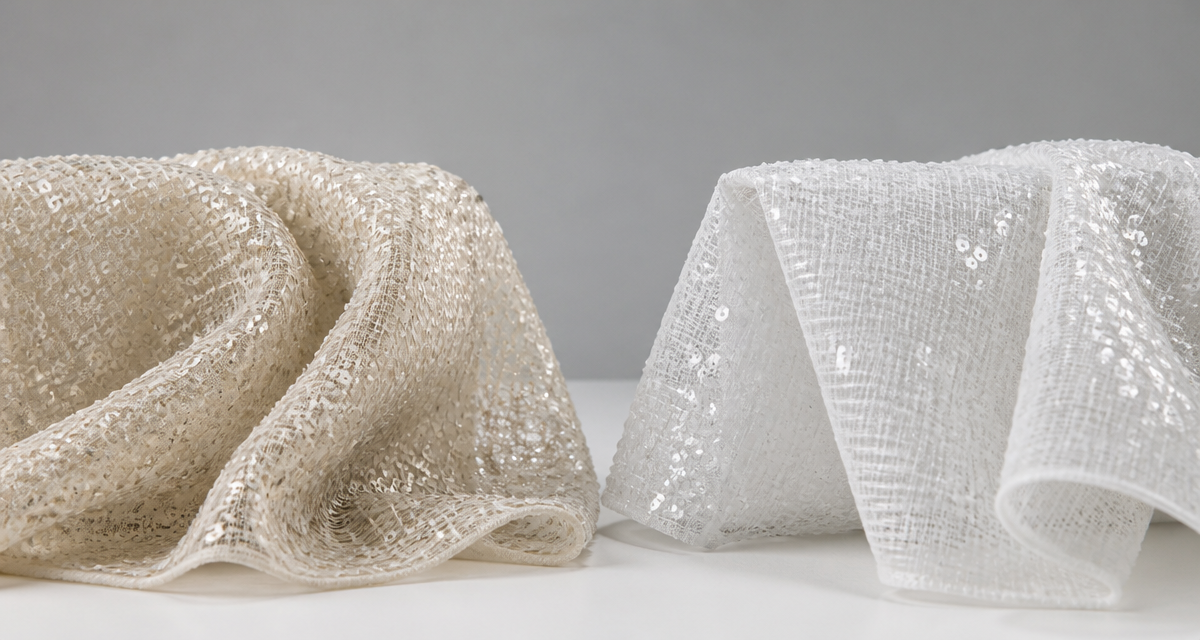
What Sequin Fabric Backing Has to Do
A sequin surface is abrasive by design. Every disc edge is a small, hard point that rubs against whatever sits beneath it. A backing answers that problem, and it usually does five jobs at once.
- It separates hard sequin edges from the skin, so the garment stays wearable through a long event.
- It hides the reverse of the stitch line, the mesh ground and any embroidery backing.
- It gives the ground fabric extra body, so panels do not collapse or cling.
- It stabilises seams, which reduces puckering and skipped stitches.
- It protects the sequin application from abrasion on the inside of the garment.
Missing any one of those jobs shows up later. A backing that hides the reverse but adds no body still gives you a sagging hem. A backing that adds body but has a rough face still scratches.
How to Choose Sequin Fabric Backing in Five Steps
Work through these steps in order, because each one narrows the field for the next.
- Start from the ground fabric. A sheer mesh ground needs a smooth, soft backing to separate the discs from skin. A dense satin or crepe ground may need only a light inner layer. A stretch knit ground needs a backing with similar recovery, so both layers move as one.
- Match the weight, not just the colour. A backing that is too light will not hold a heavy sequin application. A backing that is too heavy stiffens a soft drape and changes the silhouette you already approved.
- Test stretch in both directions. Stretch the paired layers by hand across the width and along the length. If one layer recovers and the other does not, the seam will wave after wear.
- Check the face and the hand feel. Draw the backing face across the inside of your forearm. If it drags, it will irritate a wearer at the armhole, waist or bust line.
- Confirm care behaviour. Ask how the backing responds to the care method your garment will carry. A backing that shrinks differently from the ground distorts the panel after the first clean.
Backing Options and What They Suit
Most sequin garments use one of four practical approaches. The table below maps each approach to the comfort and stability problem it solves.
| Backing approach | Best for | Comfort effect | Stability effect |
|---|---|---|---|
| Soft mesh lining layer | Sheer and lightweight sequin grounds | Smooth against skin | Light body only |
| Stretch knit lining | Bodycon, dancewear and knit grounds | High, moves with the body | Preserves recovery |
| Woven satin or crepe layer | Structured eveningwear and bridal | Moderate | Strong shape support |
| Bound or faced seam finish | Opaque grounds and open-back styles | Targeted at seams | Controls seam edges |
None of these is universally correct. The right answer depends on the ground weight, the sequin size and the silhouette you promised your buyer.
How Ground Fabric Changes the Backing Decision
Sheer mesh and tulle grounds
These grounds show everything underneath, so the backing must be visually quiet and physically smooth. A soft meshes or a fine tricot works well when the style calls for light coverage. Avoid a backing with a heavy sheen, because it will read through the sequin surface under stage lighting.
Satin, crepe and structured grounds
Here the ground already provides opacity and body. The backing is often a light inner layer plus a clean seam finish rather than a full second garment. Keep the backing lighter than the ground so the drape stays fluid instead of board-like.
Stretch knit and spandex grounds
Recovery matters more than weight. Choose a backing with a similar stretch percentage and a similar return rate, then sew a test seam with the same stitch and thread you plan for bulk. Mismatched recovery is the most common cause of wavy seams in stretch sequin garments.
Backing Check Fields Before Sample Approval
Add these fields to your sample review sheet. Record a value for each one, and keep the signed sheet with the approved swatch.
- Ground fabric and weight. Record the ground type, yarn and measured weight.
- Backing type and weight. Name the backing and record its measured weight.
- Stretch direction and recovery. Note both stretch axes and how each layer returns.
- Face feel result. Record the forearm drag test outcome and any noted roughness.
- Seam behaviour. Note puckering, waviness or seam slippage on the sewn sample.
- After-care behaviour. Record shrinkage and surface change after the agreed care method.
- Approved swatch reference. Attach the swatch and reference its media record.
If your team already runs a review sheet for fabric approvals, add these fields to it rather than creating a second document. One sheet is easier to defend when a repeat order arrives months later. We describe that workflow in our guide to preparing a fabric sample review sheet for B2B approvals.
Comfort and Stability Signs to Watch in a Wear Test
A wear test is the fastest way to catch a backing problem. Ask two people of different sizes to wear the sample for at least one hour. Then check four things.
- Skin contact points. Look for redness or pressure marks at the armhole, bust and waist.
- Hem behaviour. Check whether the hem has dropped or started to wave.
- Seam lines. Look for puckering that was not present on the flat sample.
- Panel shape. Compare the worn panel against the technical drawing.
Small defects at this stage cost you a sample. The same defects in bulk cost you a season, because a backing change forces every pattern and seam to be re-tested. That is why we treat the backing as a specification item and not as a finishing detail.
Where the Backing Decision Connects to the Rest of the Order
Backing choice rarely stands alone. It ties into the ground fabric, the sequin size and the construction method. A heavier sequin needs more support. A larger sequin changes how the panel falls. If those decisions are still open, settle them before you finalise the backing.
You can review the ground options in our guide to choosing sequin fabric base cloth and the surface scale in our comparison of 3mm, 5mm and 18mm sequin fabric. For styles that sit directly on the body, our note on planning lining and layering for sequin garments covers the order of layers.
Frequently Asked Questions
Does every sequin garment need a backing layer?
No, but most benefit from one. Garments that touch skin at the armhole, bust or waist need separation from the sequin edges. A simple bound seam finish can be enough on a structured, opaque piece.
Can I use the same backing across a whole collection?
Often yes, and one backing simplifies sourcing and repeat orders. Test stretch grounds separately, because a backing that suits satin can restrict a knit.
Should the backing match the sequin colour or the skin tone?
Both work. A matching backing keeps the surface colour clean. A skin-tone backing softens the look under sheer overlays. Test both under the lighting your customer will actually see.
How do I stop a backing from showing at the hem?
Cut the backing slightly shorter than the outer layer, then check the drop on a sewn sample after it has rested. Pressing and weight both change the final fall.
Key Takeaways
Sequin fabric backing is a comfort and stability decision, not a cosmetic one. Start from the ground fabric, match the weight, test stretch in both directions, check the face feel, and confirm care behaviour. Record every result on your sample review sheet so a repeat order matches the approved swatch. Do that, and the backing stops being a risk and becomes the reason your sequin garments feel as good as they look.
Need Sequin Fabric for Your Next Collection?
We supply sequin, embroidered and decorative fabric for fashion, bridal and event collections worldwide, with sample support before bulk orders.
Request Sequin Fabric Samples
Tell us your ground fabric, target sequin size and backing preference so we can prepare a sample set for your review.
Morris
Phone / WhatsApp: +86 156 3752 5803
Alternative: +86 175 1619 6727
Email: morris@yunfantextile.com