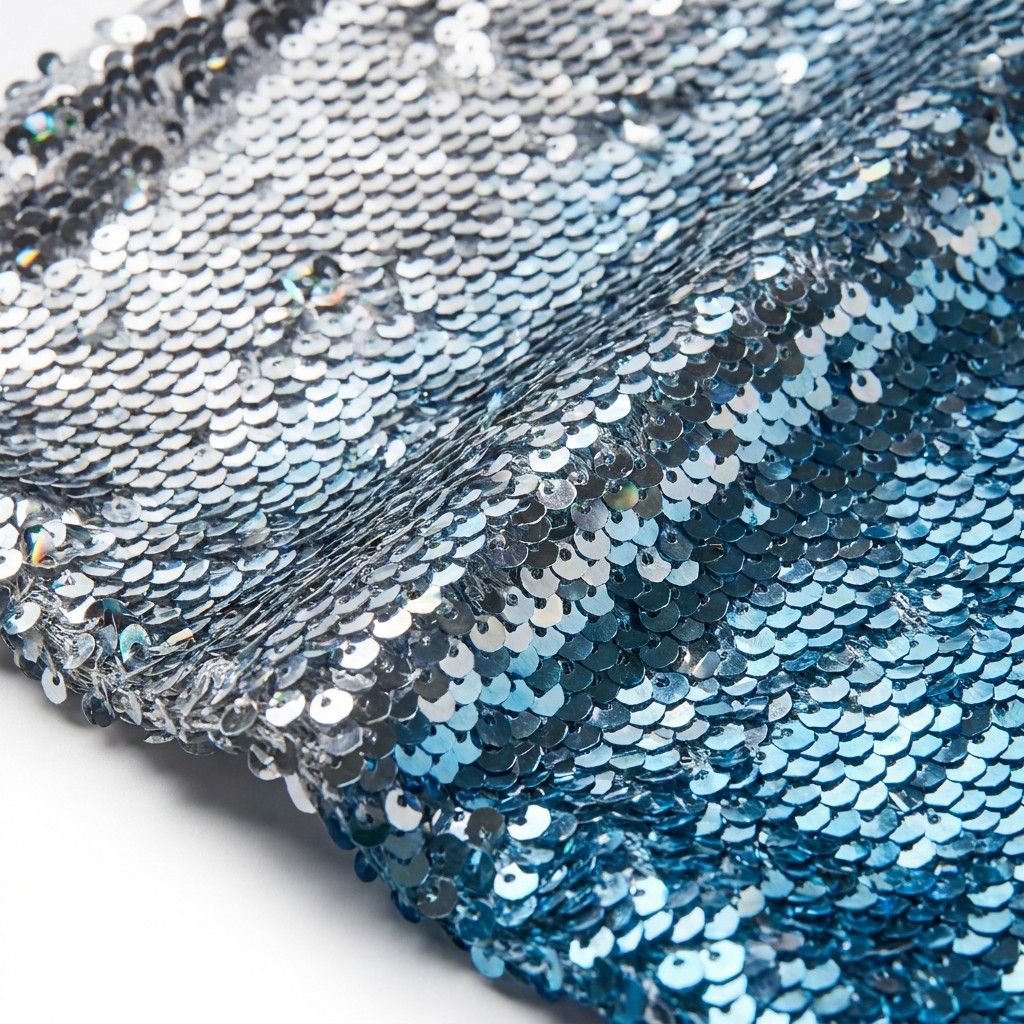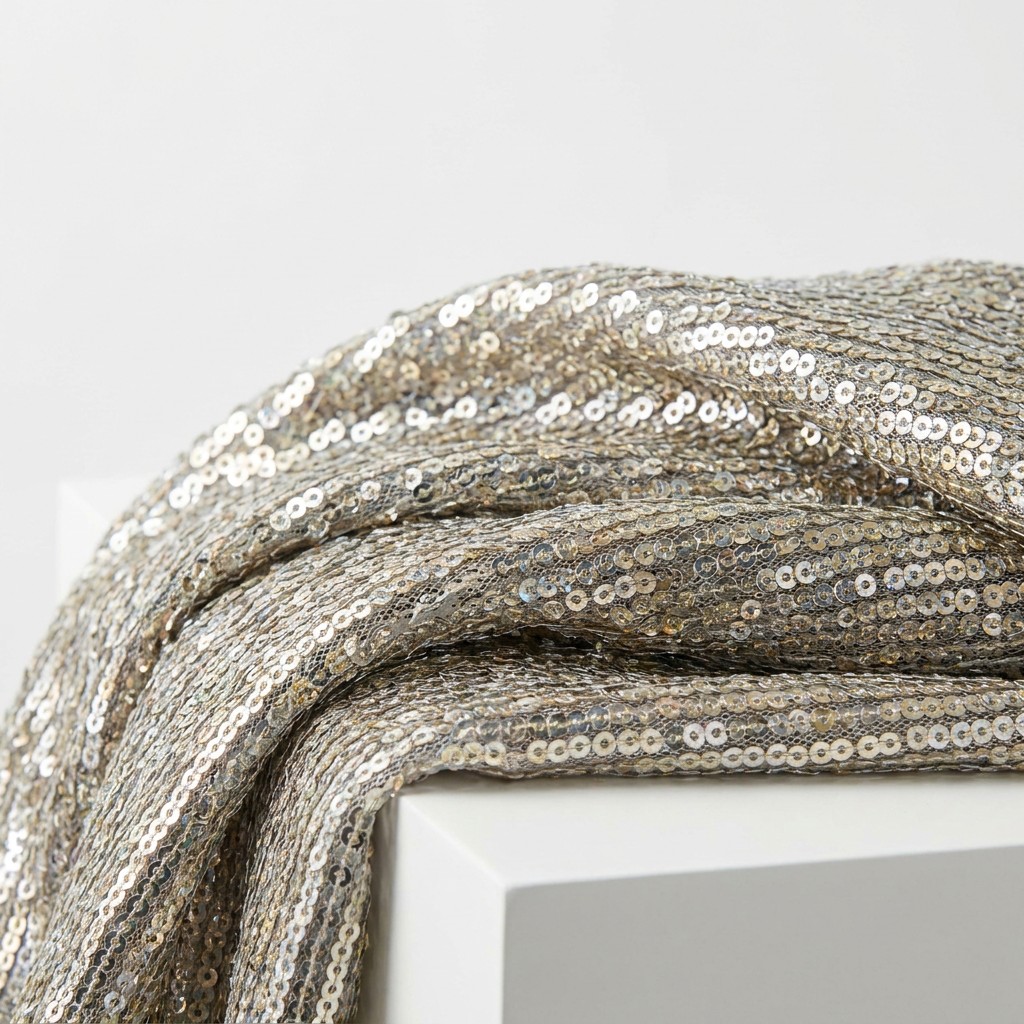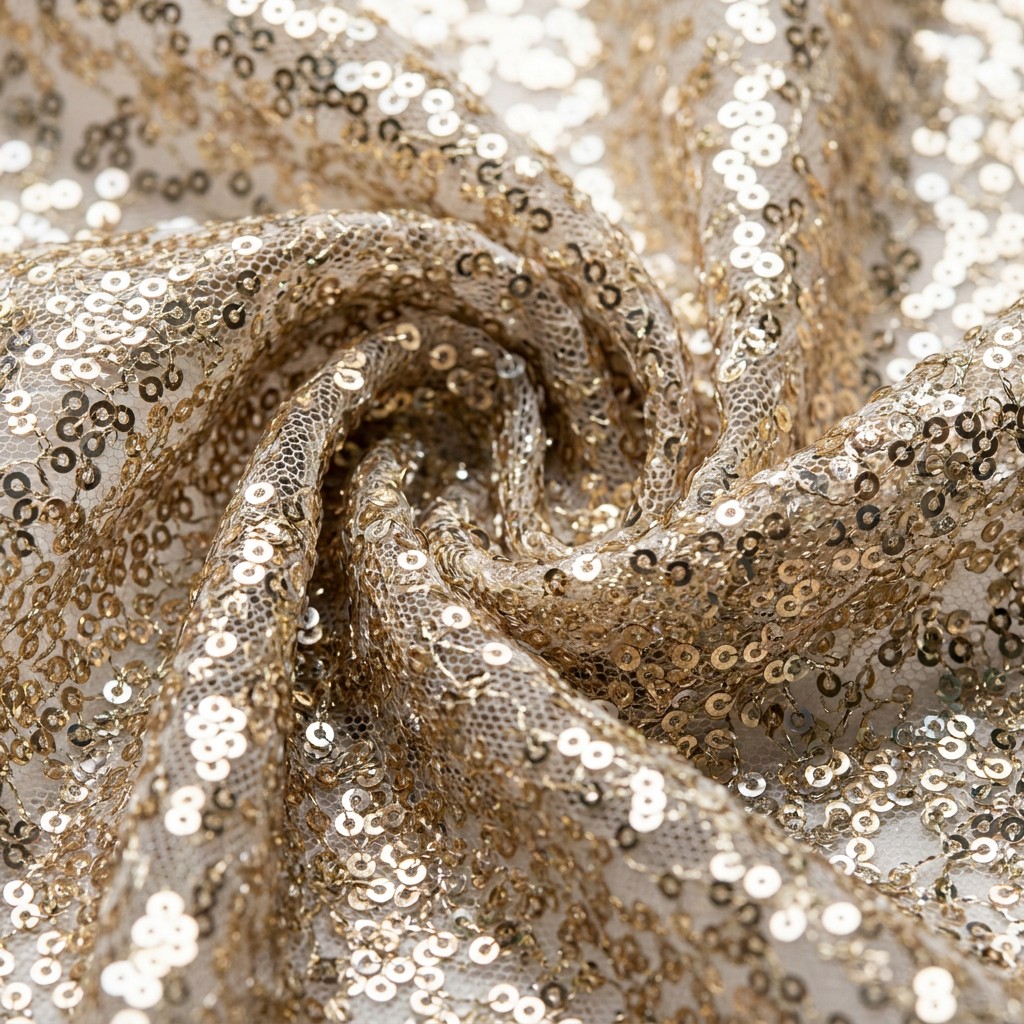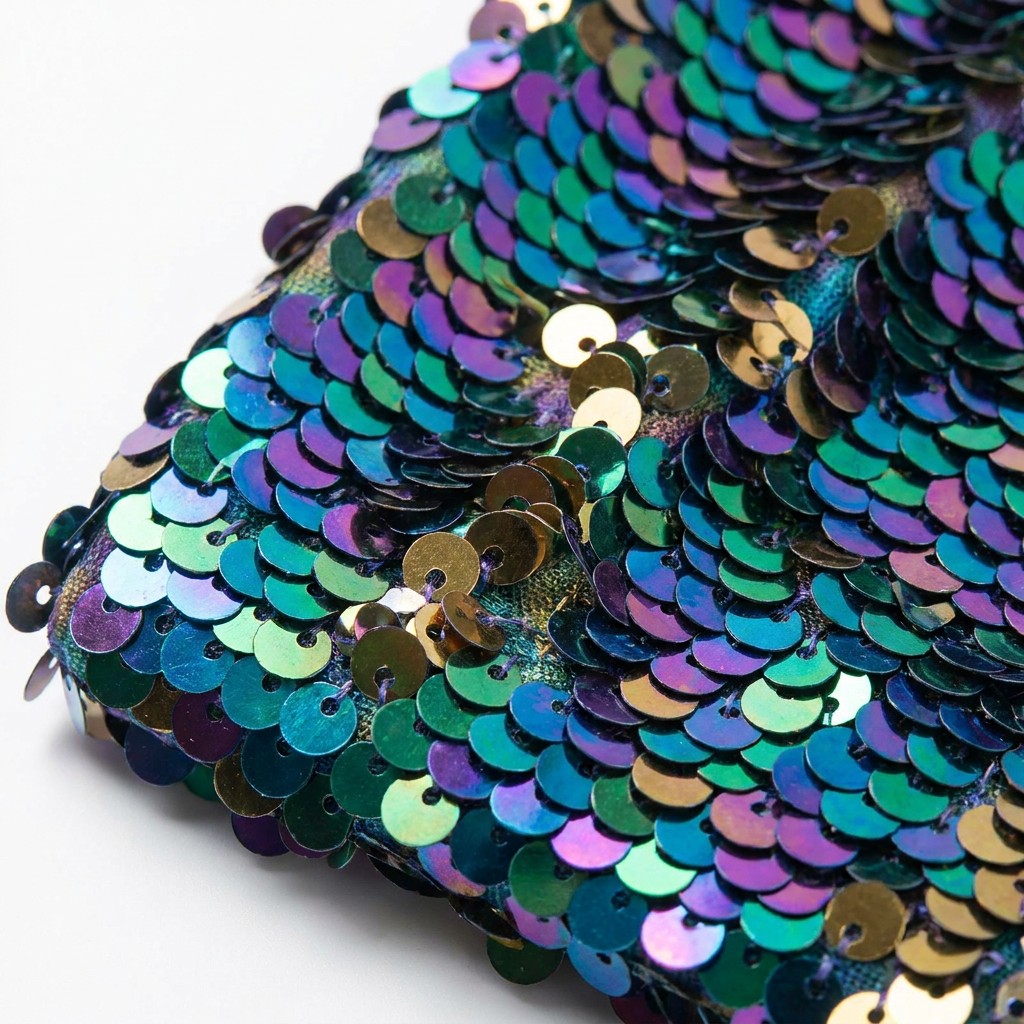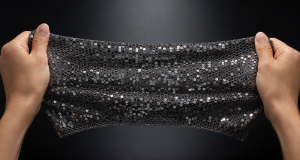
Sequin fabric reflectivity is how much light a sequin surface returns to the viewer, and it depends on the sequin finish, the sequin angle and the light source itself. Two fabrics that look identical on a swatch table can behave completely differently under a stage beam or a warm dinner light. That is why a reflectivity comparison only means something when you run it in a room that resembles the final venue.
Production designers and eveningwear buyers both need this answer early, because reflectivity affects camera exposure, colour perception and the reading of the silhouette. This guide shows a repeatable comparison method, the fields worth recording, and the mistakes that make a test useless.

What Sequin Fabric Reflectivity Actually Measures
Sequin fabric reflectivity is the proportion of incoming light that a sequin surface sends back toward the viewer, shaped by the sequin finish, its tilt and the light source around it. Four factors drive the result.
- Finish. A mirror-like metallic sequin returns a narrow, intense highlight. A matte or frosted sequin spreads light across a wider area.
- Sequin tilt. Sequins that sit flat reflect in one direction. Sequins that sit at an angle scatter light and read brighter from more seats.
- Density. A denser coverage returns more light, because fewer dark ground areas interrupt the surface.
- Base colour. A white or pale ground lifts the surface. A black ground absorbs and makes the sparkle read as isolated points.
Those four factors interact. A flat matte sequin on white mesh may read softer than a tilted metallic sequin on black, even when the sequin sizes are identical.
How to Compare Sequin Fabric Reflectivity in Six Steps
Run every sample through the same sequence. Consistency matters more than a perfect room.
- Fix one light source. Use the lamp or beam your production will actually use, at a set distance and angle. Never change it between samples.
- Photograph at three angles. Shoot straight on, then at about thirty degrees, then at about sixty degrees. Reflectivity changes with the viewing angle, and the camera records that change.
- Record a control swatch. Keep one neutral reference sample in every photo so you can compare sets taken on different days.
- Assess from a distance. Step back several metres. Up close every sequin sparkles; at performance distance the difference between finishes becomes obvious.
- Check the unlit reading. Turn the light off and photograph the fabric in ambient room light. Some fabrics look rich in a beam and dull under normal light.
- Note the viewing window. Record how wide the seat range is where the sparkle still reads. A narrow window suits a fixed camera. A wide window suits a live stage.
Sequin Fabric Reflectivity Comparison Table by Finish
Use this table to narrow the field before you run a physical test.
| Sequin finish | Reads best when | On camera | Watch for |
|---|---|---|---|
| Metallic mirror | Light comes from one controlled direction | Strong, narrow highlights | Blown highlights and hot spots |
| Satin or pearl | Lighting is soft and diffused | Smooth, even glow | A flatter look in strong beams |
| Matte or frosted | The look should not overpower the garment | Predictable exposure | Low sparkle at long viewing distances |
| Iridescent or holographic | The light source moves or changes angle | Colour shifts across the frame | Colour cast that fights the design palette |
No single row is the right answer. Eveningwear usually rewards a smooth, controlled return, while stage work often rewards a wider viewing window.
Sequin Fabric Reflectivity Check Fields for Sample Notes
Record these fields for every sample you test. The notes are what let you defend a choice three months later.
- Sequin finish name. Record the finish as your supplier describes it.
- Sequin size and density. Note the size and the coverage level.
- Ground and base colour. Record the ground type and its colour.
- Light source and angle. Record the lamp type, distance and angle used.
- Viewing window. Note the seat range where sparkle still reads.
- Unlit appearance. Record how the fabric reads in ambient light.
- Camera exposure note. Note any clipping, colour cast or metering problem.
- Sample reference. Attach the swatch or photo set to the record.
Store the photo set with your specification. If a supplier substitutes a finish later, the photo set is the evidence you need. Our note on inspection points for bridal and stagewear orders covers the wider approval sequence.
Why the Lighting Room Changes the Answer
Stage lighting
Stage beams arrive from steep, moving angles. A flat sequin can disappear when the beam moves off axis, while a tilted sequin keeps returning light. If your production moves the light, test the fabric with the light moving too.
Warm evening light
Candle and warm lamp light push a silver surface toward gold and mute cool tones. A champagne or pearl finish usually holds its colour better than a bright white metallic in that setting.
Camera and flash
A camera flash is a hard, on-axis source. It produces a narrow reflection that can clip to pure white and erase surface detail. If the garment will be photographed, test with the flash and check the histogram, not just the preview.
Mistakes That Make a Sequin Fabric Reflectivity Test Invalid
- Changing the light between samples. This single habit destroys the comparison.
- Judging only at close range. Close-up sparkle does not predict performance-distance reading.
- Ignoring the ground colour. Buyers often attribute a ground effect to the sequin finish.
- Testing a flat swatch for a draped garment. Drape creates folds, and folds create shadow lines.
- Comparing under mixed light. Daylight plus ceiling light produces a reading you can never repeat.
Avoid those five and your comparison becomes a specification you can re-run on a repeat order.
How Size and Density Change Sequin Fabric Reflectivity
Reflectivity and sequin size are different variables, and buyers often confuse the two. A large sequin returns one bigger highlight. A small sequin returns many small highlights. The total amount of light can look similar, but the surface texture on camera is not.
- Large paillettes. Produce broad, bold highlights that read strongly from a distance but can look heavy in a close portrait.
- Mid-size sequins. The most predictable option for eveningwear, because they balance highlight size against surface detail.
- Micro sequins. Produce a fine, almost liquid shimmer that suits close camera work but flattens at long viewing distances.
Density then multiplies the effect. A dense surface removes dark gaps and raises the overall return. A sparse surface lets the ground show through and turns the sparkle into isolated points. Decide the size and the density together, then confirm the finish.
Our guide to choosing sequin size and surface pattern covers the sizing decision in more detail, and fabric sourcing for dancewear and performance wear covers the movement factor.
Building a Sequin Fabric Reflectivity Standard
Once you have chosen a finish, turn that choice into a written standard so a repeat order matches it. Record the sequin finish name, the sequin size, the density level and the ground colour. Attach the approved photo set and one physical swatch. Then state clearly what may vary and what may not.
For most eveningwear programmes, the finish and the colour are fixed while the lot number may vary. For stage programmes, density is often the fixed value, because a density change alters the brightness of the whole costume. A short written standard prevents a supplier from making a reasonable substitution that turns out to be visually wrong.
If you want to compare finishes side by side before you decide, wholesale sequin fabric for bridal and eveningwear sets out what buyers usually review together.
Frequently Asked Questions
Is there a reflectivity number I can ask for?
Not a single useful one for garment decisions. Reflectivity depends on angle and light source, so a physical test under your own lighting is more reliable than a single figure.
Which finish suits eveningwear best?
Satin, pearl and softer metallic finishes usually suit eveningwear, because they return light evenly without blowing out under photography. Confirm the choice with a camera test.
Can I mix two finishes in one collection?
Yes, and many designers do. Compare both finishes in the same session so the difference in sparkle is intentional rather than accidental.
How many samples should I compare at once?
Three to five works well. More than that and small differences become hard to judge, especially at performance distance.
Key Takeaways
Sequin fabric reflectivity is not a fixed property. It is the result of finish, tilt, density and base colour, read under a specific light. Fix one light source, photograph at three angles, judge from performance distance, and record the fields above. Do that and you can choose a surface that reads correctly on stage and in a photograph, instead of discovering the difference after the collection is cut.
Need Sequin Fabric for Your Next Collection?
We supply sequin, embroidered and decorative fabric for fashion, bridal and event collections worldwide, with sample support before bulk orders.
Request Sequin Fabric Samples
Tell us the finishes you want to compare and the lighting your production uses so we can prepare a sample set for your review.
Morris
Phone / WhatsApp: +86 156 3752 5803
Alternative: +86 175 1619 6727
Email: morris@yunfantextile.com
For related reading, see our guides to evening gown trends and diamond-cut sequins, holographic fabric for stage and event collections, and pearlescent sequin fabric for bridal and eveningwear.