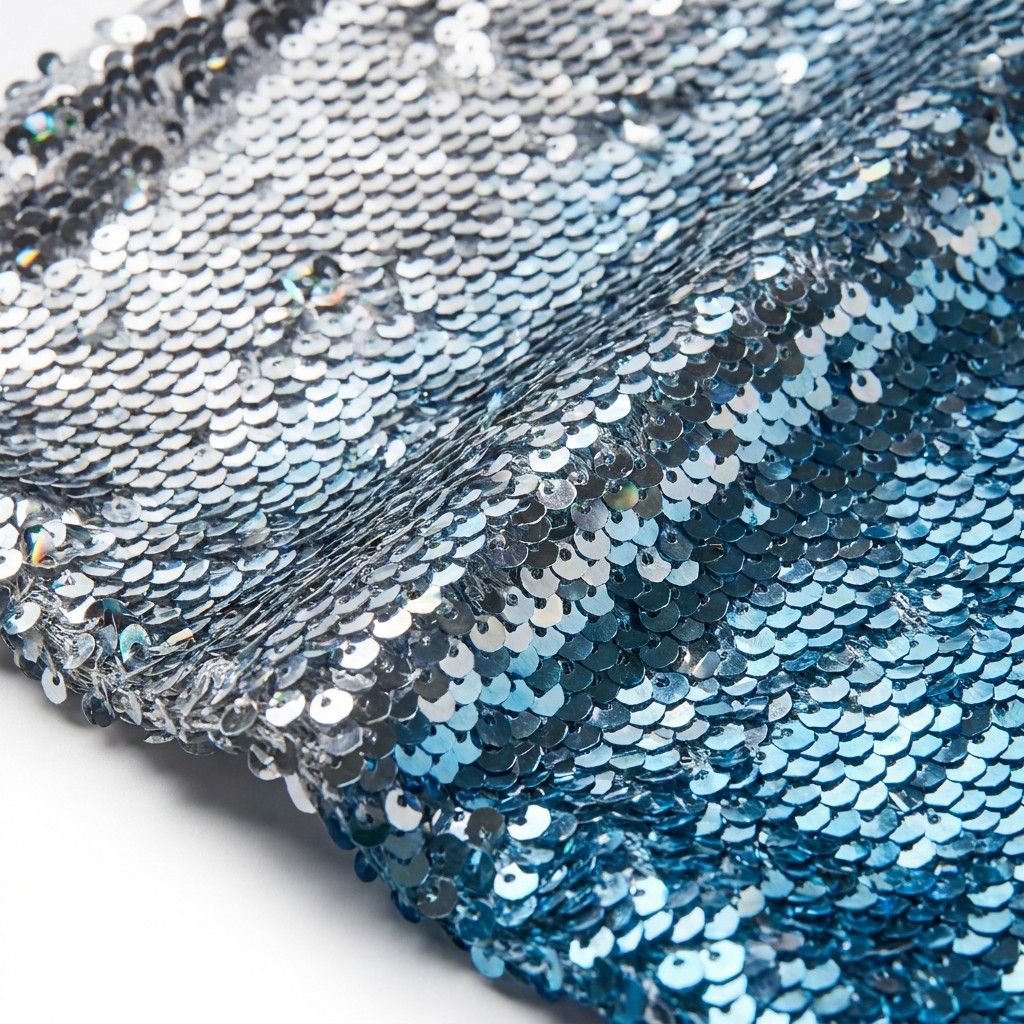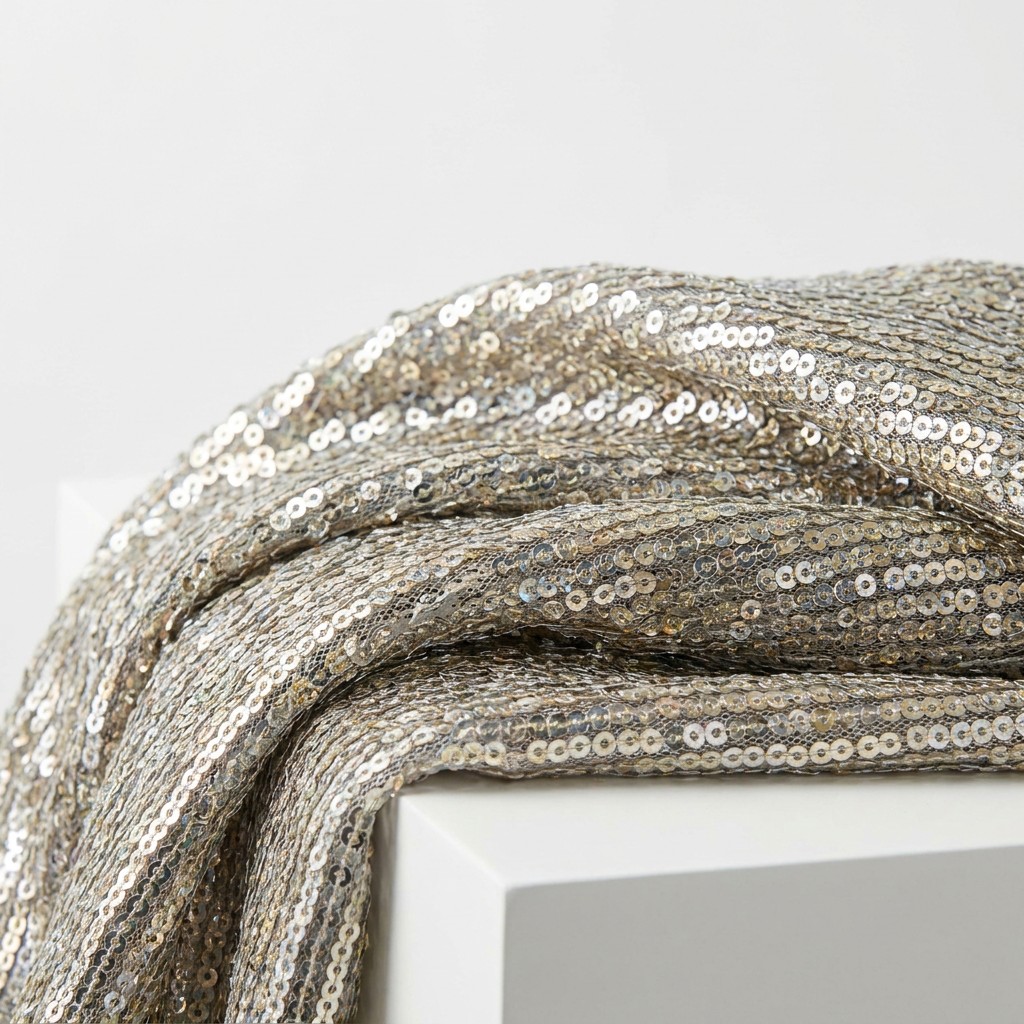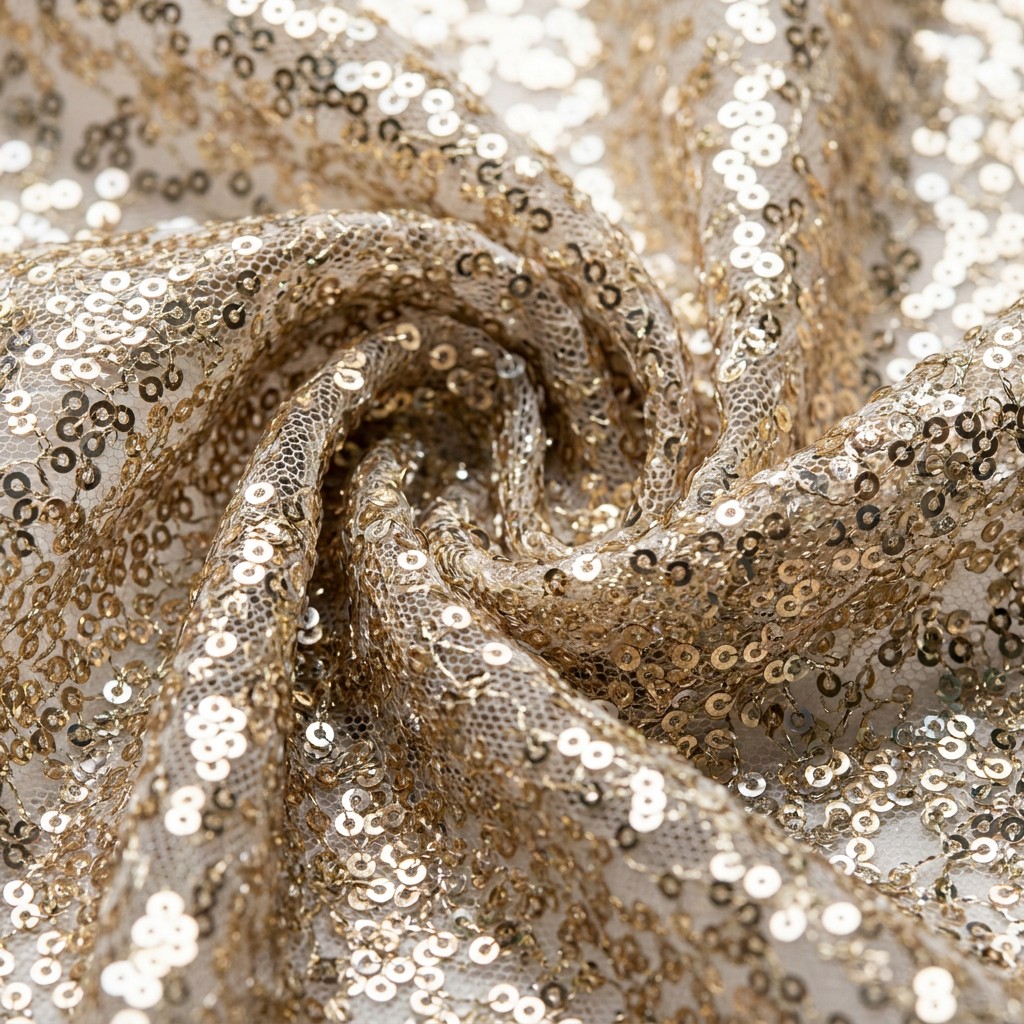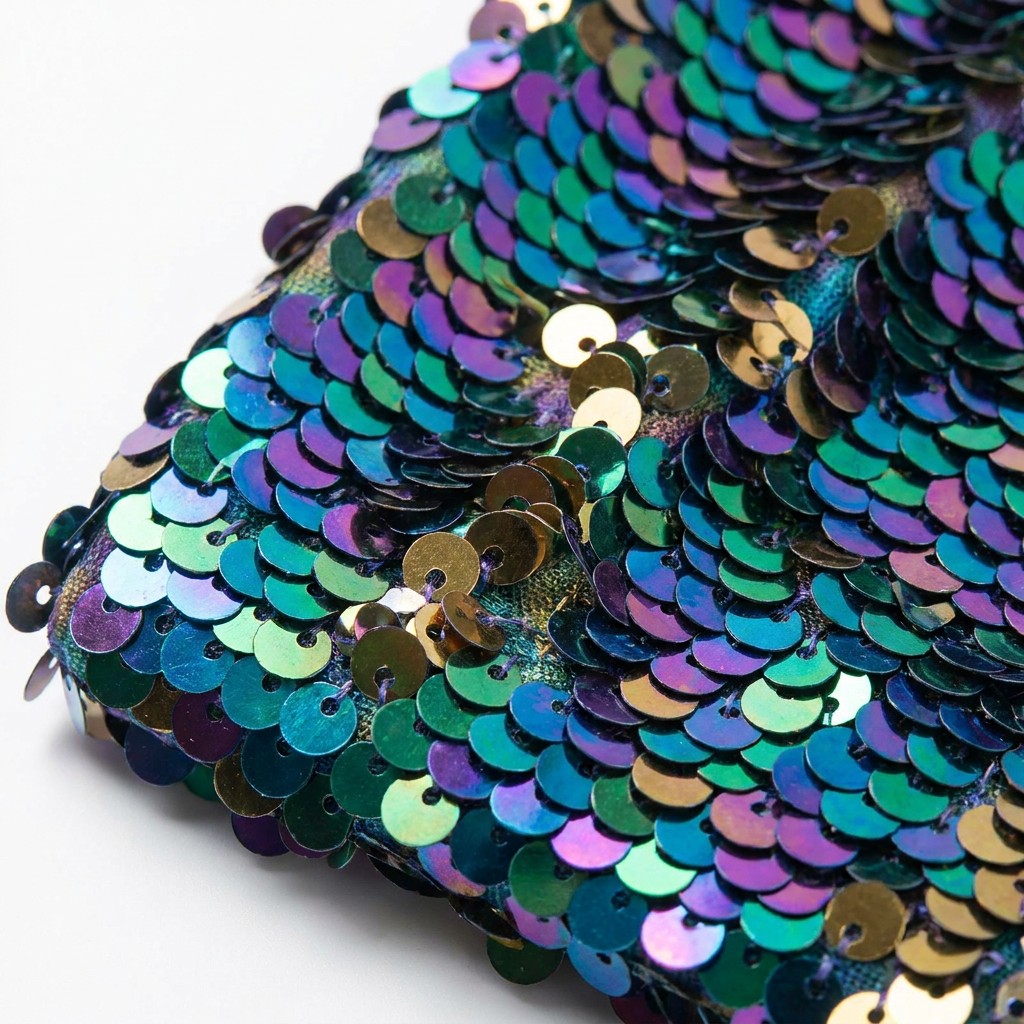
Sequin size selection decides how a garment reads from three metres away and how it behaves on the sewing floor. Pick 3 mm sequins when the design needs fine, continuous shimmer and a soft drape. Pick 5 mm sequins when you want sparkle that is clearly visible but still workable in a fitted silhouette. Move to 9 mm paillettes or larger when the collection calls for bold scale and individual light play. Surface pattern then sets the direction of the shine: flat placement reflects evenly, fish-scale overlaps build texture, and ombre or engineered layouts create movement across the panel.
This guide to sequin size selection explains what each size changes, how surface patterns behave on different garment shapes, and how to confirm both choices before you place a bulk order.
What Sequin Size Selection Actually Changes on a Garment
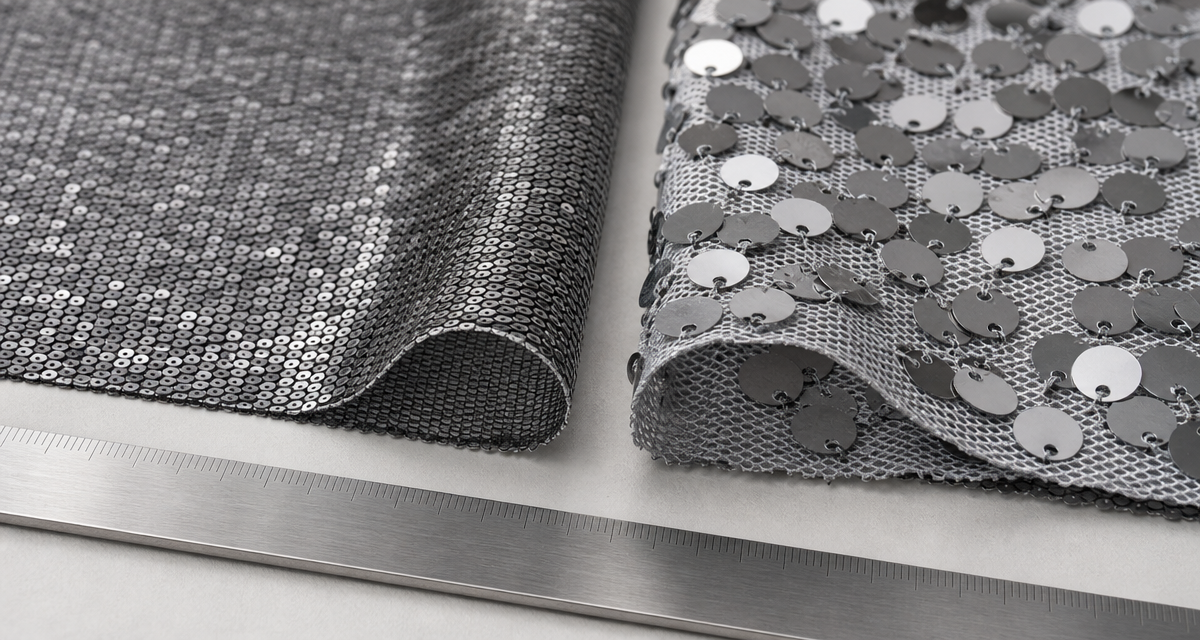
Sequin diameter is not only a style decision. It changes four production realities at once: shine density, fabric weight, drape and sewing behaviour. A smaller disc sits closer to its neighbour, so the surface reflects light as one continuous sheet. A larger disc leaves gaps between neighbours, so each sequin catches light separately and the fabric reads as individual points of sparkle.
Weight follows the same logic. Larger discs use more material per square metre, and they usually sit on a heavier ground fabric that can hold them. That combination raises the total garment weight, which matters most in long gowns, sleeves and layered skirts. Drape and hand feel move in the opposite direction: the heavier the surface, the less freely the fabric falls.
3 mm Sequins: Fine Shimmer, Dense Coverage
Three-millimetre sequins suit bridal overlays, fitted bodices and light layering pieces. The small disc creates a soft glow rather than a hard sparkle, which photographs evenly under both studio light and daylight. Because the coverage sits tight, the fabric keeps a relatively smooth hand and folds without large gaps appearing between discs. Sewing is slower in terms of stitch count, yet the low weight makes the finished garment easier to line and more comfortable to wear through a long event.
5 mm Sequins: Balanced Sparkle and Workability
Five-millimetre sequins remain the most requested size for eveningwear and cocktail collections. They deliver sparkle that is visible across a room while keeping the fabric light enough for close-fitting shapes. Drape stays predictable, edging is manageable, and the size works with a wide range of ground fabrics. If you are unsure where to start a new programme, five millimetres is usually the safest first sample.
9 mm to 18 mm Paillettes: Bold Scale, Heavier Handling
Large paillettes turn the fabric into a statement surface. Each disc is big enough to read on its own, so the garment looks bold in photographs and on stage. The trade-offs appear during production: the fabric weighs more, needles need to be larger and sharper, and the cutting table needs more care to stop discs lifting at the seam line. Choose these sizes when impact matters more than lightness.
Sequin Size Comparison at a Glance
| Sequin size | Visual effect | Typical use | Handling notes |
|---|---|---|---|
| 3 mm | Fine, continuous shimmer that reads as a soft glow | Bridal overlays, fitted bodices, light layering | Dense stitch count, fine needles, lowest weight, easiest to line |
| 5 mm | Clearly visible sparkle with even coverage | Eveningwear, cocktail dresses, dancewear panels | Balanced weight and drape, standard sequin needles, edging needs attention |
| 9 mm to 18 mm | Bold individual sparkle with strong light play | Stagewear, statement gowns, event pieces | Higher weight, larger needles, slower sewing, more edge trimming |
How Sequin Size Selection Affects Sewing and Sampling
Sewing teams adapt quickly when the sequin size selection is clear, so describe size in millimetres and attach a photograph of the approved disc instead of relying on trade names. Suppliers use different words for the same product, and a vague brief almost always produces the wrong sample.
Weight and needle choice go together. Small sequins tolerate standard machine settings, while large paillettes need a heavier needle and a slower feed. Test tension on an offcut before you run a full panel, because sequins can pull and distort a light ground fabric. Keep the test result on file, since it tells the next operator which settings already worked.
Sampling should always happen on the final ground fabric rather than a generic substitute. A disc that looks balanced on mesh can look crowded on satin. For a closer look at how diameter and density interact, see our guide to 3 mm vs. 5 mm vs. 18 mm sequin fabric, and our notes on choosing sequin size and density for wholesale orders.
Surface Patterns: Flat, Fish-Scale, Ombre and Allover Placement
Once the size is fixed, the pattern controls how that size behaves across the panel. Four layouts cover most production briefs.
Flat Placement
Flat placement keeps every disc on one plane and facing the same direction. Light reflects evenly, colour stays consistent across the roll, and panels match each other easily during cutting. This is the most forgiving layout for large orders because join lines are hard to detect.
Fish-Scale and Overlapping Layouts
Fish-scale and overlapping layouts let each row sit over the one below, which creates depth and a moving highlight. The surface feels richer, yet the overlap adds thickness at the seam and can catch on fine linings. Plan a little extra allowance at hem edges, and avoid sharp seam junctions where the overlap runs against the seam direction.
Ombre and Gradient Effects
Ombre and gradient patterns shift colour or density from one edge to the other. These layouts look striking on full skirts and capes, but they demand careful marker planning. Every panel must be cut from the correct point in the gradient, so offcuts are harder to reuse. Confirm the direction of the fade on a full-width sample before approving the layout.
Engineered Allover Patterns
Engineered patterns place motifs at set positions across the width. They suit placement effects on bodices and sleeves, and they need an accurate repeat map so the cutting room can align motif centres with pattern notches. The clearer the repeat drawing, the fewer surprises appear at the sewing line.
Matching Surface Pattern to the Garment and the Lighting
The venue and the lighting often matter more than the trend board. Dense flat sequins under warm stage light can look almost solid, while large paillettes under the same light produce strong flashes that read well on camera. For daylight events, mid-size sequins with an even pattern tend to hold their colour best.
Silhouette also guides the choice. Fitted shapes favour small discs because the fabric must follow a curve without buckling. Flowing shapes tolerate larger discs and heavier patterns. When a design combines both, many buyers split the specification: fine sequins on the bodice, bolder paillettes on the skirt. Our comparison of sequin fabric and beaded fabric explains how that mix changes surface texture.
A Pre-Bulk Checklist for Sequin Size and Surface Pattern
- Sequins measured in millimetres and confirmed against a physical disc, not a catalogue name.
- Ground fabric named, with weight and usable width recorded.
- Surface pattern described as flat, fish-scale, ombre or engineered, with a repeat drawing attached.
- Direction of shine marked on the sample so cutting follows one orientation.
- Seam and hem treatment agreed for overlapping layouts.
- Colour approved under the same light the end user will see, with the reference kept on file.
- Weight per garment estimated from the sample panel rather than from the roll alone.
A written checklist prevents the most common rework: a beautiful sample that cannot be repeated because nobody recorded how it was made. Keep the approved disc, the colour reference and the repeat drawing together in one specification file, and review them again before every repeat order. Our guidance on fabric colour matching covers how to hold that reference steady between production runs.
Where Samples Fit in the Ordering Process
Most projects begin with a sample set rather than a full production run, which lets the design team test drape, weight and colour before committing budget. A sample set normally includes a small number of colourways on the chosen ground, so the buyer can compare shades and surfaces side by side.
When the specification is settled, production usually continues at a standard minimum of 200 yards per colour and ground, which keeps the dyeing and sequin-application runs economical. That figure is simply the point at which the line runs efficiently. The design decisions above come first, and they determine whether the order moves smoothly at that volume. A settled sequin size selection keeps the first production run aligned with the approved sample. Before confirming, review our guide to approving a sequin fabric sample before bulk production.
Frequently Asked Questions
How do I choose between 3 mm and 5 mm sequins?
Base the decision on silhouette and weight. Choose 3 mm for fitted bridal pieces and light layering where a soft glow and low weight matter. Choose 5 mm when the sparkle must read clearly across a room and the garment still needs a workable drape.
Does a larger sequin always look more expensive?
No. Perceived quality comes from consistency and finish rather than diameter. A dense, evenly placed small sequin surface often looks more refined than a sparse large one, especially on tailored shapes.
How many sample rounds should I plan for?
Plan for at least two. The first round confirms size, colour and pattern direction. The second round confirms the sewn result on the final ground fabric and the seam treatment.
Can I mix two sequin sizes in one garment?
Yes, and many collections do. Keep the mix intentional by defining which panel uses which size, then record the transition point so every unit in the order follows the same layout.
Need Sequin Fabric for Your Next Collection?
We supply sequin, embroidered and decorative fabric for fashion, bridal and event collections worldwide, with sample support before bulk orders.
Request Sequin Fabric Samples
Send your target sequin size, ground fabric, colour reference and repeat drawing so we can prepare a sample set for your review.
Wendy Jessie
Phone / WhatsApp: +86 156 3752 5803
Alternative: +86 175 1619 6727
Email: morris@yunfantextile.com
Email: morris@yunfantextile.com