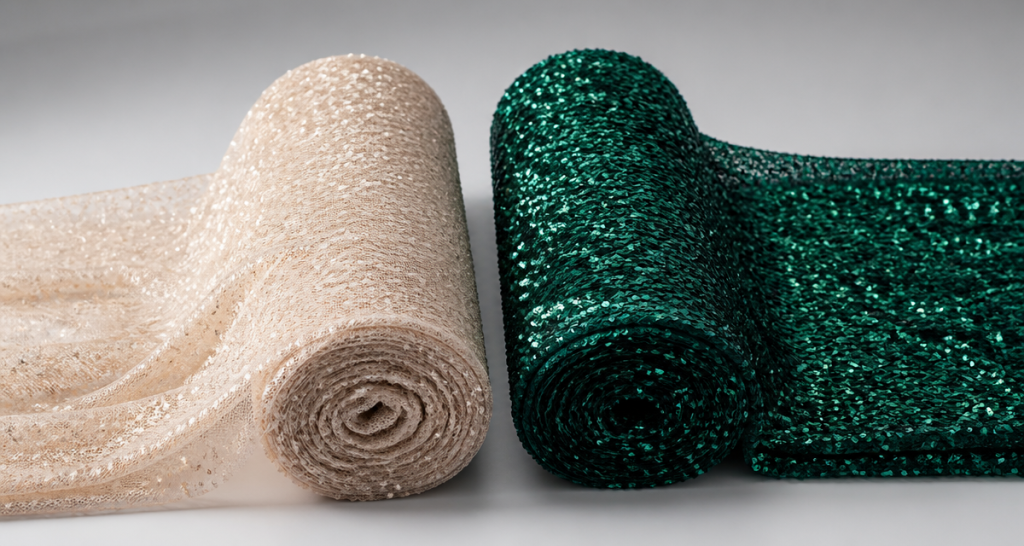
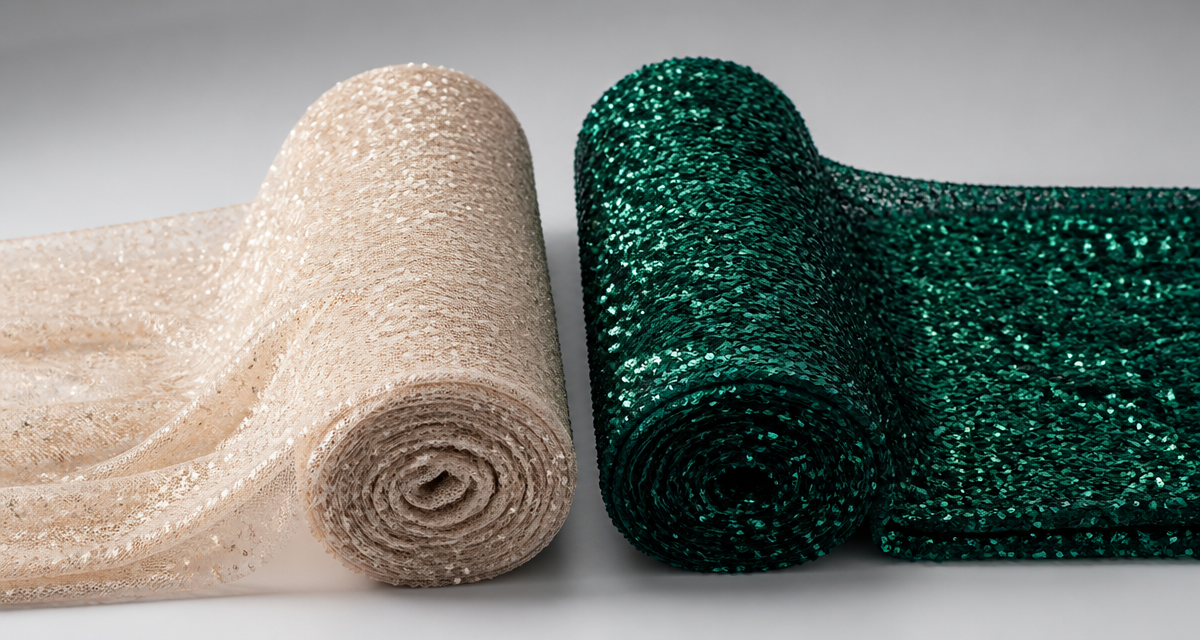
A well-built sequin fabric RFQ is the fastest route from a sourcing concept to a quotable order. When a request arrives without a base cloth, a usable width or a sequin specification, the factory has to guess, and the quotation that comes back rarely matches what the designer pictured. This guide sets out the fields that belong in a sequin fabric RFQ for a 200-yard B2B order, and it explains how each field protects you during sampling and bulk production.
Why a Clear Sequin Fabric RFQ Protects Your 200-Yard Order
For a 200-yard order, the RFQ is the first version of the specification rather than a simple price request. Sequin fabric is a layered product: a base cloth carries a sequin surface that is stitched, embroidered or bonded onto it. Because both layers matter, two fabrics that look identical in a photograph can behave very differently once they are cut and sewn. When the RFQ names the base cloth, the usable width and the sequin format, the supplier can quote a construction that already exists, and you avoid a slow loop of clarification emails. Therefore, the time you invest in the RFQ is time you save later, during sampling and inspection.
A vague RFQ also makes quotations hard to compare. If one supplier quotes a lightweight mesh base and another quotes a firm satin base, the two prices are not describing the same product. Fixing the specification in writing brings every quote back to a common reference, so the lowest number is no longer simply the one that left the most detail out. In addition, a written RFQ gives your own team a single source of truth once the order moves from sourcing into production.
The Fields Every Sequin Fabric RFQ Should Contain
A practical RFQ is a short document, but it should be complete. The fields below are the ones that change price, sampling and quality the most, so they each deserve a line.
Project and End Use
Describe what the fabric will become: an evening dress, a dance costume, a table overlay, a backdrop panel or a cushion cover. End use sets the priorities. A gown needs drape and comfort, a stage costume needs movement and sparkle under stage light, and a decorative panel needs width, opacity and dimensional stability. Stating the end use lets the supplier propose the right construction instead of quoting a generic stock item.
Base Cloth and Construction
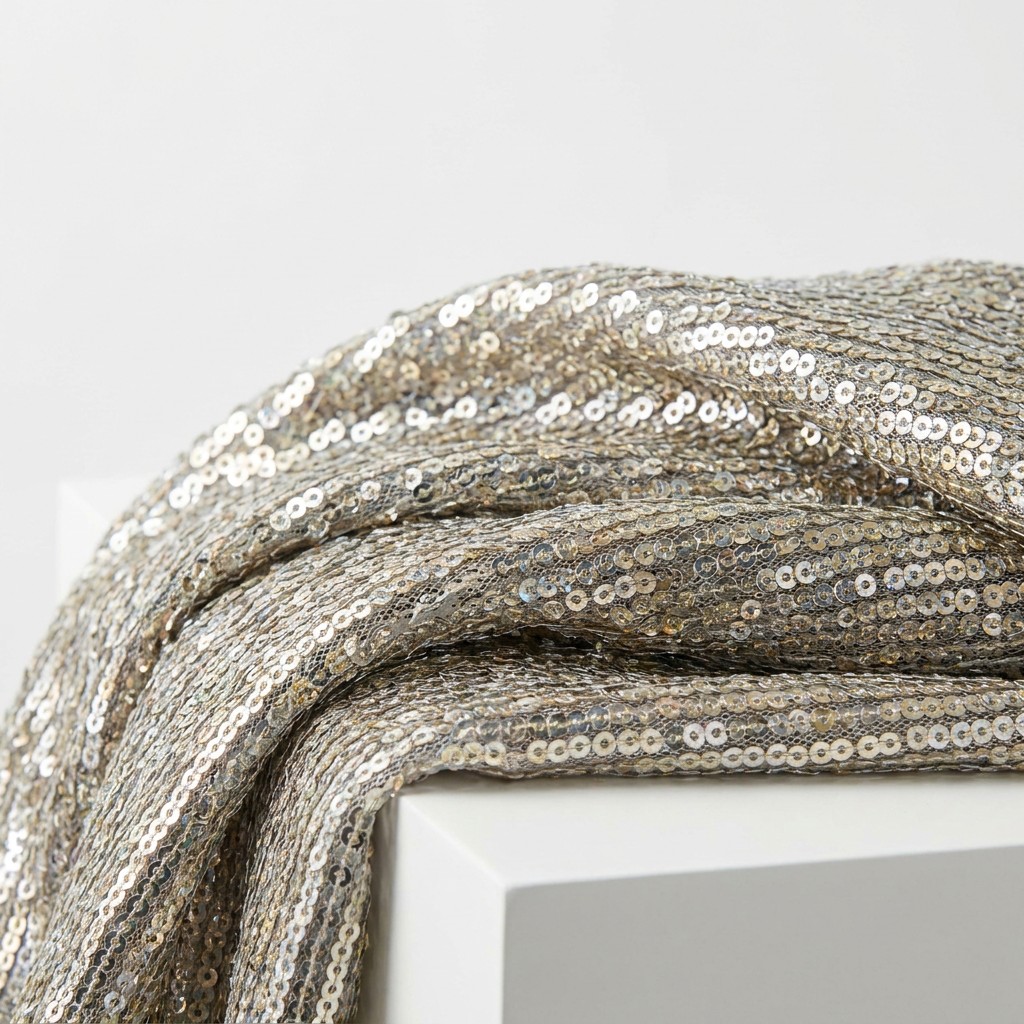
Name the base cloth if you already know it, for example mesh, knit, satin, chiffon or velvet. If you are unsure, describe the behaviour you need instead: soft drape, firm structure, stretch recovery or opacity. Say whether the sequin surface is embroidered, stitched or bonded, because the method affects both cost and the way the fabric behaves when it is cut. If the base cloth is still open, ask for two or three options so you can compare them physically.
Usable Width
Ask for usable width rather than total width. Selvedges and the sequin-free margins cannot be cut, so the figure that matters is the area you can genuinely use. Comparing usable width with your marker plan is the quickest way to see how many panels a 200-yard order will actually deliver, and our guide to checking fabric width and usable yield walks through the calculation.
Colour and Finish
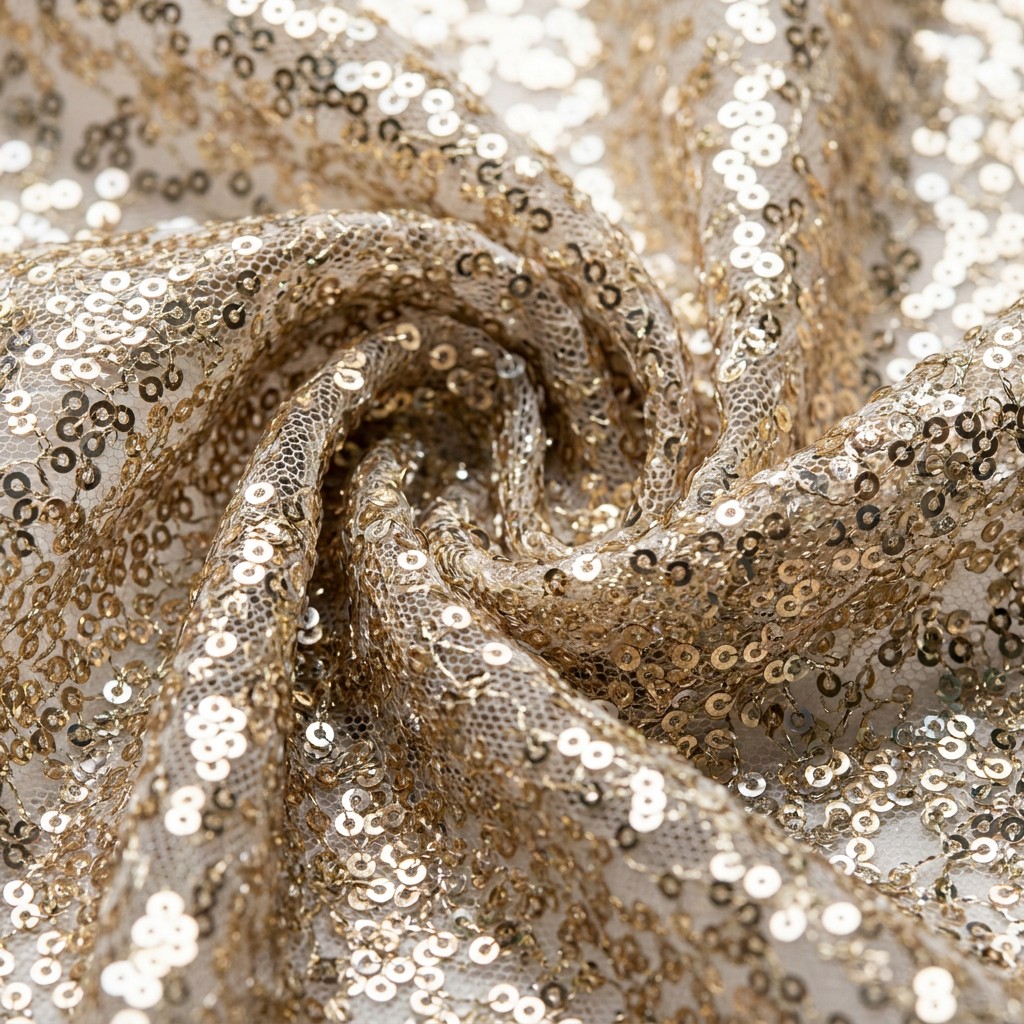
Give a colour reference that a dyehouse can act on: a Pantone number, a physical swatch sent by courier, or a reference to a previous order. Add the finish you expect, whether matte, glossy, holographic or pearlescent, because the same shade reads differently under each surface treatment. If the project has a colour deadline, note it in the RFQ, and expect to approve a lab dip or a sample before bulk begins.
Sequin Size, Shape and Direction
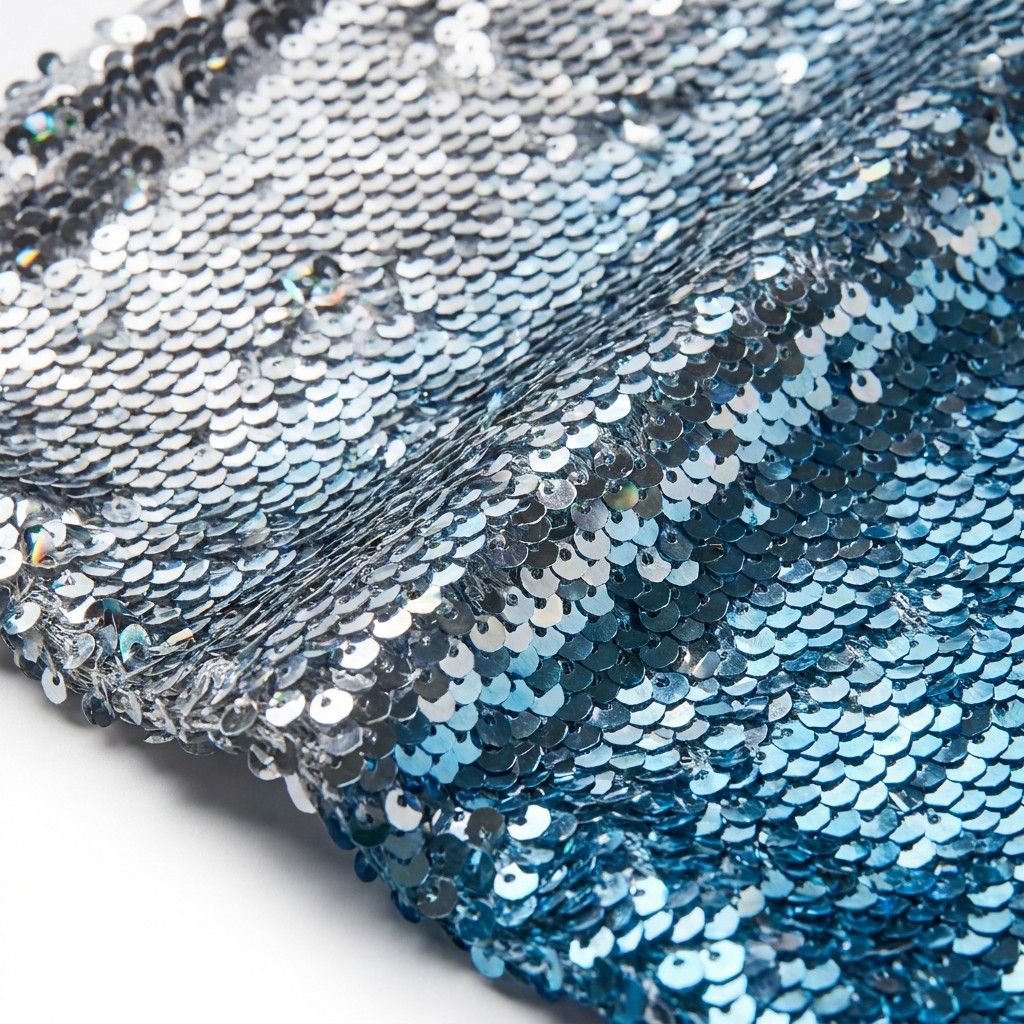
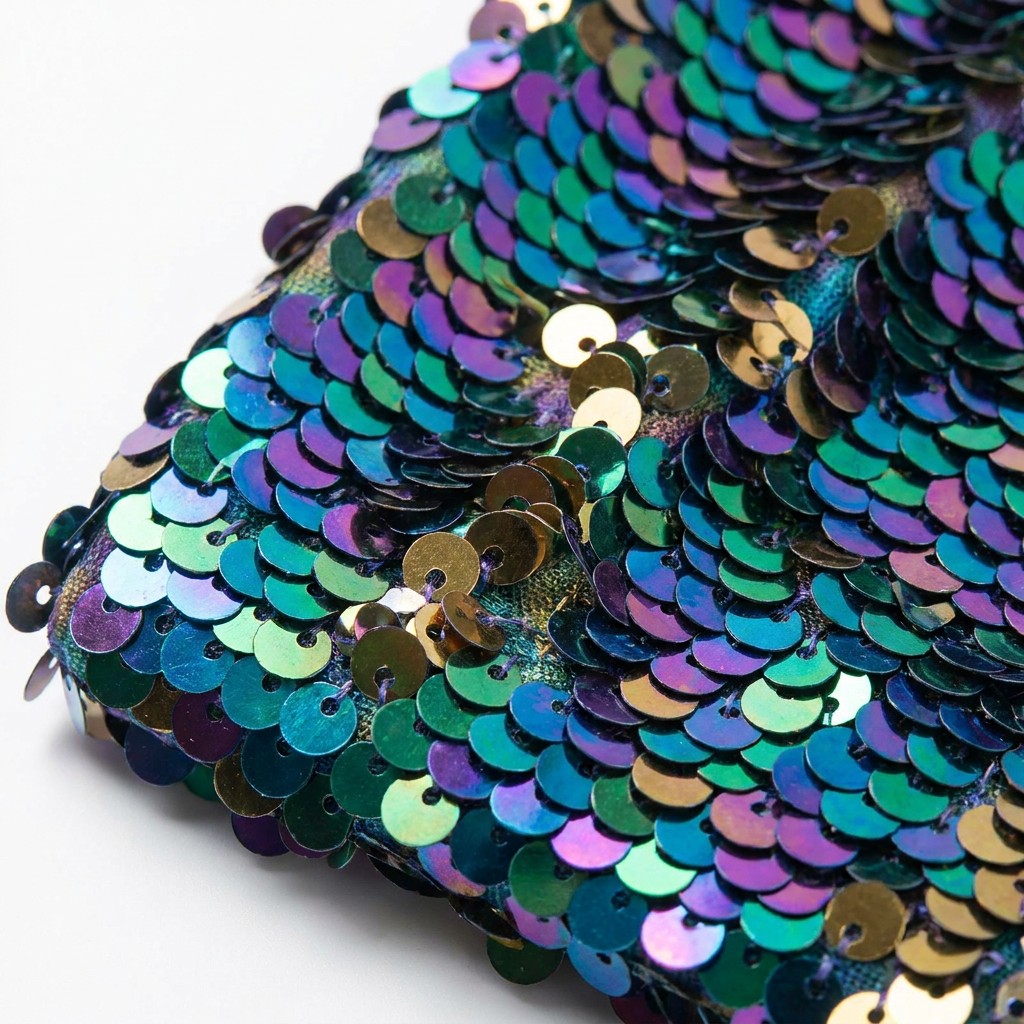
State the sequin diameter in millimetres, the shape (round, square, paillette or drop) and the laying direction. Direction matters because sequins reflect light differently when they are laid flat, vertical or mixed, and the effect changes dramatically as the wearer moves. If two sizes are acceptable, say so. Comparing 3 mm, 5 mm and larger sequin formats early usually settles the design question faster than ordering samples twice.
Hand Feel and Drape
Describe the hand feel in plain words: soft and fluid, crisp, dense, light or stiff. Hand feel is the field buyers mention least often in an RFQ, yet it is the field that most often causes a rejected sample. A short sentence is enough, and it can save a full sampling round.
Quantity and the 200-Yard MOQ
State the quantity in yards and confirm the unit, because yards and metres are easily confused in international enquiries. Our standard minimum order quantity is 200 yards, so a 200-yard order is a normal production run rather than a special exception. If the project will be split across colourways, say how you want the yards divided so the quotation reflects the real set-up cost.
Sampling and Approval
Say that you want a sample or a swatch set, and describe how you will approve it. A sample lets you check colour, usable width, sequin security, hand feel and sewing behaviour before you commit to bulk. Adding the approval step to the RFQ keeps sampling and production in one conversation instead of two, which is exactly the process described in our guide to approving a sequin fabric sample before bulk production.
Packing, Labelling and Inspection
Describe the roll length you want, the core size, the bagging and any label text. Then add the inspection points that matter to your team: colour consistency, width, sequin attachment, edge condition and visible surface defects. Writing these down early means the acceptance criteria are agreed before the fabric is made, not after it has been shipped.
Trade Terms and Delivery
Close the RFQ with the trade term you prefer, the destination port or city, and the documents you need, such as the commercial invoice, packing list and bill of lading. Providing a delivery window rather than a single fixed date keeps the quotation realistic, and it lets the supplier plan production around your deadline instead of around a guess.
RFQ Field Checklist Before You Send
Use the table below as a final check. Every row is a field a supplier will ask about anyway, so answering it in advance shortens the quotation cycle.
| RFQ field | What to write |
|---|---|
| Project and end use | Garment, costume, overlay or panel, plus the priority (drape, structure, opacity) |
| Base cloth | Mesh, knit, satin, chiffon or velvet, or a description of the behaviour you need |
| Usable width | Cuttable width after selvedges, not total roll width |
| Colour and finish | Pantone, physical swatch or previous order reference, plus surface finish |
| Sequin format | Size in millimetres, shape and laying direction |
| Hand feel | Soft, crisp, dense or light, in plain language |
| Quantity | Yards per colourway, with 200 yards as the standard minimum order |
| Sampling | Swatch set or sample, and who approves it |
| Packing and inspection | Roll length, core size, bagging, labels and acceptance points |
| Trade terms | Incoterm, destination and required documents |
Attachments That Help the Factory Quote Faster
Documents turn a good RFQ into a fast one. Attach a tech pack or a simple line drawing if you have one, a reference photo of the effect you want, and a colour swatch reference. If the fabric will be cut into a specific panel, include the marker plan or the panel dimensions so the supplier can check usable width against your layout. Finally, note who on your team approves samples and how quickly you can respond, because a quotation is only as fast as the approval that follows it.
FAQ: Sequin Fabric RFQ Questions
These are the questions buyers send most often after they have written their first RFQ.
How detailed should a sequin fabric RFQ be?
One page is usually enough. Cover the end use, base cloth, usable width, colour reference, sequin size and direction, hand feel, quantity in yards, sample approval, packing, inspection and trade terms. If a field is genuinely open, write that it is open and describe your priority instead, so the supplier knows which trade-offs are acceptable.
Can I place an order below the 200-yard minimum?
Our standard MOQ is 200 yards, and we keep that figure consistent across colourways and constructions so pricing stays predictable. If your launch is smaller, the practical route is to plan the first order at 200 yards, use part of the fabric for sampling and salesmen samples, and scale the repeat order once the style is confirmed.
What if I do not know the base cloth yet?
Describe the result you need and let sampling answer the question. Tell the supplier whether the fabric must drape, hold a shape, stretch or stay opaque, and ask for two or three base options in the sample set. Comparing them side by side on a dress form or a panel is far more reliable than choosing from a written description.
Source Sequin Fabric with Yunfan Textile
Browse our sequin fabric, mesh base and embroidered textile range, and send your specification straight through our Alibaba storefront.
Request Sequin Fabric Samples
Send your specification and we will prepare a sample set for review. Contact us directly:
Wendy Jessie
+86 156 3752 5803
+86 175 1619 6727
morris@yunfantextile.com
morris@yunfantextile.com