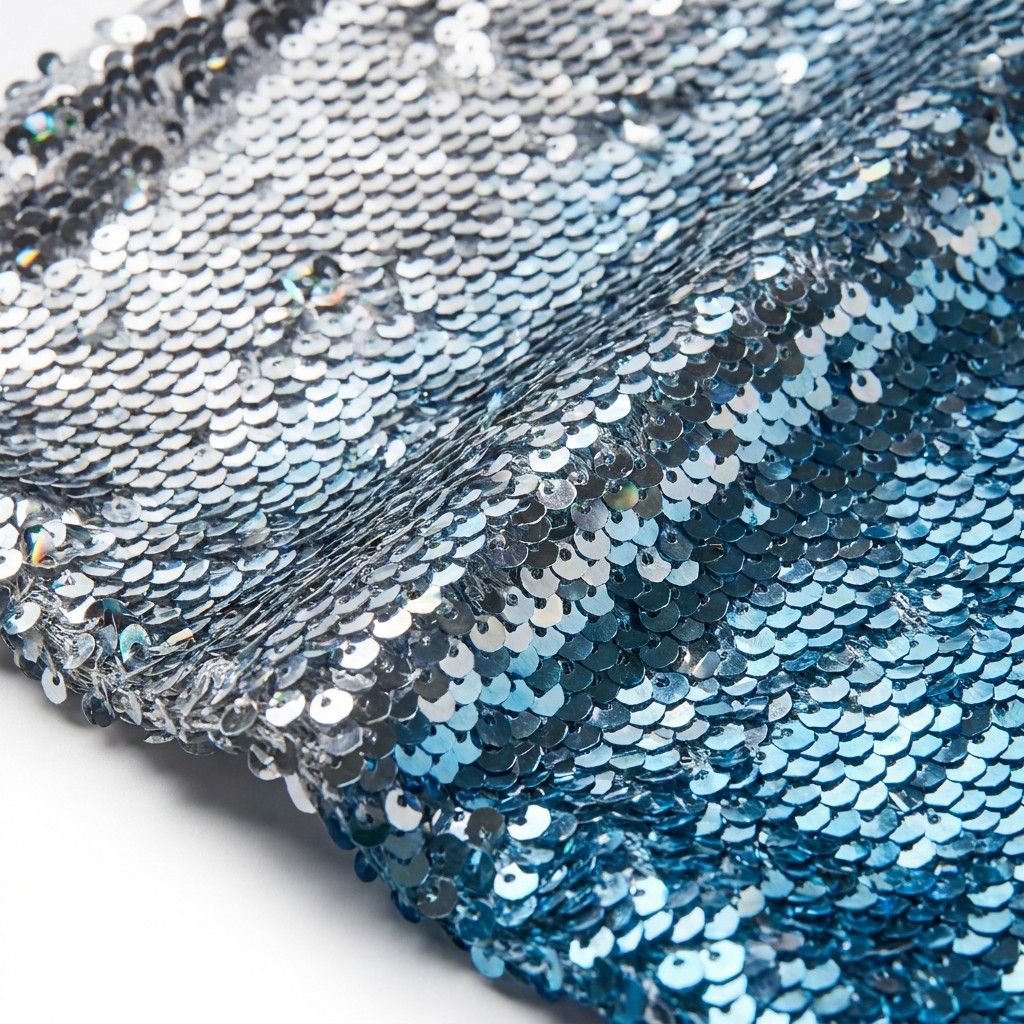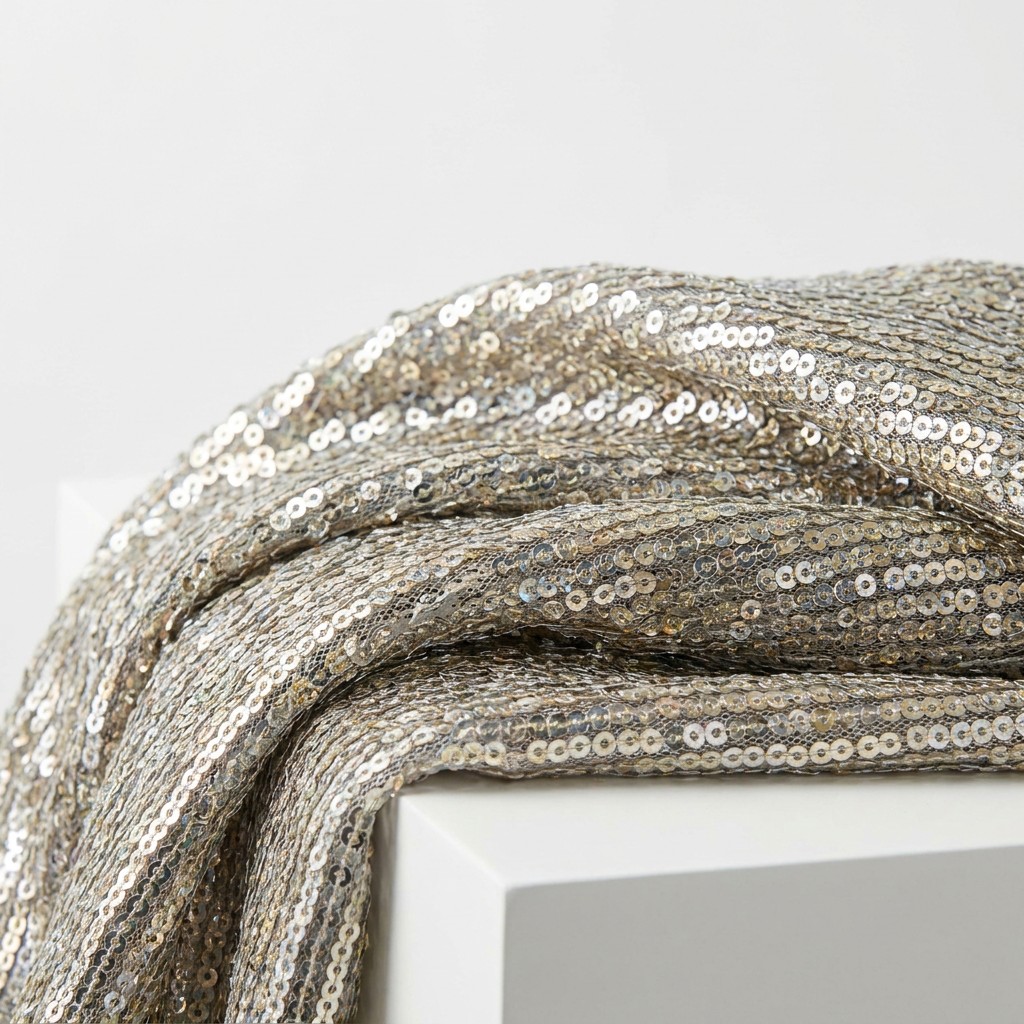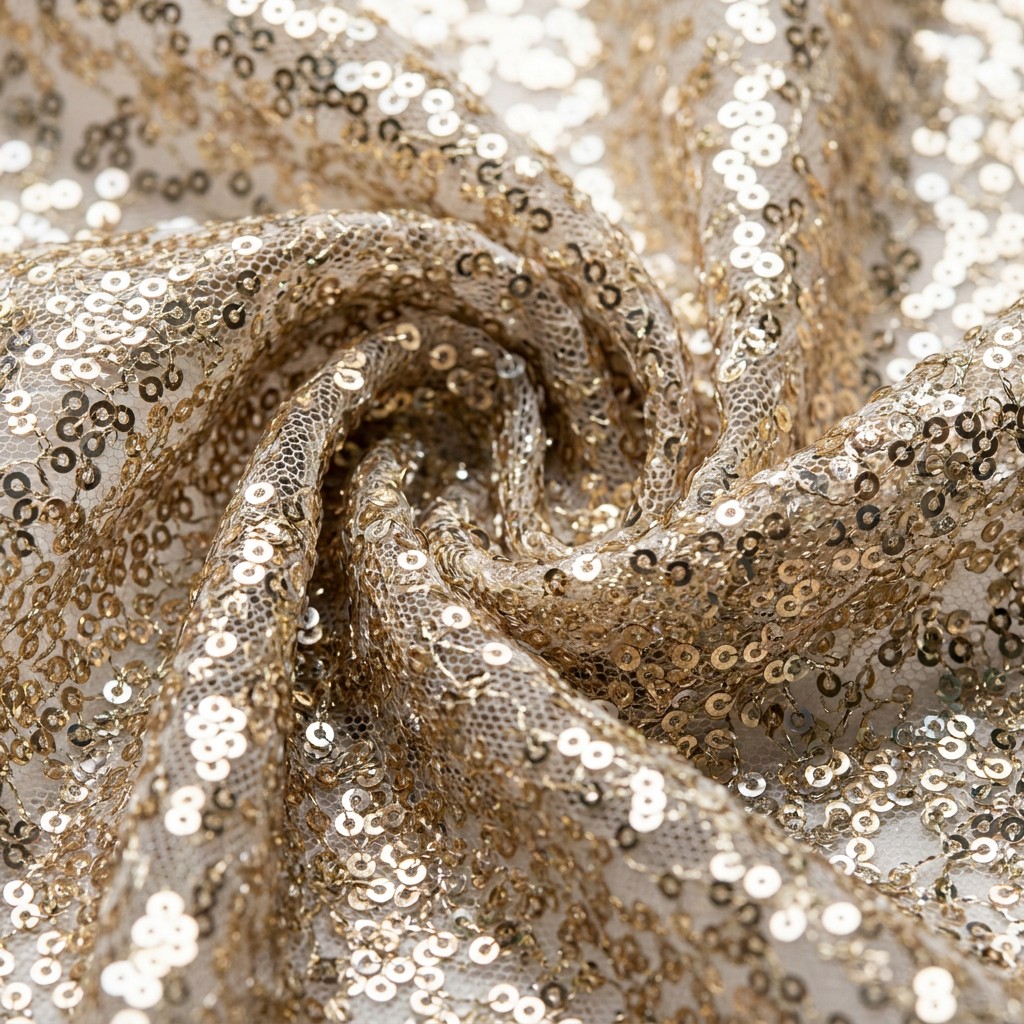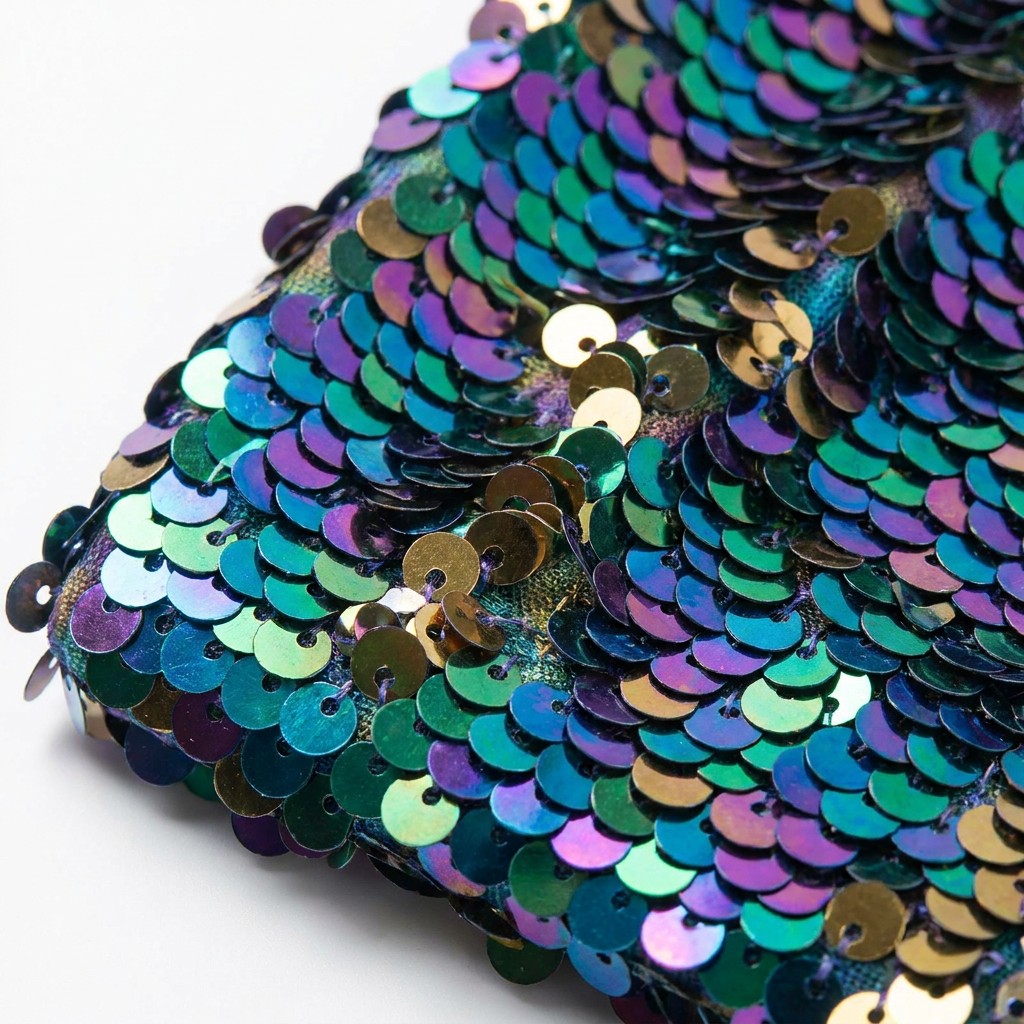
The sequin fabric base cloth decides how a collection moves and how it feels on the skin. It also decides how long the garment lasts on the rail. Buyers often pick the sparkle first and the base last. This guide compares the base cloths used for a 200-yard order and shows how to confirm each choice through samples.
Why Sequin Fabric Base Cloth Matters More Than Buyers Expect
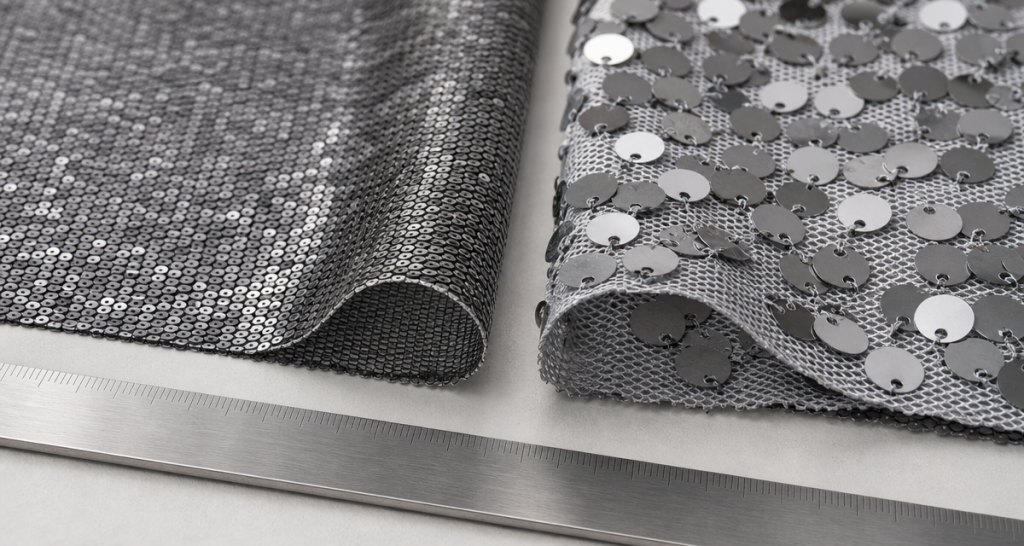
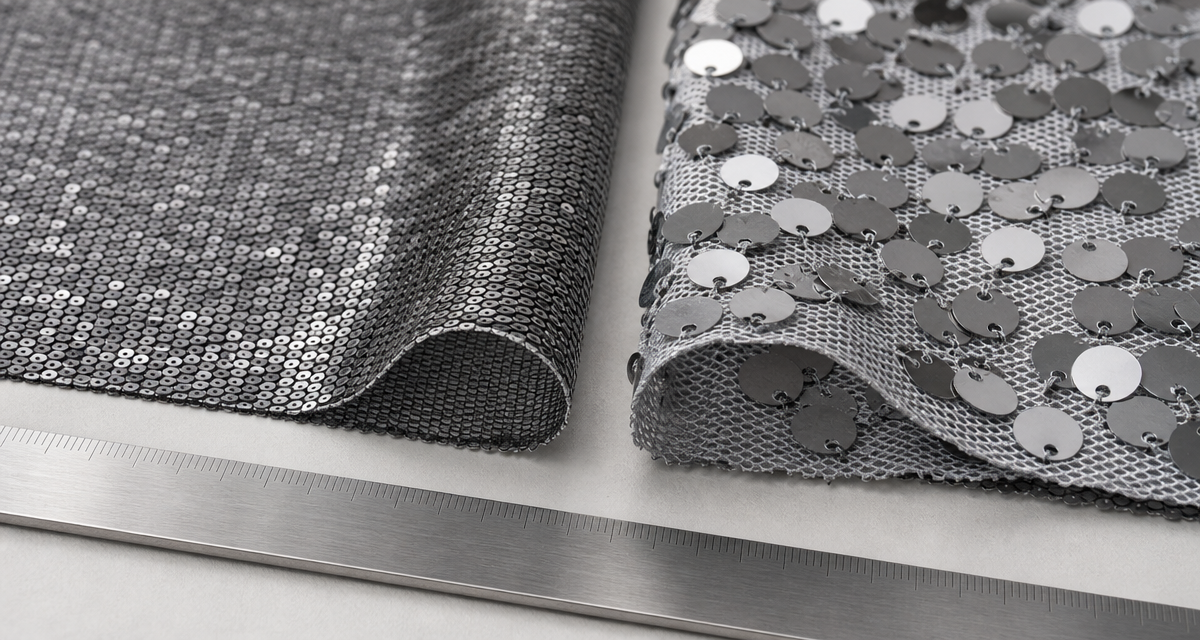
Sequin fabric is a two-layer product. The sequin surface supplies the sparkle, while the base cloth supplies the body. That base carries the weight of the sequins and holds the shape of the panel.
Change the base, and you change the drape, the comfort and the opacity. You also change the way the fabric behaves under the needle, even when the sequin format stays the same. As a result, two fabrics with the same colour and sequin size can behave like completely different products.
For a 200-yard order, the base cloth is also a commercial decision. A very light base may need an interlining to stop the panel from collapsing. Heavier bases, meanwhile, may deliver structure on their own, yet they can feel warm against the body. Neither choice is wrong, because the right one depends on the garment and the season.
Base Cloth Options Compared for a 200-Yard Collection
The base cloths below cover most of the sequin fabric made for fashion, bridal, stage and decorative programmes. Each one earns its place through what it does well, so match it to the end use, not to a trend.
Mesh and Tulle
Mesh is the most common base for sequin fabric, and for good reason. It is light, and it stretches slightly. Mesh also lets the sequins sit on a surface that stays flexible. Tulle works in a similar way, but with a softer hand.
Mesh bases move comfortably and suit dresses, dancewear and stage costumes. However, a fine mesh can read as transparent, so it often needs a lining. Our technical guide to the base fabric for sequin and embroidery applications covers denier and openness in more detail.
Knit and Stretch Bases
Knit and stretch bases such as power mesh recover after they stretch. As a result, they suit body-hugging garments that move with the wearer. These bases keep their shape through repeated wear instead of restricting movement.
However, stretch base cloth demands more care during cutting and sewing. The panel can relax if you leave the fabric hanging, so state the stretch direction in the specification. That way, the marker team can lay it correctly.
Satin and Firm Wovens
Satin and similar firm wovens give sequin fabric a smooth face and a stable handle. They hold a sculpted silhouette and support heavier sequin formats without sagging.
Firm wovens also photograph with a controlled sheen. For bridal and eveningwear, that sheen often decides whether a garment stands away from the body or clings to it.
Firm bases also cut more accurately. That accuracy matters when a 200-yard order has a tight marker plan.
Chiffon and Georgette
Chiffon and georgette bring fluidity and a soft fall. Sequins on these bases catch light in motion, which suits flowing skirts and layered sleeves.
These fabrics are delicate, so choose a modest sequin format and finish the seams carefully. For the softest possible hand feel, start with a light chiffon base. Our article on lightweight mesh and decorative fabrics for layering shows how to combine it with a supporting layer.
Velvet and Velour
Velvet base cloth gives sequin fabric depth and a rich, matte backdrop. That backdrop makes the sequins read as jewellery rather than as surface texture. Velvet therefore suits eveningwear, occasion dressing and interiors where warmth matters.
Velvet is heavier and can show pile marking, so packing and handling need attention. Check the panel weight against the garment construction before you place the order.
Comparison Table: Drape, Support, Comfort and Sewing
| Base cloth | Drape | Support | Comfort and transparency | Sewing notes |
|---|---|---|---|---|
| Mesh / tulle | Soft to fluid | Light, needs lining for structure | Breathable, often transparent | Stable under the needle, may need a lining layer |
| Knit / stretch mesh | Fluid with recovery | Medium, follows the body | Very comfortable, semi-sheer | Cut with relaxed tension, watch stretch direction |
| Satin / firm woven | Structured | High, holds a silhouette | Opaque, warmer | Cuts cleanly, heavier seams |
| Chiffon / georgette | Very fluid | Low, usually layered | Soft, sheer | Handle gently, finish seams carefully |
| Velvet / velour | Soft with body | High, adds volume | Warm, fully opaque | Watch pile direction and pressing marks |
How to Confirm Base Cloth in a Sample Before 200 Yards
A base cloth that reads well in a folder can still fail on the body. Therefore, confirm it physically before you release the order. Ask for a swatch that carries the sequins, not a plain base swatch. The sequin weight changes the way the fabric hangs, so a plain swatch tells you very little.
Then check four things before you commit. First, drape the swatch over a dress form or a roll and watch how it falls. Second, hold it against a light source to judge transparency for your lining plan. Third, fold and press a corner to see how the base responds to finishing.
Fourth, sew a short seam with the needle and thread you intend to use. Then pull gently to see how the sequins and the base behave together.
Record the results of each test and keep the approved sample with the order paperwork. When you order the same construction again months later, that sample confirms fastest that the base cloth has not drifted. Our guide to wholesale sequin fabric for bridal and eveningwear shows how bridal programmes structure this approval step.
How Base Cloth Interacts With Lining and Interfacing
The base cloth never works alone. Most sequin garments use a lining, and structured styles often add an interfacing as well. You must therefore make the base choice with those layers in mind.
A fine mesh base can feel light on its own, yet turn stiff once you attach a heavy lining. By contrast, a firm woven base may need no interfacing at all.
Plan the whole stack early to avoid an unpleasant surprise at the first fitting. That habit also keeps the 200-yard order aligned with the garment you will actually sew.
Lining selection follows the base. If the base is transparent, the lining carries the opacity and takes most of the contact with the skin. Its hand feel then matters as much as the sequin surface. If the base is opaque, the lining becomes a comfort layer rather than a structural one.
In both cases, choose the lining after you confirm the base, not before. A lining that fights the base will show at every seam.
Interfacing usually goes into collars, cuffs, waistbands and structured bodices. Sequin fabric is already dense, so a heavy interfacing can make a panel board-stiff. Therefore, test a small piece before you release the order.
A short sample that combines the base, the lining and the interfacing tells you more than any written description. It also gives the sewing floor a physical reference to match.
FAQ: Sequin Fabric Base Cloth Questions
Which base cloth suits a bridal collection best?
Bridal work usually calls for a base that holds a silhouette. It must also stay comfortable for a long day of wear. A firm woven such as satin supports structured bodices. Light mesh or tulle, meanwhile, suits layered skirts and illusion panels.
Many collections use both, so make the base choice style by style. Avoid one base decision for the whole collection.
Does the base cloth change the price of a 200-yard order?
Yes, because the base cloth has its own weight, width and finishing cost. It also changes how densely the factory can apply the sequins. A heavy woven base and a fine mesh base will not carry the same quotation, even when the sequin format is identical.
Confirm the base before pricing. That step keeps the comparison honest and avoids a revision later.
Can I change the base cloth after approving a sample?
A base change is a new construction, so treat it as a fresh sample rather than a simple substitution. The sequin density, the seam behaviour and the drape all shift when the base changes. As a result, the approved reference is no longer valid.
Plan the change before you release the 200-yard order. It costs far less than correcting the mistake after production.
Source Sequin Fabric with Yunfan Textile
Browse our sequin fabric, mesh base and embroidered textile range, and send your specification straight through our Alibaba storefront.
Request Sequin Fabric Samples
Send your specification and we will prepare a sample set for review. Contact us directly:
Wendy Jessie
+86 156 3752 5803
+86 175 1619 6727
morris@yunfantextile.com
morris@yunfantextile.com