A written sequin fabric quality control plan turns a good sample into a repeatable order. Without one, the team judges each roll by memory and mood. Small differences in colour, sequin attachment or width then surface only after the fabric is cut. This guide sets out a practical inspection plan for a 200-yard order. It runs from locking the specification through to packing records. That way, every roll can match the same approved reference.
What a Sequin Fabric Quality Control Plan Covers
Sequin fabric has two layers, so its quality plan has two families of checks. The base cloth contributes colour, width, weight and surface defects. The sequin surface contributes attachment, alignment, density and edge condition. A complete plan covers both layers at three moments. These are before production starts, while the rolls are running, and before the goods leave the factory. Because sequin fabric is difficult to repair after cutting, every check costs less than the correction it prevents.
The plan does not need to be long. It needs to state what the team measures and what they compare it against. It should also name who records the result and what happens when a roll does not match. The sections below build that structure for a 200-yard order.
Stage 1: Lock the Specification Before Production
Quality control starts before the factory makes any fabric. If the reference is vague, the inspection has nothing to measure against. As a result, opinion settles disagreements rather than record.
Approve a Physical Sample
Keep a signed physical sample of the approved construction. The sample should show the base cloth, the sequin size and shape, the laying direction, the colour and the finished surface. Photographs help with communication. However, they cannot carry a colour or a hand feel, so the physical reference stays with the order file. Our article on approving a sequin fabric sample before bulk production explains how to run that approval cleanly.
Write the Specification Sheet
Turn the approved sample into a written specification. It should list the base cloth, usable width, colour reference, sequin format, sequin direction, roll length, packing and label text. Add the quantity in yards and confirm that 200 yards is the standard minimum order. The inspection team works from this sheet, so it should use the same vocabulary as the factory floor.
Stage 2: Incoming and In-Process Checks
Once production begins, the team can run the checks below on the line. They rely on observation, so they do not need laboratory equipment. The production team can record them as the rolls are running.
Colour
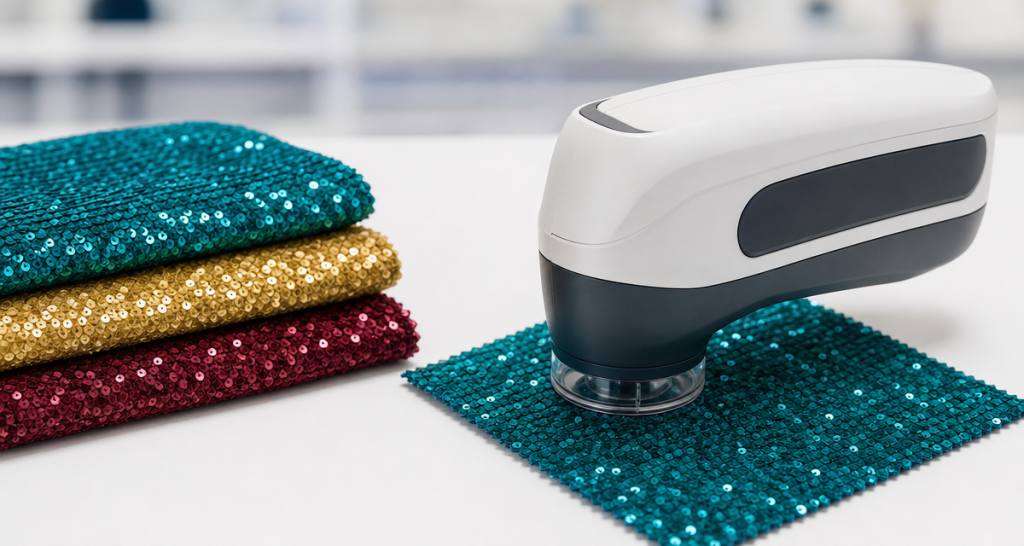
Compare the running production against the approved sample under the same light source every time. Colour drift is easiest to catch early, when the team can still adjust a shade. It is hardest to correct once the rolls leave the line. Record the result of each comparison, so the file can answer a later question instead of memory. Consistent colour also depends on how the team approved the shade at the start. Our fabric colour matching guide for wholesale buyers explains that subject in full.
Width
Measure usable width, not total width, and measure it at more than one point along a roll. Sequin fabric can pull slightly across the surface. A narrow section that appears after cutting is expensive. Compare the reading with the specification sheet, and note any roll that falls outside the agreed tolerance.
Weight and GSM
Record the weight and GSM of the running production. Compare them against the approved sample rather than against a figure chosen in advance. Weight and GSM describe the relationship between the base cloth and the sequin density. Therefore, a change here usually signals a change in construction. Logging the value on each batch makes drift visible long before it becomes a complaint.
Sequin Attachment and Edge Condition
Check that sequins sit securely and stay evenly aligned. Confirm that the laying direction stays consistent. Make sure the edges stay clean and free from loose or damaged sequins. Run a light hand test along the surface and the edges. It will reveal anything that would catch during cutting or wear. Edge condition is often the first sign of a stitching problem. As a result, it belongs in the in-process check rather than the final one.
Surface Defects and Stains
Inspect the surface for stains, marks, pulled threads, misaligned sequins and flattened areas. The face of a sequin fabric is reflective. As a result, defects that would stay invisible on a plain woven become obvious here. Mark the position of any defect on the roll. The cutting team can then plan around it, or set the roll aside.
Stage 3: Pre-Shipment Inspection, Packing and Records
Final Roll Inspection
Before packing, inspect the finished rolls against the same specification as the line. Confirm colour, usable width, sequin attachment, edge condition and surface quality. Then check that the roll count and yardage match the order. Our pre-shipment inspection checklist for sequin fabric follows the same sequence in more detail.
Packing and Roll Identification
Check that each roll matches the agreed length and core. Confirm that the bagging protects the face of the fabric. Make sure every roll carries the label text agreed in the specification. Packing is part of quality control. A roll that arrives creased or dirty counts as a rejected roll. That holds true no matter how well the factory made it.
Batch Records and Traceability
Keep a simple record for each production batch. Note the date, the specification version, the checks the team performed and the result of each one. When a repeat order follows, these records show what the team approved and what it measured. That is the fastest way to keep the second order consistent with the first. Our guide to keeping sequin fabric quality consistent in repeat orders builds on the same file.
Handling Non-Conforming Fabric
Decide in advance what happens when a roll does not match. The usual options are simple. You can set the roll aside for a second look. If the defect is local, you can shorten the roll, or you can replace it before shipment. The important part is that the team records the decision. The buyer also needs to hear about it before the goods leave. That way, the outcome becomes a documented agreement rather than a surprise.
Quality Control Checklist for a 200-Yard Order
| Stage | Check | Reference |
|---|---|---|
| Before production | Approved physical sample | Signed sample in the order file |
| Before production | Written specification sheet | Base cloth, width, colour, sequin format, packing |
| In production | Colour against the sample | Same light source and viewing angle |
| In production | Usable width at several points | Specification sheet tolerance |
| In production | Weight and GSM | Approved sample |
| In production | Sequin attachment and edge condition | Hand test plus visual check |
| In production | Surface defects and stains | Marked position on the roll |
| Pre-shipment | Final roll inspection | Specification sheet |
| Pre-shipment | Roll length, core and bagging | Agreed packing instruction |
| Pre-shipment | Batch record completed | Order file |
Keeping the Plan Workable Across a 200-Yard Order
A sequin fabric quality control plan only works when the team can follow it. Therefore, keep the checklist short. In addition, keep the wording consistent with the specification sheet. As a result, the inspector does not have to translate between two documents.
Also set a rhythm. Check the first roll carefully, then check the middle and the last of the run. However, do not rely on the final roll alone. Because colour can drift late in a run, the last roll deserves the same attention as the first.
Finally, treat every finding as information. When the team sets a roll aside, note the reason next to the batch record. That note becomes the starting point for the next order. It also turns a single inspection into a lasting habit.
FAQ: Sequin Fabric Quality Control
How much of a 200-yard order should be inspected?
Check every roll at least visually. Take the agreed measurements at more than one point on each roll. A 200-yard order usually uses a small number of rolls. Therefore, a full visual pass is practical and far more reliable than a spot check. The specification sheet should state which checks the team records on every roll. It should also state which checks the team records per batch.
What counts as a defect in sequin fabric?
The usual categories include several faults. They are colour deviation from the approved sample and width outside the agreed tolerance. They also include weight or GSM drift, loose or missing sequins, inconsistent laying direction, damaged edges, stains and pulled threads. The precise limit for each category belongs in the specification. That way, the inspector and the buyer work from the same definition.
How do I keep quality stable on a repeat order?
Keep the approved sample, the specification version and the batch records together, and reference them in the repeat order. Comparing a new batch with the original reference is the simplest way to detect drift. It also turns a subjective conversation about sparkle into a measurable comparison.
Source Sequin Fabric with Yunfan Textile
Browse our sequin fabric, mesh base and embroidered textile range, and send your specification straight through our Alibaba storefront.
Request Sequin Fabric Samples
Send your specification and we will prepare a sample set for review. Contact us directly:
Wendy Jessie
+86 156 3752 5803
+86 175 1619 6727
morris@yunfantextile.com
morris@yunfantextile.com