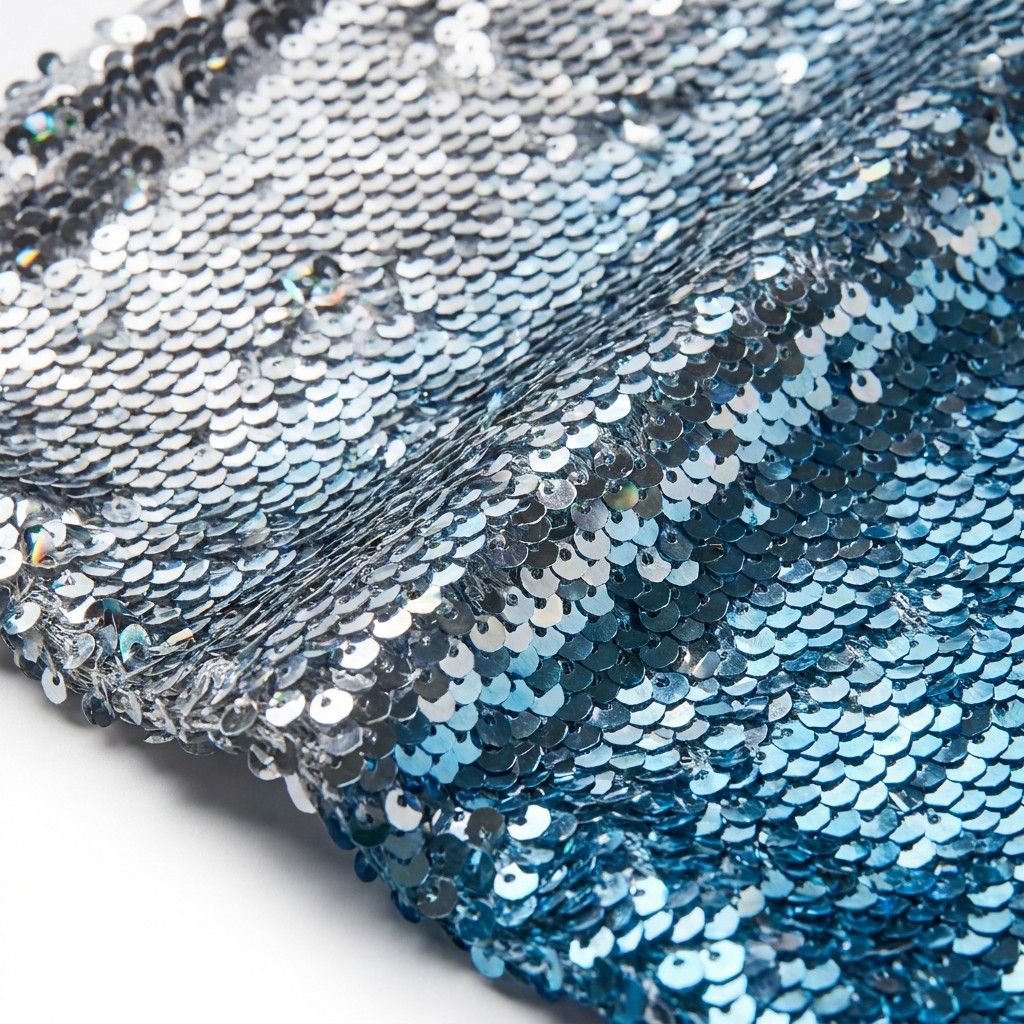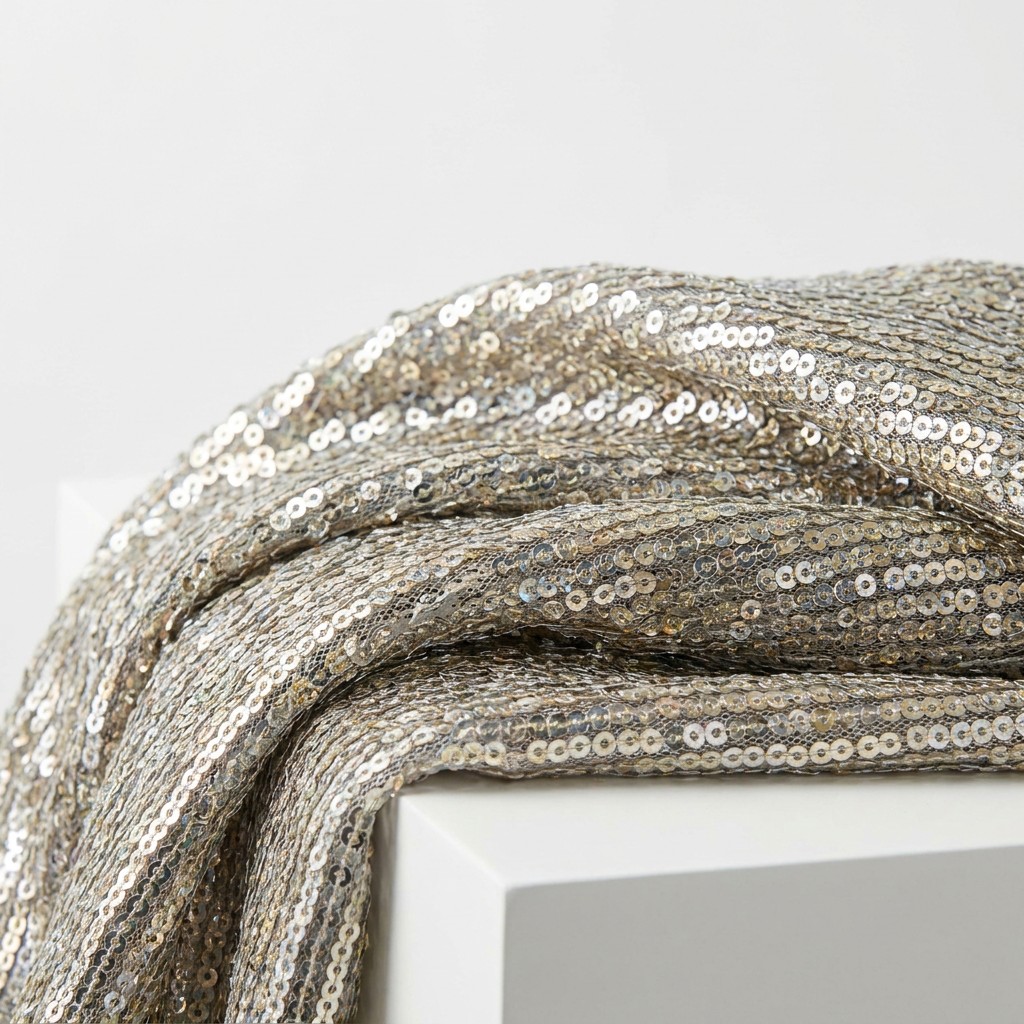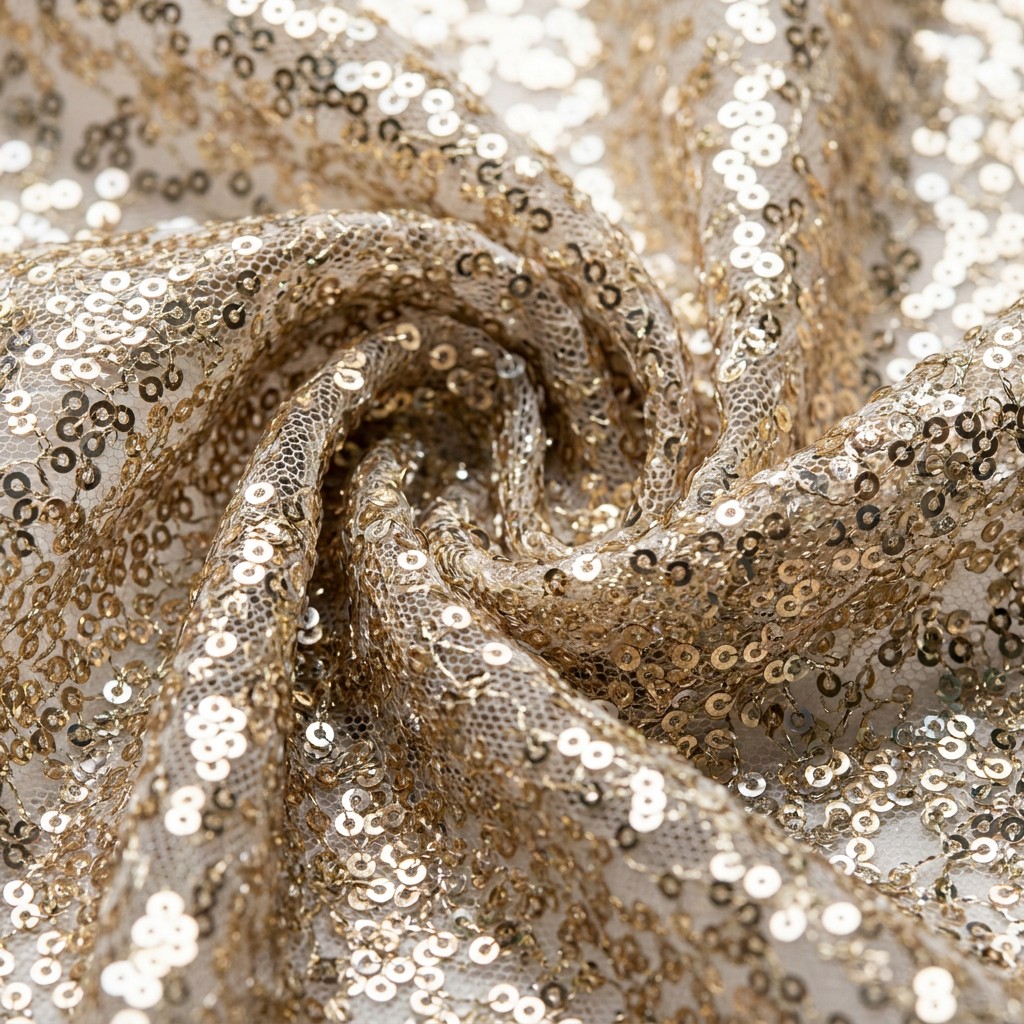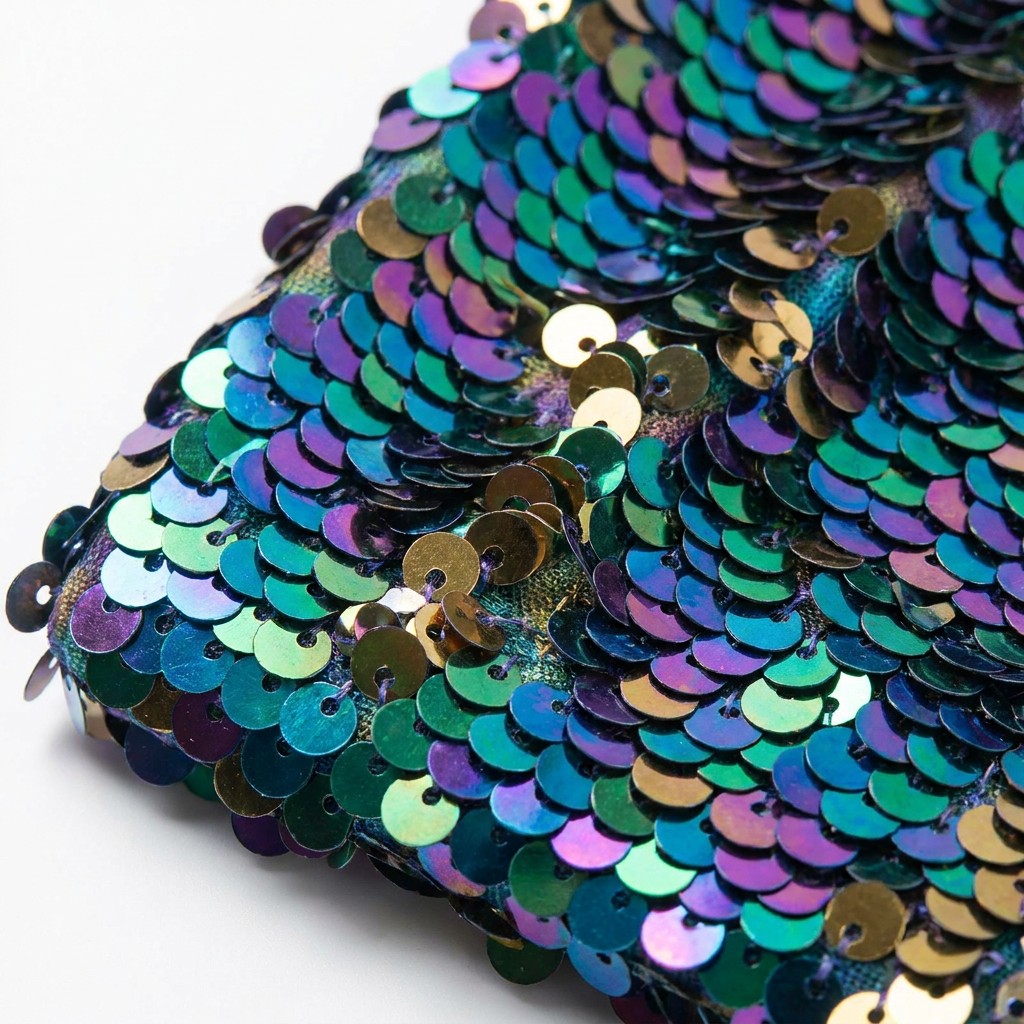
A sequin fabric lining is the layer that decides whether a sparkly garment feels comfortable, whether the sparkle reads cleanly, and whether the inside of the garment survives a full evening of wear. Start by reading the sequin surface itself. A sheer mesh ground usually needs a soft, smooth lining to separate the discs from the skin. A dense satin or crepe ground may need only a light inner layer or a bound seam finish. A stretch knit ground needs a lining with similar recovery so the garment moves as one piece. Ground fabric, comfort, opacity and structure all pull on the same decision, and the sections below show how to balance them before bulk production.
What a Lining Has to Do in a Sequin Garment
A sequin surface is abrasive by nature. Every disc edge is a small, hard point that rubs against whatever sits beneath it. A lining therefore does four jobs: it separates the sequins from the skin, it hides the reverse side of the application or embroidery, it protects seams from abrasion, and it helps the garment hold its intended shape.
Skip that layer, and the effects appear quickly. Wearers report scratching at the underarm and waist, the inside of the garment sheds threads, and the reverse of the sequin work becomes visible through movement. Each of those problems is easier to prevent at the sampling stage than to correct after the order has been cut.
Ground Fabrics and How They Change the Lining Decision
The ground fabric sets the starting point, because it determines how much weight a lining can add and how much stretch it must accommodate. Our guide to choosing a base fabric for sequin and embroidery covers grounds in more detail; the notes below focus on what each ground asks of the lining.
Mesh and Tulle Grounds
Mesh and tulle grounds are open and light, so the lining carries most of the opacity and much of the comfort. A smooth, low-friction lining works best here, because anything with a raised texture will catch on the open weave. Keep the lining thin so the sheer character of the overlay survives, and choose a tone that either matches the skin intent or deliberately contrasts with it.
Knit and Stretch Grounds
Stretch grounds need a lining that recovers in the same way. Match the stretch direction and the approximate recovery of the two fabrics, then test the pair together in a sewn sample. A rigid lining on a stretch ground restricts movement and creates pull lines across the body, which no amount of pressing will remove.
Satin and Crepe Grounds
Dense grounds already provide coverage, so the lining decision leans towards comfort and finish. A lightweight satin or crepe lining keeps the inside smooth and lets the garment slide on easily. Weight matters here, because adding a heavy lining to an already dense ground can make a long gown tiring to wear.
Velvet Grounds
Velvet grounds bring their own nap and weight. A smooth lining prevents the nap from rubbing against the body, and it also stops the garment from clinging. Choose a lining that will not print through the pile under pressure, and check the pile direction on a full panel before you approve the layering order.
Comfort Against the Skin
Comfort is the first property a buyer should test, because it is the hardest to fix later. Run a hand inside the sample, then press the sequin surface against the inner arm for a few seconds. If the disc edges bite, add a lining layer or change the seam finish rather than assuming the wearer will tolerate it.
Two details decide most comfort outcomes. The first is whether the lining sits between the skin and every sequin edge, including at the underarm and the waistline where pressure is highest. The second is the weight of the lining, since a heavy inner layer creates drag and heat even when the surface feels smooth.
Transparency and Coverage
Transparency is a design decision as much as a technical one. Some collections want the body to read softly through the overlay, while others need full coverage in daylight. Test opacity against the light the end user will actually see: a lining that looks solid in a studio can turn translucent under direct sun or a camera flash.
Coverage also changes across the body. The bust and the upper thigh usually need the most support, so many designs use a graduated approach with a denser lining in those areas and a lighter layer elsewhere. Note the boundaries on the pattern so the factory can follow the same map in production.
Seam Protection and Edge Finishing
Seams take the most punishment in a sequinned garment. The lining should cover the raw seam allowance so the sequin threads cannot abrade the skin or the outer fabric. French seams, bound seams and enclosed seam finishes all work, and the choice depends on how much bulk the panel can accept.
At the hem and the armhole, the lining needs enough length to release the outer fabric without pulling. A hem that is too tight will make the sequin layer bunch, and a hem that is too loose will let the lining drop below the outer edge. Confirm both on a sewn sample.
Structure, Drape and Weight
A lining quietly adds structure. Bonded panels and layered bodices use that effect deliberately to support a strapless shape or to keep a neckline steady. On fluid shapes, the same lining would fight the design, so keep the inner layer light and let the outer fabric lead.
Weigh the garment at the sample stage, not on paper. A full-length gown with a dense sequin surface and a medium lining can end up noticeably heavier than a knee-length cocktail dress with the same materials. That difference changes how the garment falls and how the customer experiences it. Our notes on lightweight mesh and decorative fabrics for layering explore this balance further.
Comparing Sequin Fabric Lining Options
| Lining option | Works best with | Comfort | Effect on drape | Watch points |
|---|---|---|---|---|
| Soft mesh lining | Sheer mesh and tulle overlays | Very smooth and light against skin | Keeps the overlay fluid | May be too sheer for full coverage |
| Lightweight satin lining | Satin, crepe and velvet grounds | Smooth, helps the garment slide on | Adds a little body | Contributes weight in long panels |
| Stretch knit lining | Stretch and knit grounds | Follows body movement | Preserves stretch recovery | Stretch direction must match the ground |
| Bonded or fused panel | Structured bodice sections | Firm, reduces scratch at the edge | Stiffens the panel | Unsuitable for fluid silhouette shapes |
How Bridal, Eveningwear and Stage Costume Differ
Bridal work prioritises skin comfort and clean lines. A soft lining with fully enclosed seams suits the long wearing times and the close attention photographers pay to the inside of a gown. Ivory and skin-tone linings dominate, and opacity is usually tested against daylight.
Eveningwear tolerates more structure because the garment is worn for a shorter period. Designers often use the lining to shape the bodice and to support heavier sequin work on the skirt. Colour options widen, and a contrast lining can become a visible design feature at the hem or the split.
Stage costume prioritises durability. Performers move hard, change quickly and wear the same piece many times, so the lining must hold up to repeated stress and fast dressing. Smooth, hard-wearing linings that let the garment slide over tights or a bodysuit work well. Our overview of fabric sourcing for dancewear and performance wear covers the movement patterns to allow for.
Validating the Lining on Samples and Garment Samples
Begin with a fabric sample that shows the sequin surface and the proposed lining together, cut to a panel large enough to fold, press and handle. Test the pair for scratch, drape and opacity under real light.
Then move to a garment sample. A sewn piece shows how the two fabrics behave at the seam, the hem and the closure, which no flat swatch can reveal. Wear it for a short period if the schedule allows, because movement exposes discomfort that a static review misses. Our checklist for inspection points for bridal and stagewear orders lists the areas worth checking at this stage.
Planning the Order Around Samples and Bulk
Most programmes start with a sample set that covers a small number of colourways, so the design team can compare surfaces and linings before committing a budget. That step usually costs far less than correcting a bulk order.
Once the combination is approved, production typically continues at a standard minimum of 200 yards per colour and ground, which keeps the dyeing and finishing runs economical. Treat that figure as the volume at which the line runs efficiently rather than as the starting point of the design conversation. Buyers who settle the sequin fabric lining first generally find the bulk stage far more predictable. For colour work, see our guidance on wholesale sequin fabric for bridal and eveningwear.
Frequently Asked Questions
Does every sequin garment need a lining?
No, but most do. Garments that touch the skin at the underarm, waist or bust benefit from a lining even when the ground fabric is opaque, because the sequin edges remain abrasive. Lightly structured pieces can sometimes use a bound seam finish instead.
Should the lining match the sequin colour or the skin tone?
Both approaches work, and the choice depends on intent. A matching lining keeps the surface colour clean, while a skin-tone lining softens the look through sheer overlays. Test both against the final lighting before deciding.
Can I use the same lining across a whole collection?
Often yes, and a single lining simplifies sourcing. Check the stretch grounds separately though, because a lining that suits satin may restrict a knit ground.
How do I stop the lining from showing at the hem?
Cut the lining slightly shorter than the outer fabric and check the drop on a sewn sample. Pressing and weight both affect the final fall, so confirm the length after the sample has rested.
Need Sequin Fabric for Your Next Collection?
We supply sequin, embroidered and decorative fabric for fashion, bridal and event collections worldwide, with sample support before bulk orders.
Request Sequin Fabric Samples
Tell us your ground fabric, target sequin size and lining preference so we can prepare a sample set for your review.
Wendy Jessie
Phone / WhatsApp: +86 156 3752 5803
Alternative: +86 175 1619 6727
Email: morris@yunfantextile.com
Email: morris@yunfantextile.com