

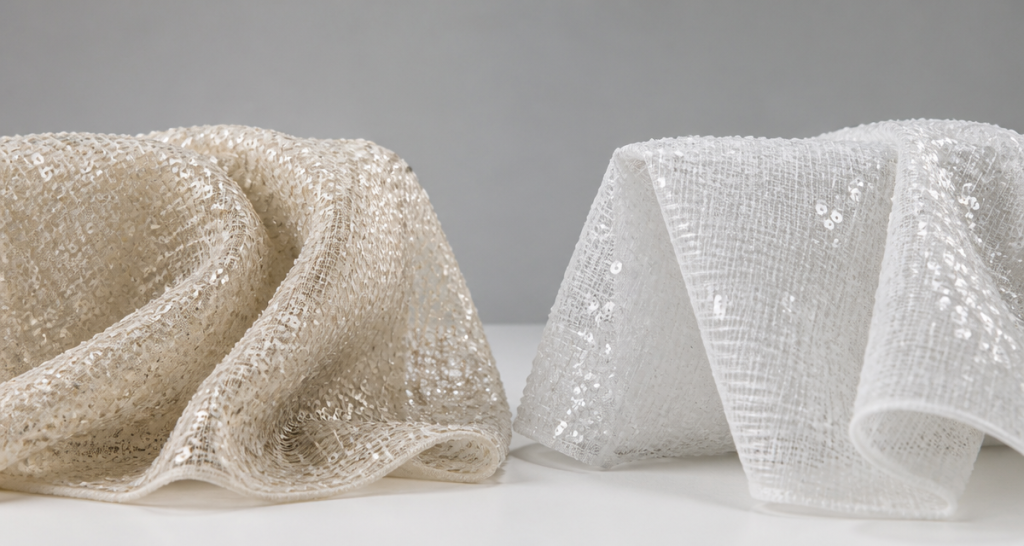
Sequin fabric drape is decided by three things: base fabric weight, sequin size, and sequin coverage. For a fluid evening gown, start with a light chiffon or mesh base under 60 gsm and moderate coverage; for a structured column or cape, a firmer organza or tulle base with denser sequins holds the shape. The practical buying answer is to specify all three variables on one sheet, then test full-drop length over a dress form before approving. Never approve drape from a hand-held swatch, because a small panel behaves nothing like a finished five-metre run.
What Is Sequin Fabric Drape?
Sequin fabric drape is how a sequinned fabric falls, folds, and recovers when it is suspended under its own weight. It combines softness of hand, weight per square metre, and the stiffness the sequins add to the base cloth.
Drape is not the same as quality. A heavy fabric is not automatically a good one, and a light fabric is not automatically cheap. What matters is fit: the drape must match the silhouette you are selling. Bias-cut skirts, cowl necks, and flowing panels need low weight and soft recovery. Structured corsetry, capes, and event backdrops need body and hold. Choosing sequin fabric drape is therefore a design decision with a direct cost consequence, because base weight and coverage both move the price per yard.
Key Takeaways
- Specify base weight in gsm, sequin size in millimetres, and coverage as a percentage.
- Light bases under 60 gsm give fluid drape; 90 gsm and above hold structure.
- Test drape at full drop length on a dress form, not on a flat swatch.
- Sequin size affects stiffness more than sequin colour or finish does.
- Confirm recovery after hanging for 24 hours to reveal stretch or distortion.
- Our decorative fabric minimum order quantity is 200 yards per colour.
How to Select Sequin Fabric Drape and Weight: Step-by-Step
- Define the silhouette first. Decide whether the product needs flow, volume, or support before you look at fabrics.
- Set a target base weight. Choose a gsm range that matches the silhouette rather than starting from a finished fabric sample.
- Select sequin size. Small 3 mm sequins add flexibility; 5 mm and larger add weight and stiffness.
- Fix coverage. Dense all-over coverage stiffens fabric noticeably, while spaced or gradient coverage keeps movement.
- Order drape swatches. Ask for at least three combinations of base, sequin size, and coverage.
- Test full drop. Hang a one to two metre length over a dress form and photograph the folds from the front and side.
- Check recovery. Leave it hanging for 24 hours, then confirm the fabric returns to shape without permanent stretching.
- Confirm the hand feel. Feel the fabric on the skin and over a lining, referencing our sequin fabric hand feel guide.
- Approve and record. Sign the winning combination and write the three values into the purchase order.
Drape and Weight Specification Fields
| Field | Example value | Effect on drape |
|---|---|---|
| Base weight | 55 gsm mesh | Lower weight means softer fall |
| Base construction | Chiffon, knit or woven | Determines recovery and bias behaviour |
| Sequin size | 3 mm or 5 mm | Larger sequins stiffen the panel |
| Sequin type | Sewn or bonded | Sewn gives more flexibility |
| Coverage | Full, spaced or gradient | Drives weight and shine density |
| Stretch | Mechanical stretch or rigid | Controls fit on body-hugging styles |
| Recovery | Tested after 24 hours hanging | Predicts long-term shape |
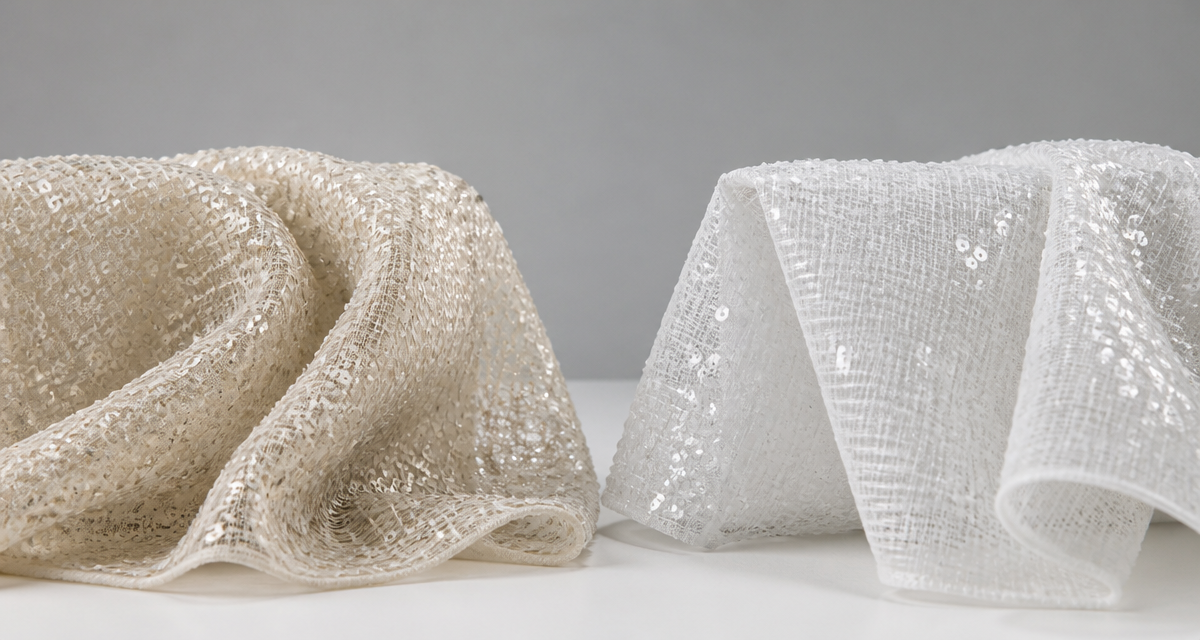
Sequin Fabric Bases Compared for Drape
| Base | Typical weight | Drape character | Best suited to |
|---|---|---|---|
| Chiffon | 40–60 gsm | Very fluid, soft folds | Bias skirts, flowing gowns |
| Mesh | 50–80 gsm | Light with slight body | Bodysuits, panels, dancewear |
| Organza | 60–90 gsm | Crisp, holds volume | Structured overlays, capes |
| Tulle | 30–60 gsm | Springy, high volume | Skirts, tutus, event backdrops |
| Stretch knit | 90–140 gsm | Body-hugging recovery | Eveningwear, performance looks |
Common Drape Selection Mistakes
Choosing by colour instead of behaviour
Shade is what a buyer sees first, but drape is what the customer feels. A stunning gold swatch on the wrong base will fail on the body, so confirm construction using our sequin fabric backing guide before ordering colour.
Ignoring GSM during reorders
A reorder at a different gsm changes the whole silhouette. Compare weight figures properly using our sequin fabric weight and GSM guide, and keep the number on the purchase order.
Skipping the full-drop test
A 30 cm swatch cannot show how gravity acts on a long panel. Run a proper drape test following our sequin fabric drape test and control method before you approve.

How GSM and Base Fabric Change Sequin Drape
Two fabrics can carry identical sequins and still fall completely differently, because the base decides it. A light chiffon under 60 gsm moves softly and collapses into fine folds, while a stiffer organza or tulle holds structure and creates volume. Sequins then add weight and stiffness in proportion to their size and density. When you specify drape, you are really specifying a base weight, a sequin size, and a coverage level together, so write all three on the spec sheet.
Matching Drape to Garment Silhouette
Fluid silhouettes, bias-cut skirts, and cowl necks need low-weight bases with moderate sequin coverage so the fabric still falls under gravity. Structured shapes, capes, corsetry, and column gowns can carry heavier sequins and firmer bases because the pattern itself provides support. Test the fabric over a dress form at full drop length before approving, because a swatch held in the hand cannot tell you how a five-metre panel will hang once it is cut and sewn.
Weight Budgeting for Shipping and Handling
Heavier sequin fabric costs more to move, and the effect compounds through the whole supply chain. A base that rises from 55 to 100 gsm can increase freight weight per roll noticeably, raise handling difficulty in the cutting room, and change how a finished garment feels on a hanger. When you compare two drape options with similar appearance, weigh the total landed cost rather than the price per yard alone, because the heavier roll is rarely the cheaper one by the time it reaches your warehouse.
Roll diameter matters too. Denser, heavier fabric needs a larger core and a stronger carton, which changes packing efficiency and container loading. Ask for the packed roll weight and diameter with your sample so the finance team can price the shipment accurately instead of discovering the difference on the freight invoice.
How Lining and Interfacing Change Drape
Drape is decided at the garment level as much as the fabric level. A soft lining can smooth the fall of sequin fabric and reduce the scratchiness a wearer feels, while a fused interfacing inside a bodice can stiffen a light base considerably. If you approve drape on the bare fabric and then construct the garment differently, the final silhouette may not match the sample you signed.
Test drape with the lining and interlining you actually intend to use. Note the lining weight, the interfacing type, and the number of layers on the specification sheet, then confirm the combination once more at pre-production. This is the step that keeps a flowing resort style from turning into a stiff column, and it costs nothing beyond a second look at the sampling stage.
Frequently Asked Questions
What GSM is best for sequin fabric drape?
Under 60 gsm gives the softest, most fluid fall. Between 60 and 90 gsm balances flow with structure, and above 90 gsm the fabric holds shape firmly, which suits structured silhouettes.
Does sequin size affect weight?
Yes. Larger sequins add measurable weight and stiffness, and denser coverage multiplies the effect. Moving from 3 mm to 5 mm on full coverage can noticeably change how a panel hangs.
Can I get fluid drape with dense coverage?
To a degree. Pair dense coverage with the lightest base that can carry it, and specify sewn rather than bonded sequins so the panel retains flexibility.
How do I test drape before bulk?
Hang a one to two metre length from a dress form, photograph the folds, and re-check after 24 hours. Also review stretch behaviour with our decorative fabric stretch recovery test.
Does drape change after shipping?
It can. Compression in transit creates fold marks that affect appearance and hand feel, so plan delivery in rolls and follow our fold mark recovery guidance.
Decide Drape Before You Order 200 Yards
Sequin fabric drape is a specification, not a feeling. Fix the base weight, sequin size, and coverage together, test them at full drop length, and put the approved values on every purchase order. That is how you keep a silhouette identical from first sample to final reorder.
Request Sequin Fabric Samples in multiple base and coverage combinations so you can compare sequin fabric drape on the bench and on the form.
Source direct on Alibaba - request bulk pricing, specifications, and production details in one place.
View Yunfan Textile on AlibabaContact: Morris — morris@yunfantextile.com — WhatsApp: +86 156 3752 5803 / +86 175 1619 6727






