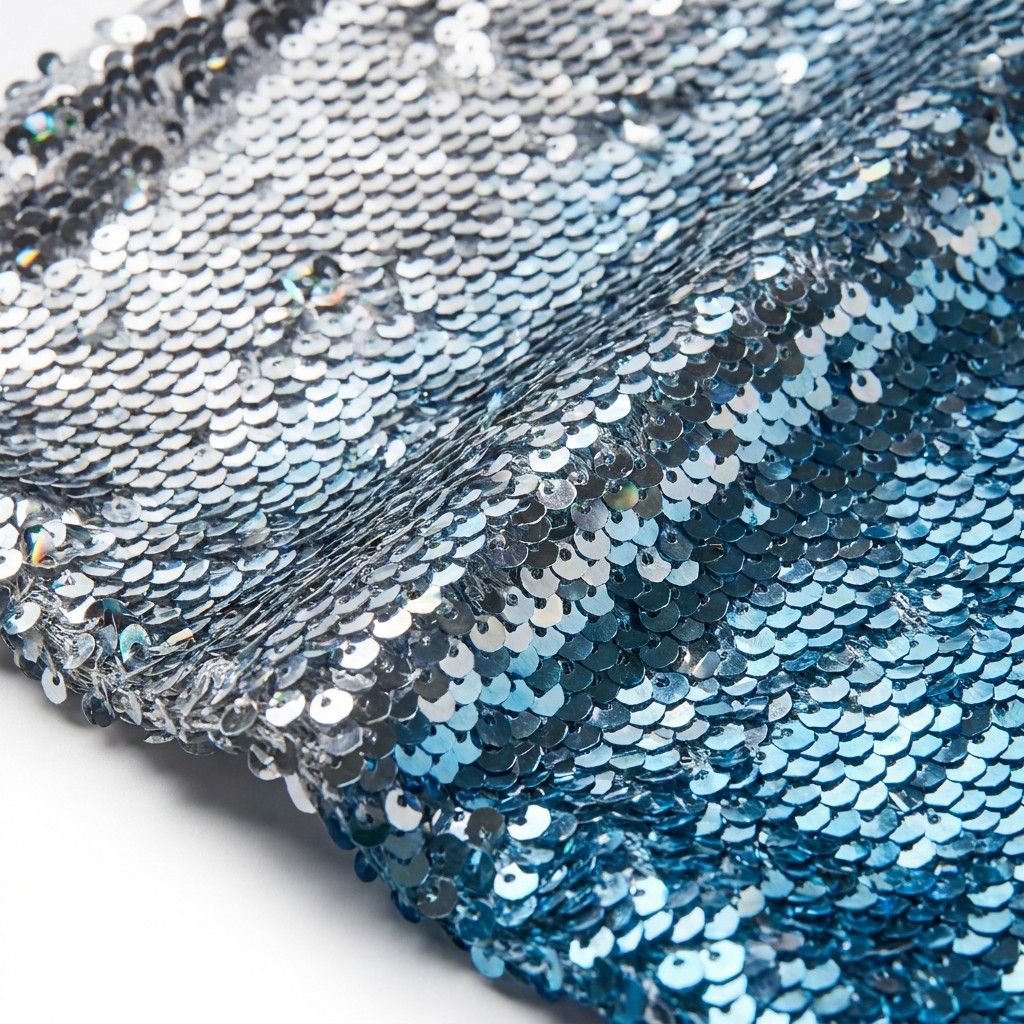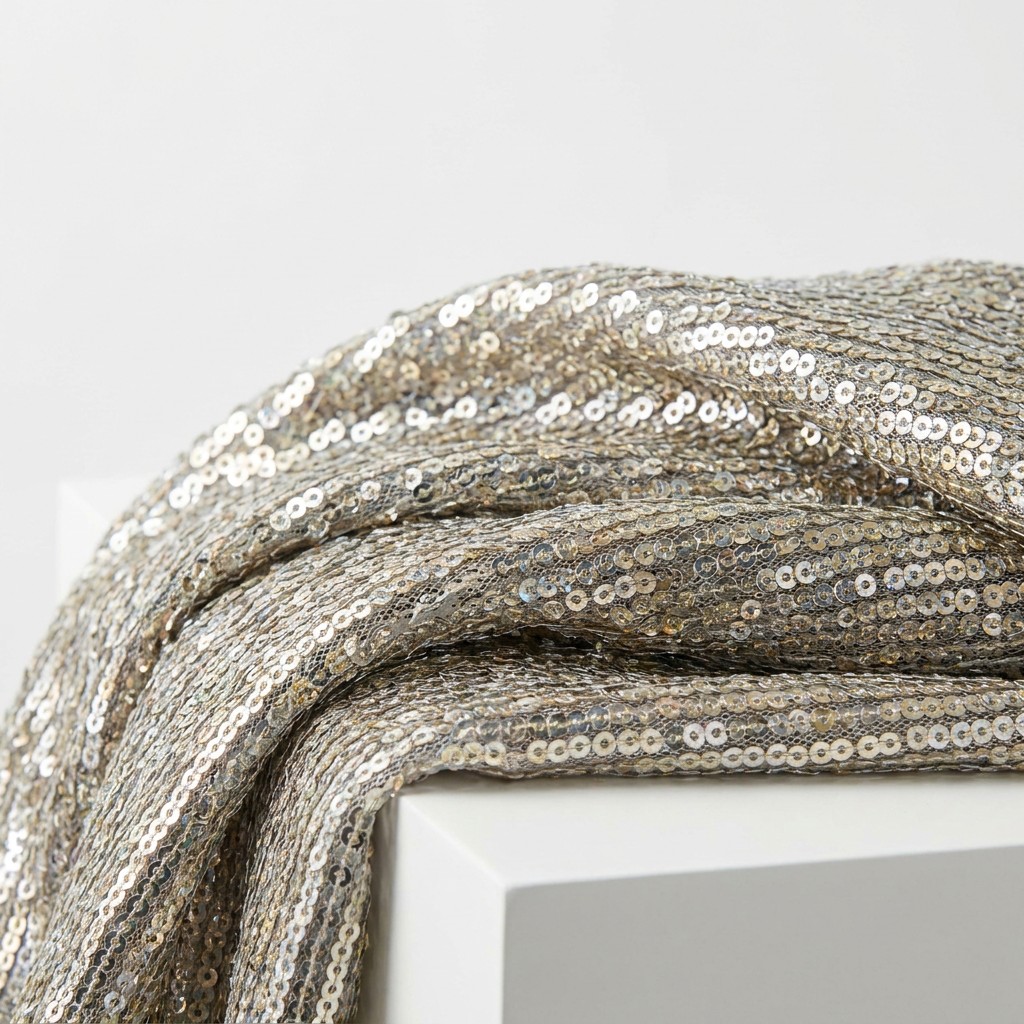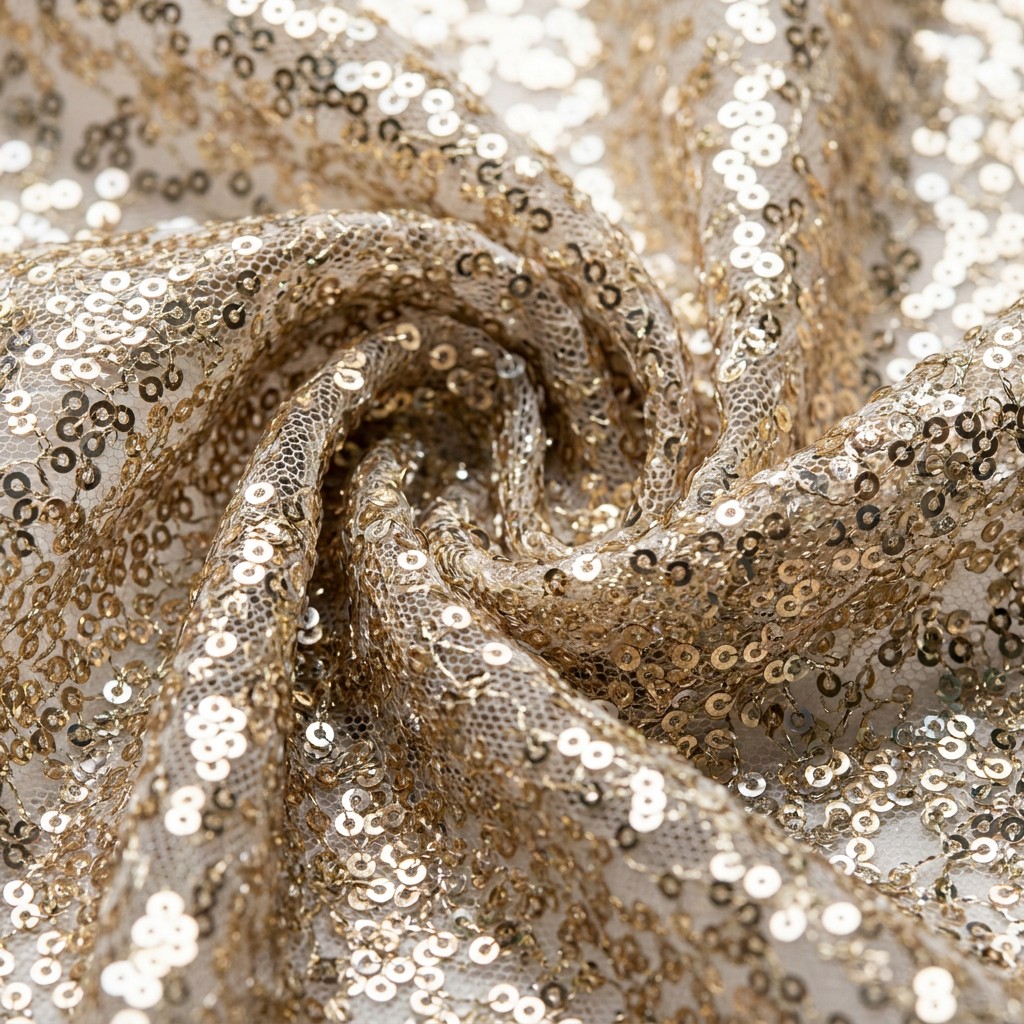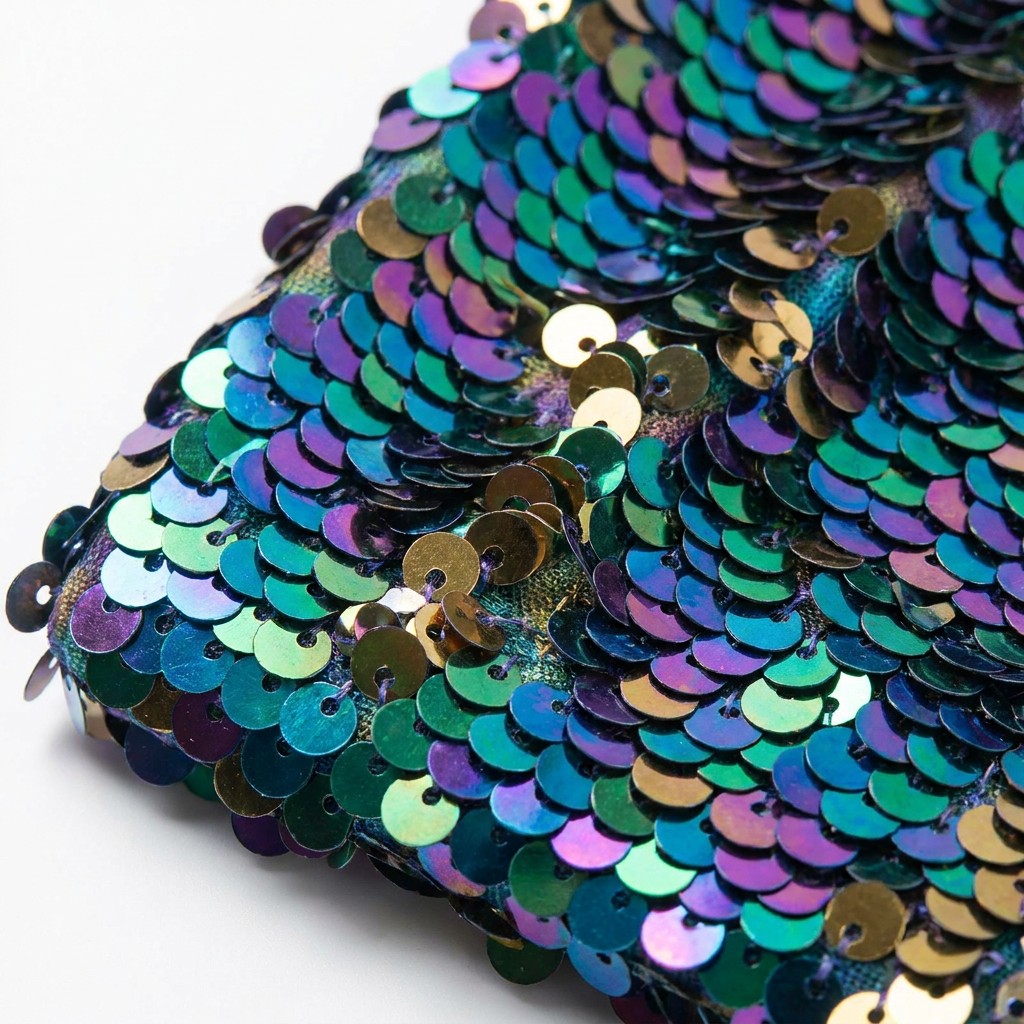
Sequin fabric hand feel is how the finished fabric feels against skin and fingers: its softness, its surface friction, its stiffness, and its weight in the hand. Hand feel decides whether a customer keeps a sequinned garment on for an evening or takes it off after twenty minutes, and it is judged in the first five seconds of a fitting. Because hand feel combines several properties at once, buyers need a simple routine to convert a subjective impression into notes that a mill can act on. This guide sets out that routine.
Key Takeaways
- Hand feel is a combination of surface friction, stiffness, weight, and edge sharpness, not a single property.
- Judge hand feel on the finished, backed fabric, because backing changes comfort more than sequin size does.
- Test on skin at the inner wrist and neck, not only between two fingers.
- Heat and moisture change how a sequin edge feels, so test again after a warm, humid cycle.
- Record hand feel as short, comparable phrases so that two people describe the same swatch the same way.
What Makes Up Sequin Fabric Hand Feel
Hand feel is the sum of four measurable properties that the fingers read together. Surface friction describes how much drag the sequin surface creates when a hand moves across it. Stiffness describes how much the fabric resists folding. Weight is the mass per square meter that you already track as fabric weight. Edge sharpness describes how aggressively the rim of each sequin meets the skin. Change any one property and the overall impression changes, even when the other three stay the same.
This is why a fabric can be light and still feel scratchy, or heavy and still feel soft. Weight and softness are independent variables, and buyers who treat them as one number end up with complaints that cannot be traced to a specification line.
The Four Factors Buyers Can Actually Specify
Each factor below can be written into a specification and checked on a counter sample.
- Sequin size and rim finish. Smaller sequins with a rounded, polished rim read softer than large paillettes with a sharp cut edge.
- Sequin density. High density raises friction because more edges sit under the hand. Lower density with an open pattern feels cooler and smoother.
- Mesh base and denier. A fine, soft mesh contributes a smoother baseline feel than a stiff heavy mesh.
- Backing. A soft knit backing separates sequins from skin and removes most scratch complaints, at the cost of some drape and weight.
Backing is the single most effective comfort lever, and the trade-offs are set out in choosing sequin fabric backing for garment comfort and stability. When comfort sits above drape in your priorities, start the conversation with backing rather than with sequin size.

How to Judge Hand Feel on a Counter Sample
Run the same five checks on every swatch so that notes stay comparable.
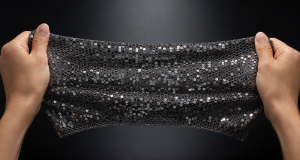
- Fold the fabric in half and press the fold closed with two fingers, then open it and watch how quickly the crease relaxes.
- Drag two fingers slowly across the sequin surface and note whether the movement feels smooth, catching, or rough.
- Place the fabric sequin-side down against the inner wrist and leave it there for ten seconds.
- Press the fabric lightly against the neck or inner arm, where skin is thinner and more sensitive.
- Repeat steps two and three after warming the swatch slightly, then write one short phrase for each check.
Step five matters because warmth and moisture change the reading. A fabric that feels acceptable in a cool sample room can feel noticeably sharper after a warm journey or a humid evening.

Hand Feel Comparison by Construction
| Construction | Typical hand feel | Comfort risk | Best suited to |
|---|---|---|---|
| Fine micro-sequin on soft mesh | Smooth, cool, flexible | Low | Overlays, eveningwear, close-fitting styles |
| Standard sequin on stretch mesh | Textured, lively, supple | Moderate | Dancewear, party dresses |
| Dense all-over sequin | Rich, firm, higher friction | Moderate to high | Structured bodices, statement pieces |
| Dense sequin with knit backing | Soft, calm, cushioned | Low | Garments worn directly on skin |
| Large paillette on heavy mesh | Bold, stiff, edge-led | High | Stage costume, decor, outer layers |
Where Hand Feel Goes Wrong in Production
Changing the backing after approval
A backing swap is a hand feel swap. Treat any change of backing as a new sample approval, because the comfort promise has changed even if the colour has not.
Cutting and sewing with the wrong tools
Blunt needles and tight machine tension crush sequins and roughen the surface. The handling rules in reducing snagging risk when sewing sequin fabric protect hand feel as well as appearance.
Ignoring the lining plan
Most comfort complaints are solved at the pattern stage, by lining or by a backing. Plan this early, using the options in sequin fabric lining for garment collections.
Hand Feel Specification Checklist
- Sequin size, shape, and rim finish
- Sequin density and pattern type
- Mesh base denier and construction
- Backing type, if any, and its weight
- Fabric weight in GSM and gram per linear yard
- Softness phrase agreed by both parties, in the same short wording
- Skin-contact test result and test conditions
- Reference sample number and approval date
Writing Hand Feel Notes That a Mill Can Use
Subjective language fails when it is vague. Replace general words with short, comparable phrases, and use the same phrase order every time: surface, stiffness, weight, and skin contact. A useful note reads as smooth under the fingers, medium stiffness, mid band weight, and comfortable on the inner wrist for ten seconds. An unhelpful note reads as feels nice.
Pair the words with one photograph of the folded swatch and one photograph of the fabric resting on skin. Together they give the mill three ways to understand the target: words, a fold image, and a contact image.
Finally, agree a tolerance for feel as well as for measurement. State which construction changes are acceptable without re-approval and which require a new sample. Sequin batches, mesh lots, and backing rolls vary slightly, and a clear rule prevents a small, acceptable variation from becoming a claim. The same discipline applies to texture and drape, described in decorative fabric texture for garment silhouettes.
Testing Hand Feel Under Real Garment Conditions
A swatch test in a cool sample room is a starting point, not a verdict. Three extra checks bring the result closer to the fitting room.
The warm and humid check
Warm the swatch gently and add light moisture, then repeat the wrist test. Skin softens and swells slightly in humid conditions, so a rim that feels neutral when cool can feel noticeably sharper when warm.
The seam and edge check
Seams, hems, and facings create concentrated edges. Fold the swatch so that a cut edge sits against the wrist and repeat the ten second test. This is where most scratch complaints actually originate, not at the flat surface.
The layered check
Most garments place sequin fabric over a lining, a facing, or a second layer. Build a small stack that mirrors the garment and test the whole stack, because the layers change both friction and stiffness.
Run all three checks on the approved swatch and keep the notes with the sample. They take a few minutes, they need no equipment, and they predict the complaint that a flat swatch test misses.
Frequently Asked Questions
Does a lighter sequin fabric always feel softer?
No. Softness depends mainly on sequin rim finish, density, and backing. A light, dense fabric with a sharp cut rim can feel rougher than a heavier fabric with a rounded rim and a soft backing.
Can hand feel be measured, or is it always subjective?
It can be partly measured through stiffness, thickness, and surface friction tests, and partly described through agreed phrases. Use both so the mill has a number and a sentence.
Why does my sample feel softer than the bulk delivery?
Slight differences in sequin batch, backing roll, or finishing can shift the feel. Compare the bulk swatch against the approved reference and use the sample review fields in the fabric sample review sheet for B2B approvals.
Which construction is safest for garments worn directly on skin?
Fine sequin on a soft base with a soft knit backing usually gives the calmest skin contact. Confirm on a lined mock-up before committing to bulk.
Conclusion
Sequin fabric hand feel is a specification, not an opinion. Break it into friction, stiffness, weight, and edge sharpness, test it on skin as well as between fingers, and write the result in short comparable phrases. Approve the backing at the same time as the surface. Do that and comfort stops being the complaint that arrives after the season has already shipped.
Feel the difference on real swatches. Tell us your end use and comfort priority, then click Request Sequin Fabric Samples to compare sequin size, density, and backing options by hand.
Contact: morris@yunfantextile.com
WhatsApp: +86 156 3752 5803
WhatsApp: +86 175 1619 6727