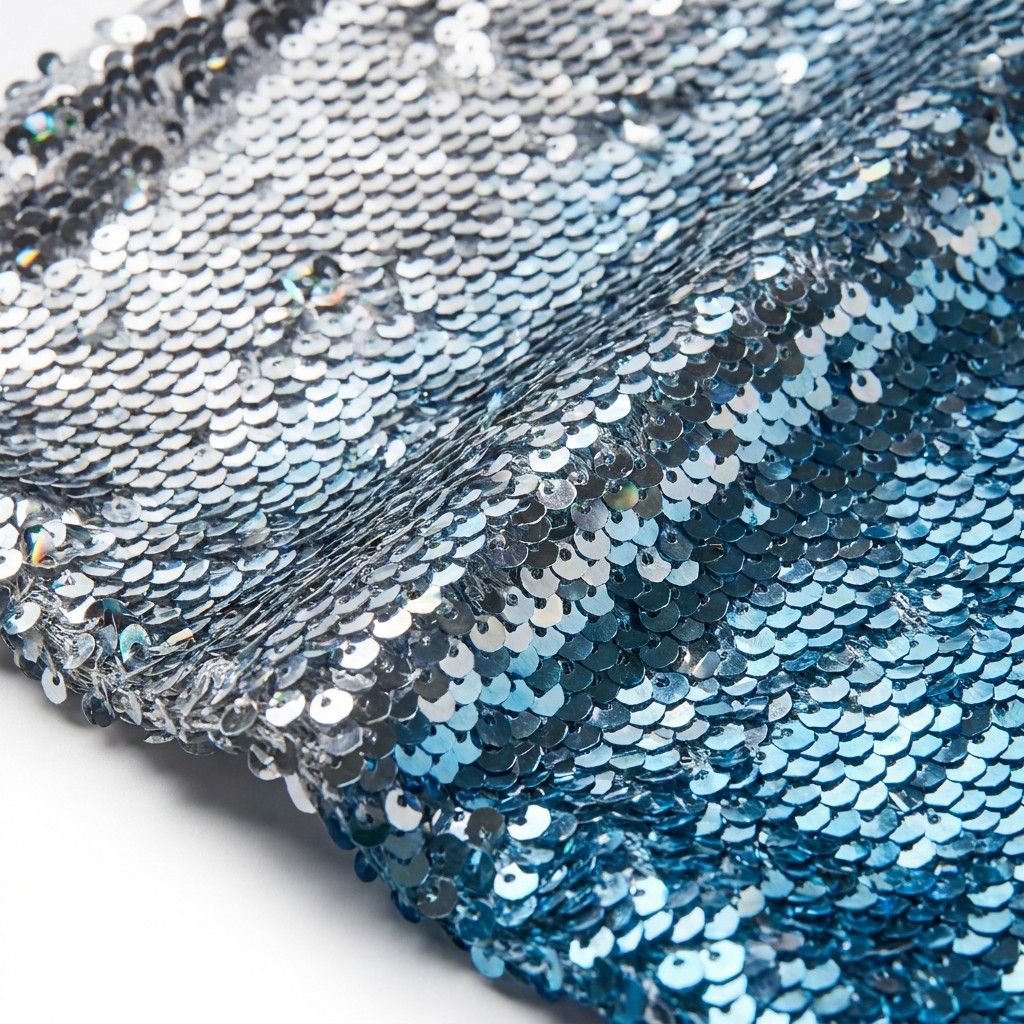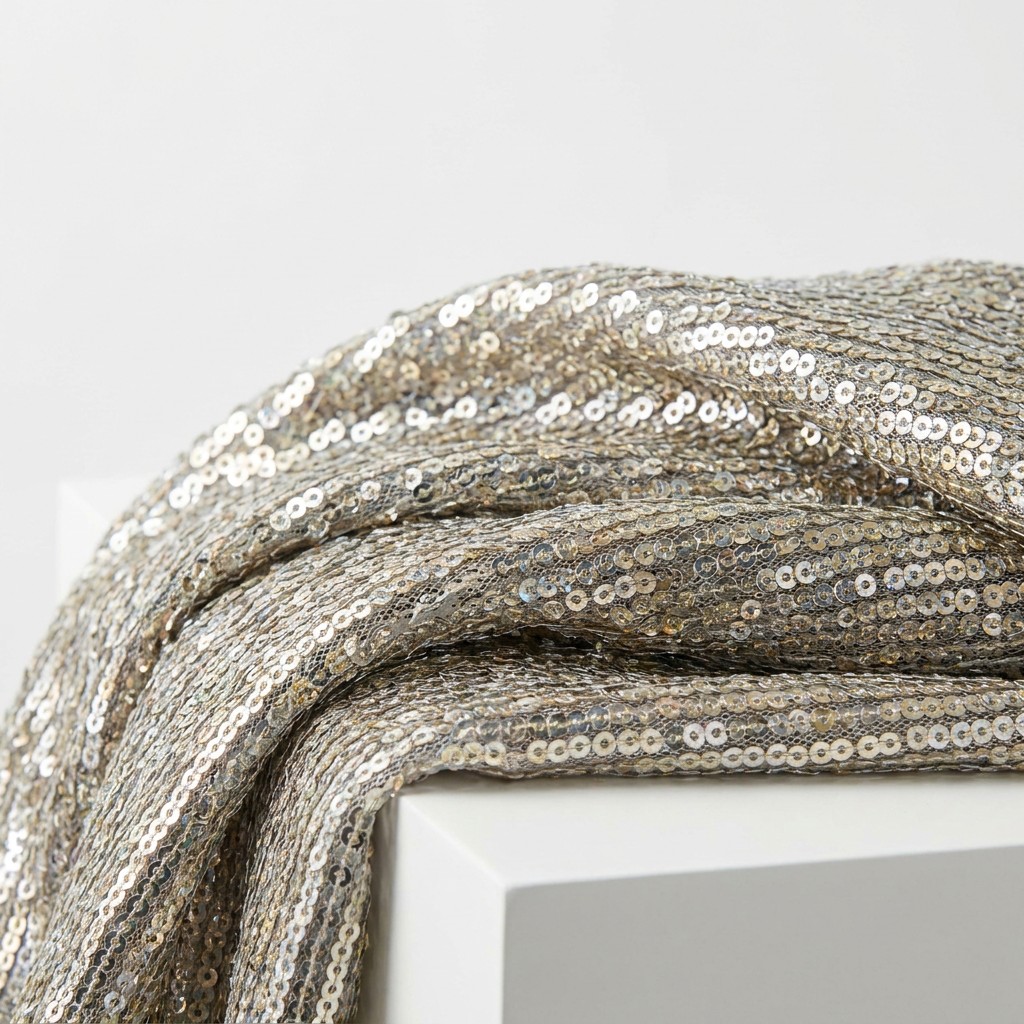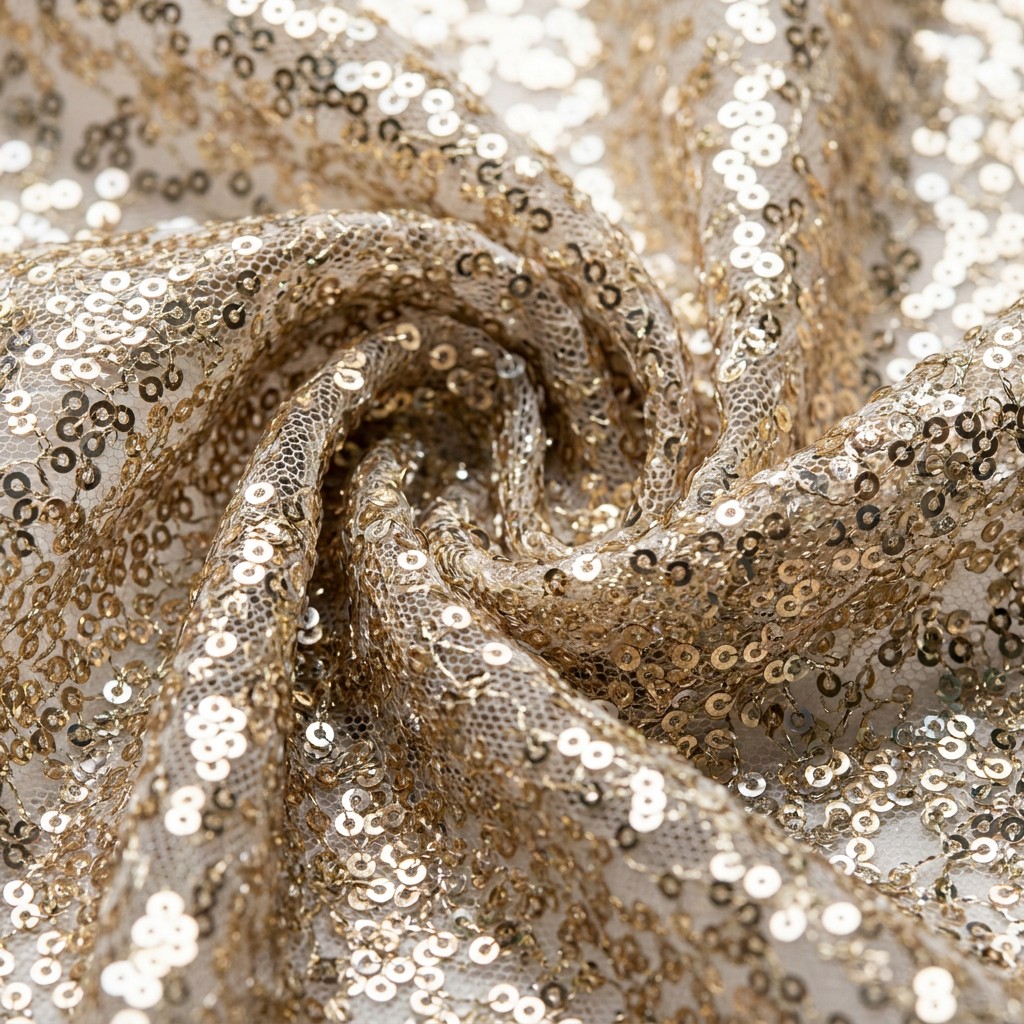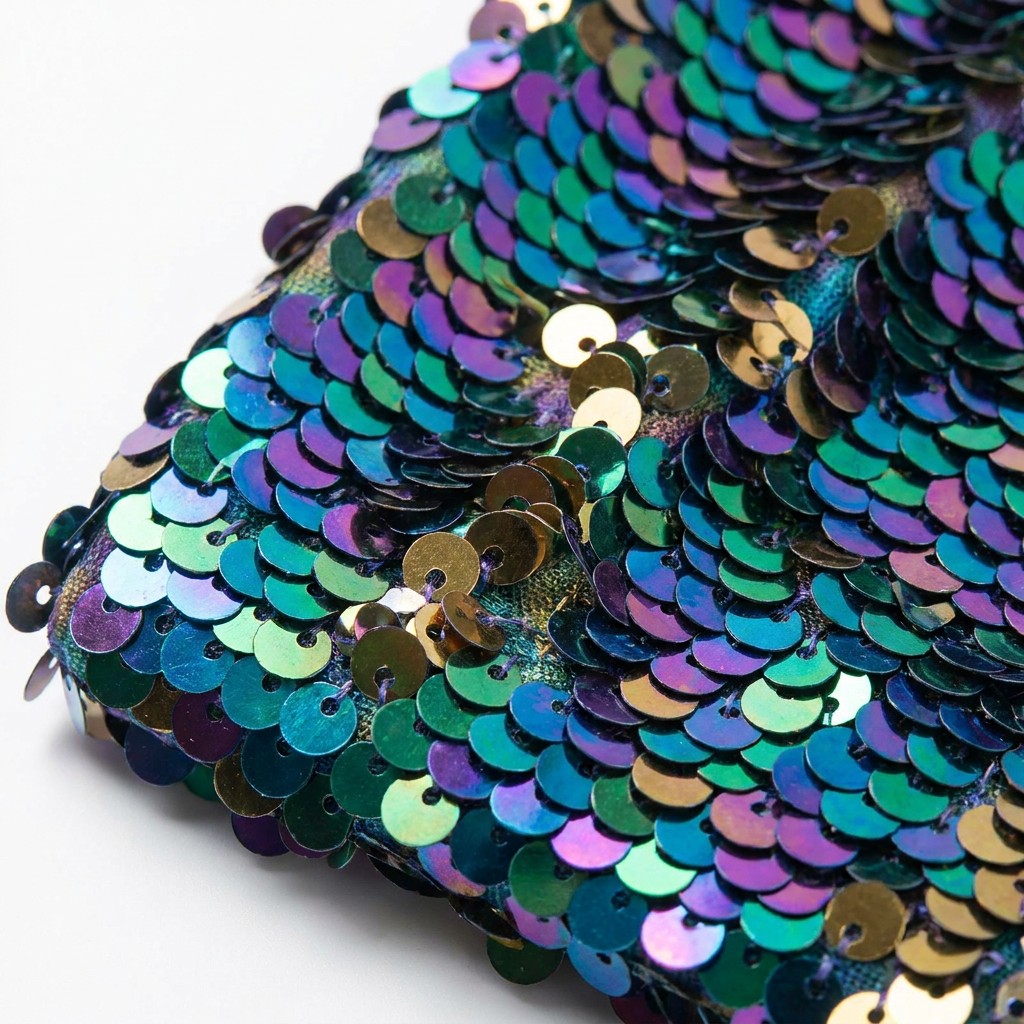
Fabric shrinkage testing is the controlled measurement of how much a fabric changes in length and width after a defined wash, steam, or heat cycle. On decorative fabrics the test is more important than on plain fabric, because sequins, embroidery, and backing each relax at a different rate, and the base mesh carries most of the movement. Buyers who test shrinkage before cutting protect their fit, their cutting plan, and their margin. Buyers who skip the test discover the problem when the first bulk delivery arrives and the pattern no longer matches the measurement chart.
Key Takeaways
- Test the full finished construction, never the bare base mesh.
- Fix the wash or steam cycle first, then test, so results stay comparable between mills.
- Measure both directions, because decorative fabrics rarely shrink equally in length and width.
- Set a tolerance with a stated test method, and record it on the approved specification sheet.
- Allow for shrinkage in the pattern and in the cutting plan, not in the customer promise.
What Decorative Fabric Shrinkage Testing Measures
Shrinkage testing measures the permanent change in a marked distance after a defined process cycle. A square is marked on the fabric, measured, exposed to the agreed cycle, conditioned again, and measured a second time. The change in each direction is divided by the original distance and reported as a percentage. The number is only meaningful when it is attached to the cycle that produced it, which is why the test method must be written down next to the result.
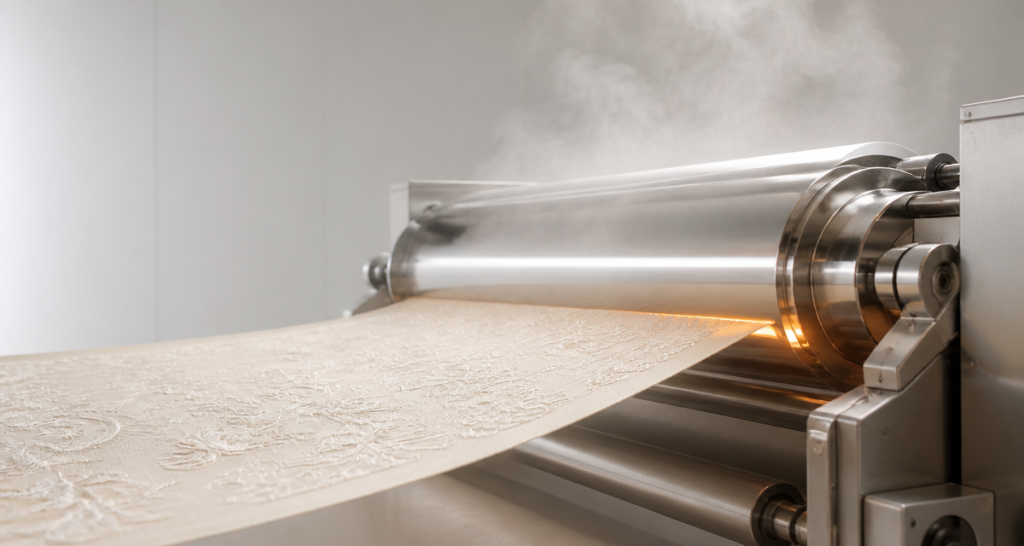
Decorative fabrics add two complications. First, heat setting and steaming relax the base, so a sequin fabric can change during finishing rather than during washing. Second, the embellishment can restrict the base, so the same mesh may behave differently once sequins are attached. For both reasons, the sample that goes into the test must be the production construction.
Shrinkage, Relaxation, and Growth: Three Different Things
Buyers often use these words as if they describe one property. They do not, and confusing them leads to the wrong corrective action.
- Shrinkage. The fabric becomes smaller after a process cycle. It usually happens once and then stabilises.
- Relaxation. The fabric returns to its natural dimensions after the tension of weaving, knitting, or finishing is released. It can happen without any washing.
- Growth. The fabric becomes larger, most often after being stretched under tension or after elastic recovery falls short.
A fabric can shrink in length while growing in width within the same cycle. That is why the report must show two numbers per sample, not one average figure.

How to Run a Shrinkage Test on Decorative Fabric
- Confirm the construction, including sequin size, density, base denier, and backing.
- Condition the sample flat in a stable, moderate-humidity room for at least four hours.
- Mark a square of known size in the centre of the sample, away from the selvedge, with two marks in each direction.
- Measure and record every marked distance to the nearest millimetre.
- Run the agreed cycle, such as a defined wash, a steam treatment, or a dry-clean cycle.
- Dry the sample by the agreed method, then condition it again for four hours.
- Re-measure every marked distance and calculate the change in each direction separately.
- Report the result with the cycle, the drying method, and the sample identification.
Steps two and six are the ones that get skipped in a busy sampling room, and they are the reason two labs report different numbers for the same fabric.

Shrinkage Comparison by Finishing Route
| Finishing route | Typical shrinkage behaviour | Buyer action |
|---|---|---|
| Heat set after embroidery | Low and predictable | Accept with a stated tolerance |
| Steam only | Moderate | Confirm on production construction |
| No stabilising finish | Higher and less predictable | Test every colourway and plan extra allowance |
| Bonded backing applied last | Movement controlled by the bond | Test the bonded panel, not the loose fabric |
| Natural-fibre base with embroidery | Highest risk | Test at least twice and allow pattern ease |
Where Shrinkage Costs Money
Cutting before the fabric has relaxed
Panels cut while the fabric still holds finishing tension will move after cutting. Combine the relaxation rules in checking fabric width and usable yield for sequin collections with your shrinkage data.
Reporting one number instead of two
Length and width move independently. A single average figure hides the direction that actually breaks the fit.
Applying a tolerance that the mill cannot hold
An unrealistic tolerance creates rejections that nobody can fix. Set the target from measured data on the real construction and confirm the figure is repeatable before it enters the purchase order.
Testing only the first colourway
Different dyeing and finishing routes move differently. Test each colourway, or at minimum each dyeing route, and keep the records, in line with building a sequin fabric quality control plan.
Shrinkage Specification Checklist
- Article code, colour, and construction details
- Test cycle, temperature, and duration
- Drying method and conditioning conditions
- Shrinkage in length, with tolerance
- Shrinkage in width, with tolerance
- Sample size and marking method
- Result for the approved reference sample
- Approved by and date
Turning Shrinkage Data into a Cutting Plan
Shrinkage data only earns its keep when it changes a document downstream. Three actions turn a test result into money saved.
First, adjust the pattern allowance. If the fabric loses two percent in length, the marker needs that two percent returned somewhere, or the finished garment will be short at the hem. Second, adjust the cutting plan quantity. If usable width narrows after processing, the number of panels per lay falls, and the order needs more metres than the unshrunk calculation suggested. Third, brief the sewing floor. Operators who know the fabric moves will handle and press it with that in mind, rather than pressing it back to the original measurement. The same discipline appears in pre-shipment inspection for sequin and embroidery fabric, where measured panels are checked against the approved record.
Finally, keep the record with the style file so that a repeat order starts from data instead of memory. Compare the new result with the approved result before cutting begins, and treat a move outside tolerance as a reason to pause the lay, not a reason to trim panels afterwards.
Drape and shrinkage are related but separate properties, and both belong in the same sampling conversation. The method in sequin fabric drape testing and control shows how to record the second one on the same sheet.
Field Verification: Confirming Shrinkage on Bulk Rolls
A laboratory result predicts behaviour. A bulk check confirms it, and the bulk check is where an unplanned movement is caught before it reaches the cutting table.
Check the first roll of every colourway
Cut a marked square from the first roll of each colourway, run the agreed cycle, and compare the result with the approved record. If the two figures sit within the agreed tolerance, release the roll for cutting.
Compare roll to roll, not only roll to standard
Two rolls from the same dyeing lot can relax slightly differently if they were finished on different machines or at different points in the run. One marked square per roll is enough for a comparison, and the cost is a few centimetres of fabric.
Record the roll number with the result
Tie the measurement to the roll number so that a later finding can be traced to a machine, a shift, or a finishing batch. Without the roll number, the measurement cannot be used to correct anything.
These three checks take less than an hour across an order and they turn a laboratory number into a production control.
Frequently Asked Questions
How much shrinkage is acceptable in decorative fabric?
Acceptable shrinkage depends on the end use and the finishing route. What matters is that a measured target and a tolerance are agreed in writing before bulk production, and that the reference sample result is recorded.
Can sequin fabric be pre-shrunk?
Heat setting and controlled steaming reduce later movement by relaxing the base before cutting. Ask what stabilising step is applied, and confirm its effect with a test on your own construction.
Should I test before or after the colourway is approved?
Both. Approve the colour first, then test shrinkage on the approved construction and colourway, because the dyeing route can influence the result.
Does the backing stop shrinkage?
It reduces movement rather than eliminating it. A bonded backing limits how much the base can move, but the bonded panel still needs to be tested as a complete unit.
Conclusion
Fabric shrinkage testing is a small, repeatable routine that protects fit, yield, and margin. Test the full production construction, fix the cycle, measure both directions, agree a tolerance, and pass the result into the pattern, the cutting plan, and the sewing floor. A test that stays in a laboratory folder has no value. A test that changes three documents has paid for itself.
Get shrinkage data with your samples. Tell us your end use, colourway, and care expectation, then click Request Sequin Fabric Samples and we will supply each construction with its finishing route and measured stability data.
Contact: morris@yunfantextile.com
WhatsApp: +86 156 3752 5803
WhatsApp: +86 175 1619 6727