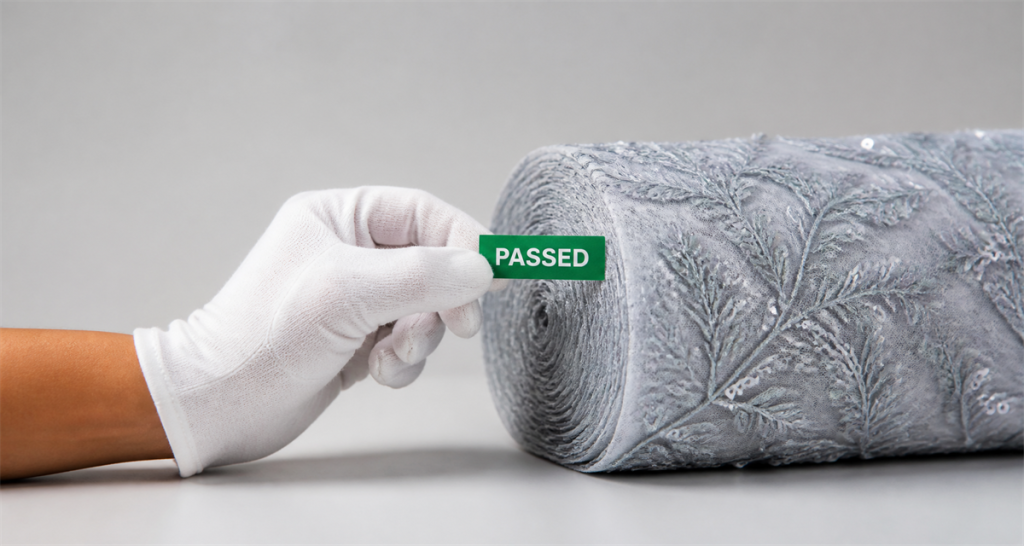
A fabric order is not finished when the production line stops. For international buyers, the most important quality decision often happens just before shipment: does the finished roll match the approved sample, technical specification and intended end use?
This question matters especially for sequin and embroidery fabric. A small variation in color, usable width, stitch density, sequin attachment or roll condition can create cutting loss, production delays and customer complaints. A clear pre-shipment inspection process gives fashion brands, wholesalers, event suppliers and home textile buyers a practical way to reduce those risks before the goods leave the factory.
At Yunfan Textile, a Keqiao-based textile manufacturer, we support buyers with factory-direct development for sequin, embroidery and decorative fabrics. The following guide explains the checks that should be included in a professional pre-shipment inspection.
1. Start with the Approved Sample and Specification Sheet
The approved sample should be treated as the physical reference for bulk production. It should be stored together with the final specification sheet, color reference and confirmed artwork.
Before inspection, buyers should compare the finished fabric with:
- The approved swatch or golden sample
- Confirmed color references and lab-dip records
- Fabric composition and GSM requirements
- Finished width and usable width
- Sequin size, shape, density and attachment method
- Embroidery repeat, stitch direction and pattern placement
This prevents a common problem in textile sourcing: accepting a shipment based on a photograph instead of comparing it with the actual approved standard.
2. Check Color and Surface Consistency Across Rolls
A roll can look correct at the beginning and still show variation later. Inspectors should review samples from the beginning, middle and end of selected rolls. For larger orders, samples from different production lots should also be compared under consistent lighting.
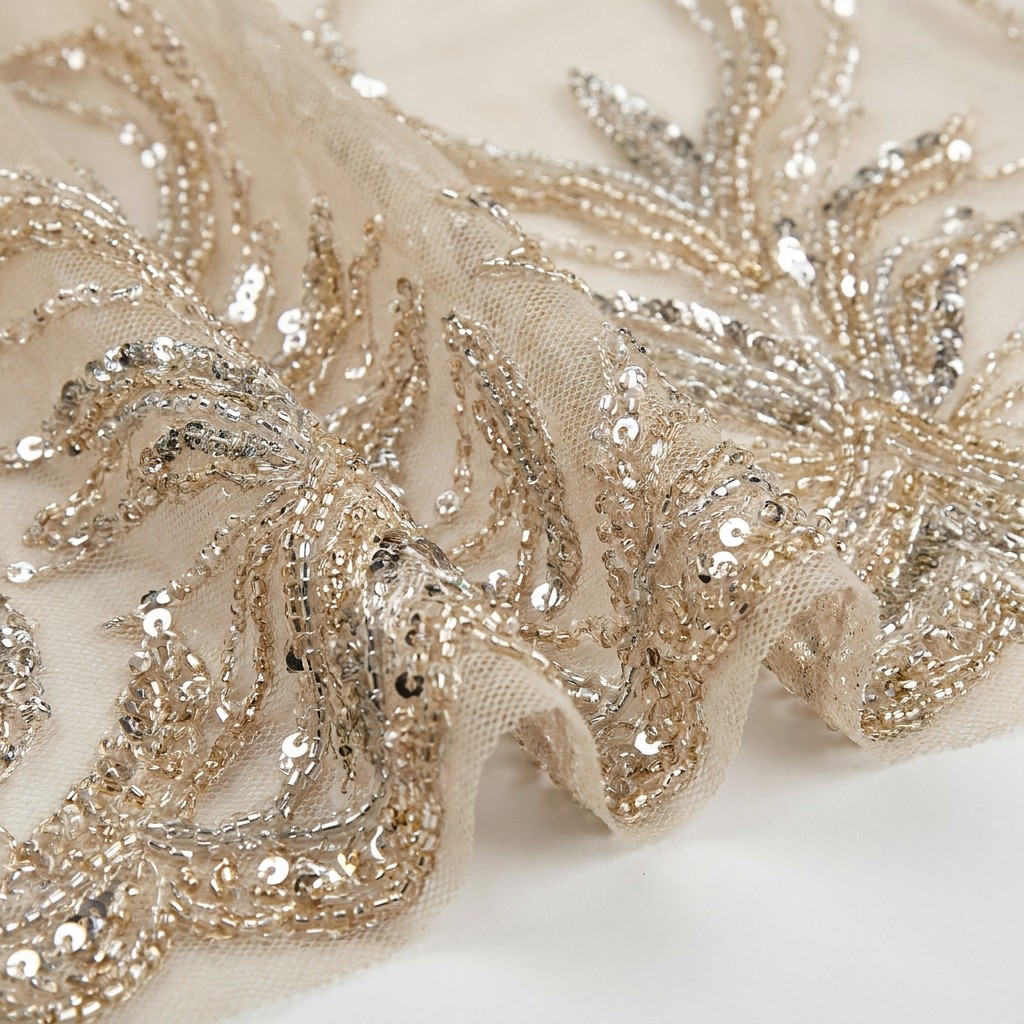
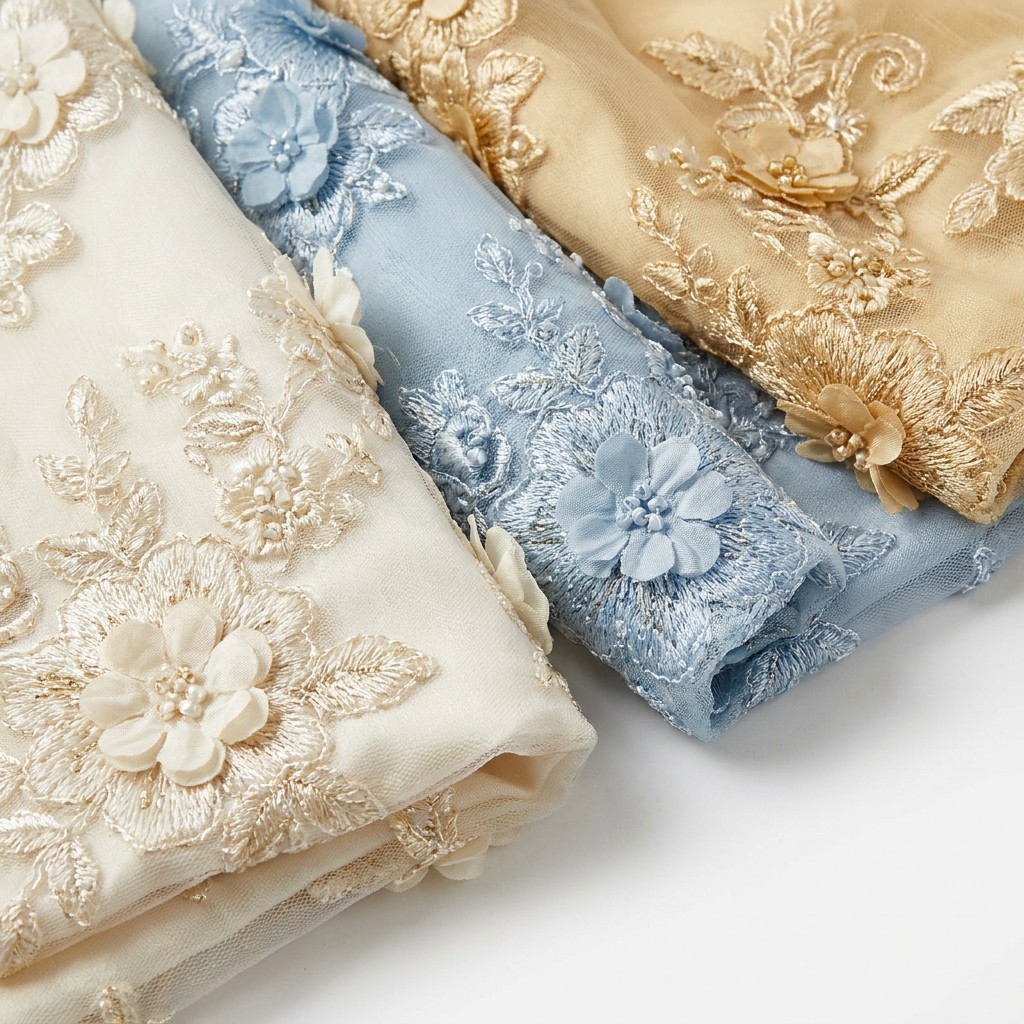
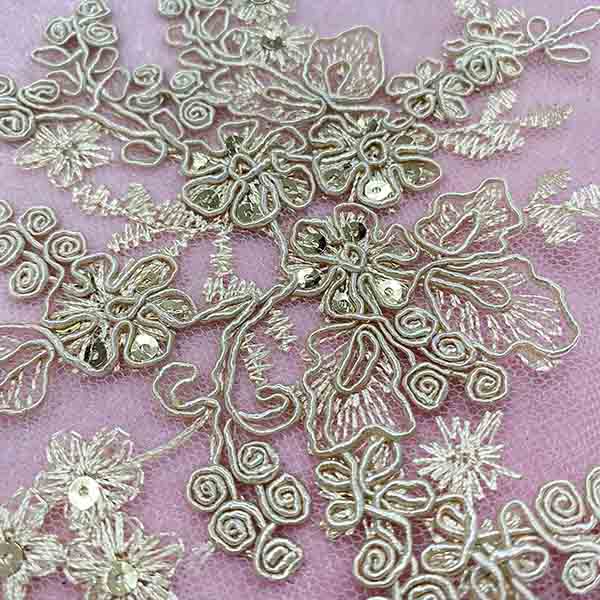
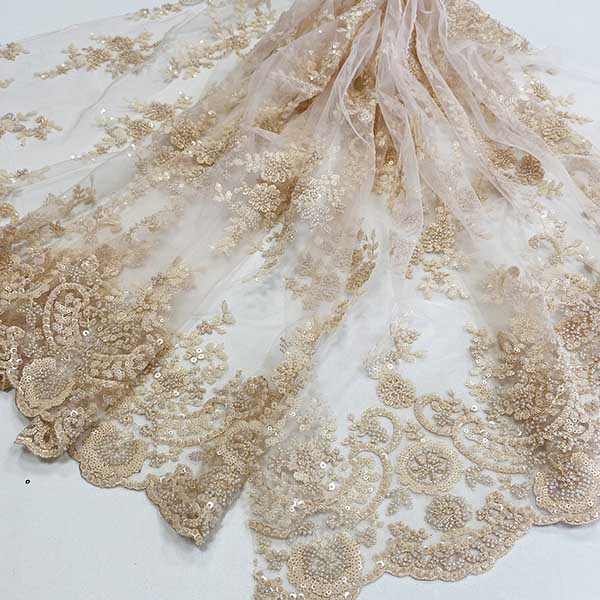
For sequin fabric, the inspection should look for uneven reflection, shade changes, missing sequins and irregular density. For embroidered fabric, check thread color, stitch tension, pattern alignment and visible puckering.
Buyers should also record any acceptable tolerance before production. Clear tolerance rules make it easier to distinguish a correctable variation from a shipment-level quality issue.
3. Verify Width, GSM and Usable Cutting Area
Fabric width affects pattern layout and material consumption. A small reduction in usable width may increase the number of rolls required for a production program.
The inspection should record:
- Total finished width
- Usable width after selvedge and edge treatment
- GSM or weight range
- Roll length and roll identification
- Edge condition and winding quality
For heavily embellished fabrics, the usable cutting area may be narrower than the total width. This should be confirmed before the buyer calculates yield or final cost.
4. Test Attachment, Surface and Handling Performance
A visual inspection alone cannot identify every problem. Inspectors should gently rub, bend and handle a sample from each selected roll. The purpose is not to damage the fabric, but to identify loose sequins, broken threads, unstable backing, open embroidery points or excessive shedding around the cut edge.
If the fabric is intended for stagewear, event decoration or hospitality use, the inspection should reflect the real application. A fabric that looks attractive on a flat table may need stronger attachment and more stable backing when it is repeatedly folded, installed or moved.
5. Review Packing and Shipping Protection
The final inspection should include packaging. Rolls need clear identification, moisture protection and winding that prevents crushing or distortion. Sample cards, roll labels and carton marks should match the packing list and commercial documents.
For buyers importing from China, it is useful to confirm the roll count, net weight, gross weight and shipping marks before loading. This reduces receiving errors and makes warehouse checks more efficient.
6. Keep the Inspection Record for Future Orders
A useful inspection report should include the date, order number, inspected rolls, photos, measurements, accepted tolerances, defects and corrective actions. Keeping this record helps the buyer compare future lots and gives the factory a precise quality target for repeat orders.
For buyers sourcing from the Keqiao textile cluster, the Keqiao textile hub and custom embroidery service can provide useful starting points for technical discussion. Buyers developing sequin programs can also review sequin fabric options and OEM/ODM development before requesting a sample plan.
Conclusion: Inspect Before the Container Leaves
Pre-shipment inspection is a practical control point between factory production and overseas delivery. By comparing the bulk order with the approved sample, checking technical specifications, testing surface stability and reviewing packing, buyers can reduce avoidable quality and receiving problems.
Yunfan Textile provides factory-direct support for brands and wholesalers developing sequin, embroidery and decorative fabrics. To discuss a quality-control plan or request samples, visit our Contact Us page. Buyers who prefer Alibaba can also visit our .
Planning a hotel, wedding or event backdrop project?
Send your venue application, target area, preferred color, quantity and deadline. We can recommend swatches and wholesale sequin fabric options.
Source Directly from Our Alibaba Store
Get factory-direct pricing, free samples, and Alibaba Trade Assurance protection.
Contact Yunfan Textile for B2B Sourcing
🌐 Website: https://www.yunfantextile.com/
📌 B2B Contact: Jessie wendy
📱 WhatsApp/WeChat: +86 175 1619 6727 / +86 156 3752 5803
📧 Email: morris@yunfantextile.com
📧 Email: morris@yunfantextile.com