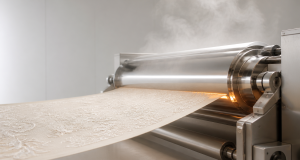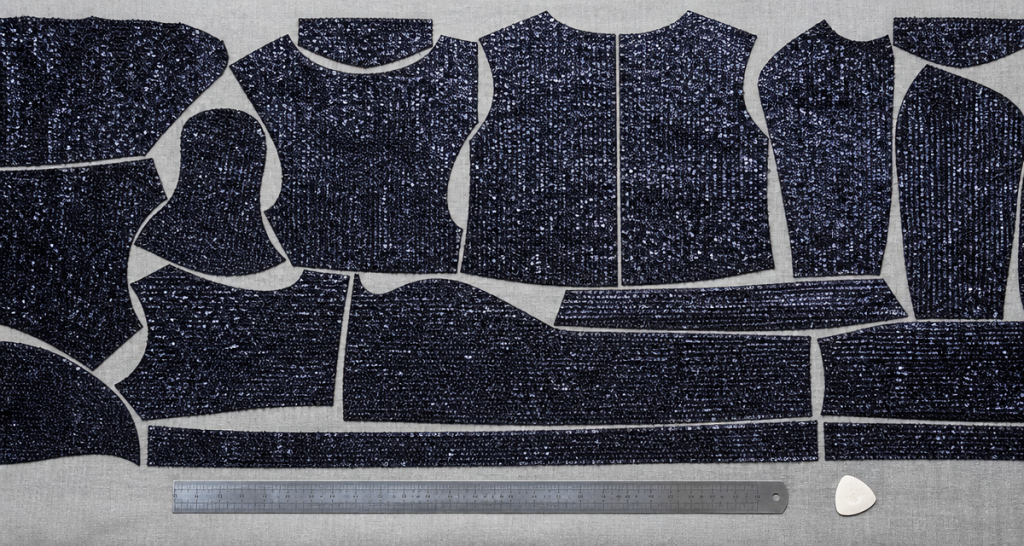
Sequin fabric laser cutting gives buyers clean motifs, sealed edges, and repeatable shapes without the fraying that blades cause. This guide explains how laser precision and controlled edge melting work together, which settings matter for a 200-yard order, and how to inspect the result before bulk production. If you source embellished fabric at scale, these details protect your margin. First, choose the right sequin type and base cloth, because each one reacts to heat in its own way. Then set power, speed, and focus so the beam melts edges without warping the mesh. Finally, confirm the outcome with a simple wash test. As a result, you cut waste and keep every panel identical.
What Is Sequin Fabric Laser Cutting?
Sequin fabric laser cutting is a shaping process that uses a focused beam instead of a blade to separate paillettes, mesh, and embroidery from a panel. The beam vaporizes a narrow channel of material. Because there is no physical contact, the sequins do not shift, and the edge seals as it cuts. That sealed edge is the real advantage. It locks the mesh yarns and reduces shedding during handling and sewing.
In contrast, die cutting and hand shears rely on force. Force bends discs, snaps threads, and leaves loose sequins. As a result, you lose yardage and add labor. Laser work avoids that problem when the parameters are correct.
Key Takeaways
Keep these points in mind before you approve a production run.
- Laser cutting seals edges, which lowers shedding and fraying.
- Kerf, power, speed, and focus decide whether edges melt cleanly or burn.
- Heat-sensitive bases need lower power and faster speed.
- Always approve a laser-cut sample on your exact base cloth.
- Inspect kerf width, edge color, and mesh integrity before bulk.
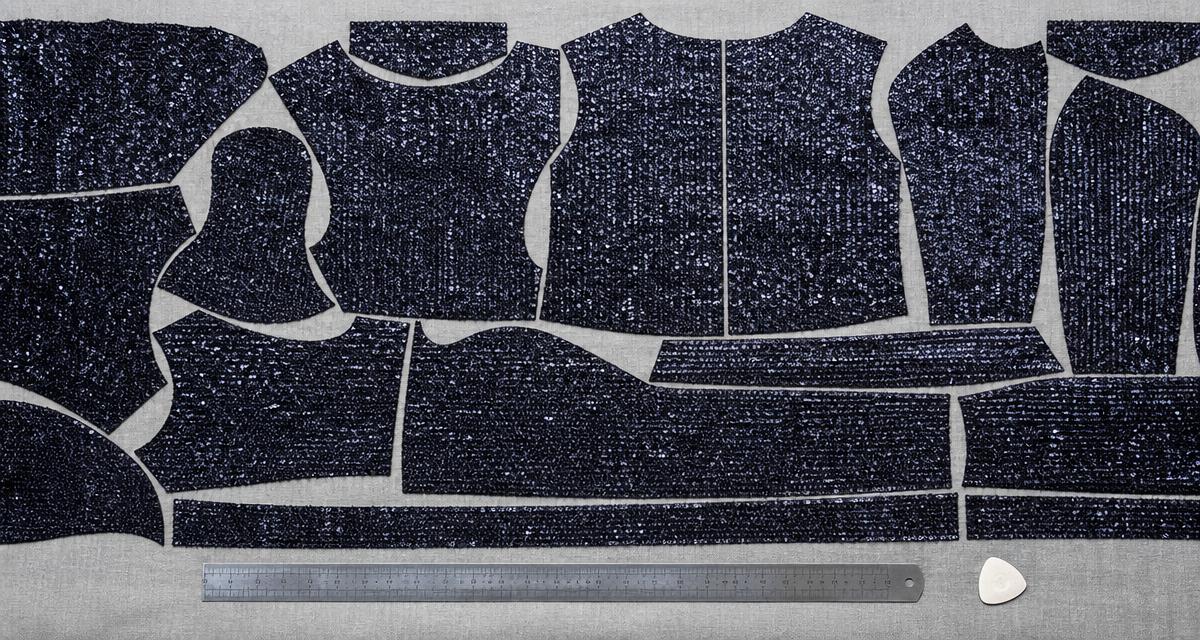
Which Craft Steps Keep Laser Precision High?
Precision comes from process control, not luck. Follow these steps for a repeatable result.
- Confirm the sequin type, disc size, and base cloth. Each combination has a heat threshold.
- Nest the motif outlines to reduce waste and to keep the beam path short.
- Run a focus test on scrap. Adjust the lens height until the kerf is thin and even.
- Set laser power below the point where the mesh curls. Then raise speed if edges stay sealed.
- Add an air assist. The airflow cools the cut and clears vapor so the edge stays light.
- Cut one full panel. Check kerf width and edge color along the whole outline.
- Wash the panel gently. If sequins lift or the mesh frays, lower the power and retest.
- Record the approved settings and lock them for the order.
Therefore, the sample becomes your control document. Every roll then follows the same recipe.
Laser Cutting vs Die Cutting vs Shears
The table below compares the three main methods for a 200-yard order.
| Factor | Laser | Die cutting | Shears |
|---|---|---|---|
| Edge finish | Sealed and clean | Compressed, may fray | Raw and frayed |
| Motif detail | Fine and sharp | Limited by die | Depends on operator |
| Heat risk | Managed with settings | Low | None |
| Setup cost | Low, digital file | High, tooling | Very low |
| Best for | Complex shapes | Simple repeats | Small trims |
Consequently, laser wins when shapes are detailed or vary across a collection. Die cutting still suits simple, high-volume repeats, while shears only fit trims.
Procurement Checklist and Order Fields
Send these fields with your request so the first sample lands close to target.
| Field | What to specify |
|---|---|
| Base cloth | Mesh, chiffon, organza, or knit |
| Sequin type | Disc size, finish, and density |
| Motif file | Vector outline with kerf allowance |
| Edge target | Sealed, matte, or glossy melt |
| Tolerance | Kerf width and size range |
| Order size | 200 yards minimum |
In addition, ask for a labeled sample that shows front and back. Review it against your pre-shipment inspection checklist so nothing is missed.
Common Sequin Laser Cutting Defects and Their Fixes
Most problems share a small number of root causes, and each one has a clear fix.
| Defect | Symptom | Fix |
|---|---|---|
| Burnt edge | Dark, brittle rim | Lower power, raise speed |
| Wide kerf | Gap wider than target | Refocus the lens |
| Curled mesh | Warped panel | Reduce heat, add air assist |
| Loose discs | Sequin lift after wash | Slower speed for a fuller melt |
For example, a burnt edge usually means the beam lingered too long. Therefore, raising the speed often solves it without touching power. In addition, a dull focus makes the beam wider, so the kerf grows and the edge dulls. Check the lens first when quality drops.
How to Specify Sequin Fabric Laser Cutting in Your RFQ
A clear request shortens the sample cycle. Include these points.
- Attach a vector file with closed outlines.
- State the base cloth and sequin type.
- Give the kerf allowance for the pattern.
- Name the edge target, sealed or matte.
- Set the size tolerance in millimeters.
- Confirm the order quantity, starting at 200 yards.
As a result, the first sample lands close to the target, which saves one or two rounds.
Quality Control Checks Before Shipment
Run these checks on every roll before it leaves the floor.
- Measure kerf width at the head, middle, and tail.
- Compare edge color from roll to roll.
- Pull a few discs to test the melt bond.
- Wash one panel and recheck for shedding.
- Confirm the panel count matches the order.
Moreover, keep a reference sample on file. It becomes the standard for the next order.
Cost and Lead-Time Factors
Laser cutting costs less in tooling and more in machine time. Complex outlines take longer, so the per-yard price rises with detail. By contrast, simple shapes cut fast and cost less. Volume also helps, because setup spreads across more yards. A 200-yard order balances setup and run time well. Therefore, group similar motifs into one purchase when you can, and share one approved sample across the collection.
Working With Your Supplier
Share your motif files early and ask for a settings record. A supplier who documents power, speed, and focus gives you repeatable quality. If edges drift between orders, the record explains why. You can also combine this step with your sample approval routine. Finally, keep an approved panel in a dry folder so both sides compare against the same reference.
How Sequin Fabric Laser Cutting Affects Your End Product
Cut quality carries through to the finished garment or decor item. A sealed, narrow edge keeps discs in place, so sewing runs without snags. In addition, a clean outline holds the motif shape after washing. Therefore, buyers who lock in laser quality see fewer repairs downstream. Meanwhile, a burnt or wide edge shows as a dark rim on light fabric, so edge color belongs on the approval sheet.
Sample Approval Workflow for Laser Cutting
A short, clear workflow prevents surprises.
- Request a cut sample on your exact base cloth.
- Check kerf width, edge color, and melt bond.
- Wash the sample and look for shedding.
- Approve and archive the panel as the reference.
- Confirm settings in writing for the bulk run.
Moreover, label the sample with the date and settings, because memory fades between orders.
Key Terms for Laser Cutting
Kerf
Kerf is the width of material the beam removes. A thin kerf keeps fine detail, while a wide kerf blurs small shapes.
Edge melting
Edge melting is the controlled fusing of the cut rim. It seals yarns and discs, which lowers fraying.
Air assist
Air assist is a jet of air at the cut point. It cools the edge and clears vapor, so the cut stays clean.
Storage and Handling After Laser Cutting
Handling protects the sealed edge you paid for.
- Roll cut panels with tissue between layers.
- Keep rolls flat and dry, away from direct sun.
- Avoid sharp creases that crack the melted rim.
- Label each roll with the motif and order code.
- Move rolls with a core support, not the edges.
Therefore, careful storage keeps edges sealed and discs flat until sewing begins. In addition, a labeled roll speeds picking on the cutting floor.
Overlooked Details That Decide Quality
A few small points separate a good run from a great one. First, confirm the lens is clean before each shift. Next, check that the base cloth lot matches the approved sample. Then verify the nesting file version, because an old file cuts the wrong outline. Finally, keep the settings sheet beside the machine, so any operator repeats the approved cut the same way.
Source direct on Alibaba - request bulk pricing, specifications, and production details in one place.
FAQ
Does laser cutting melt the sequins?
It melts only a thin edge line. With the right power and speed, the melt seals the cut and stays narrow. Too much power, however, warps discs and mesh.
Can every base cloth be laser cut?
Most synthetic mesh and organza handle it well. Natural fibers and loose knits need testing first, because they char or curl.
How does edge melting affect shedding?
A sealed edge holds loose discs and yarns in place. That reduces shedding during sewing, packing, and wear. Read more in our guide on sequin fabric shedding prevention.
What is the minimum order?
Our minimum is 200 yards. Samples ship before bulk so you approve the exact look.
Conclusion
Sequin fabric laser cutting rewards planning. Choose the right materials, tune power and speed, and lock the approved settings. Then inspect every roll against your control sample. Do that, and you get clean edges, low waste, and consistent panels across the whole order.
Request Sequin Fabric Samples
Send your artwork, target colorway, and order size. We reply with a clear plan, then ship samples so you can approve before bulk production. Our minimum order is 200 yards.
- Contact: Morris
- Email: morris@yunfantextile.com
- WhatsApp: +86 156 3752 5803
- WhatsApp: +86 175 1619 6727
- MOQ: 200 yards