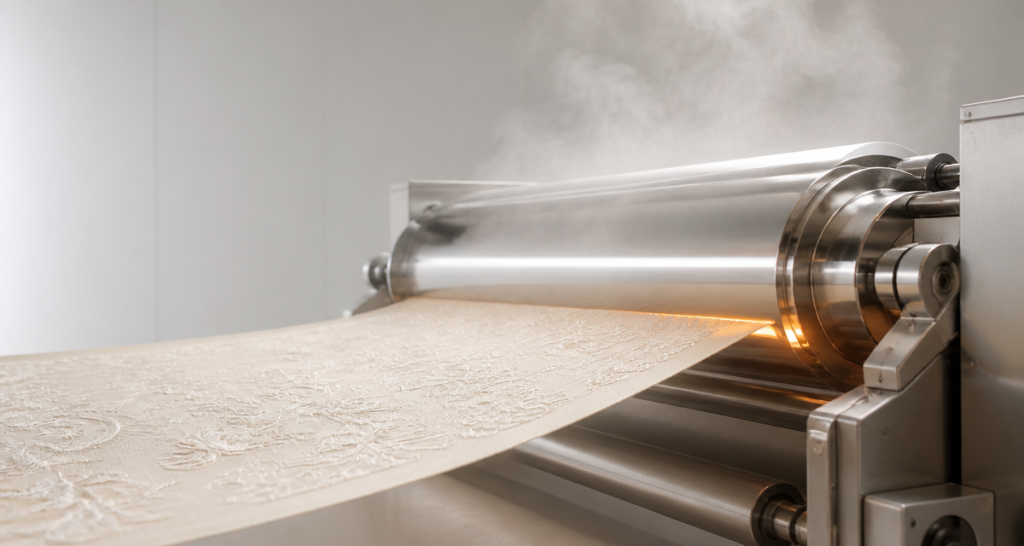
Sequin fabric ironing limits define the highest heat and steam a decorated panel can take before the plastic film softens or warps. Buyers protect the surface by keeping the iron below the film softening point, using a pressing cloth, and avoiding direct steam on the sequins. This guide explains safe temperature ranges, the risk of local heat, and the fields to approve before finishing bulk orders.
Key Takeaways
- Sequin film softens at a much lower heat than most base fabrics.
- Direct steam can cloud or curl a plastic sequin.
- Press from the back, and use a cloth between the iron and the fabric.
- Keep the iron moving, because local heat causes the worst damage.
- Test every new sequin lot at the planned finishing temperature.
- Write a maximum heat and steam limit into the order spec.
What Are Sequin Fabric Ironing Limits?
Sequin fabric ironing limits are the temperature and steam values a decorative panel can accept without changing the sequin shape. Most sequins are made from a thin plastic film. Therefore, they react to heat long before the base mesh or woven cloth does.
The limit is not a single number. It depends on the film material, the sequin size, and the base cloth. In addition, a stacked or dense sequin area holds heat longer than a light scatter pattern. Consequently, the safe limit must be tested, not assumed.
Why Heat Damage Is a Hidden Bulk Risk
Heat damage often appears after finishing, not during it. A sequin that took too much heat may look fine when warm, then curl or cloud once it cools. Moreover, the change can spread across a whole panel, because press operators repeat the same setting.
The cost is high. In addition, the defect is irreversible, so the panel cannot be repaired. As a result, a single wrong setting can reject a full run of finished goods.
How to Iron Sequin Fabric Safely: Step-by-Step
Use a fixed routine, and test before you press a full batch.
- Confirm the sequin film type and the safe temperature before pressing.
- Set the iron to a low synthetic range, and switch off the steam.
- Place the panel face down on a soft pad, with the base cloth facing up.
- Use a pressing cloth between the iron and the fabric.
- Press in short passes, and keep the iron moving at all times.
- Lift and check the surface after the first pass, then continue if it is stable.
- Let the panel cool fully before you run a final visual check.
Comparison Table: Ironing Settings by Fabric Type
Treat this table as a guide, then confirm on your own sequin lot.
| Fabric type | Heat sensitivity | Steam | Best practice |
|---|---|---|---|
| Plastic sequin on mesh | High | Avoid direct steam | Press face down with a cloth |
| Metallic film sequin | High | Avoid direct steam | Short passes, low heat |
| Sequin on woven base | Medium | Light indirect steam | Test before bulk |
| Beaded decorative panel | Medium | Indirect only | Pad the surface |
Procurement Checklist: Heat and Steam Fields
- Sequin film material and thickness.
- Maximum safe iron temperature.
- Steam restrictions, including direct and indirect use.
- Recommended pressing cloth type.
- Approved finishing method.
- Cool-down check requirement.
- Test sample reference for the approved surface.
How Buyers Verify Heat Safety with a Supplier
Ask the supplier to press a sample at the production setting and send photos of the cooled surface. Then compare that sample with your own test. In addition, request the maximum temperature in writing so the finishing team works to one number.
For related reading, see our guides on sequin fabric heat sensitivity and decorative fabric fold mark recovery. You can also review embroidery color bleeding to protect color during finishing.
Common Sequin Fabric Ironing Mistakes
Pressing directly on the sequins is the worst mistake. Direct contact sends full heat into the thin film, which softens fast. Therefore, press from the back with a cloth between the iron and the fabric.
Using steam on plastic sequins is another common error. Direct steam can cloud or curl the film, and the damage often shows only after the panel cools.
Holding the iron in one spot is a third mistake. Local heat causes the deepest damage, so keep the iron moving in short passes at a low setting.
Finally, many buyers approve a finishing sample at one temperature, then change the setting later. As a result, the approved surface no longer matches production output.
Sequin Fabric Ironing Limits: Cost, Sampling, and Lead-Time Factors
Heat damage is irreversible, so its cost is high. One wrong setting can reject a full run of finished panels.
Sampling protects the order. When the supplier presses a sample at the production setting and photographs the cooled surface, the buyer can approve the finish before bulk begins.
| Cost factor | Effect on price | Buyer action |
|---|---|---|
| Rejected finished panels | High | Approve a pressed sample |
| Re-finishing time | Medium | Set a written temperature |
| Rework of dense areas | High | Use a pressing cloth |
| Late surface defects | High | Check after cool-down |
How to Run a Heat Test Before Bulk
A heat test is quick, and it protects a whole order. Run it on the exact sequin lot you ordered.
- Confirm the sequin film type and its safe temperature.
- Set a low synthetic iron and switch off the steam.
- Press the panel face down on a soft pad.
- Use a pressing cloth between the iron and the fabric.
- Press in short passes, and keep the iron moving.
- Let the panel cool, then check for clouding and curl.
- Approve the setting, and record the temperature.
Finishing Room Conditions and Order Documentation
Finishing conditions change how a sequin reacts. Heat builds faster in a warm room, so keep the pressing area cool and ventilated. In addition, clean the iron plate so no residue transfers to the film.
- Sequin film material and thickness
- Maximum safe iron temperature
- Steam restrictions, direct and indirect
- Pressing cloth type
- Cool-down check requirement
- Approved pressed sample reference
Standard orders start at 200 yards per color, and the pressed sample should be approved before the first bulk panel is finished.
Working with a Supplier on Heat Safety
Ask the supplier to state the maximum temperature in writing and to attach a pressed sample to the order file. Then the finishing team works to one number.
In addition, ask for a photo of the cooled surface, because some heat damage appears late. This simple check prevents a rejected shipment.
With a shared limit and an approved sample, sequin panels reach the customer bright, flat, and undamaged.
How to Compare Two Supplier Heat Records
Two finishers can use the same temperature and still produce different surfaces. Therefore, ask both to press on the same sequin lot and to photograph the cooled panel. In addition, request the pressing cloth type.
A clear record states the iron temperature, the steam setting, and the pass time. Moreover, it names the sequin film material. As a result, you can match the finish across suppliers.
When the surfaces differ, check the film first, then the method. A thin film reacts faster than a heavy coated disc. Consequently, set a temperature limit per sequin type.
Final Surface Check Before Shipment
A last check protects the order. Press one panel from each dye lot, then let it cool fully. After that, inspect the surface under bright light for clouding and curl.
- Sequin film material on the record
- Iron temperature and steam setting
- Pressing cloth type
- Cooled panel photo
- Approved pressed sample reference
Source direct on Alibaba - request bulk pricing, specifications, and production details in one place.
View Yunfan Textile on AlibabaFAQ
Can I iron sequin fabric directly?
No. Always use a pressing cloth, and press from the back. Direct contact can melt or cloud the sequin film.
Is steam safe on sequins?
Direct steam is not safe on plastic sequins. Use light indirect steam only when the film type allows it.
What temperature should I set the iron to?
Use a low synthetic range, and test the sequin lot first. The safe limit differs by film material.
Can heat damage be repaired?
No. Heat damage is permanent. Prevent it with a low setting, a cloth, and short passes.
Conclusion: Test the Limit Before You Press
Sequin fabric ironing limits protect both the sparkle and the order value. Therefore, test each new sequin lot, press face down with a cloth, and keep the heat low. Then finished panels stay bright, flat, and ready to ship.
Request Sequin Fabric Samples
Send your fabric type, target GSM, color reference, and order volume. Our team will prepare a sample set for review before you commit to bulk.
Yunfan Textile B2B Contact
Contact: Morris
Email: morris@yunfantextile.com
WhatsApp: +86 156 3752 5803
WhatsApp: +86 175 1619 6727