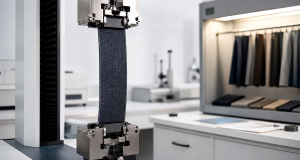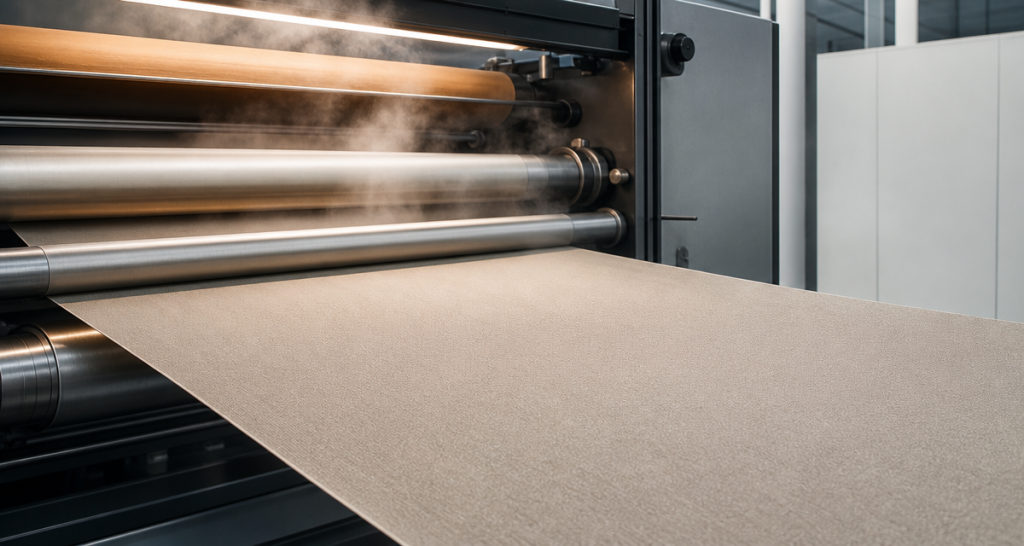
Sequin fabric heat sensitivity is the way sequins, thread and base mesh respond to heat during pressing, drying, steaming and finishing. Most sequins are PET or PVC film, and both soften at moderate temperatures. Therefore, a buyer who ignores sequin fabric heat sensitivity often receives wavy, dull or stuck-together rolls. This guide explains how to set a heat limit, test it and write it into the specification before bulk production starts.
Key Takeaways
- Heat sensitivity is a property of the whole build: sequin film, thread and base cloth.
- Most sequin films soften well below the temperatures used on plain fabric.
- Press temperature limits should be agreed in writing, not guessed on the ironing table.
- A short heat test on bulk rolls prevents the most expensive decoration defects.
- Hot air drying and tumble drying cause more damage than pressing.
- Write the heat limit, the dwell time and the contact pressure into the purchase order.
What Is Sequin Fabric Heat Sensitivity?
Sequin fabric heat sensitivity is the maximum heat load a decorated fabric can take before the sequins deform, curl, lose gloss or bond to each other. Moreover, it covers the base mesh, the sewing thread and any adhesive or backing film in the build. Each element responds at a different temperature, so the lowest one sets the practical limit.
Heat load has three parts: temperature, time and pressure. For example, a gentle iron at low temperature can still damage sequins if the dwell time is long. In contrast, a short burst of higher heat may pass through safely. Consequently, a single number is never enough. Buyers should ask for a temperature range plus a maximum contact time.
Why Sequin Fabric Heat Sensitivity Matters in Bulk Programs
Heat damage appears late in production. It usually shows up after cutting, sewing and pressing, when the goods are almost finished. As a result, one wrong press setting can ruin a whole cutting lot. In addition, the defect is often progressive. Sequins look acceptable on the day of pressing and turn dull or wavy after a few days in the warehouse.
Export packing makes the risk worse. A sealed carton in a hot container can reach temperatures far above warehouse levels. Meanwhile, humidity softens the base mesh and lets sequins press into each other. Therefore, heat sensitivity belongs in the specification next to GSM, width and color. It is not a finishing detail.
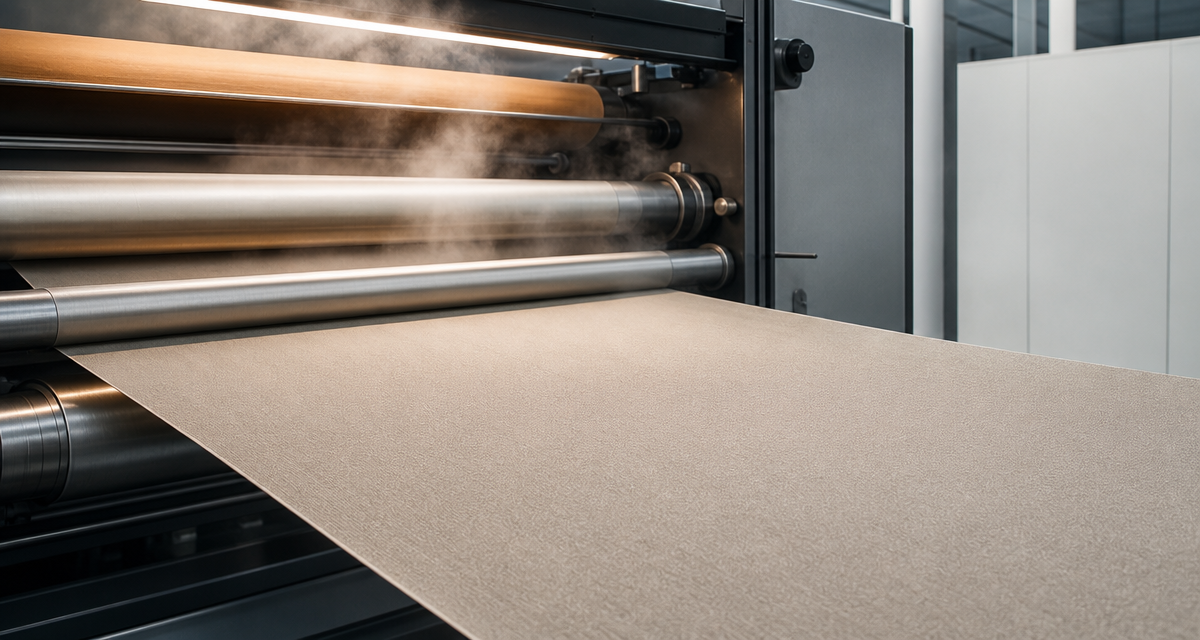
Heat Sources That Affect Sequin Fabric
| Heat source | Typical risk | What to control |
|---|---|---|
| Iron or heat press | Melting, gloss loss, curl | Temperature, dwell time, pressure, protective cloth |
| Tumble drying | Distortion and thread shrinkage | Avoid or use low heat with a mesh bag |
| Steam finishing | Softening the base mesh | Short bursts, no direct nozzle contact |
| Heat-set finishing | Sequin flattening | Line speed and roller temperature |
| Container heat in transit | Blocking, dull surface | Liner, ventilation and packing height |
The table shows why one heat number cannot cover every process. However, it gives a buyer a clear list of questions for the supplier. Similar process limits appear in our sequin fabric wash care protocol.
How to Test Sequin Fabric Heat Sensitivity Before Bulk
- Cut three test panels of at least 20 cm by 20 cm from different positions in the roll.
- Record the base reference: sequin type, film thickness, thread composition and mesh weight.
- Start a press test at the lowest practical temperature and raise it in small steps of about 10 degrees.
- Hold each step for five, ten and twenty seconds so the dwell time is measured, not estimated.
- Cool every panel for thirty minutes, then compare gloss, curl and edge shape against an untreated sample.
- Repeat the test on a lapped seam, because two layers trap more heat than one.
- Photograph each step and attach the set to the approval sheet, signed by buyer and supplier.
After the test, write the safe window as a range. For example, quote a maximum temperature with a maximum dwell time. Then state which protective layer, such as a pressing cloth or a silicone sheet, must be used. In practice, that single paragraph prevents most pressing claims.
Purchasing Checklist: Sequin Fabric Heat Sensitivity Fields
- Sequin material and film thickness
- Recommended maximum pressing temperature
- Maximum dwell time at that temperature
- Required protective layer for pressing
- Drying instruction for the finisher
- Base mesh composition and weight
- Thread composition for sewing and embroidery
- Heat-set or finishing step already applied
- Packing method for hot-climate routes
- Reference to the approved heat test panel
Moreover, keep the signed test panel with the shipment file. When a claim appears three months later, that panel settles the discussion quickly. For related decoration risks, see embroidery and sequin compatibility.
Comparing Sequins by Heat Response
| Sequin type | Heat response | Practical note |
|---|---|---|
| Standard PET film sequin | Moderate | Softens gradually, gloss loss is the first sign |
| Metallic coated sequin | Higher risk | Coating can cloud or crack before the disc deforms |
| PVC-based sequin | High risk | Can bond to neighbours in warm packing |
| Glass or stone bead | Low risk | Adhesive or thread may fail before the bead does |
| Sequins on stretch mesh | Moderate | Mesh relaxes with heat and changes the pattern |
Common Heat Defects and How to Fix Them
Curl at the sequin edge usually means the press was too hot or held too long. Therefore, lower the temperature first, then shorten the dwell time. Dull or cloudy sequins point to surface damage from direct contact, so add a protective cloth. Meanwhile, blocked sequins that stick together come from warm packing, not from pressing.
Wavy panels after finishing usually mean the base mesh relaxed while the sequins did not. Consequently, the fabric and the decoration moved at different rates. In addition, thread shrinkage can pull a motif out of register. That risk overlaps with the checks in our pilling resistance guide, because both defects appear after repeated handling.
FAQ: Sequin Fabric Heat Sensitivity
Can sequin fabric be ironed at all?
Yes, but only from the reverse side, at a low setting, with a protective cloth and a short dwell time. Test on a spare panel first.
Does heat sensitivity change with sequin size?
Size matters less than film thickness and coating. However, larger sequins show distortion more clearly, so defects appear sooner to the eye.
Should I ask for a heat test report?
Ask for the test panel and the recorded steps, not only a summary number. The raw steps show the safe window and the failure point.
How does heat sensitivity affect shipping?
Warm containers can soften sequins and cause blocking. Therefore, use a liner, control the stacking height and avoid sealing goods while they are still warm.
Where Sequin Fabric Heat Sensitivity Shows Up in Production
Heat damage rarely appears at the finishing machine. It appears later, when the garment is folded on a table under studio light. That delay makes the defect expensive, because the goods have already passed several operations. Therefore, buyers should place a heat check at three points: after cutting, after sewing and after final press.
On the cutting table, the risk is a hot knife or a fusing press used for interlining. Both touch the fabric directly, and both can leave a shiny stripe along the panel edge. During sewing, the risk is steam from a hand iron used to open a seam. At final press, the risk is a high-pressure head with a short dwell time that the operator sets by habit rather than by instruction.
In addition, decoration placement changes the answer. A dense sequin panel holds heat near the surface, so the same iron setting that is safe on a plain area can distort a decorated area. Consequently, the specification should state a different limit for decorated zones, or require a protective layer everywhere.
How to Write Sequin Fabric Heat Sensitivity Into the Purchase Order
Write it as a short technical clause, not as a note. First, name the sequin material and film thickness. Second, state the maximum pressing temperature. Third, state the maximum dwell time at that temperature. Fourth, name the protective layer. Fifth, require a heat test panel with every shipment.
Then link the clause to the approved sample. For example, add a line that reads: heat performance must match the approved panel dated on the sample approval sheet. That single cross-reference gives the quality team a clear benchmark. Similarly, repeat the clause on repeat orders, because suppliers sometimes change film suppliers between seasons.
Finally, agree what happens if the limit fails. In practice, the cleanest remedy is replacement of the affected rolls, plus a re-test of the remaining balance. If you need help drafting that clause, our team can review your specification and suggest a heat window that matches your finishing line.
Conclusion: Set the Heat Limit Before You Press
Sequin fabric heat sensitivity is a process limit, not a fabric feature. Therefore, test it early, record it clearly and repeat it on every purchase order. Then the pressing line, the dryer and the packing team all work inside the same safe window.
Source sequin fabric with a documented heat window
Compare sequin types, base mesh options and finishing limits in one place.
Request Sequin Fabric Samples
Send your heat limit, sequin type and end use, and we will prepare a sample set for review.
Yunfan Textile B2B Contact
Contact: Morris
Email: morris@yunfantextile.com
WhatsApp: +86 156 3752 5803
WhatsApp: +86 175 1619 6727