A sequin fabric crocking test measures how much color rubs off a dyed or coated surface and transfers to another cloth. For buyers, the number matters because color transfer ruins linings, packaging, and white garments. This guide explains the crocking method, the grades that pass, and the checks that keep a 200-yard order stable. First, understand wet and dry rubbing. Then read the grade scale. Finally, set an acceptance level before you buy. As a result, you avoid returns caused by color bleeding.
What Is a Sequin Fabric Crocking Test?
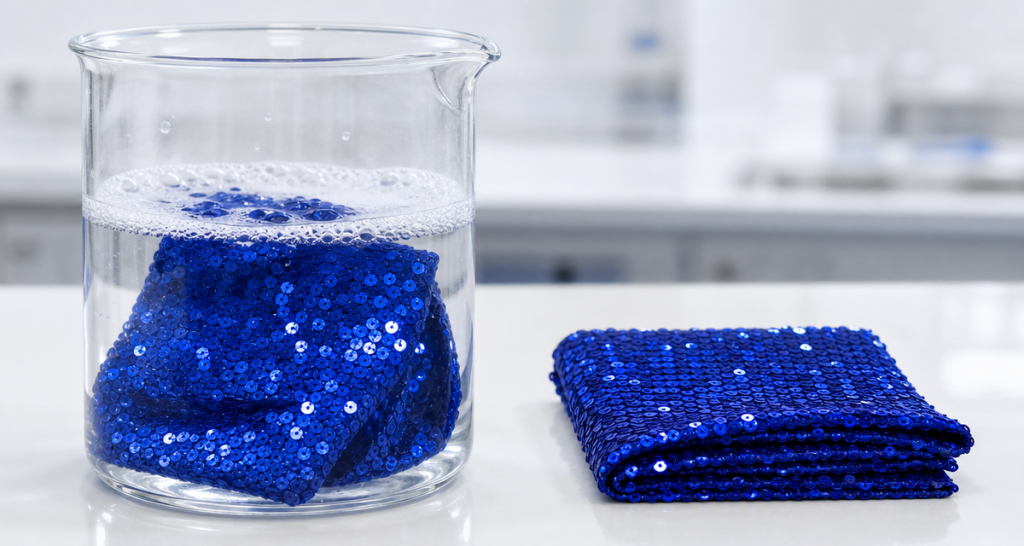
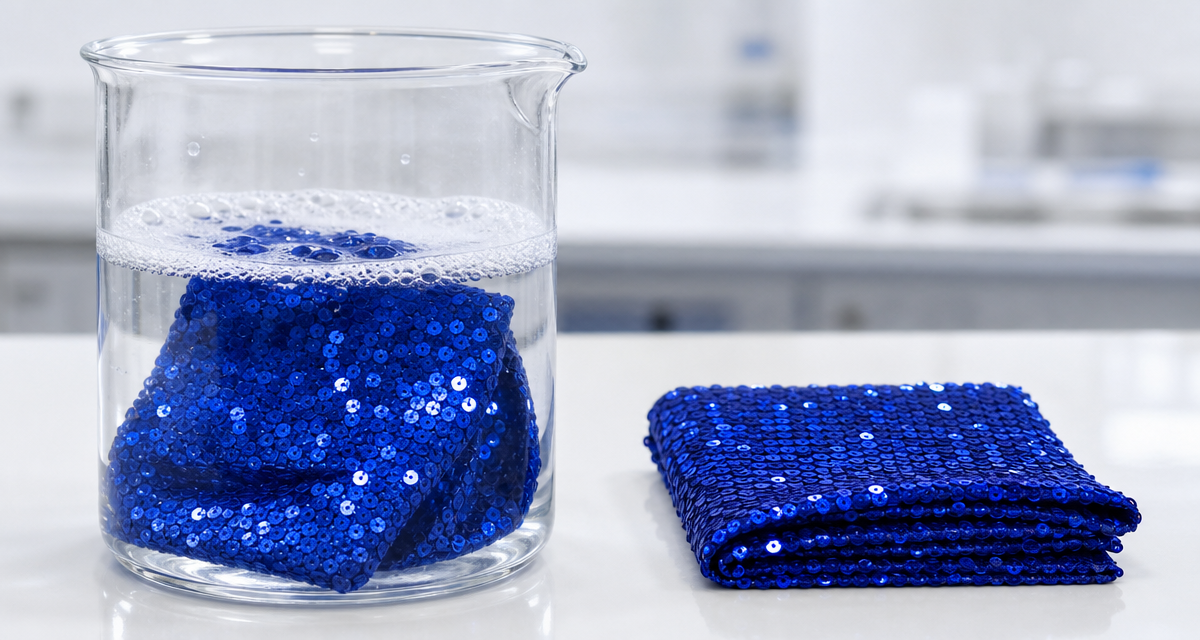
A sequin fabric crocking test rubs a white cloth against the fabric under set pressure. Then a lab compares the staining against a grey scale. Dry rubbing uses a dry cloth, while wet rubbing adds moisture. Wet results are usually lower, because water lifts dye from the fiber.
For sequin fabric, the test matters twice. The disc coating and the dyed mesh both can transfer color. Therefore, inspect both surfaces, not just the top.
Key Takeaways
Use these points when you review a test report.
- Crocking measures color transfer from rubbing.
- Wet rubbing is harder to pass than dry rubbing.
- Sequin coating and mesh dye both count.
- Grade 4 or higher is a common buyer target.
- Test the finished fabric, not the greige.
How Do You Run the Crocking Test?
The method is simple and repeatable. Follow these steps.
- Cut two fabric samples from the same roll.
- Mount the sample on the tester so it stays flat.
- Attach a white cotton square to the rubbing head.
- Rub in a straight line for a set number of cycles.
- Repeat with a wet white square on a fresh sample.
- Dry the rubbed squares and compare them to the grey scale.
- Record the dry and wet grade for each sample.
- Repeat on a second roll to confirm consistency.
As a result, you see whether the color holds. Standards such as AATCC 8 and AATCC 116 guide this work.
Reading the Grade Scale
| Grade | Meaning | Buyer view |
|---|---|---|
| 5 | No visible transfer | Excellent |
| 4 | Slight transfer | Good, often accepted |
| 3 | Noticeable transfer | Risky for light goods |
| 2 | Heavy transfer | Reject |
| 1 | Severe transfer | Reject |
However, the target depends on end use. White linings and bridal wear need grade 4 or higher. Dark, lined stagewear can tolerate slightly less.
Buyer Checklist and Order Fields
| Field | What to confirm |
|---|---|
| Dry grade | Grade from dry rubbing |
| Wet grade | Grade from wet rubbing |
| Test standard | AATCC 8 or AATCC 116 |
| Surfaces tested | Disc and mesh |
| Target grade | Usually grade 4 |
| Order size | 200 yards minimum |
In addition, tie the result to your care label. Pair it with a sequin colorfastness review for full coverage.
Common Color Transfer Defects and Their Fixes
Color transfer has a few causes, and each one can be reduced.
| Defect | Symptom | Fix |
|---|---|---|
| Low wet grade | Heavy wet transfer | Better rinsing, fixative |
| Coating rub | Color from discs | Seal the coating |
| Lining stains | Transfer in the white | Use a barrier lining |
| Uneven result | One roll differs | Standardize the dye lot |
For example, poor rinsing leaves loose dye on the surface, so wet rubbing scores low. Therefore, a better rinse and a fixative raise the grade. In addition, a coated disc can rub off on light goods, so sealing the coating protects the color.
How to Specify Crocking in Your RFQ
Set a clear target so the sample meets your market.
- State the fabric and colorway.
- Provide the minimum dry grade.
- Provide the minimum wet grade.
- Name the test method, such as AATCC 8.
- Ask for both disc and mesh testing.
- Confirm the order quantity, starting at 200 yards.
As a result, the works can adjust dye and finish before the bulk run.
Quality Control Checks Before Shipment
Confirm fastness on the finished goods.
- Review the dry and wet test grades.
- Check both the disc and the mesh surfaces.
- Compare a current sample with the approved one.
- Test white lining contact for light goods.
- Store reports with the color approval file.
Moreover, retest if the dye lot changes, because a new lot can shift the grade.
Cost and Lead-Time Factors
Better fastness costs a little more in dye and finish. Yet the saving on returns is larger. Therefore, treat fastness as a value, not a cost. In addition, extra rinsing extends finishing time slightly, so plan the sample early. Volume helps, because a stable dye recipe repeats across a 200-yard order with less variation. Grouping colors into one run also lowers the risk of shade drift.
Working With Your Supplier
Ask for the raw grades, not a pass or fail note. Then keep them with your approved swatch. A supplier who tests both surfaces gives you a real picture. You can pair this with your lab dip approval. Finally, revisit the target when the end use changes, because white bridal goods need higher grades than dark stagewear.
How Crocking Results Affect the Finished Product
Color transfer changes how a product looks after use. A low grade stains linings, packing tissue, and light garments. In addition, transfer shows on white trims and bridal wear, where any mark is visible. Therefore, buyers who set a fastness target protect their brand. Meanwhile, a stable fabric keeps its shade through wear, which supports repeat orders and fewer complaints.
Sample Approval Workflow for Crocking
Confirm fastness before you commit.
- Request dry and wet grades.
- Check both disc and mesh surfaces.
- Test contact with a white lining.
- Compare against the target grade.
- Archive the report with the swatch.
Moreover, retest after any dye or finish change, because fastness can shift.
Key Terms for Crocking
Crocking
Crocking is color transfer caused by rubbing. It tests surface dye and coating, not washing.
Grey scale
The grey scale is a reference chart that grades staining from one to five. Higher is better.
Fixative
A fixative is a finishing agent that binds dye to the fiber. It raises fastness on many fabrics.
Storage and Handling to Protect Color
After testing, storage keeps the color stable.
- Keep rolls wrapped and away from damp air.
- Avoid stacking heavy rolls that press the surface.
- Store away from direct sunlight.
- Label each roll with the dye lot.
- Ship in lined cartons to reduce rubbing.
Therefore, careful storage limits transfer before the goods reach the buyer. In addition, dye-lot labels make future matches easier to trace.
Overlooked Details That Decide Fastness Quality
A few habits raise fastness. First, rinse fully after dyeing, because loose dye rubs off first. Next, apply a fixative when the fiber allows it. Then test both surfaces, since the disc and mesh behave differently. Finally, keep a white control cloth with the sample, so any transfer is easy to see later.
Additional Buyer Considerations for Crocking
Fastness interacts with other choices. A darker shade carries more surface dye, so it often transfers more, even with good rinsing. In addition, a soft finish can release color faster than a firm one, so match finish to end use. Meanwhile, storage humidity affects the result, so keep rolls dry. Finally, record the dye lot with every report, because a new lot can shift the grade.
Next Steps for Buyers
Begin with a treated sample in your target colorway. Then confirm the dry and wet grades in writing. After that, test contact with a white lining for light goods. Once approved, keep the report beside the swatch and recheck at the 200-yard run. That habit protects every order from unexpected transfer.
Source direct on Alibaba - request bulk pricing, specifications, and production details in one place.
FAQ
What is the difference between crocking and wash fastness?
Crocking tests rubbing, while wash fastness tests color loss in water. A fabric can pass one and fail the other.
Is wet crocking always lower?
Usually yes. Moisture lifts loose dye, so wet grades often run half a point below dry grades.
Which grade should I demand?
For light or white end uses, ask for grade 4 or higher on both dry and wet tests.
Can finishing improve the result?
Yes. Better rinsing and a proper fixative raise fastness. Compare options in our color matching notes.
Conclusion
A sequin fabric crocking test is a cheap way to avoid expensive returns. Test dry and wet, read the scale, and set a target grade before you buy. Do that, and your color stays where it belongs.
Request Sequin Fabric Samples
Send your artwork, target colorway, and order size. We reply with a clear plan, then ship samples so you can approve before bulk production. Our minimum order is 200 yards.
- Contact: Morris
- Email: morris@yunfantextile.com
- WhatsApp: +86 156 3752 5803
- WhatsApp: +86 175 1619 6727
- MOQ: 200 yards