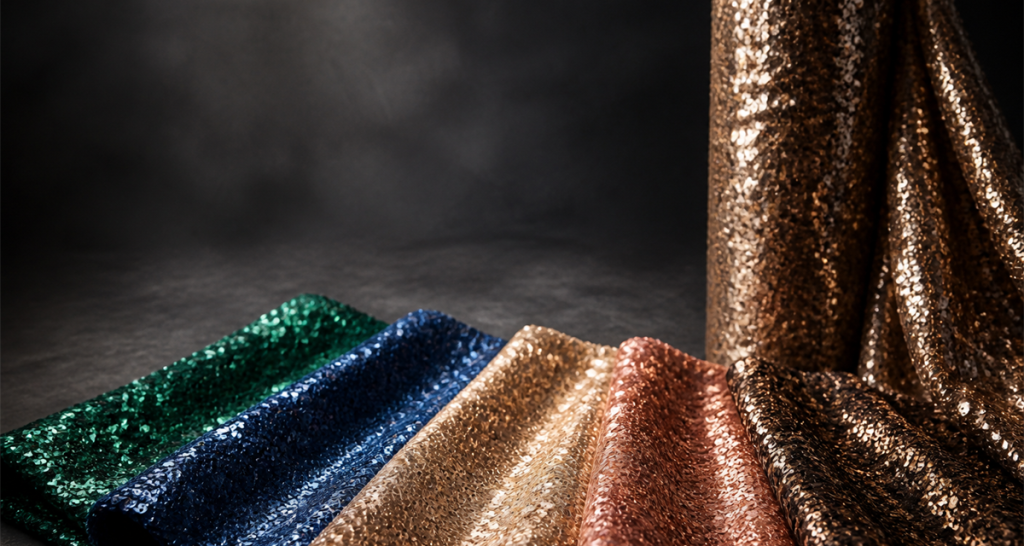
Sequin fabric colorfastness is the ability of the base cloth and the sequins to keep their color when washed, rubbed, exposed to light, or in contact with perspiration. For B2B buyers, it is the difference between a collection that sells through and one that comes back as a claim.
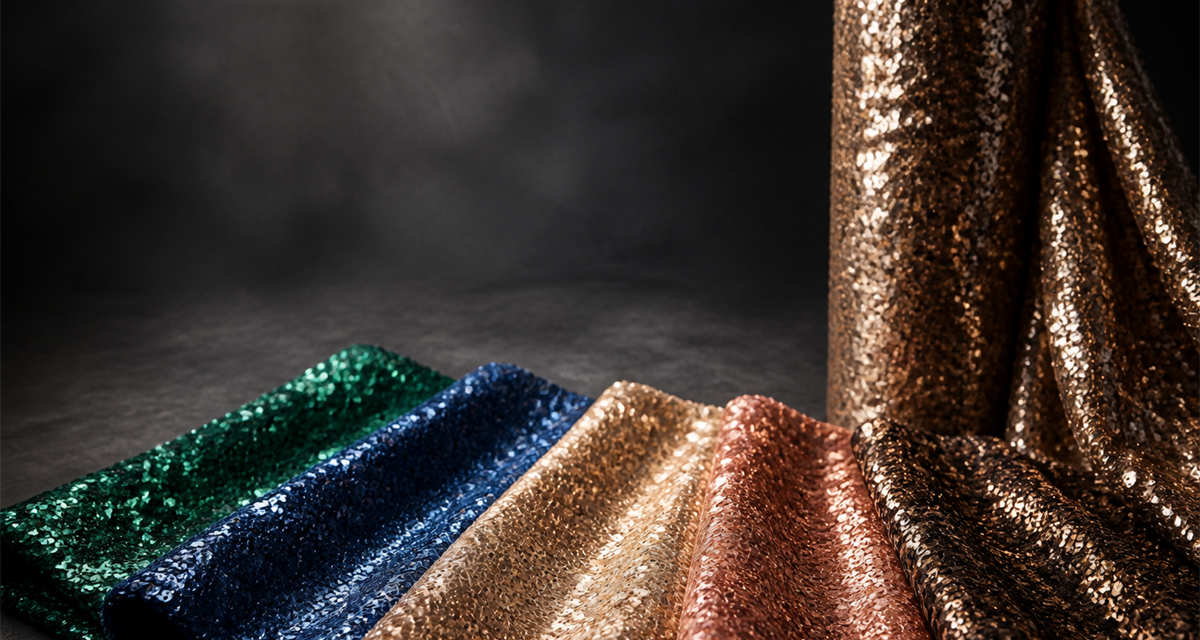
Key Takeaways
- Colorfastness covers four separate risks: washing, rubbing, light, and perspiration.
- The base cloth and the sequins can fade at different rates.
- Request test data for each risk, not one combined "color fast" claim.
- Match the test to the real end use and the market's care habits.
- Record results against a batch reference so repeat orders stay consistent.
What Is Sequin Fabric Colorfastness?
Colorfastness is the resistance of a colored textile to color change or color transfer during normal use and care. On sequin fabric, color lives in two places at once: the dyed base cloth and the coated or dyed sequin film. Each can behave differently.
That split is what makes sequin fabric colorfastness tricky. A base that holds color well can sit under sequins that dull after cleaning, and the finished panel then looks uneven.
Why Colorfastness Matters for B2B Buyers
Color complaints are expensive. They arrive late, after the goods have shipped, and they are hard to prove without data. A single fading batch can cost a season of sell-through and a long-term customer.
Colorfastness also connects to other specifications. If the shade shifts after washing, every other approval is affected. That is why we treat lab dip approval and colorfastness as one chain, from the first swatch to the final care label.
The Four Colorfastness Risks to Test
- Washing. Color change and staining after a defined wash cycle.
- Rubbing (crocking). Color transfer when dry or wet fabric rubs against another surface.
- Light. Fading after exposure to light, especially for stage and display products.
- Perspiration. Color change and staining from contact with sweat, critical for skin-contact garments.
Common Test Methods Compared
| Risk | Typical method | What it reports | Most relevant for |
|---|---|---|---|
| Washing | AATCC 61 / ISO 105-C06 | Color change and staining grade | Apparel, washable decor |
| Rubbing | AATCC 8 / ISO 105-X12 | Dry and wet crocking grade | Upholstery, event use |
| Light | ISO 105-B02 | Fading grade after light exposure | Stage, window display |
| Perspiration | AATCC 15 / ISO 105-E04 | Color change and staining grade | Skin-contact garments |
Confirm the exact method and the target grade with your supplier, and keep the same method across orders so results stay comparable.
Fields to Check on a Colorfastness Report
- Test method and standard number
- Condition tested (dry, wet, washed, exposed)
- Separate results for base cloth and sequins
- Color change grade
- Staining grade on adjacent fabric
- Number of specimens
- Batch or lot reference
- Photographs of the tested specimen
- Care conditions assumed for the test
How to Protect Colorfastness in Production and Care
- Fix the dye recipe. Keep dye and finishing recipes stable between lots.
- Match base and sequin. Choose a sequin film that ages at a similar rate to the base.
- Control the rinse. Remove unfixed dye so it cannot bleed during use.
- Write a care label. Base the label on the tested care conditions, not on habit.
- Re-test on bulk. Confirm colorfastness on a production cutting before shipping.
- Train the end user. Simple care guidance reduces avoidable complaints.
FAQ
Do sequins fade faster than the base fabric?
They can. Coated sequin film and dyed base cloth age differently, so ask for separate results rather than one combined figure.
Is dry cleaning safer than washing for sequin fabric?
Not automatically. The right choice depends on the base, the sequin, and the tested care conditions. Follow the care label that matches the tested result.
Which colorfastness test matters most for event decor?
Light and rubbing are usually the highest risk for decor, because those products are handled often and displayed under bright light.
Can I compare colorfastness across suppliers?
Only if the method and conditions match. Fix the method in your specification so every supplier reports on the same basis.
Make Colorfastness Part of Every Approval
Sequin fabric colorfastness should be tested, recorded, and repeated. Treat it as a specification with numbers, not a promise. Then protect it through production, care labeling, and bulk testing.
Connect it to your wider color matching process so shade decisions and colorfastness decisions support each other.
How to Read a Colorfastness Grade
Results are usually reported on a numbered scale, where a higher number means less color change and less staining. Two numbers often appear: one for color change and one for staining of an adjacent fabric.
Read both. A sample can change little itself but stain its neighbor, and that staining is just as visible in the finished product.
Colorfastness Priorities by End Use
| End use | Highest risk | What to request |
|---|---|---|
| Everyday apparel | Washing | Wash and perspiration data |
| Eveningwear | Rubbing and perspiration | Dry and wet crocking data |
| Stage costume | Light and rubbing | Light and crocking data |
| Event decor | Light | Light exposure data |
| Childrenswear | Perspiration and washing | Both, plus care guidance |
Common Causes of Poor Colorfastness
- Unfixed dye left on the fabric after rinsing
- Sequin film that dulls faster than the base cloth
- A care label that does not match the tested conditions
- Heat applied during finishing without control
- Storage in damp conditions before shipping
- Mixing lots with different dye behavior in one order
How to Write Colorfastness Into an RFQ
State the method, the condition, and the minimum acceptable grade. Then ask for the report as a condition of shipment, not as a favor after delivery.
Combine this with your RFQ structure and your pre-shipment checklist so the requirement is checked at both ends of the process.
Does a high wash grade guarantee no fading?
No. Wash, light, and rubbing are separate risks. A high wash grade says nothing about how the fabric behaves under strong light.
Colorfastness vs Color Matching: How They Differ
Color matching asks whether the color is right at the start. Colorfastness asks whether it stays right over time. Both matter, and neither replaces the other.
A fabric can match the approved standard perfectly on day one and still fade after washing. That is why buyers approve a shade and then test its stability as two separate steps.
Building a Colorfastness Protocol
- Define the risks. List washing, rubbing, light, and perspiration in the specification.
- Choose methods. Select one standard method for each risk and keep it fixed.
- Set minimum grades. Agree the lowest acceptable result for your market.
- Test the sample. Run each method on the material you plan to buy.
- Record and file. Store results with the batch reference and photos.
- Re-test on bulk. Confirm that production matches the approved sample.
Colorfastness Checklist
- Methods chosen and written into the specification
- Minimum grades agreed with the supplier
- Base and sequin results recorded separately
- Staining on adjacent fabric checked
- Photographs filed with the report
- Care label based on tested conditions
- Bulk re-test completed before shipment
Between the sample stage and the bulk stage, keep the same method and the same conditions. A change in either makes the two results impossible to compare and weakens your position if a claim arises.
Why Sequin Colorfastness Is Harder Than Plain Fabric
Plain fabric has one color surface. Sequin fabric has two: the dyed base and the coated or dyed sequin film. Each one responds to light, water, and friction in its own way.
That is why a test result for the base cloth alone is not enough. Ask for the base and the sequin surface to be reported together, and compare the two. If they age at very different rates, the finished panel will look uneven even when both results pass on their own.
Storing Fabric to Protect Color
Color can degrade before the fabric is ever cut. Damp storage, direct sunlight, and long exposure to heat all reduce shelf life. Store rolls in a dry, shaded area and rotate stock so older rolls move first.
For orders that ship by sea, check the packing and the transit conditions with the supplier. Fabric that travels well keeps the colorfastness result you approved.
Should I test every color in a collection?
Test the colors with the highest risk first, such as deep tones and bright metallics, and test every color you plan to repeat. Similar shades can behave differently.
Get Sequin Fabric Samples for Your Next Order
Test colorfastness, compatibility, and hand feel on your own base cloth, sequin size, and color reference before you commit to bulk. Yunfan Textile produces decorative and sequin fabric for B2B buyers worldwide.
Source direct on Alibaba - request bulk pricing, specifications, and production details in one place.
Request Sequin Fabric Samples and share your target GSM, width, sequin size, and color reference.
Talk to Morris directly:
Email: morris@yunfantextile.com
WhatsApp: +86 156 3752 5803
WhatsApp: +86 175 1619 6727