Sequin fabric friction abrasion is the surface wear that happens when sequins rub against themselves, other panels, or the wearer. Buyers control it because high-wear zones such as underarms, seat seams, and straps show damage first. Protection comes from the right backing, disc quality, and smart seam placement. This guide explains how abrasion develops, how to test it, and which fields to approve before bulk orders.
Key Takeaways
- Friction abrasion removes shine and cuts thread in high-wear zones.
- Disc hardness and film quality decide how fast the surface wears.
- A firm backing spreads friction away from the stitch line.
- Seam placement can move wear away from pressure points.
- Test abrasion on the real garment zone, not on a flat swatch.
- Set an abrasion limit in the order specification.
What Is Sequin Fabric Friction Abrasion?
Sequin fabric friction abrasion is the gradual loss of surface quality caused by rubbing. Each sequin is a thin disc, and repeated contact dulls the coating and wears the fixing thread. Therefore, the sparkle fades and the disc may loosen over time.
Abrasion is different from a single snag. A snag pulls one thread in one event, while abrasion works slowly across many contacts. In addition, abrasion often shows as a dull patch rather than a hole.
Why Friction Abrasion Matters in High-Wear Zones
Garments fail at pressure points first. Underarms, inner elbows, seat seams, and bag straps rub with every movement. Moreover, stacked sequins rub against each other more than single discs, so dense areas wear faster.
The business cost is visible. In addition, a dull patch on a gown or a costume reads as poor quality, even when the rest of the panel is perfect. As a result, abrasion drives returns and damages repeat orders.
How to Reduce Friction Abrasion: Step-by-Step
Plan for the wear zone, then test the real construction.
- Map the high-wear zones on the finished garment before you cut.
- Choose a disc with a durable coating for those zones.
- Use a backing that supports the stitch and cushions friction.
- Move seams away from pressure points where the design allows.
- Sew a test piece and rub it against the likely contact surface.
- Inspect for dulling, loose discs, and thread wear after the test.
- Record the approved disc, backing, and seam plan.
Comparison Table: Abrasion Risk by Zone
Use this table to prioritise protection, then confirm with a wear test.
| Garment zone | Abrasion risk | Main contact | Protection focus |
|---|---|---|---|
| Underarm | High | Body and side seam | Cushioned backing |
| Seat seam | High | Seat and chair | Durable disc coating |
| Sleeve edge | Medium | Table and rails | Reinforced hem |
| Back panel | Low | Light contact | Standard build |
Procurement Checklist: Abrasion Fields
- Disc material and coating type.
- Base cloth and backing reference.
- Target abrasion performance for high-wear zones.
- Thread type and fixing method.
- Seam plan for pressure points.
- Approved wear test sample reference.
- Wash and wear test requirement.
How Buyers Verify Abrasion Performance with a Supplier
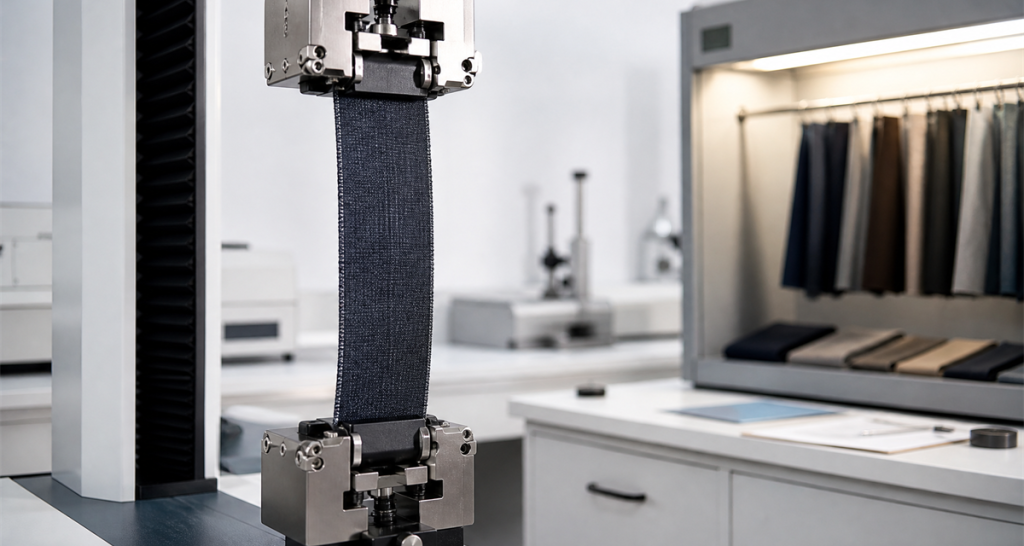
Ask the supplier to run a rubbing test on the real construction and to send photos of the worn area. Then compare that result with your own wear trial. In addition, keep the approved sample so repeat orders match the same standard.
For related reading, see our guides on sequin fabric abrasion resistance and sequin fabric shedding prevention. You can also review decorative fabric seam strength to protect high-wear seams.
Common Sequin Fabric Friction Abrasion Mistakes
Treating every garment zone the same is the first mistake. Underarms and seat seams rub far more than a back panel, so one build cannot protect both. Therefore, plan protection by zone.
Choosing a disc on shine alone is another common error. A bright coating may look perfect on the sample yet dull quickly under friction. In addition, a thin film wears through faster than a heavier disc.
Ignoring the backing is a third mistake. Without a cushion, the fixing thread takes the full friction and breaks early. Consequently, the sequin loosens and the panel fails at the wear point.
Finally, many buyers test on a flat swatch instead of a real garment zone. Yet abrasion depends on how the fabric folds and rubs, so a flat test can miss the worst contact.
Sequin Fabric Friction Abrasion: Cost, Sampling, and Lead-Time Factors
Abrasion faults cost reputation as much as money. A dull patch reads as poor quality, even when the rest of the panel is perfect, so returns follow.
Sampling protects the order. When the supplier rubs a real construction and photographs the worn area, the buyer can approve the build before bulk.
| Cost factor | Effect on price | Buyer action |
|---|---|---|
| Durable disc coating | Medium | Approve on a wear test |
| Cushioned backing | Medium | Match backing to zone |
| Re-cut worn panels | High | Map zones before cutting |
| Customer returns | High | Test the real construction |
How to Run an Abrasion Trial Before Bulk
An abrasion trial is simple, and it reveals how a build behaves under real wear.
- Map the high-wear zones on the finished garment.
- Cut a test piece from the real construction.
- Rub the piece against the likely contact surface.
- Repeat the rub for a fixed number of cycles.
- Check the disc coating for dulling and the thread for wear.
- Compare a durable build with a standard build.
- Approve the better build, and store the worn sample.
Garment Design Choices That Reduce Wear
Design can move friction away from the worst points. A seam placed slightly outside a pressure point rubs less, so it lasts longer in wear.
In addition, a small amount of ease reduces contact on tight areas. Moreover, a lined panel shields the sequins from the body and the chair.
For stage and evening wear, these choices matter most, because the garment moves for hours under bright light where every dull patch shows.
Storage, Handling, and Order Documentation
Careful handling protects the surface before the garment is made. Stacked panels should not slide against each other, so use a soft interleaf. In addition, keep dusty packing away from the sequins.
- Disc material and coating type
- Base cloth and backing reference
- Target abrasion performance per zone
- Thread type and fixing method
- Approved wear test sample
- Wash and wear test requirement
Standard orders start at 200 yards per color, and the wear sample should be approved before bulk cutting begins.
Working with a Supplier on Abrasion Performance
Ask the supplier to keep the worn sample and to note the test method. Then repeat orders can be judged against the same result.
In addition, agree a rule for disc changes. If the coating supplier changes, run the wear test again before bulk.
With a mapped zone plan and an approved sample, the sparkle lasts through wear and the order protects its reputation.
How to Compare Two Supplier Abrasion Reports
Two suppliers can test the same fabric and report very different results. Therefore, ask both to rub the same garment zone for the same number of cycles. In addition, request the worn sample, not only a pass or fail.
A clear report names the disc type, the backing, and the thread used in the fixing. Moreover, it states the contact surface, because a hard chair rubs differently from soft fabric. As a result, you can compare like with like.
When the samples differ, check the disc coating first, then the backing. A thinner film dulls faster, so the same build can pass on one lot and fail on another. Consequently, set a wear limit for each disc type.
Finally, keep both worn samples under the same light. A dull patch that looks small on its own can look obvious beside a fresher sample.
Final Wear Check Before Shipment
A last check protects the order. Build one test piece for each high-wear zone, then rub it against the likely contact surface.
- Disc coating type on the report
- Backing and thread used
- Contact surface in the test
- Cycles run before inspection
- Approved wear sample reference
Source direct on Alibaba - request bulk pricing, specifications, and production details in one place.
View Yunfan Textile on AlibabaFAQ
What causes sequin fabric friction abrasion?
Repeated rubbing between sequins, other panels, or the body dulls the coating and wears the fixing thread.
Which zones wear first?
Underarms, seat seams, and strap contact points wear first, because they rub with every movement.
Can a backing reduce abrasion?
Yes. A matched backing cushions the stitch and spreads friction away from the seam line.
How do I test abrasion before bulk?
Rub a test piece against the likely contact surface, then check for dulling and loose discs.
Conclusion: Protect the Zones That Rub
Sequin fabric friction abrasion is predictable when you map the wear zones early. Therefore, choose a durable disc, add a cushioned backing, and test the real construction. Then the sparkle lasts through wear, and the order protects its reputation.
Request Sequin Fabric Samples
Send your fabric type, target GSM, color reference, and order volume. Our team will prepare a sample set for review before you commit to bulk.
Yunfan Textile B2B Contact
Contact: Morris
Email: morris@yunfantextile.com
WhatsApp: +86 156 3752 5803
WhatsApp: +86 175 1619 6727