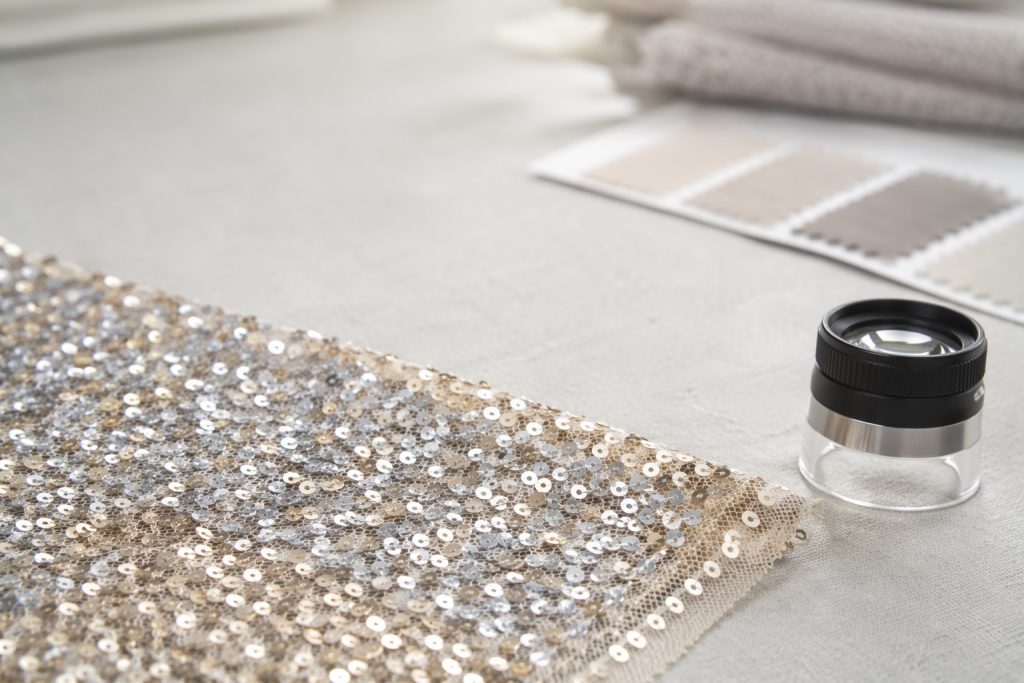
Sequin fabric shedding is the progressive loss of sequins from a stitched or film-bonded base cloth, and the procurement answer is direct: lock the attachment method, stitch count per sequin and thread type into your purchase order, then verify them with a tape test on the production rolls before bulk ships. Buyers who freeze those three variables lose far fewer sequins during cutting, sewing, transit and after-sales handling. Shedding is rarely random. It is a design and process decision that can be specified, quoted and inspected.
This guide explains the physical causes of shedding, gives a step-by-step prevention workflow, and lists the tests and order fields you can copy into your next request for quotation.
What Is Sequin Fabric Shedding?
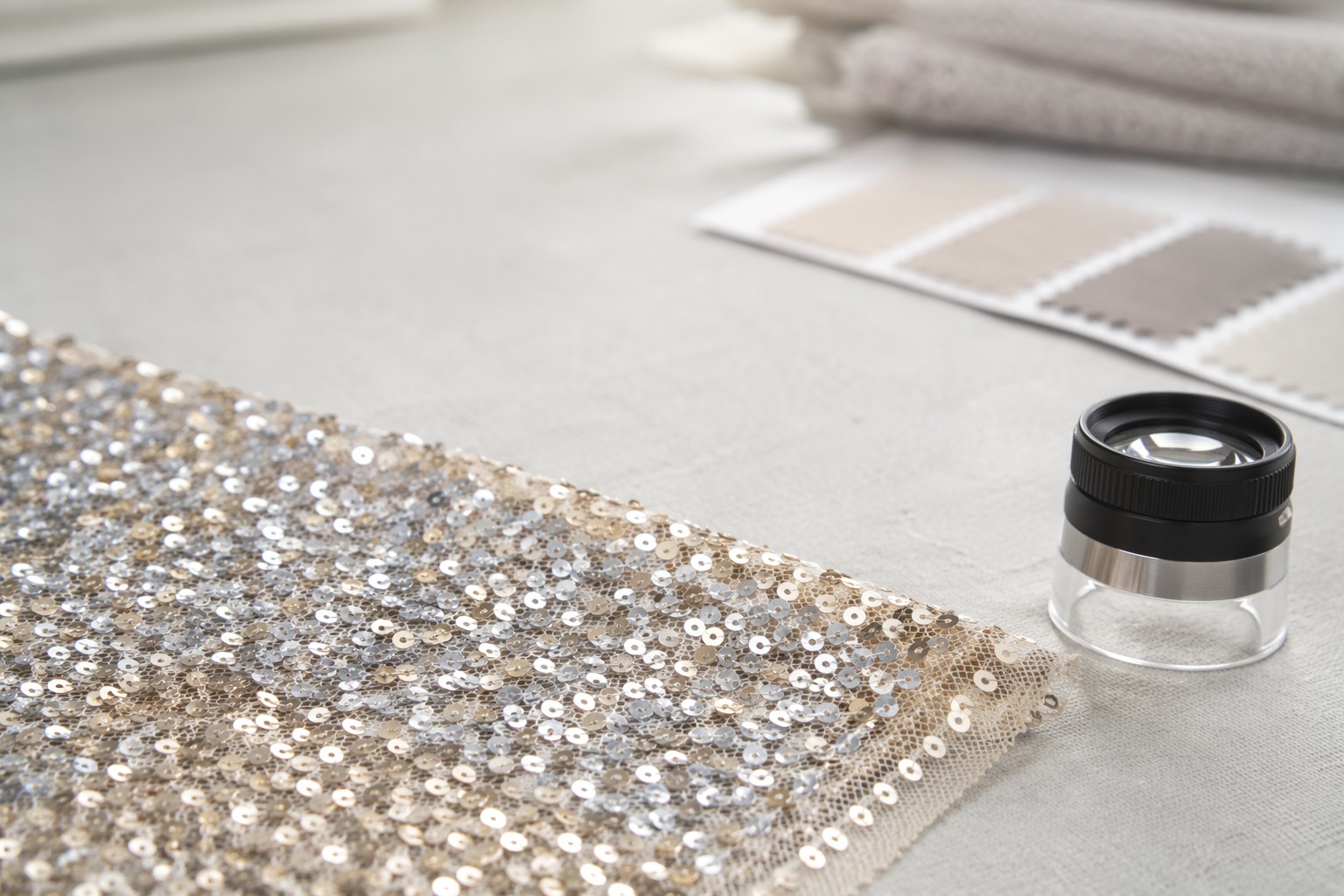
Sequin fabric shedding means loose, detached or partially anchored sequins falling away from the ground fabric. It appears in three ways: discs that drop during cutting and sewing, discs that shed inside the garment bag or packing carton, and discs that release only after the end customer wears or washes the item.
The problem is structural. Every sequin is held by one or two stitch loops, an adhesive film, or a bead anchor. When the anchor is too loose, the thread too brittle, the sequin hole too tight, or the base mesh too weak, ordinary mechanical stress finishes the job. Shedding is therefore a function of attachment design, not chance. That is good news for buyers, because attachment design is something you can write into a specification. Our sequin fabric collection is built around documented anchor parameters for exactly this reason.
Key Takeaways
- Shedding is controlled at the attachment stage: stitch tension, stitch count per sequin and thread type.
- A tape lift test on the production roll predicts most shedding complaints before shipment.
- Dense coverage with low stitch density is the most common hidden cause of sequin loss.
- Write the attachment method into the specification sheet and link it to an inspection clause.
- Sample approval is not enough. Confirm the same parameters on the bulk rolls.
Why Sequins Shed: The Five Real Causes
Most shedding traces back to five conditions. Ask your supplier which ones apply to your order, and ask for evidence rather than assurance.
1. Insufficient stitch anchoring
Each sequin needs enough thread loops to resist movement. When a single loop holds a large paillette, the disc pivots, the thread abrades, and the sequin escapes. Two secure loops, or a lock-stitch path that crosses the sequin hole twice, hold far better under the same handling load. This is the single most common root cause we see in returned bulk lots.
2. Wrong thread type or tension
Monofilament and low-tenacity threads break once sequins start moving. Over-tensioned thread sits under permanent stress and snaps weeks later. Balanced tension with a high-tenacity filament gives the loop room to flex without fracturing, which matters most on stretch bases.
3. Over-dense coverage on a weak base
When sequins are packed so tightly that stitches crowd the mesh, the ground distorts, the holes stretch, and anchors loosen. Shedding then appears in clusters instead of as isolated discs, and it spreads outward along the stitch line.
4. Sharp or burred sequin holes
Poor-edge punching leaves a burr inside the sequin hole. The burr cuts the thread from the inside, so the seam looks perfect in the sample room and fails weeks later in the field. A simple magnifier check on the sequin hole edge catches this before bulk.
5. Rough handling after finishing
Shedding also accelerates through folding, high-speed machine sewing, and repeated abrasion in shipping. A robust attachment survives all three. A marginal one fails in whichever stage comes first.
Prevention Checklist Before You Approve Bulk
- Freeze the attachment spec. Write stitch count per sequin, thread type and stitch type into the specification sheet.
- Approve on the real base cloth. Test on the production mesh, never a sample-room substitute.
- Run a tape test on three rolls. Press and lift adhesive tape across the face, then count loose sequins.
- Check tension by hand. Slide a fingernail under one sequin edge and confirm it resists without lifting a neighbour.
- Confirm bulk equals the approved sample. Compare stitch density and sequin pitch side by side.
- Add an inspection clause. Define the acceptable number of loose sequins per linear metre, and let our quality control routine enforce it.
Attachment Methods Compared
| Attachment method | Shedding risk | Best use | Watch-out |
|---|---|---|---|
| Single-loop stitching | High | Light décor, low handling | Loose discs after washing |
| Double-loop or lock anchoring | Low | Apparel, dancewear, events | Higher stitch time and cost |
| Glue or heat-transfer film | Medium | Flat decorative panels | Heat and solvent sensitivity |
| Bead or crystal anchoring | Low to medium | Bridal and couture trims | Weight gain on fine mesh |
If your product is handled often, choose double-loop anchoring and accept the extra stitch time. If your product is a fixed decorative panel, a film bond can be sufficient, provided you test the film against the end-use cleaning method before you commit to a bulk quantity.
Order Fields That Prevent Shedding Disputes
Ambiguous purchase orders create shedding disputes. Include these fields in every request for quotation so that both sides measure the same thing.
| Field | Example value | Why it matters |
|---|---|---|
| Sequin attachment | Double-loop lock stitch | Defines anchor security |
| Stitch count per sequin | 2 anchors | Removes the main variable |
| Thread type | High-tenacity filament | Controls abrasion life |
| Base cloth | 40D mesh, 145 cm | Sets stretch and distortion |
| Loose sequin limit | Agreed count per linear metre | Makes inspection objective |
How to Test for Shedding in Bulk
| Test | What it measures | How to run it |
|---|---|---|
| Tape lift test | Surface loose sequins | Apply and lift tape at three points per roll |
| Fingernail pick test | Anchor security | Try to lift one sequin edge under light force |
| Fold-and-rub test | Handling durability | Fold the panel, rub the fold line, then inspect |
| Post-wash check | Real-use shedding | Wash a swatch per the care label and count detached discs |
Document results by roll number. If a roll fails, quarantine that batch instead of reworking it on the line, because a reworked anchor is rarely as strong as one built correctly the first time. Our sourcing guide walks through how to structure that roll-level record.
FAQ
Is sequin shedding normal?
A few loose sequins at cut edges are normal. Progressive shedding across the face of the roll is not. Treat that as a process defect and reject the roll.
Can I stop shedding after the goods arrive?
Only partly. You can trim loose discs and add a soft backing, but you cannot restore a weak anchor. Prevention happens at the stitching stage.
Does sequin size affect shedding?
Yes. Large paillettes need more anchor points. Micro sequins shed less individually but can lose several discs at once when the base distorts.
What causes shedding after washing?
Usually thread abrasion and base shrinkage. When the care method pulls the mesh tighter than the stitch can follow, loops break and discs release.
Should I test every roll?
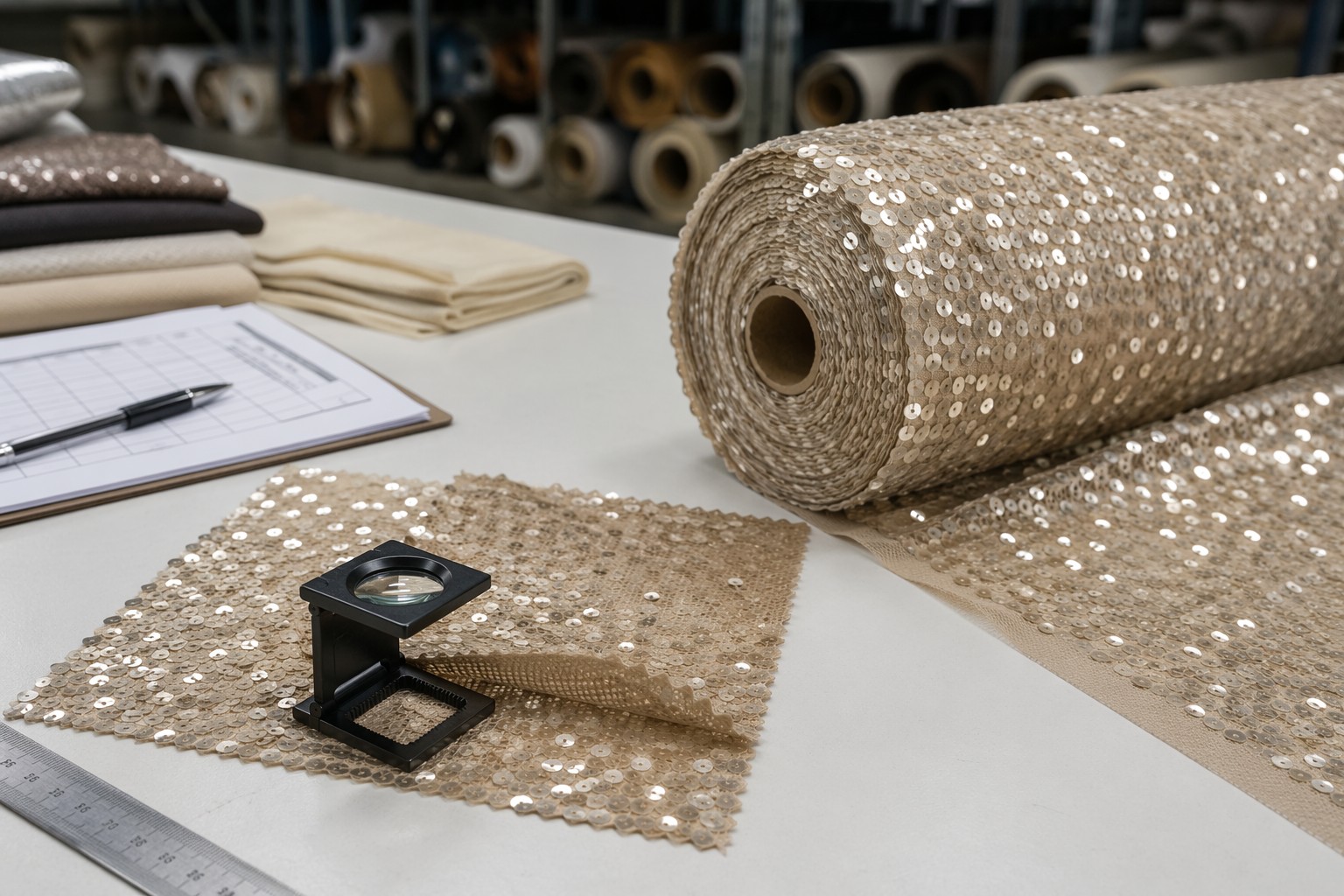
Test a sample of rolls from every dye lot, and test every roll if the design uses large paillettes or a fine mesh base. Document each result.
Common Shedding Complaints and Their Fixes
Buyers rarely report shedding in the abstract. They report one of five specific complaints. Match your complaint to the fix below before you open a claim, because each cause points to a different correction.
| Complaint | Likely cause | Fix on the next order |
|---|---|---|
| Sequins fall in the cutting room | Single-loop anchor on a large paillette | Switch to two anchors per sequin |
| Discs appear in the packing carton | Loose tension or brittle thread | Reset tension and specify high-tenacity filament |
| Shedding after the first wash | Base shrinkage against a rigid stitch | Match base and care method, then retest |
| Whole clusters release together | Over-dense coverage on a stretched mesh | Reduce density or move to a stronger base |
| Seam looks fine but fails later | Burred sequin hole cutting the thread | Inspect hole edges with a magnifier |
Two habits prevent most repeat complaints. First, keep the approved sample sealed and dated, so a later dispute is settled by comparison instead of by memory. Second, record the stitch count and thread type on the inspection report for every roll, not only for the first one. When a claim does arise, that record tells you within minutes whether the factory drifted from the approved specification or whether the design itself was under-anchored from the start.
It also helps to separate cosmetic trims from load-bearing trims. A sequin panel used as a backdrop carries almost no mechanical stress, so a lighter anchor is acceptable. The same sequin on a fitted garment, a dance costume or a frequently handled cushion carries constant stress, and the anchor specification should reflect that difference in the very first quotation. Buyers who negotiate on price alone usually discover this gap only after the first complaint.
Conclusion: Specify the Anchor, Then Verify It
Sequin fabric shedding is predictable and preventable. Define the attachment method, run a tape test on production rolls, and hold the shipment against that result. Buyers who inspect the anchor, not just the shine, cut their returns and their rework at the same time.
Want to test attachment quality on your own bench? Request Sequin Fabric Samples and tell us your end use, and we will send matched rolls with the stitch specification attached.
Contact Morris at morris@yunfantextile.com, or message on WhatsApp: +86 156 3752 5803 or +86 175 1619 6727. You can also request sampling through yunfantextile.en.alibaba.com.