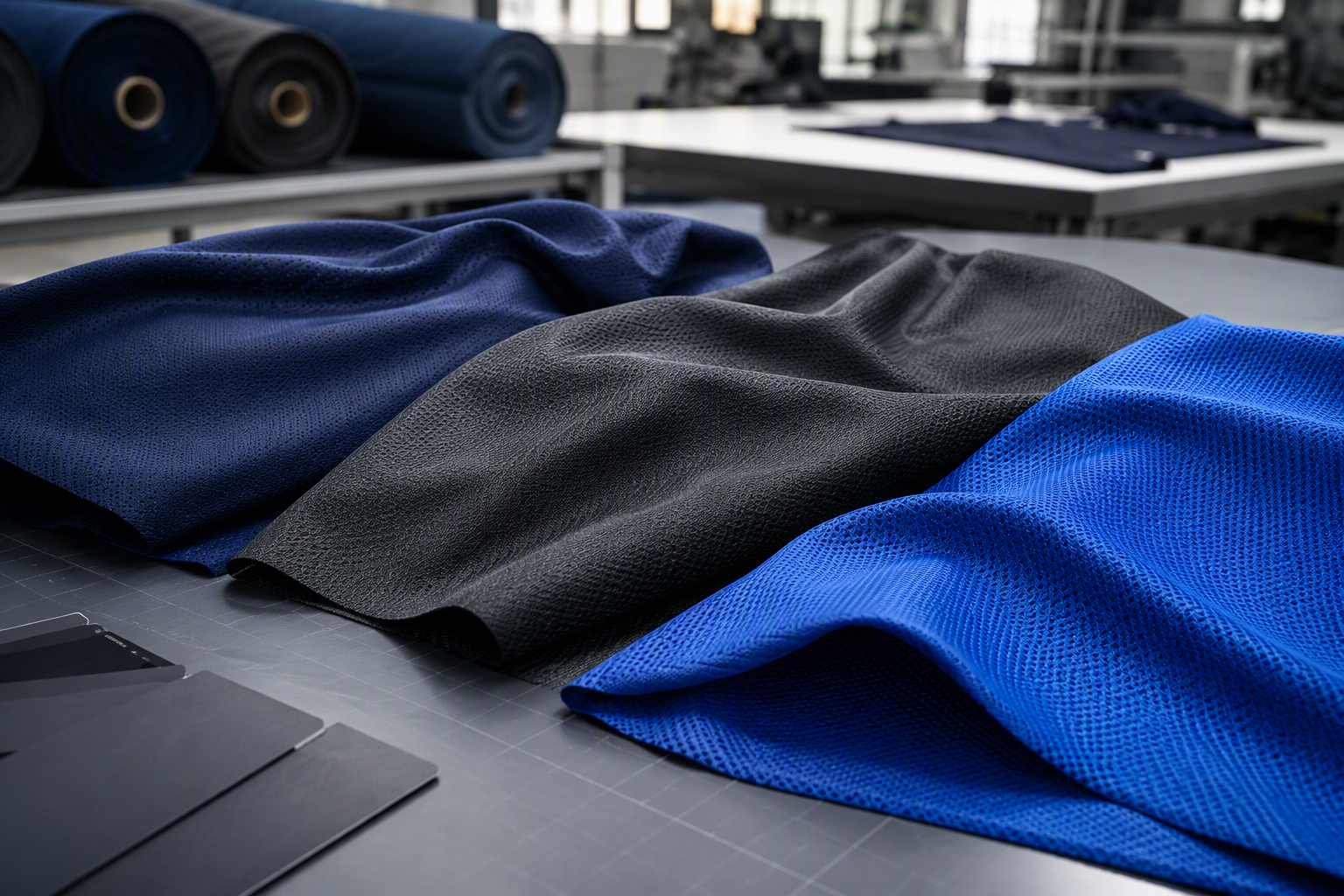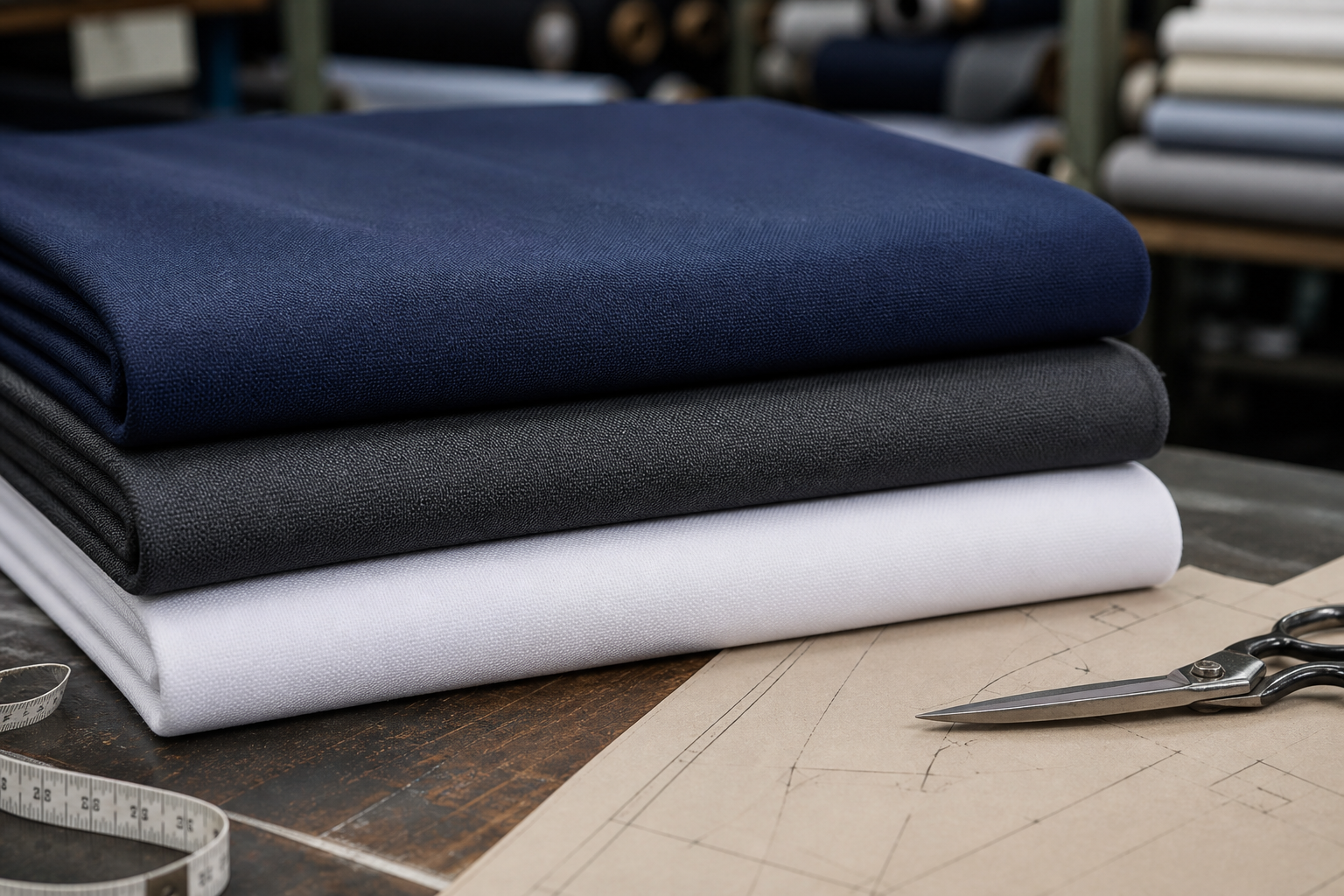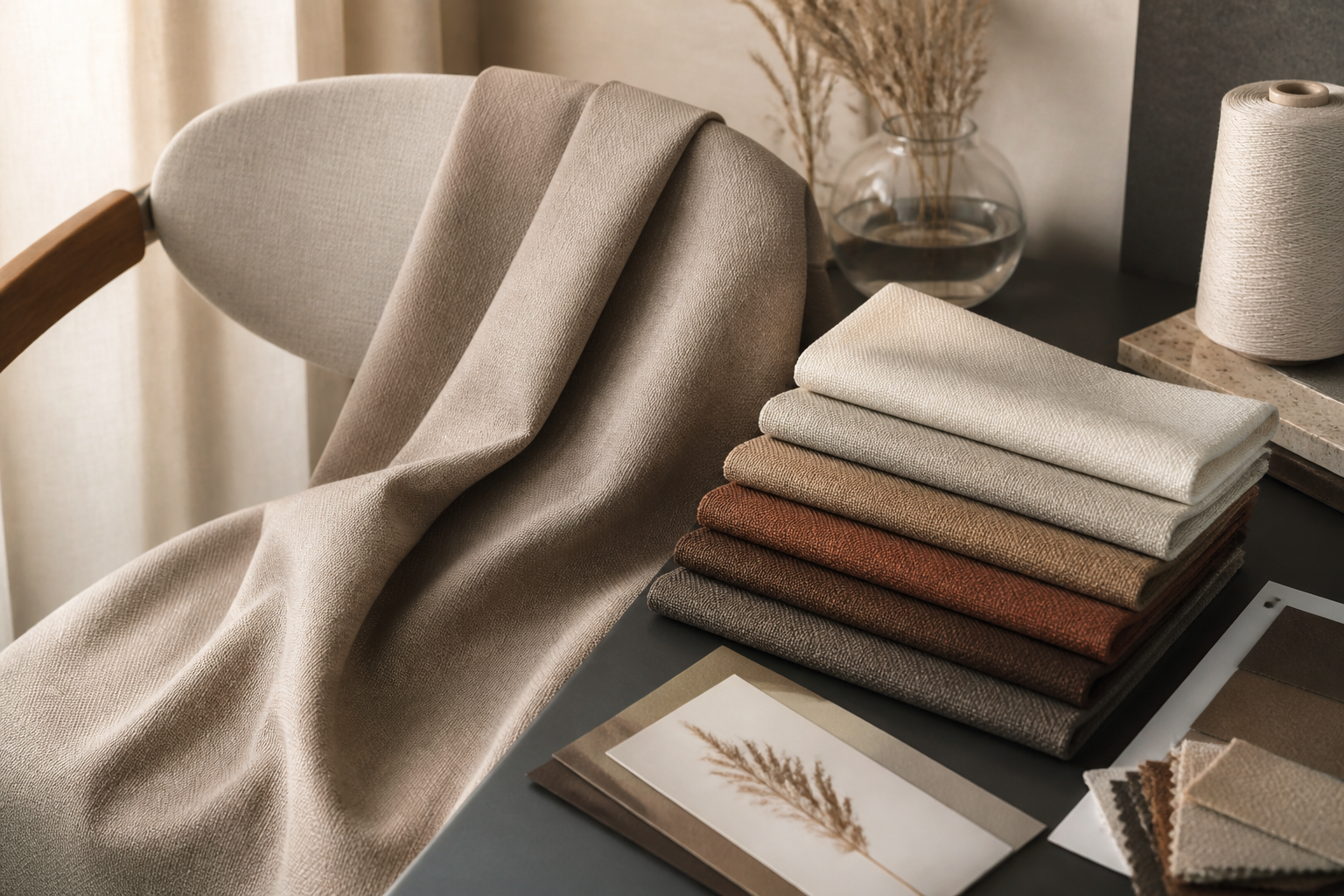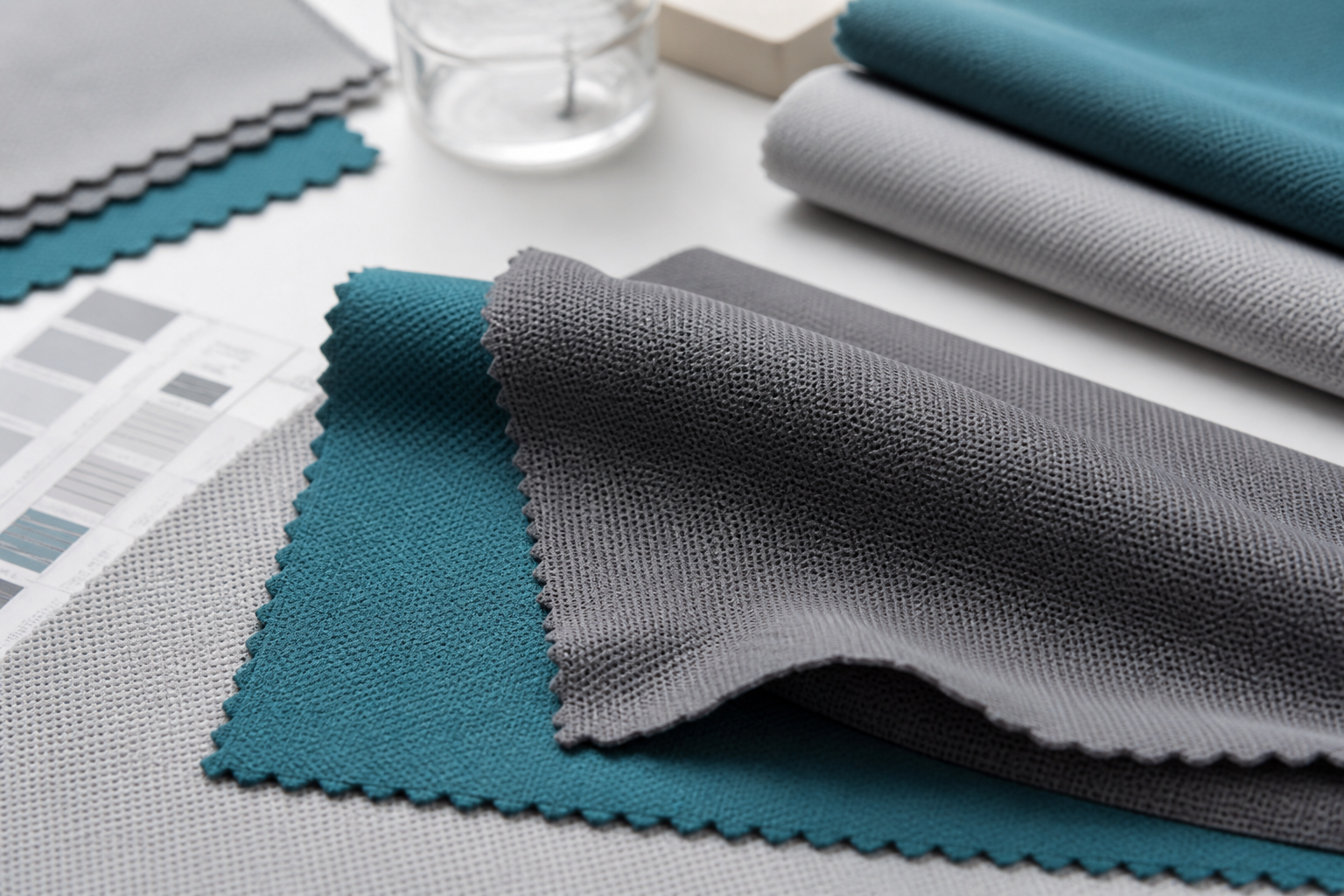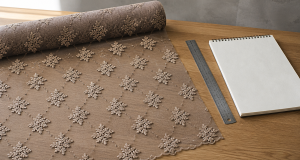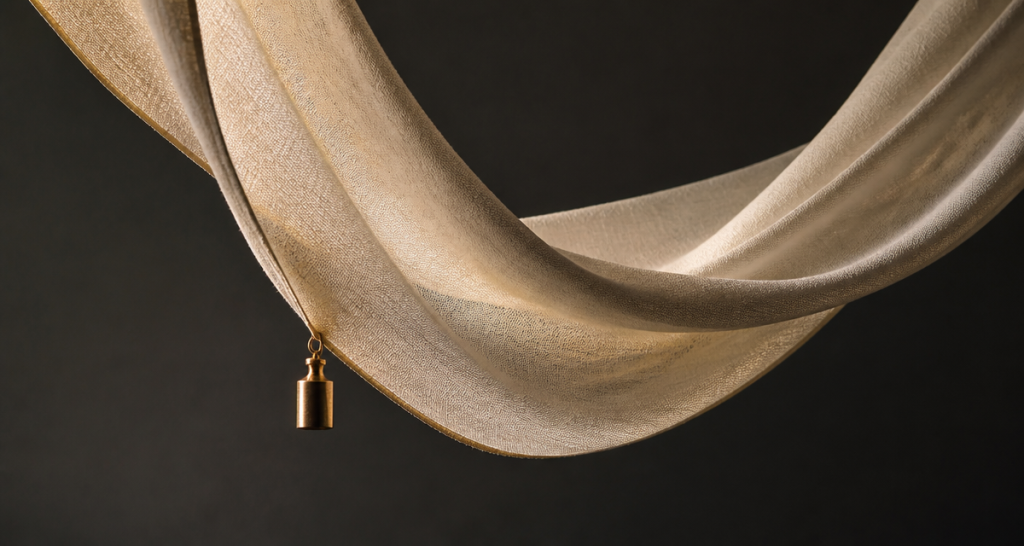
Decorative fabric creep recovery is the ability of a fabric to return to its original length after being held under load, and it decides whether drapes, upholstered panels and long table runs still look correct six months after installation. The procurement answer is to specify creep behaviour in the order, not to hope for it: name the test method, the load, the dwell time and an acceptable residual deformation, then verify those numbers on the bulk rolls. A fabric with poor recovery sags permanently even though it passed every visual check at the sample stage.
This guide explains what drives creep, how to measure recovery without a laboratory, and which fields to freeze in your request for quotation.
What Is Decorative Fabric Creep and Recovery?
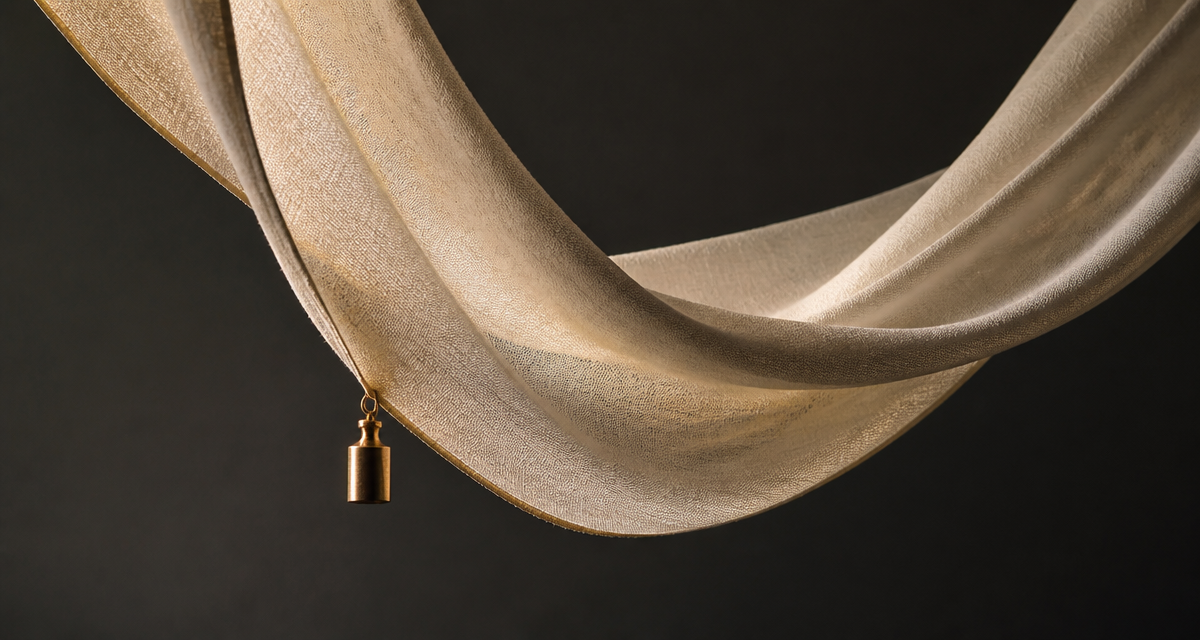
Creep is time-dependent deformation under a constant load. Hang a decorative panel and gravity becomes that load. The fabric extends slowly, and the length gained is creep. Recovery is what happens when the load is removed: an elastic fabric returns close to its original length, while a plastic one keeps part of the stretch forever.
Two numbers matter to buyers. Creep is the extension measured while the load is applied. Residual deformation is the permanent extension measured after a defined recovery period. A fabric that creeps 2 percent but recovers to 0.3 percent is perfectly serviceable. A fabric that creeps 2 percent and stays there will show a sagging hem within one season. Our manufacturing team treats both numbers as specification data, not as opinions.
It also helps to separate two questions that buyers often merge. The first question is structural: can this construction carry the hanging load without permanent elongation? The second is aesthetic: does the fabric still drape the way the design intended after it has taken that load? A panel can pass the first test and fail the second, which is why recovery is measured on the finished, trimmed piece rather than on a raw greige roll.
Key Takeaways
- Creep and residual deformation are separate values. Ask for both.
- Fibre type, weave density and GSM drive recovery more than any finish.
- Seam and stitch construction can inject creep into a stable fabric.
- Higher temperature and humidity accelerate creep in every decorative textile.
- Test the finished panel, not only the greige roll, because finishing changes recovery.
What Causes Creep in Decorative Fabric
Creep is not a single property. It emerges from the interaction of six variables, and a supplier can usually tell you which one dominates your construction.
1. Fibre and yarn behaviour
Polyester filament yarns recover well because their molecular structure snaps back after moderate extension. Cellulosic fibres such as viscose and cotton recover more slowly and retain more permanent set. Blends sit between the two, so the polyester-to-viscose ratio is an early indicator of how a drape will behave under sustained load.
2. Weave density and GSM
An open weave with low GSM stretches easily and recovers slowly, because load per thread is high. A denser construction spreads the same load across more yarns. This is why a heavier fabric is not automatically better: a well-balanced 220 GSM weave can out-recover a loose 280 GSM one.
3. Stitch and seam construction
Long stitch lengths and low stitch density allow seams to slip under tension. A seam that elongates drags the panel with it, so the panel appears to creep even when the fabric itself is stable. Underlay and reinforcement at the heading are the usual remedies.
4. Load, dwell time and hanging method
Creep grows with both load and time. A heavy lining or a weighted hem multiplies the load on the face fabric. Dwell time matters too: most measurable creep occurs in the first hours after hanging, and a smaller amount continues for weeks. Tensioned heading systems distribute load and reduce local stretch.
5. Temperature and humidity
Heat and moisture both soften the polymer network and accelerate creep. A decorative textile tested in a cool, dry room can behave quite differently in a hot, humid venue. Specify the conditioning environment alongside the result.
6. Panel direction and sewing sequence
Warp and weft rarely recover at the same rate. If one panel is cut along the warp and its neighbour along the weft, the two will elongate differently and the join will wave. Keep a consistent cutting direction across a set, and record it on the cut ticket so a replacement panel can be matched later.
How to Test Decorative Fabric Creep Recovery
You do not need a full laboratory to get a usable number. Follow these steps and record every value.
- Cut matched strips. Take three warp and three weft strips of equal width from different positions on the roll.
- Precondition the samples. Rest them in the target environment for at least four hours before testing.
- Mark a gauge length. Draw two reference lines at a fixed distance, for example 200 mm.
- Apply a defined load. Use a weight that matches the real hanging load, and note the value in grams.
- Measure creep at intervals. Record extension at 1 minute, 30 minutes and 24 hours to see the creep curve.
- Remove the load and measure recovery. Record residual deformation after 1 hour and after 24 hours.
- Calculate the recovery percentage. Divide recovered extension by total creep extension and convert to a percentage.
- Attach the result to the order. Make the tested sample the reference for bulk comparison.
Three Mistakes That Cause Early Sagging
Most sagging complaints trace back to one of three avoidable decisions, and all three are visible in the paperwork before a single metre is cut.
Choosing by GSM alone. Weight is easy to quote and easy to compare, so buyers use it as shorthand for quality. Recovery, however, depends on weave balance as much as weight. A denser, better-balanced construction at a lower GSM can outperform a heavier loose weave, and it will hang straighter for longer.
Adding a heavy lining to a light face cloth. Lining increases the load that the face fabric must carry, so it can make creep worse rather than better. Where opacity is the goal, choose a lighter lining plus a tensioned heading, or move to a more stable face fabric in the first place.
Approving the greige roll instead of the finished panel. Dyeing, heat setting and finishing all change how a fabric recovers. The only sample worth approving is one that has followed the same finishing route as the bulk order, cut in the same direction and sewn with the same heading.
Creep Behaviour by Fabric Type
| Fabric type | Typical creep | Recovery | Best use |
|---|---|---|---|
| Dense polyester woven | Low | High | Upholstery, structured panels |
| Polyester and viscose blend | Medium | Medium | Soft drapery, cushions |
| Heavy jacquard | Medium to high | Medium | Feature panels, short drops |
| Loose open weave | High | Low | Light decorative overlays only |
| Embroidered mesh overlay | Medium | Medium to high | Layered decoration on a stable ground |
Use this table as a starting filter, then confirm with your own test. Two fabrics from the same family can differ if finishing, stitch density or base tension changes.
Specification Fields for Your RFQ
| Field | Example value | Why it matters |
|---|---|---|
| Creep at 24 hours | Under 2.0 percent | Caps long-term extension |
| Residual deformation | Under 0.5 percent | Controls permanent sag |
| Test load | Matched to hanging load | Makes results comparable |
| Conditioning | 23 degrees C, 50 percent humidity | Removes environment bias |
| Heading construction | Tensioned, reinforced | Limits seam-driven creep |
FAQ
Is creep the same as stretch?
No. Stretch is immediate extension under load. Creep is the additional extension that accumulates while the load is held. A fabric can be low-stretch and still creep noticeably.
How long should a creep test run?
Twenty-four hours gives a practical curve for sourcing decisions. Longer tests are useful for architectural installations where panels stay hung for years.
Does lining reduce creep?
Lining adds load, so it can increase creep on a light face fabric. Use a lightweight lining or a tensioned heading instead of simply adding weight.
Can finishing fix poor recovery?
Finishing can improve stability, but it cannot change the underlying fibre behaviour. Select the right fibre and construction first.
Why did my drape sag in summer?
Heat and humidity accelerate creep. A panel that performs in a dry showroom can elongate in a warm, humid venue, so test in the target environment.
Should I test every colour in a bulk order?
Test at least one roll per colour and per dye lot. Dyeing conditions change fibre behaviour slightly, so a recovery figure from one colour does not automatically cover the rest.
Conclusion: Test Recovery Before You Hang It
Decorative fabric creep recovery is a measurable engineering property, and it is the difference between a panel that still looks crisp after a season and one that sags. Specify both creep and residual deformation, condition the samples the way the installation will be conditioned, and keep the tested strip as the bulk reference. Buyers who do that avoid the most expensive decorative failure of all: replacing fabric that has already been cut, sewn and installed.
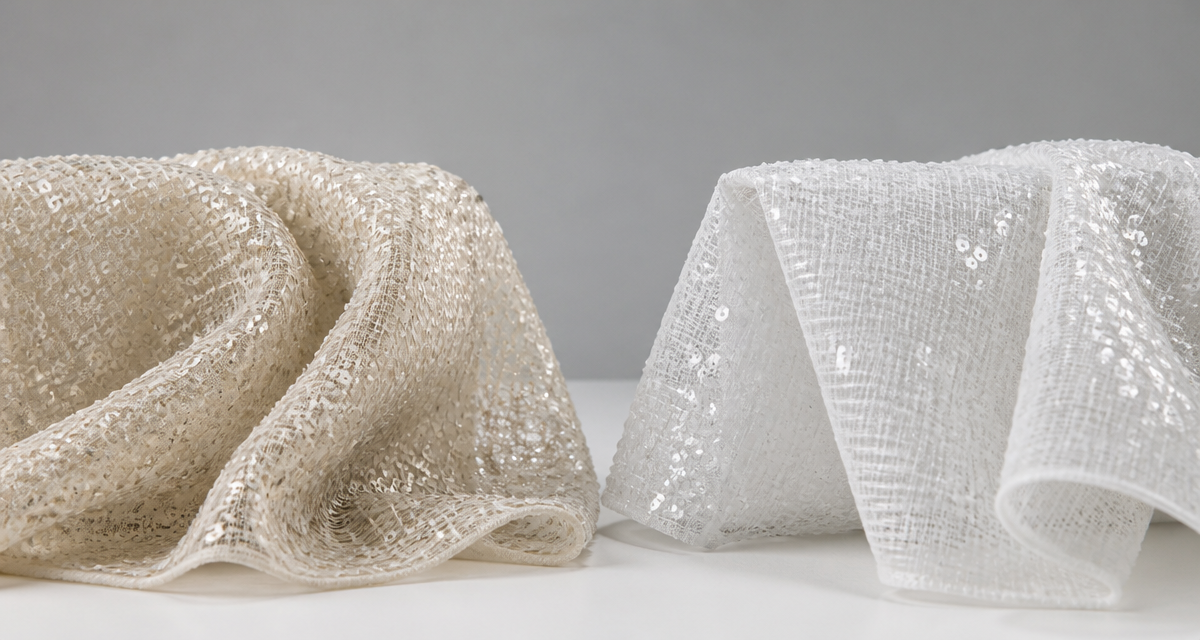
Want to compare recovery on real production cloth? Request Sequin Fabric Samples and tell us your panel size and hanging load, and we will send matched swatches with drape and recovery notes. Our sourcing guide and quality control pages explain how those notes travel with each shipment.
Source direct on Alibaba - request bulk pricing, specifications, and production details in one place.
Contact Morris at morris@yunfantextile.com, or message on WhatsApp: +86 156 3752 5803 or +86 175 1619 6727.