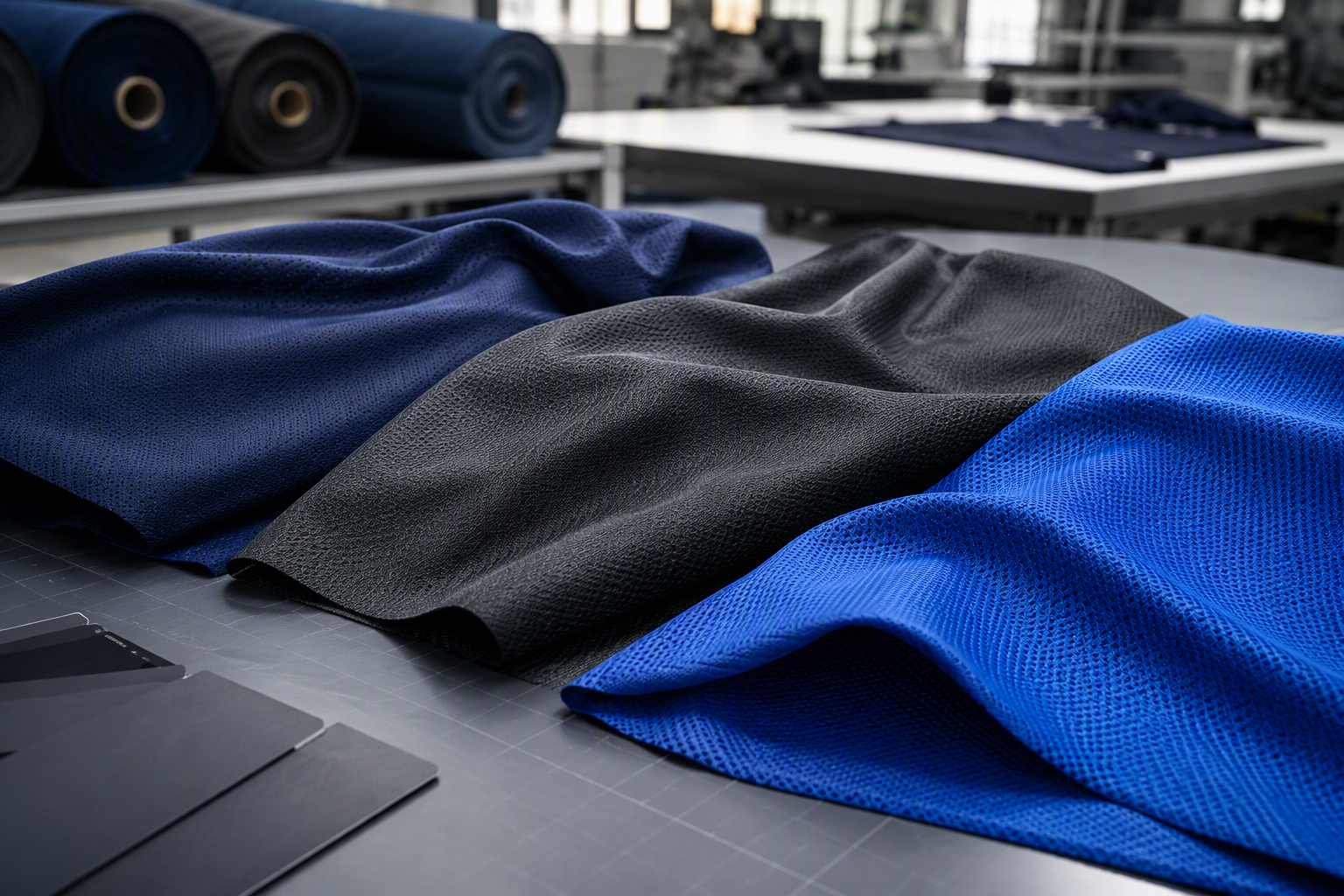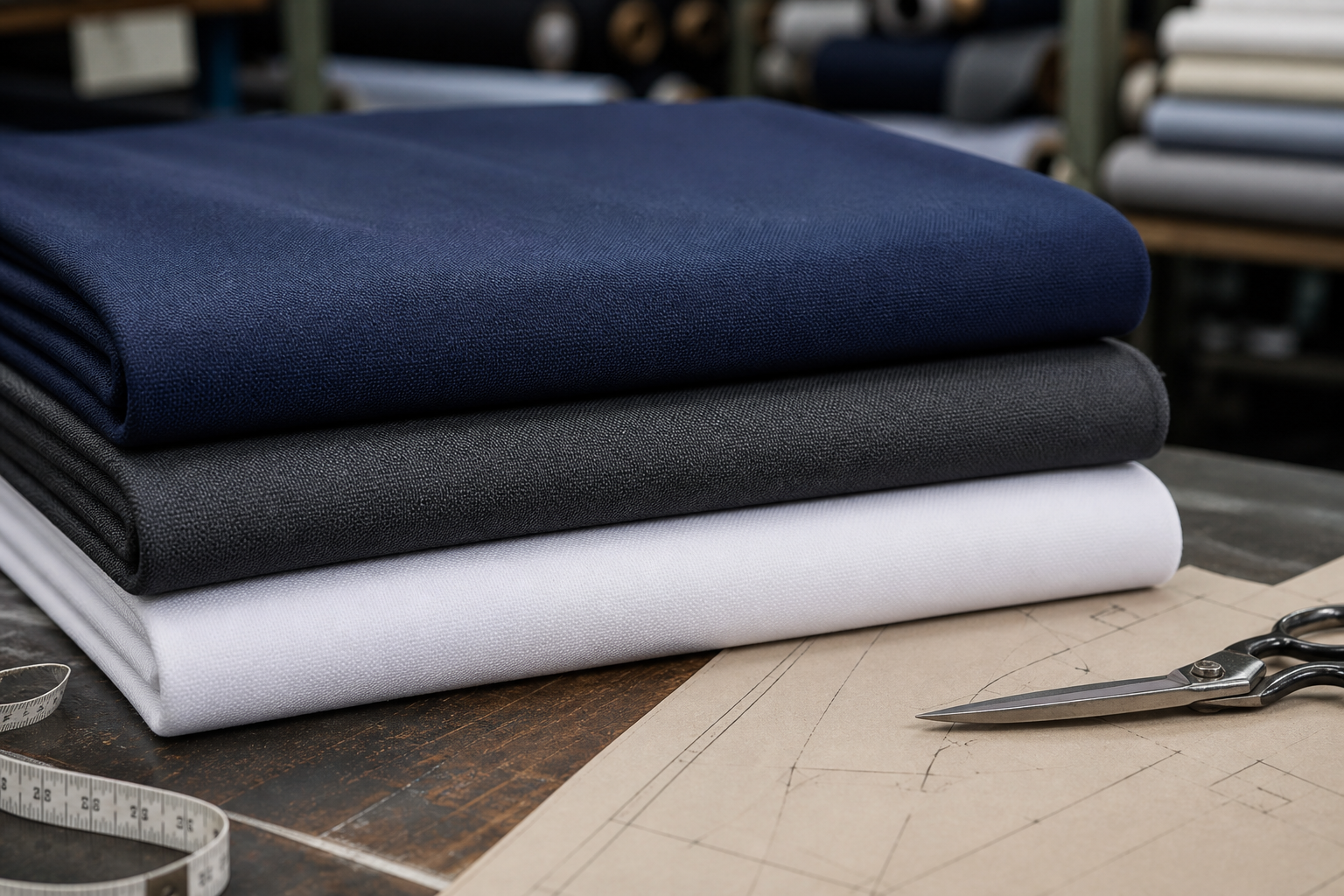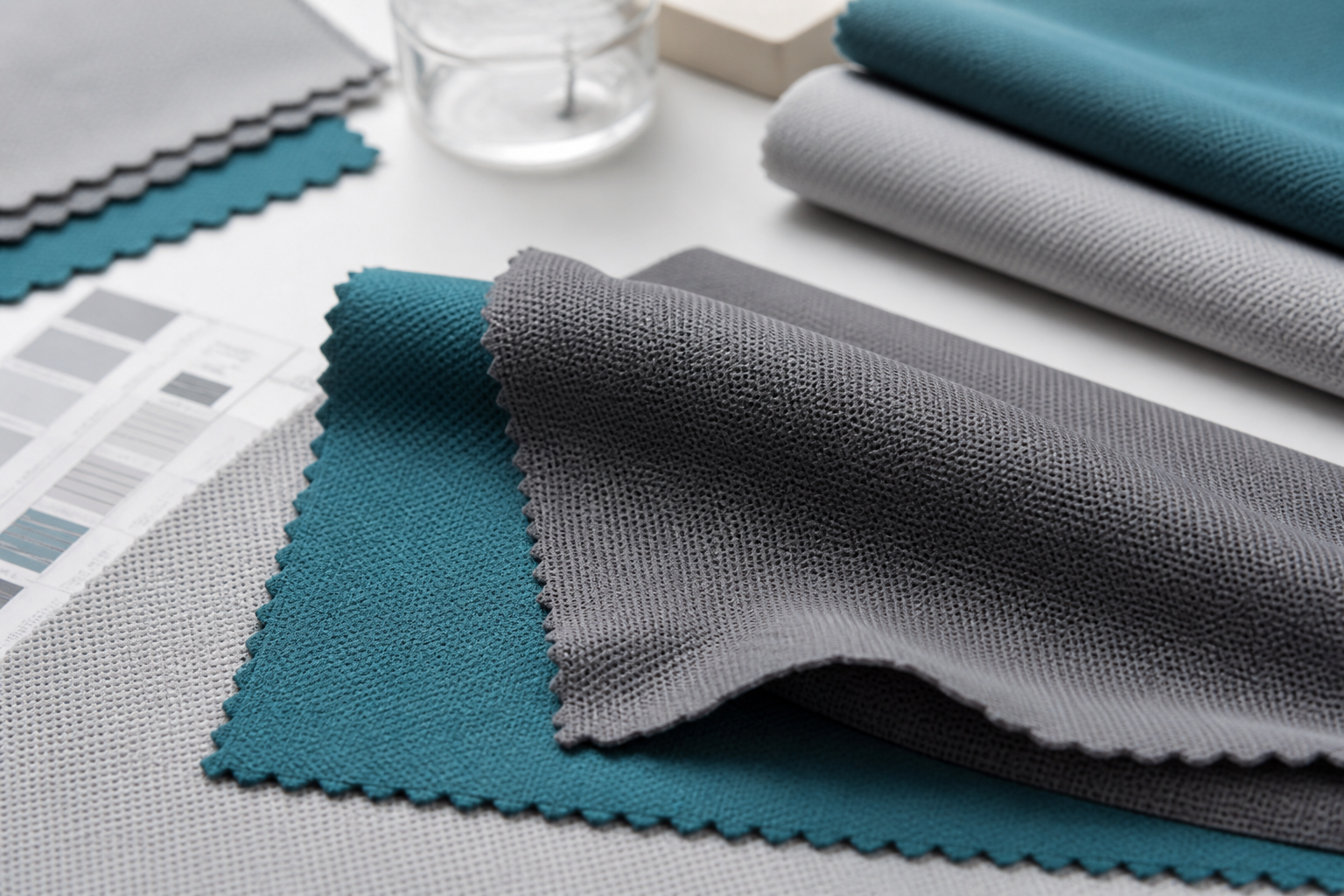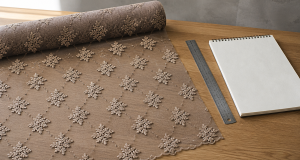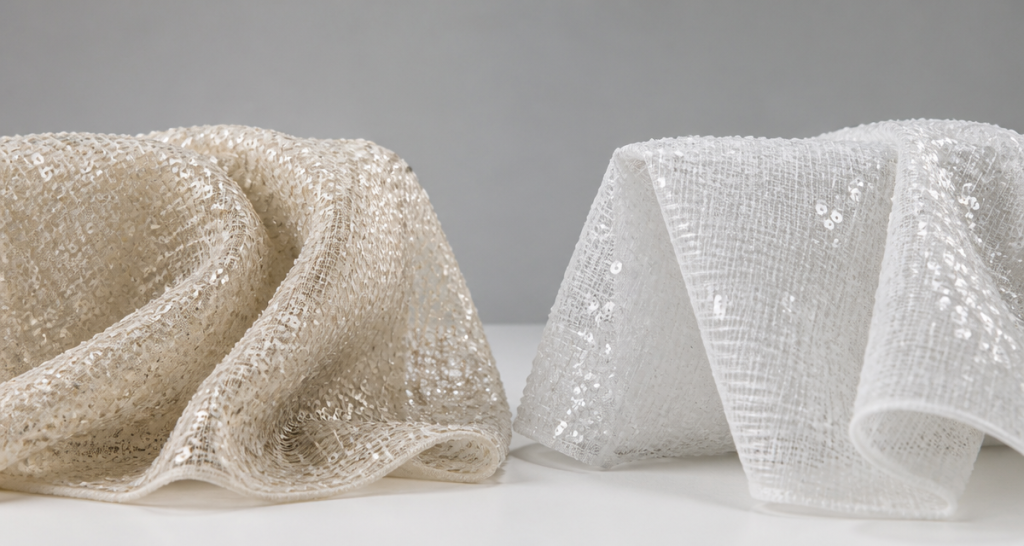
Sequin fabric glue backing is the adhesive layer that locks sequins, beads or applique elements onto a ground cloth so they stay flat and secure through cutting, sewing, wear and cleaning. It is the difference between a sequin that survives a season and one that lifts, curls or sheds inside the carton. For B2B buyers, sequin fabric glue backing stability is a specification question: define the adhesive type, the bond strength, the heat and pressure parameters and the peel or shear result you will accept, then verify it on the bulk lot. This guide sets out what the backing does, the adhesives in commercial use, the test methods and the purchase order fields that keep a glued sequin construction stable at volume.
Key Takeaways
- Glue backing stability is a bond specification - define peel strength, shear strength and the substrate pair being bonded.
- Adhesive choice depends on fibre type, end use and the care cycle, not on price alone.
- Heat, pressure and dwell time during lamination decide the final bond far more than the adhesive brand.
- Soft, stretchy backings keep hand feel but can creep; rigid backings hold shape and stiffen the drape.
- Test after care simulation, because a bond that passes dry can fail after one wash or dry-clean.
- Record the parameters per lot so a repeat order reproduces the same stability.
What Is Sequin Fabric Glue Backing?
Sequin fabric glue backing is an adhesive system applied between the embellishment and the ground fabric, or as a coated interlining bonded behind the embellished face. It performs three jobs: it anchors each element so it cannot lift or rotate, it distributes stress across the panel instead of concentrating it at a single stitch, and it controls the drape and body of the finished fabric.
There are two broad architectures. A direct-bond construction applies adhesive between sequin and ground, which is common on lightweight decorative cloth. A bonded-interlining construction laminates a coated lining to the reverse of an already embellished fabric, which is common where the face is densely sequinned and the reverse must be comfortable against skin.
Stability is the outcome you are buying. A stable glue backing means the bond holds at the weakest point of the panel - the edge of a motif, the tip of a shaped sequin, or the boundary between bonded and unbonded area - through the full care cycle the customer will apply.
Why Glue Backing Stability Matters in Bulk Production
- Shedding and claims: loose sequins in a carton or on a customer floor are an immediate, visible quality failure.
- Cutting and sewing: an unstable bond lets elements shift under the blade and the needle, causing off-register motifs and needle deflection.
- Hand feel: over-bonding stiffens the fabric and destroys the drape the design depends on - see our notes on choosing sequin fabric backing for comfort and stability.
- Repeatability: if the bond parameters are not recorded, the next lot will not match the approved sample.
- Downstream risk: heat from pressing, fusing or drying can re-activate an adhesive and create bleed-through or delamination.
What Causes Glue Backing Failure
- Wrong adhesive for the fibre. A chemistry that bonds well to polyester may not adhere to a coated or silicone-finished surface, and vice versa.
- Insufficient heat, pressure or dwell. Under-laminated fabric looks acceptable at inspection and delaminates after one wash.
- Excess adhesive. Too much glue squeezes out, stiffens the panel and creates visible strike-through on light grounds.
- Surface contamination. Softeners, dust and sequin release agents interfere with adhesion.
- Thermal history. Repeated heat cycles - printing, embossing, heat-set finishes - degrade or re-flow the bond. This overlaps closely with sequin fabric heat sensitivity, which should be specified alongside the glue system.
- Mechanical stress at the edge. Cutting, overlocking and dense embroidery all load the bond edge, which is where failure usually starts.
Adhesive Systems Compared
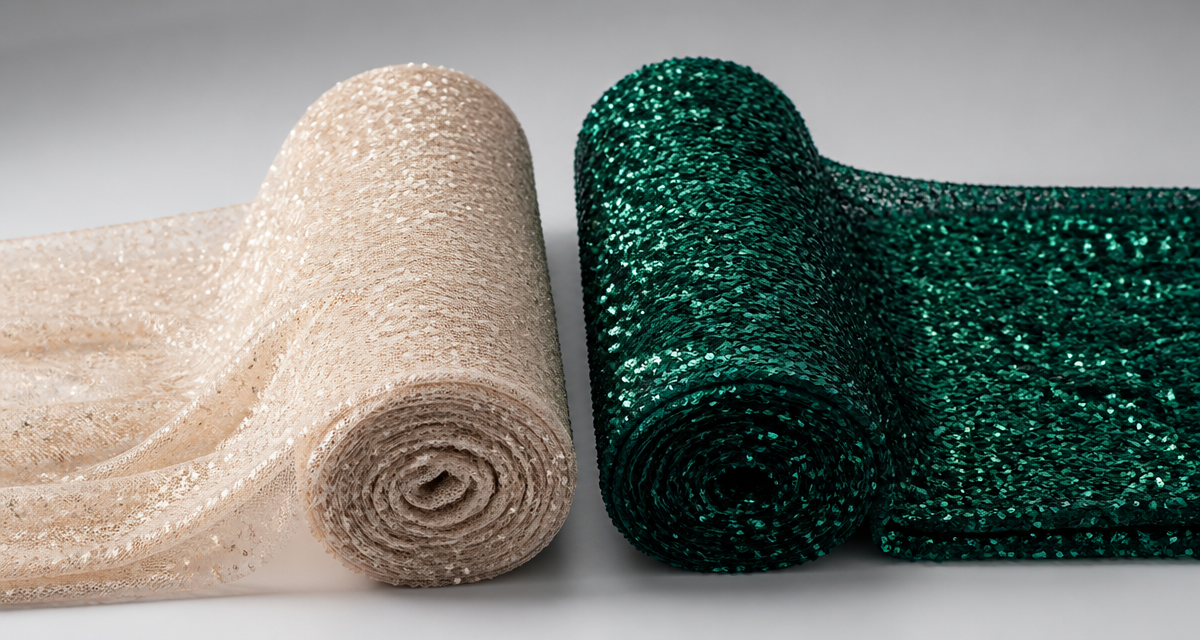
| Adhesive type | Bond character | Best substrate | Stability after care | Watch out for |
|---|---|---|---|---|
| Polyurethane (PUR) hot melt | Strong, flexible, low temperature | Most synthetics, delicate grounds | Good in cold wash | Moisture curing needs controlled storage |
| Ethylene vinyl acetate (EVA) hot melt | Soft, economical | Wovens, nonwovens | Moderate | Can creep in heat |
| Polyamide hot melt | High temperature resistance | Technical and washed products | Very good | High lamination temperature risk |
| Water-based latex | Soft, breathable | Porous grounds | Moderate | Drying energy, blocked hand |
| Fusible web (dry film) | Thin, low add-on | Delicate motifs, applique | Good if fully fused | Spotty bonding on textured sequins |
How to Specify and Verify Glue Backing Stability: Step by Step
- Name the substrate pair. Specify the exact sequin material, ground fabric and any finish, because adhesion is a property of the pair, not of the adhesive alone.
- Agree the bond metrics. Set a minimum peel strength and, for panels under load, a shear strength. State the test method and the units.
- Fix the lamination parameters. Record temperature, pressure, dwell time and line speed for each construction.
- Test the dry bond. Carry out the agreed peel test on the bulk lot, at several positions including the panel edge.
- Run care simulation. Repeat the test after five home wash cycles or one dry-clean cycle, then re-condition and re-test.
- Check hand feel and drape. Confirm the bonded panel still meets the drape and softness approved on the sample.
- Check the face for strike-through. Inspect light grounds under controlled lighting for adhesive show-through.
- Archive the parameters. Attach the bonding record to the lot file so repeat orders start from the same settings - the same discipline described in our guide to keeping sequin fabric quality consistent in repeat orders.
Buyer Checklist: Glue Backing Fields for Your Purchase Order
| Field | Example value | Where to verify |
|---|---|---|
| Adhesive type | PUR hot melt, low temperature | Technical data sheet |
| Bonded construction | Direct bond or laminated interlining | Construction diagram |
| Peel strength | Minimum value, stated method and units | Lab test report |
| Shear strength | Minimum value for loaded panels | Lab test report |
| Lamination parameters | Temperature, pressure, dwell, line speed | Production record |
| Care simulation | 5 wash cycles or 1 dry clean | Test report |
| Hand feel and drape | Matches approved golden sample | Golden sample |
| Face appearance | No strike-through on light shades | Inspection under defined lighting |
Common Mistakes That Destabilise a Glued Backing
- Specifying only the adhesive name. Without parameters, the same adhesive can be applied to produce a stable bond or a weak one.
- Testing immediately after lamination. Some adhesives keep curing, so a test run too early reads falsely strong or falsely weak.
- Ignoring the edge. Panel edges and motif tips are where delamination starts, yet they are rarely sampled.
- Skipping care simulation. A dry bond result cannot predict how a bonded sequin panel behaves after washing.
- Treating backing as a cost line only. Saving on adhesive add-on often costs far more in returns and rework. Review the true cost picture in our guide to calculating the real cost of wholesale sequin fabric.
FAQ: Sequin Fabric Glue Backing Stability
Does glue backing make sequin fabric stiff?
It can, if the adhesive add-on is too high or the bonded interlining is too rigid. The right construction balances bond strength against drape, which is why hand feel is checked alongside peel strength at sample approval rather than treated as a secondary concern.
How do I test glue backing stability without a full lab?
You can run a controlled comparative test in-house: bond the candidate samples with fixed parameters, wash a set under the agreed care cycle, then examine the panel edge and motif tips for lifting under magnification. It will not replace a certified peel test, but it will expose a clearly unstable construction early.
Can a glued sequin panel be sewn through?
Yes, provided the needle, thread and stitch density suit the bonded assembly. Needle choice affects both the bond and the sequin, so review sequin fabric needle compatibility before production planning. Sequential stitching is preferred, because driving through an already bonded area repeatedly stresses the adhesive.
Is glue backing suitable for washable garments?
Yes, with the right adhesive. Polyamide and PUR systems are typically chosen for washable products because they hold after repeated laundering. The critical step is to test after the care cycle the customer will actually use, not after a single dry test.
Conclusion
Sequin fabric glue backing stability comes down to specifying the bond, not just buying a construction. Name the adhesive and the substrate pair, agree peel and shear targets, fix the lamination parameters, test after care simulation and archive the record with the lot. Done properly, the backing stops being an invisible risk and becomes a repeatable part of your bulk specification.
Request Sequin Fabric Samples
Send us your ground fabric, sequin type, end use and care instruction and we will prepare bonded swatches with the peel test data to match. Tell us your wash or dry-clean cycle and we will recommend an adhesive system that holds.
Contact: Morris | Email: morris@yunfantextile.com | WhatsApp: +86 156 3752 5803 | WhatsApp: +86 175 1619 6727
Browse the full factory-direct range on our Alibaba International storefront.