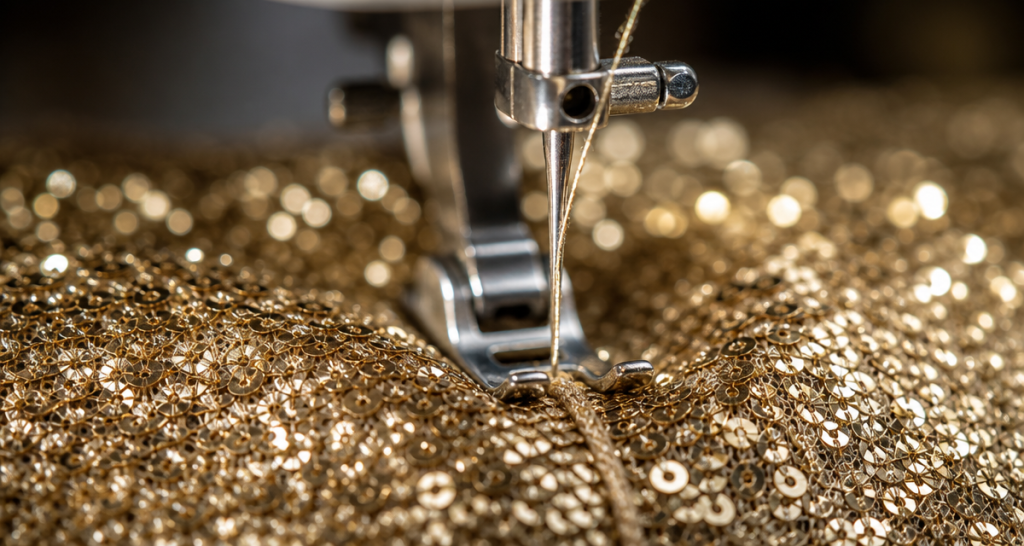
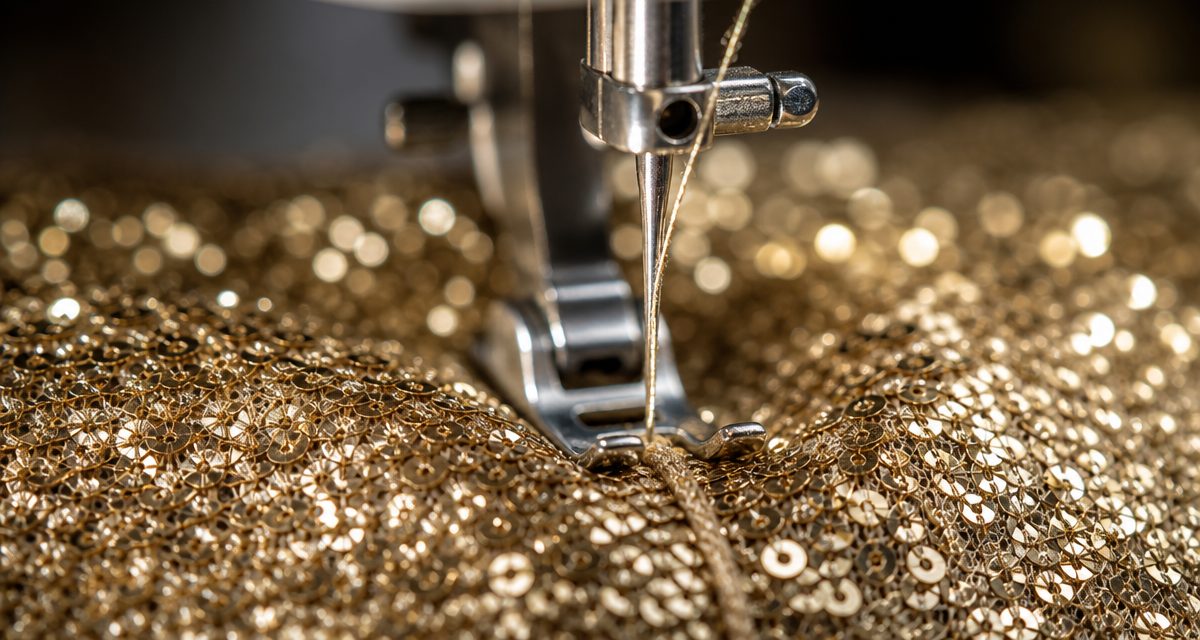
Sequin fabric needle compatibility is the match between the sewing needle and the decorated surface it must pass through. Buyers should treat sequin fabric needle compatibility as a production specification, because the wrong needle causes skipped stitches, broken sequins, snagged threads and needle breakage. A correct match keeps the stitch clean and protects the sequin surface at the same time. This guide explains how to choose, test and approve a needle setup before bulk sewing begins.
Key Takeaways
- Needle type matters more than needle size on decorated fabric.
- A sharp point cuts sequins, while a ball point pushes them aside.
- Sequin size, film thickness and base mesh all change the right choice.
- Test on the real seam, not on a single layer of fabric.
- Record needle type, size and coating in the sewing specification.
- Replace needles on a schedule, because wear changes the stitch.
What Is Sequin Fabric Needle Compatibility?
Sequin fabric needle compatibility is the ability of a needle to form a correct stitch without damaging the sequins or the base cloth. Moreover, it covers the needle point, the needle size, the eye shape and the surface coating. Each factor changes how the needle enters the fabric and how the thread behaves inside the seam.
Compatibility is not a single product choice. For example, a needle that works on a light 3 mm sequin may break discs on a heavy 9 mm sequin. In addition, the same needle may sew perfectly at low speed and skip at high speed. Consequently, the test must include the real machine speed and the real seam construction.
Why Sequin Fabric Needle Compatibility Matters in Bulk Sewing
Needle damage is expensive because it is invisible until late. A needle that chips sequins leaves a trail of small pits across the panel. Moreover, a needle that snags lifts threads on the base mesh, which then pulls during wear. Both defects pass unnoticed at the machine and appear at final inspection or after the first wash.
Breakage adds a second cost. A broken needle stops the line, and a fragment can mark the fabric or injure the operator. In practice, most breakage on decorated fabric comes from forcing a sharp needle through a hard disc instead of guiding the needle between discs.
Needle Options Compared for Sequin Fabric
| Needle type | Behaviour on sequins | Best for | Watch point |
|---|---|---|---|
| Ball point | Slides between discs | Light and medium sequin panels | Can miss a tight stitch line |
| Sharp point | Cuts through discs | Heavy or densely packed sequins | Chipped and cracked sequins |
| Universal | Mixed result | Plain seams away from decoration | Unpredictable on thick discs |
| Large eye | Protects decorative thread | Heavy topstitch thread | Larger hole in fine mesh |
| Coated non-stick | Reduces heat and friction | Adhesive-backed or coated styles | Higher needle cost |
The table gives a starting point, not a final answer. However, it shows why the point shape is the first decision. Related surface risks appear in our guide to reducing snagging risk when sewing sequin fabric.
How to Test and Approve Needle Compatibility
- Identify the sequin size, film thickness and base mesh of the production lot.
- Prepare three seam samples: a plain seam, a lapped seam and a seam crossing decoration.
- Sew each sample with the candidate needle at production speed, not at slow speed.
- Record needle type, size, coating and the machine speed used.
- Inspect for skipped stitches, pulled threads, chipped sequins and enlarged holes.
- Run each sample through the agreed wash cycle and inspect again.
- Sign and date the best sample, then attach the needle reference to the sewing specification.
After that, add a needle change interval. In practice, a worn needle behaves like a different needle, so the same reference must be paired with a replacement schedule. Then check the interval at the start of every shift.
Purchasing Checklist: Sequin Fabric Needle Compatibility Fields
- Needle system and size for each seam type
- Needle point shape and coating
- Machine speed range for the sewing line
- Sequin size and film thickness in the lot
- Base mesh weight and composition
- Thread type and ticket number
- Needle change interval in machine hours
- Seam types included in the test
- Wash cycle used for the compatibility test
- Approved seam sample reference and date
Moreover, repeat the test whenever the sequin supplier or the thread changes. A small change in film thickness can shift the right needle by one size. Base cloth selection matters too, as explained in our base fabric selection guide.
Common Needle Defects and How to Fix Them
Skipped stitches usually mean the needle is too small for the thread or too fine for the disc density. Therefore, move up one size before changing the tension. Chipped sequins, in contrast, point to a sharp point where a ball point would pass between discs. Meanwhile, enlarged holes in the base mesh mean the needle is too heavy for the cloth.
Thread fraying along the seam suggests heat and friction from an uncoated needle. Consequently, switch to a coated needle and reduce speed slightly. In addition, repeated breakage at the same point often means the needle strikes a disc rather than passing beside it. That is a file or feed alignment issue, and it overlaps with the checks in our embroidery and sequin compatibility guide.
Where Needle Problems Appear on the Sewing Line
The first sign appears as a faint line of pits along a seam, visible only under raking light. Therefore, inspect seams at an angle rather than straight on. The second sign appears at the needle plate, where a build-up of fine shavings shows that the needle is cutting discs instead of passing them.
The third sign appears after the first wash, when lifted threads and loose discs become obvious. Because those defects survive inspection, prevention is the only practical control. A scheduled needle change, a recorded reference and a short daily check keep the line stable across a long run.
Writing Needle Compatibility Into the Order File
Start with the needle reference: system, size, point shape and coating. Second, add the machine speed range and the needle change interval. Third, name the seam types that were tested. Fourth, attach the approved seam sample. Fifth, require a daily check record from the sewing floor.
Then link the clause to the sequin lot. For example, add a line that reads: needle performance must be confirmed against the approved sample for every new sequin delivery. Consequently, a supplier change cannot quietly shift the sewing result. For sample planning, see our contact page and request a test panel with your first order.
FAQ: Sequin Fabric Needle Compatibility
What needle size should I use for sequin fabric?
Size follows the thread and the fabric weight more than the sequin itself. Start from the thread requirement, then change the point shape to suit the sequins.
Is a ball point needle always better for sequins?
It is safer on light and medium sequins, because it slides between discs. On very heavy or tightly packed sequins, a sharp point may be needed.
How often should needles be changed?
Follow a fixed interval in machine hours rather than waiting for a defect. Needle wear changes the stitch slowly, so defects appear before the needle breaks.
Can needle choice reduce sequin damage?
Yes. Point shape, coating and a sensible change interval reduce chipping and snagging more than any tension adjustment.
Matching the Needle to the Sequin Lot
Sequins arrive in batches, and batches differ. Film thickness, coating and disc hardness move slightly between deliveries, even from the same producer. Therefore, a needle that passed last season may chip this season. The practical answer is a short re-test of one seam sample whenever a new sequin delivery lands.
Keep the re-test cheap. Sew one metre of the production seam at production speed, then inspect under raking light. In addition, count the needles used during that metre. In practice, one extra needle per metre is a clear signal that the match has drifted.
Finally, store the approved sample with the needle reference. Then both the sewing floor and the quality team work from the same evidence, and a needle choice becomes a documented decision instead of a habit.
Conclusion: Approve the Needle Like Any Other Component
Sequin fabric needle compatibility is a specification item, not an operator preference. Therefore, test it at production speed, record the winning combination and re-test when the sequin lot changes. Then the seam stays clean and the sequin surface stays intact.
Source sequin fabric with sewing data attached
Compare sequin sizes, base mesh options and decoration styles in one place.
Request Sequin Fabric Samples
Send your seam types, thread reference and sequin size, and we will prepare a sample set for review.
Yunfan Textile B2B Contact
Contact: Morris
Email: morris@yunfantextile.com
WhatsApp: +86 156 3752 5803
WhatsApp: +86 175 1619 6727