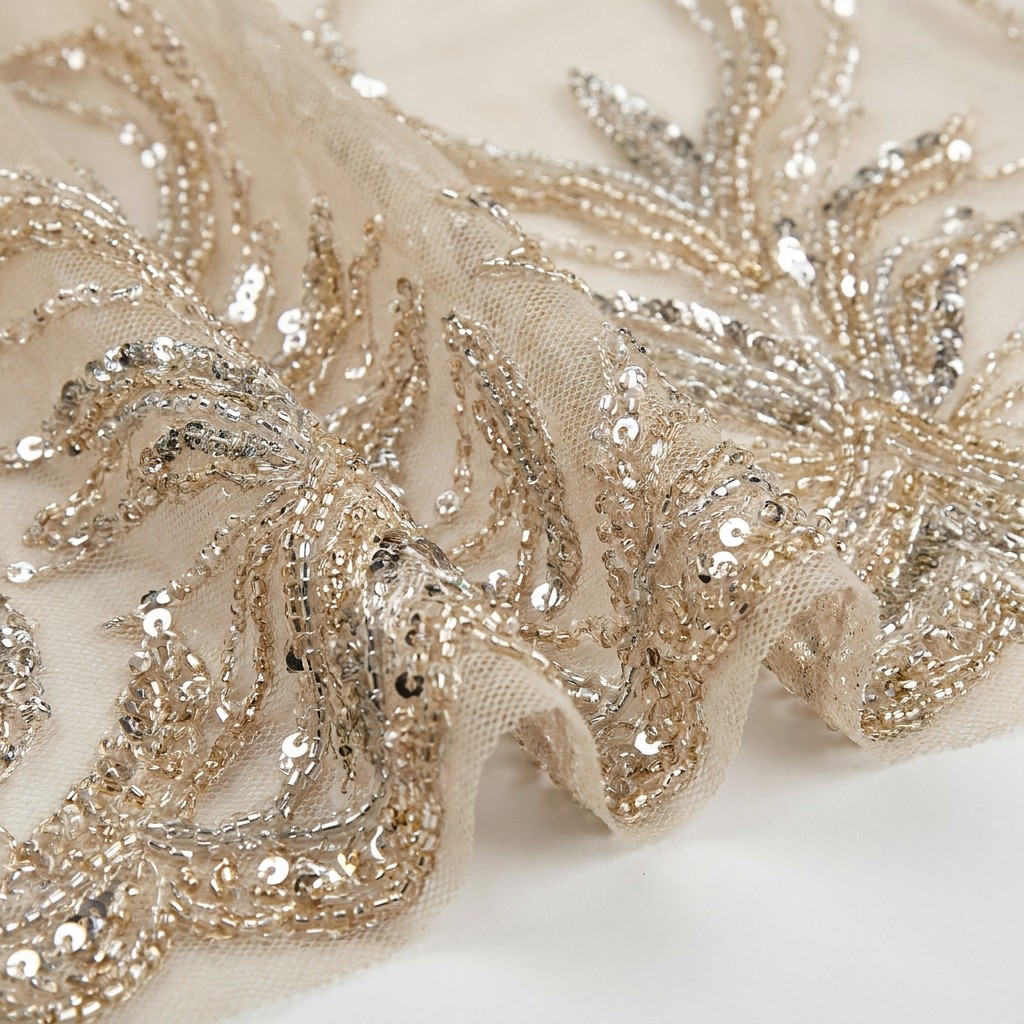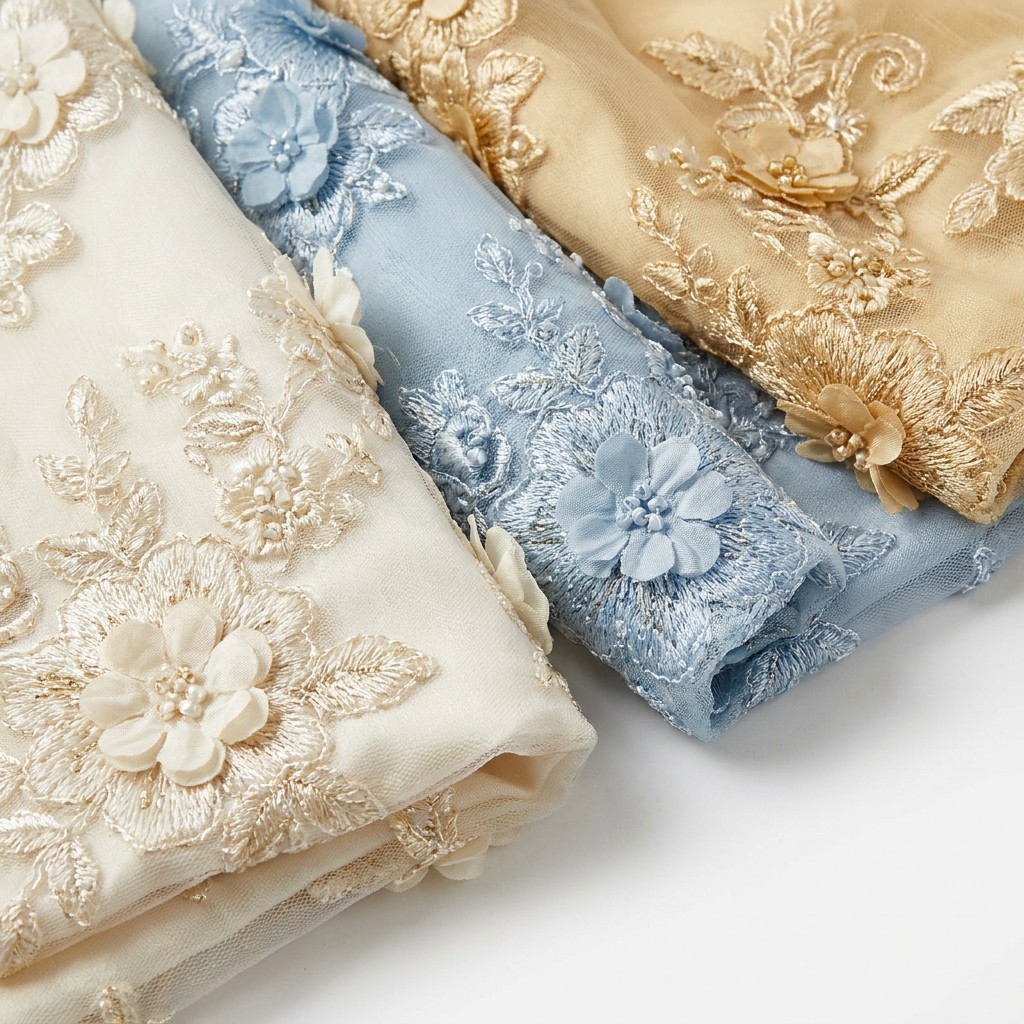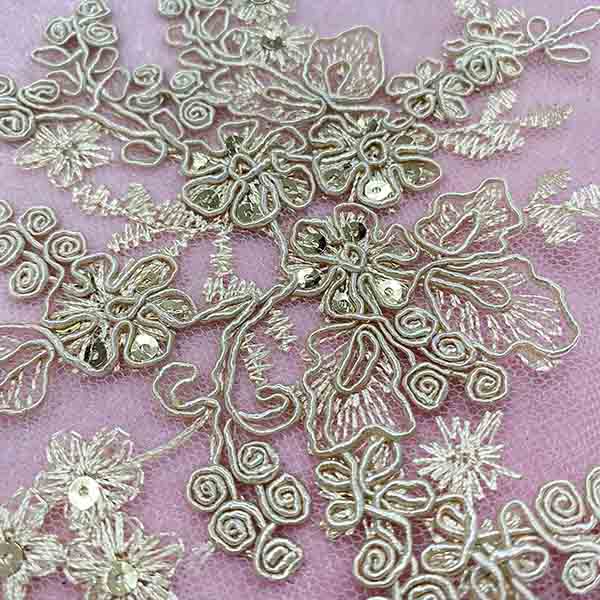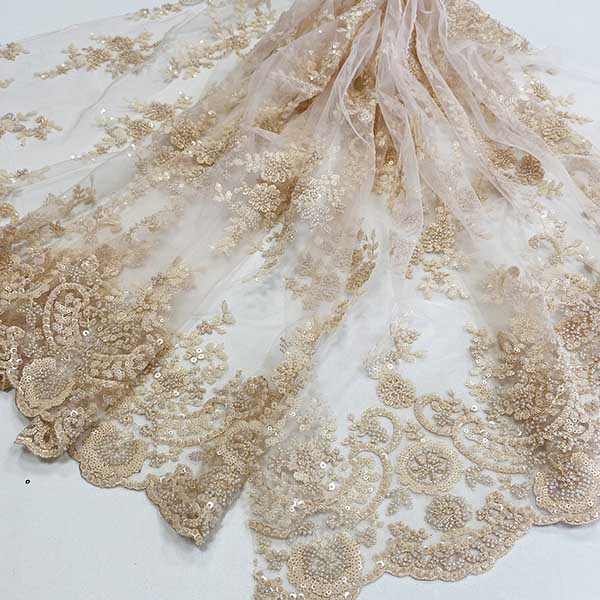
Embroidery sequin compatibility is how well an embroidered motif and a sequinned surface work together on the same panel. When they match, the design looks intentional and holds up. When they do not, the motif distorts, sequins shed, and the base puckers. Compatibility is a sourcing decision, not a styling one.
Key Takeaways
- Compatibility depends on base cloth, sequin type, thread, and motif density together.
- Sequins resist needle penetration, so the design must respect the surface.
- Match thread and sequin so they age at a similar rate.
- Approve the finished panel, never the components in isolation.
- Test movement and care, because that is where conflicts appear.
What Is Embroidery Sequin Compatibility?
Embroidery sequin compatibility is the ability of a motif and a sequinned fabric to combine without distortion, shedding, or puckering. It covers the base cloth, the sequin size and attachment, the thread, and the density of the motif as one system.
The core challenge is simple. Sequins are hard, reflective discs that resist a needle. Any design placed on them must either avoid the sequin field or account for it deliberately.
Why Compatibility Decides Quality
An incompatible combination fails in predictable ways. Dense motifs push the base and create puckers. Needles strike sequins and break, leaving holes. Thread tension pulls the film and lifts sequins.
Compatibility also affects cost. A design that needs slow stitching, frequent needle changes, and hand finishing costs more than one that flows with the surface. Planning compatibility early keeps both quality and price under control.
Factors That Affect Compatibility
- Base cloth weight, stretch, and stability
- Sequin size, film thickness, and attachment
- Thread type, weight, and color
- Motif density and direction
- Backing and topping support
- Where the motif sits relative to the sequin field
- The care the finished product will receive
Common Combinations Compared
| Combination | Compatibility | Best use | Watch out for |
|---|---|---|---|
| Motif on plain base, sequins at edges | High | Bridal, eveningwear | Careful edge finishing |
| Motif stitched over light sequin field | Medium | Statement panels | Needle strike and tension |
| Motif on dense sequin field | Low | Bold couture looks | Distortion and shedding |
| Sequin and bead mix | Medium | Luxury accents | Uneven weight and handling |
| Stretch base with motif | Varies | Fitted garments | Recovery and alignment |
When a motif must cross a sequin field, stitch density and direction decide the result. Our stitch density guide explains how to set that balance.
How to Test Compatibility in Six Steps
- Build a real panel. Use the production base, sequin, thread, and backing together.
- Check the stitch. Confirm the motif forms cleanly and the base does not pucker.
- Check needle behavior. Note broken needles and any holes left in the film.
- Move the panel. Flex, stretch, and fold it to see how the motif and sequins behave.
- Wash or clean it. Follow the expected care cycle and inspect for shedding or distortion.
- File the result. Photograph the tested panel and keep it with the approved sample.
Fields to Confirm With the Factory
- Base cloth specification
- Sequin size, film, and attachment
- Thread type, weight, and color
- Motif density and stitch direction
- Backing and topping
- Needle type and size
- Expected care conditions
- Hand finish requirements
- Approved panel reference
Design Rules That Prevent Problems
Keep the densest part of a motif off the sequin field. Let sequins sit in negative space where they can catch light without fighting the stitches. Choose thread and sequin colors that read as one design, not two.
If the design must cross the sequins, reduce density, adjust direction, and add support. Then confirm the change on a sewn panel. Compatibility is proven by the sample, not by the drawing.
FAQ
Can you embroider directly onto sequin fabric?
Yes, but the design must account for the hard surface. Keep density moderate, choose the right needle, and approve a sewn panel before bulk.
Which thread is best for sequin and embroidery combinations?
Match the thread to the base and the sequin so they age at a similar rate. Confirm the choice on the finished panel rather than on the thread card alone.
Why do sequins shed after embroidering?
Shedding usually comes from tension, needle strike, or weak attachment. Check the stitch settings and the sequin attachment together.
Does the backing change compatibility?
Yes. Backing changes hand feel, drape, and how the motif recovers after washing, so it is part of the compatibility decision.
Make Compatibility a Sourcing Standard
Embroidery sequin compatibility should be defined, tested, and written into the specification. Combine the base, sequin, thread, and backing into one approved panel, and repeat that panel for every order.
Support the decision with a clear sample approval step so compatibility never rests on assumption.
How Sequin Types Behave Under the Needle
| Sequin type | Needle behavior | Compatibility note |
|---|---|---|
| Small flat sequin | More predictable | Easier to combine with motifs |
| Large sequin | Harder to cross | Keep motifs in negative space |
| Metallic film sequin | Can crack under tension | Reduce density and tension |
| Stretch sequin on knit | Needs support | Stabilize before stitching |
| Reversible sequin | Direction sensitive | Plan motif direction carefully |
Thread and Needle Choices
Thread weight should match the motif and the base. Too heavy a thread stresses the film; too light a thread risks breakage. Needle type and size matter on a sequin surface, where a sharp point can crack the disc.
Confirm the thread and needle choice on the sewn panel. For thread and stitch behavior, see our guide to stitch density.
Common Compatibility Failures and Fixes
- Puckering: add support and reduce density.
- Shedding: review tension and attachment.
- Broken needles: change needle type and slow the stitch.
- Stiff panel: reduce backing weight.
- Motif distortion: adjust direction and stabilization.
- Uneven sparkle: review motif placement on the field.
Planning Motif Placement on Sequinned Panels
Placement is a design decision with a technical consequence. Motifs on plain areas are reliable. Motifs crossing the sequin field need more testing and more finishing.
Decide early where the sequins and the stitches will meet, and build the sample around that decision.
Working With the Factory on Compatibility
- Send the full brief. Include base fabric, sequin, thread, and motif artwork.
- Ask for a stitch trial. Request a test panel before the full sample.
- Review the trial together. Discuss puckering, shedding, and needle behavior.
- Adjust the design. Reduce density or move the motif if needed.
- Approve the final panel. Sign off on the sewn result, not the artwork.
- Record the settings. Keep the approved stitch settings for repeats.
Compatibility and Cost Planning
Compatible designs are usually cheaper to produce. They run faster, break fewer needles, and need less hand finishing. Incompatible designs look similar on paper but cost more on the floor.
Factor this into your costing. A small design change for compatibility often pays for itself many times over across a bulk run.
Compatibility Checklist for Buyers
- Base fabric specification confirmed
- Sequin type and attachment confirmed
- Thread and needle specified
- Motif density and direction reviewed
- Backing and topping approved
- Test panel flexed, folded, and cleaned
- Approved panel photographed and filed
- Stitch settings recorded for repeats
When to Say No to a Design
Some designs cannot be produced cleanly without changing the look. A motif that covers a dense sequin field with heavy stitches will distort the base and shed sequins no matter how careful the stitching is.
Saying no early saves money. Offer an alternative that keeps the visual idea but respects the surface, such as moving the motif into negative space or reducing density in the overlap area.
Compatibility by Product Type
- Bridal: keep dense motifs on sheer and lace areas, not on the sequin field.
- Eveningwear: balance motif weight with the drape of the panel.
- Dancewear: prioritize stretch recovery over motif density.
- Event decor: choose designs that survive handling and packing.
- Accessories: small panels tolerate denser motifs than garments.
Can the same design work on two different fabrics?
Only if both combinations are tested. A design that works on a stable woven may pucker on a stretch knit, so treat each base as a separate approval.
Get Sequin Fabric Samples for Your Next Order
Test colorfastness, compatibility, and hand feel on your own base cloth, sequin size, and color reference before you commit to bulk. Yunfan Textile produces decorative and sequin fabric for B2B buyers worldwide.
Source direct on Alibaba - request bulk pricing, specifications, and production details in one place.
Request Sequin Fabric Samples and share your target GSM, width, sequin size, and color reference.
Talk to Morris directly:
Email: morris@yunfantextile.com
WhatsApp: +86 156 3752 5803
WhatsApp: +86 175 1619 6727