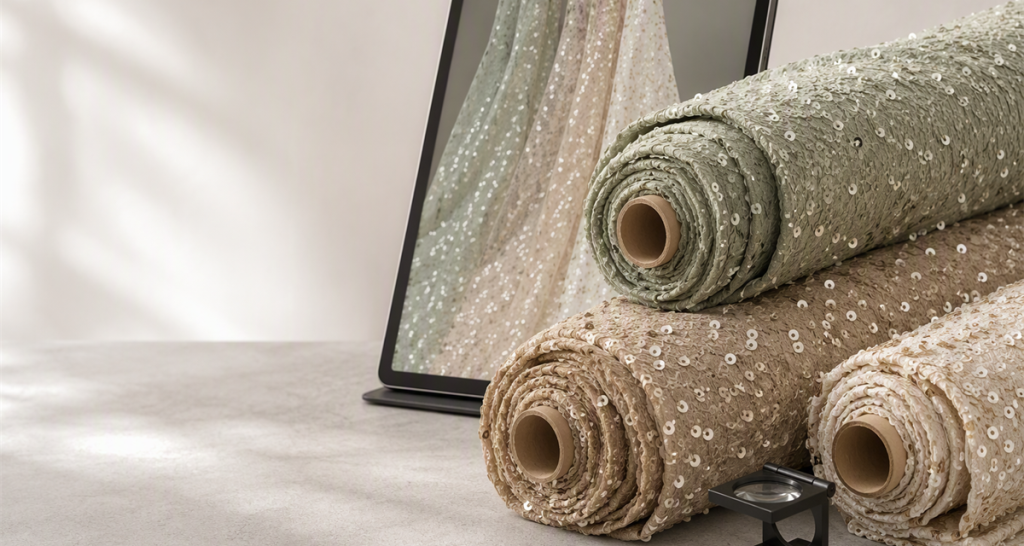
Decorative fabric roll inspection is the check you run on every roll before it reaches the cutting table. It confirms that width, shade, edges, and surface are within the approved standard, roll by roll. Done well, it catches a faulty roll while the order is still in the factory instead of after the garments are sewn.
Key Takeaways
- Roll inspection checks every roll, not just the first one.
- Record width, shade, edges, surface, and roll length against the approved standard.
- Use a light box and a magnifier so small defects are seen before cutting.
- Keep a signed record per roll so claims are supported by evidence.
- Roll inspection and pre-shipment inspection are different jobs; run both.
What Is Decorative Fabric Roll Inspection?
Decorative fabric roll inspection is the systematic examination of each roll for width, length, shade, edge condition, and surface defects against an approved reference. It is a roll-level control, which means one failing roll is identified on its own instead of being buried inside a bale.
For decorative and sequin fabric, this step matters more than for plain fabric. Shade varies subtly across a dye lot, sequins can be displaced, and edges can curl. None of that is visible after cutting.
Why Roll Inspection Matters for B2B Buyers
One bad roll can ruin a cutting plan. If a roll is narrower than declared, the marker no longer fits and yield drops. If the shade is off, panels from that roll look different in the finished garment even though the label says one dye lot.
Roll inspection creates evidence. When a defect is photographed and recorded against a roll number, a claim becomes a fact, not an opinion. That protects both the buyer and the supplier.
What to Inspect on Each Roll
- Width. Measure at several points along the roll, not only at the head end.
- Length. Confirm the length stated on the roll ticket and note any short rolls.
- Shade. Compare the roll against the approved standard under a fixed light source.
- Edges. Look for curling, fraying, pulled yarns, and holes near the selvedge.
- Surface. Check for sequin displacement, missing sequins, and marks from handling.
- Smell and moisture. Note any damp smell or visible moisture that could cause mold in transit.
- Packing. Confirm the roll is wrapped and labeled as agreed.
Roll Inspection vs Pre-Shipment Inspection
| Point | Roll inspection | Pre-shipment inspection |
|---|---|---|
| When it runs | On arrival or before cutting | After packing, before dispatch |
| Unit checked | Each individual roll | Sampled cartons and rolls |
| Main focus | Width, shade, edges, surface | Quantity, packing, labels, marks |
| Typical output | Roll-by-roll record | Inspection report and release note |
| Best owner | Warehouse or QC team | Buyer or third-party inspector |
Use our pre-shipment inspection checklist alongside this process so both stages are covered.
Roll Inspection Checklist
- Roll number and batch reference recorded
- Measured width against declared width
- Measured length against roll ticket
- Shade checked under control light
- Edge condition passed
- Surface condition passed
- Moisture and smell checked
- Packing and labeling confirmed
- Photographs filed for any defect
- Result marked pass, hold, or reject
How to Set Up a Roll Inspection Routine
- Write the standard first. Define acceptable width tolerance, shade tolerance, and defect limits before the first roll arrives.
- Set a fixed inspection point. Inspect in one controlled area with consistent lighting so results stay comparable.
- Train one owner. Give one person responsibility for the record so nothing is skipped under time pressure.
- Use simple tools. A tape measure, a light box, a magnifier, and a camera cover almost every check.
- Escalate fast. Mark a failing roll as hold immediately so it cannot be cut by mistake.
- Review trends. Review records monthly to spot recurring defects and fix them at the source.
How to Keep Records That Support Claims
Keep the record simple and consistent. Each entry should carry the roll number, the measurement, the result, the date, and the inspector's name. Attach a photo when a roll fails.
Good records also feed your supplier conversation. If the same defect appears three times, you have data to request a process change, not just a replacement roll. This is the same evidence-first approach we describe in edge quality checking.
FAQ
How many rolls should I inspect?
At minimum, inspect every roll for width, shade, and surface. For large orders, you can add a deeper measurement check on a sample of rolls from each batch.
What lighting should I use for shade checks?
Use one consistent source, such as a light box with a defined color temperature, so shade decisions are repeatable across inspectors and days.
What is a reasonable width tolerance?
Set the tolerance in your specification with the supplier. A common approach is a small minus tolerance only, so rolls are never narrower than the marker requires.
Should I inspect fabric on arrival or at the factory?
Both help. Factory inspection catches issues before shipping costs are paid, and arrival inspection confirms the goods survived transit.
Turn Roll Inspection Into a Habit
Decorative fabric roll inspection is not a one-time event. It is a habit that protects yield, shade consistency, and your relationship with end customers. Inspect each roll, record each result, and act on the data.
Pair it with a clear quality control plan so inspection, cutting, and packing all follow one standard.
Tools That Make Roll Inspection Reliable
- A steel tape measure for width and length
- A light box or controlled light source for shade
- A magnifier or loupe for surface and edge detail
- A camera with consistent framing for defect photos
- A roll inspection sheet or digital form
- A clean, flat inspection table
You do not need a laboratory. You need the same tools used the same way every time, so results stay comparable.
Common Roll Defects and What They Mean
| Defect | Likely cause | Buyer action |
|---|---|---|
| Narrow roll | Tension or finishing drift | Measure and compare with the marker |
| Shade difference | Dye lot variation | Hold the roll and check against standard |
| Curled or frayed edge | Handling or cutting | Assess how much width is usable |
| Missing sequins | Attachment or abrasion | Quantify the affected area |
| Damp smell | Storage or packing | Isolate and check for mold |
| Short length | Roll ticket error | Reconcile the delivered quantity |
Recording the cause, not just the defect, helps the supplier fix the process behind it.
How to Handle a Failed Roll
- Mark it immediately. Tag the roll so it cannot move to cutting.
- Document the defect. Photograph it with the roll number visible.
- Quantify the impact. Note how many yards are affected.
- Notify the supplier. Send the record the same day.
- Agree a resolution. Replacement, credit, or use on a hidden panel.
- Track the outcome. Close the case only when the fix is confirmed.
Working With Suppliers on Roll Standards
Share your roll standard before production, not after delivery. Suppliers who know the width rule, the shade tolerance, and the defect limits can build to them from the start.
A written standard also makes conversations easier. Instead of arguing about a single roll, you review data and agree on the next step. This is the same practical approach we describe in checking quality before bulk ordering.
How long should I keep roll inspection records?
Keep them at least until the finished goods are sold and the claim window closes. Roll records are your evidence if a defect appears later.
Roll Inspection by Fabric Type
| Fabric type | Extra check | Why it matters |
|---|---|---|
| Sequin on mesh | Sequin displacement across the roll | Shifted sequins change the pattern line |
| Embroidery on woven | Motif alignment at the fold | Misalignment shows in the finished panel |
| Stretch decorative knit | Relaxed width after unrolling | Stretch relaxes and changes the usable width |
| Jacquard or textured | Pattern repeat continuity | Broken repeats waste fabric at the seam |
| Sheer or organza | Marks and crease lines | Marks are visible in finished decor |
Different surfaces fail in different ways, so the inspection form should include a line for the fabric type you are receiving.
Monthly Review of Roll Inspection Data
Collect the records and look for patterns. If one defect appears again and again, the problem is in the process, not in one unlucky roll. Share the pattern with the supplier and agree a corrective action.
Over time, this turns inspection from a cost into a tool. Fewer defects mean less rework, better yield, and a more predictable cutting plan for every order you place.
Get Sequin Fabric Samples for Your Next Order
Test surface performance, color, and hand feel on your own base cloth, sequin size, and color reference before you commit to bulk. Yunfan Textile produces decorative and sequin fabric for B2B buyers worldwide.
Source direct on Alibaba - request bulk pricing, specifications, and production details in one place.
Request Sequin Fabric Samples and share your target GSM, width, sequin size, and color reference.
Talk to Morris directly:
Email: morris@yunfantextile.com
WhatsApp: +86 156 3752 5803
WhatsApp: +86 175 1619 6727