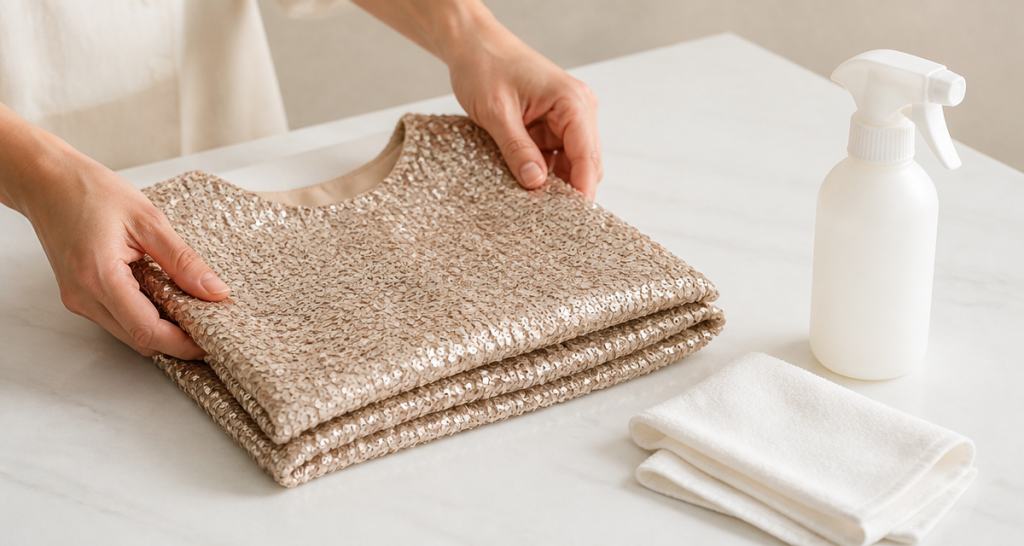
Decorative fabric fold mark recovery is how quickly a crease relaxes after a roll is unwound, folded or packed flat. Buyers ask about decorative fabric fold mark recovery because a crease that never drops out becomes a visible defect on finished curtains, panels and garments. Most decorative styles recover within a few hours of relaxed hanging, yet dense sequin and coated styles often need help. This guide shows how to test recovery, set a specification and avoid fold mark claims.
Key Takeaways
- Fold marks come from pressure, time and moisture, not from shipping alone.
- Rolled packing reduces fold marks far more than flat packing.
- Recovery is measured as the time needed for the crease to disappear.
- Heat helps some fabrics and damages others, so test before you press.
- Write a fold mark acceptance standard with a photo reference.
- Check recovery on the outer wrap and the inner layers separately.
What Is Decorative Fabric Fold Mark Recovery?
Decorative fabric fold mark recovery is the ability of a crease to relax once the pressure is removed. Moreover, it depends on fibre type, weave tightness, finishing and the decoration on the surface. A soft jacquard usually springs back quickly. In contrast, a dense sequin panel may hold a line for days because the discs resist bending.
Recovery has two parts. The first is immediate spring-back, which you see within minutes. The second is slow relaxation, which takes hours or days. Therefore, a test that only checks the first minute tells you very little about the finished product.
Why Decorative Fabric Fold Mark Recovery Matters for Buyers
A fold mark is a presentation defect, and buyers judge decorative fabric by presentation. Therefore, a technically sound roll with a hard centre crease can still be rejected at the buyer's warehouse. In addition, fold marks slow down the cutting room, because operators must rest the fabric before spreading it.
Decoration raises the stakes. Sequins, embroidery and metallic coatings create a memory in the surface, so a crease can leave a permanent bright line. As a result, the cost of recovery moves from a few hours of hanging to a full re-cut. That is why fold mark recovery belongs in the specification, not in a complaint email.
Where Fold Marks Come From in the Supply Chain
| Source | Typical cause | Practical fix |
|---|---|---|
| Inspection and re-rolling | Tight winding on a small core | Use a larger core and lower tension |
| Flat packing | Fabric folded into a carton | Switch to roll packing or tube packing |
| Carton stacking | Weight pressing on the top layer | Limit stack height and add board inserts |
| Container humidity | Moisture sets the crease | Add desiccant and a moisture barrier |
| Sample parcels | Small folds for courier limits | Roll samples on a tube instead of folding |
The table shows that most fold marks are created before the container is loaded. However, humidity in transit usually decides how deeply the crease sets. Our guide to packing and shipping decorative fabric covers the packing side in detail.
How to Test and Approve Decorative Fabric Fold Mark Recovery
- Cut three panels of about 30 cm by 30 cm from the inner, middle and outer layers of a roll.
- Fold each panel in the same direction with a light weight, such as a book, for one hour.
- Remove the weight and hang each panel in a relaxed position at room temperature.
- Observe at fifteen minutes, one hour, four hours and twenty-four hours.
- Photograph each panel at each interval under the same light.
- Repeat the test on one panel after light steaming and one panel after washing.
- Record the time when the crease is no longer visible in normal viewing conditions.
After the test, write the result as a time standard. For example, state that no fold mark should remain visible after twenty-four hours of relaxed hanging. Then add the packing method that achieved that result. In practice, that combination is far more useful than a general instruction to pack carefully.
Purchasing Checklist: Fold Mark Recovery Fields
- Packing method: roll, tube or flat pack
- Core diameter and winding tension
- Maximum stack height in the carton
- Insert board type and position
- Moisture protection and desiccant requirement
- Recovery time standard in hours
- Approved photo reference for the crease standard
- Steaming or pressing instruction for the buyer
- Handling instruction for the cutting room
- Sample packing method for courier parcels
Moreover, repeat these fields on every purchase order. A packing change between orders is the most common reason a previously clean fabric starts arriving with creases. Related roll handling checks appear in our decorative fabric roll inspection guide.
Recovery Options Compared
| Method | Effect on creases | Risk | Best use |
|---|---|---|---|
| Relaxed hanging | Slow but safe | Needs space and time | Most decorative styles |
| Light steaming | Fast on woven goods | Can soften sequin film | Plain and lightly decorated cloth |
| Low-heat pressing with cloth | Fast and even | Gloss loss on coated styles | Heavy home textiles |
| Tumble with cool air | Moderate | Snagging risk | Small parts only |
| Re-roll and rest | Removes winding creases | Extra handling cost | Rolls with hard centre lines |
Common Fold Mark Problems and How to Fix Them
A hard line down the middle of a roll usually comes from winding tension rather than packing. Therefore, reduce the tension or increase the core size. In contrast, a network of soft creases across the face points to flat packing. Meanwhile, a crease that appears only on the outer wrap suggests stack pressure in the carton.
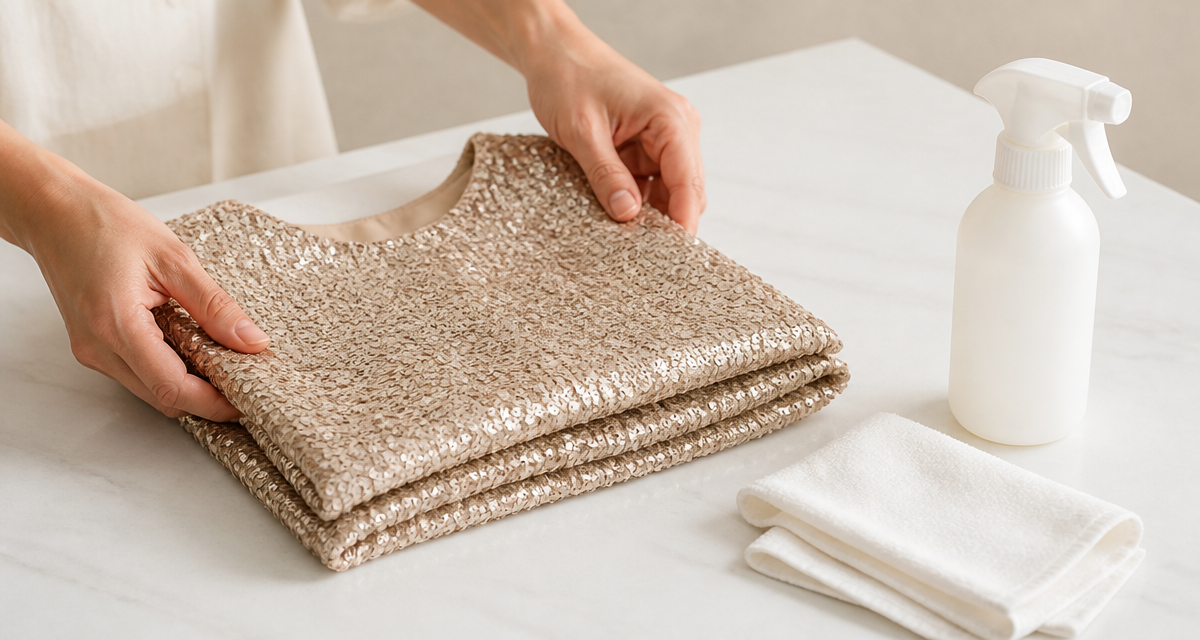
Sequin styles need extra care. A crease across a sequin panel can lift discs and leave a dull band, and pressing makes it worse. Consequently, hang the panel first and re-check after twenty-four hours. If the mark remains, the correct answer is usually a re-cut rather than heat. Our sequin fabric wash care protocol explains the handling rules that keep the surface intact.
FAQ: Decorative Fabric Fold Mark
How long should a fold mark take to disappear?
On most decorative woven styles, a light crease relaxes within a few hours of hanging. For heavy or decorated styles, allow up to twenty-four hours before judging.
Does roll packing prevent fold marks completely?
No. Roll packing removes flat-fold lines, but winding tension can still create a centre crease. Therefore, control tension and core size as well.
Can I steam out a fold mark on sequin fabric?
Only with great care. Steam can soften the sequin film, so hang the fabric first and use short bursts from a distance if steaming is unavoidable.
Should fold mark recovery be part of the quality standard?
Yes. Add it as a presentation standard with a time limit and a photo reference. Then both the supplier and the buyer inspect against the same document.
Where Decorative Fabric Fold Marks Actually Appear
Fold marks appear in four places, and each one has a different cause. The first is the centre line of a roll, which comes from winding tension. The second is the outer wrap, which takes pressure from the carton lid. The third is the fold line in a flat-packed bundle, which comes from the folding itself. The fourth is a random network of soft lines, which usually means the goods were pressed while stacked.
Each cause needs a different answer. Therefore, a single remedy rarely solves every crease. For example, a larger core removes the centre line but does nothing for a flat-pack fold. Similarly, a desiccant stops moisture setting a crease but cannot undo pressure that was applied weeks earlier.
Buyers should also separate transport marks from production marks. In practice, a crease that appears only in the top carton of a stack is a packing issue. In contrast, a crease that repeats on every roll points to winding or finishing. Naming the source early keeps the discussion factual.
Writing Fold Mark Recovery Into the Purchase Order
Start with the packing method, because it controls most of the outcome. Name roll packing or tube packing, then state the core size, the maximum stack height and the insert board position. Second, add the moisture protection requirement for the route. Third, state the recovery time standard in hours.
Then attach a photo reference. A picture of an acceptable crease and a picture of a reject removes most of the argument. Because decoration changes how a crease behaves, add a separate line for decorated zones on the same order. Finally, require that the first carton of every shipment is photographed before the container is sealed.
Agree the remedy as well. The cleanest option is a re-pack or a price adjustment for affected rolls, decided within an agreed number of days after arrival. If you would like help turning these points into a specification clause, our team can review your packing plan and suggest a standard that fits your route and your finishing line.
Conclusion: Set the Packing Method and the Recovery Time
Decorative fabric fold mark recovery improves when packing, tension and moisture are controlled together. Therefore, agree the packing method, the stack height and the recovery time in writing. Then check the first carton on arrival and confirm that the creases relax as promised.
Source decorative fabric packed to protect the surface
Compare roll packing, tube packing and carton options in one place.
Request Sequin Fabric Samples
Send your packing preference, core size and target style, and we will prepare a sample set for review.
Yunfan Textile B2B Contact
Contact: Morris
Email: morris@yunfantextile.com
WhatsApp: +86 156 3752 5803
WhatsApp: +86 175 1619 6727