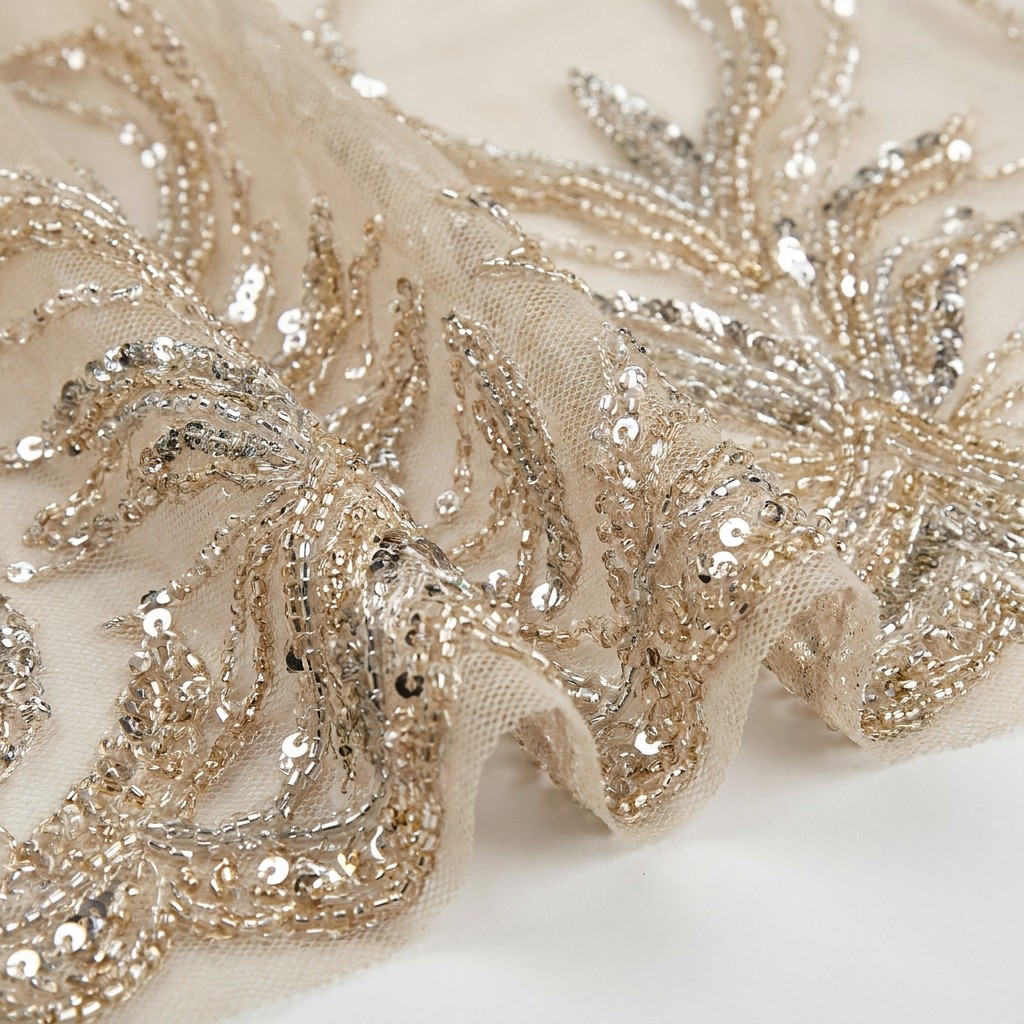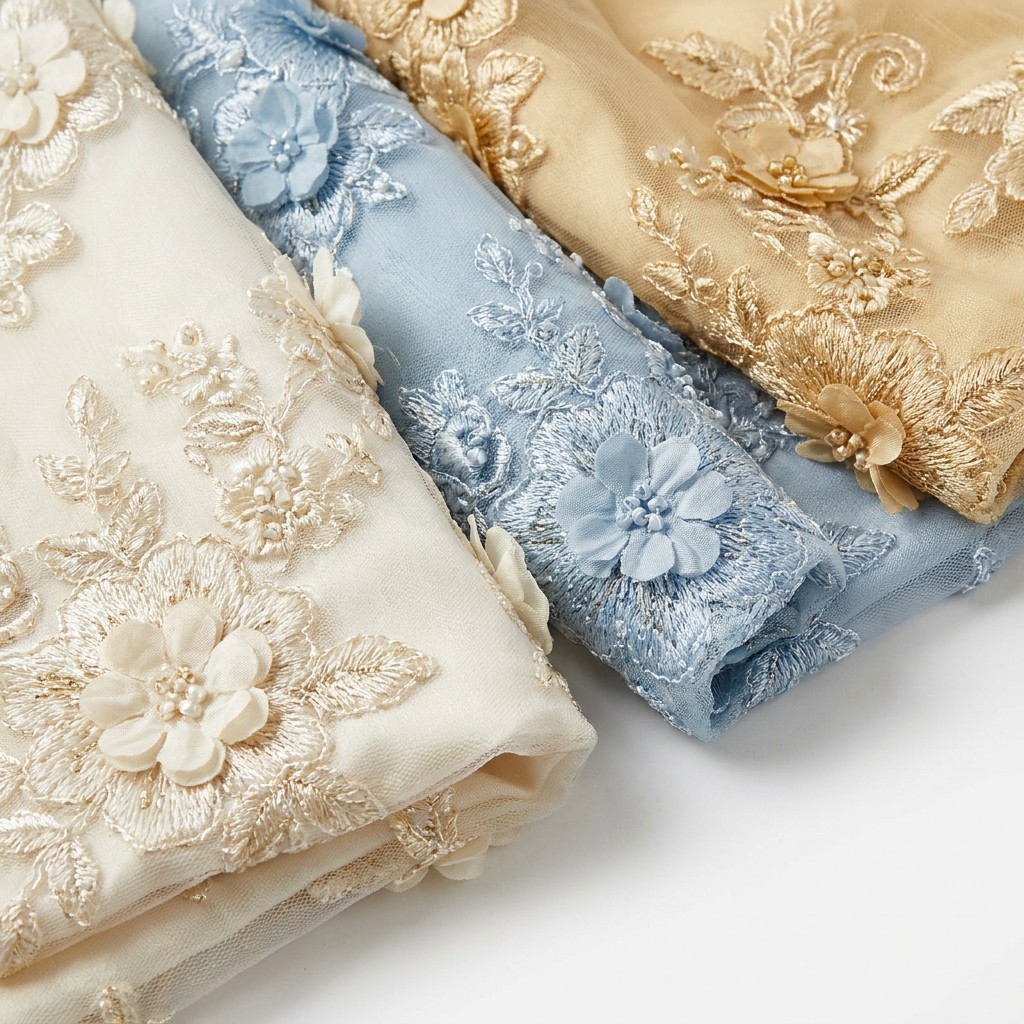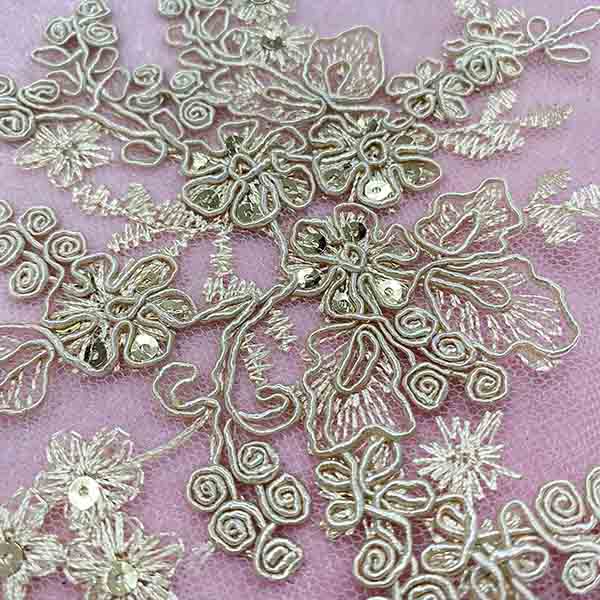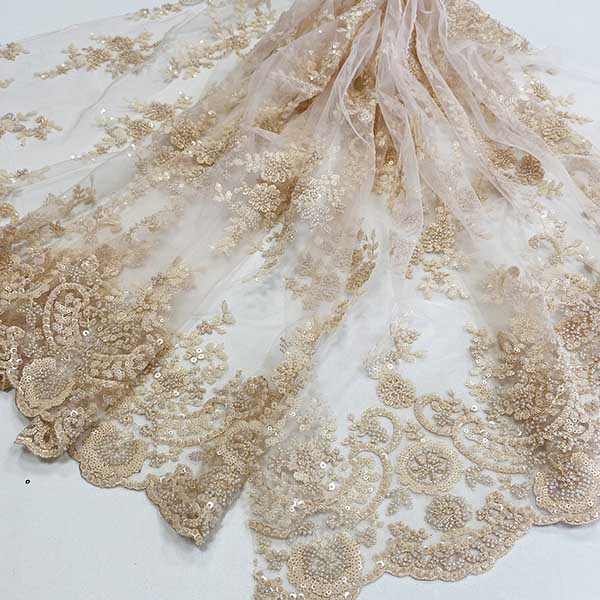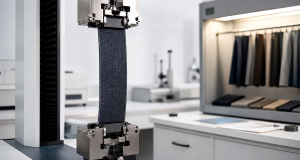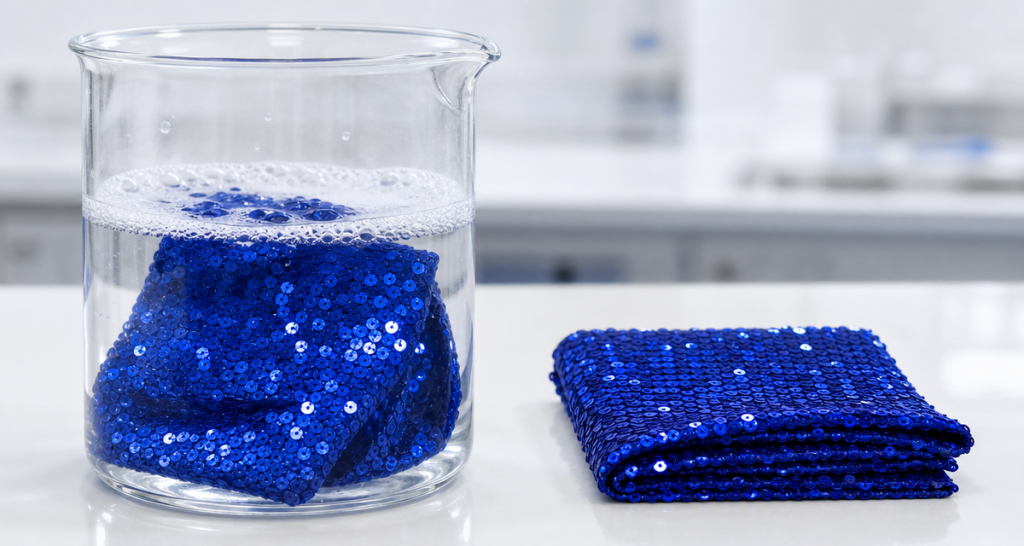
Embroidery color bleeding is the migration of dye from a thread, a base cloth or a stabiliser into an adjacent colour, and it turns a high-contrast design into a blurred one after washing or even after humid storage. For B2B buyers, the practical answer is to require a colour fastness test at sampling, keep dark threads away from pale grounds unless the fastness result supports the combination, and validate the whole composite through the care cycle that the finished product will actually face. Any thread that bleeds after one wash will bleed in the customer’s hands.
This guide explains the causes, the tests that reveal the problem, and the production controls that keep embroidery color bleeding out of bulk shipments.
What Is Embroidery Color Bleeding?
Embroidery color bleeding occurs when dye leaves one component of an embroidered fabric and transfers to another. The dye source is usually the embroidery thread, but it can also be the base cloth, a contrast piping, a stabiliser, a backing or even a wash-care label.
Migration appears in several forms. Cross-staining moves dye from a dark thread into a neighbouring light thread. Ground halo surrounds a dark motif with a faint tint on the base cloth. Back shadow shows through a light panel from a dark thread on the reverse. Transfer through storage occurs when rolls sit in humid conditions and dye migrates without any washing at all.
The mechanism is always the same. Dye molecules that are not properly fixed remain mobile in the fibre. Add water, heat or mechanical agitation and they travel. That is why bleeding is a fixation and process problem rather than a design problem, and why the same thread can behave perfectly in one order and fail in the next.
Contrast is what makes the fault visible. A design that mixes a deep navy thread with an ivory ground has nowhere to hide a small halo, while a tonal design may never show one. Buyers of embellished and embroidered decorative fabric should therefore treat every high-contrast design as a fastness priority, not as a routine line item.
Key Takeaways
- Any thread that fails a wash fastness test on the production ground will bleed; test the combination, not the components.
- High-contrast designs, pale grounds and dark threads are the highest-risk combinations.
- Dye migration can occur without washing if goods are stored warm and humid, so transit conditions matter.
- Heat, moisture and mechanical agitation accelerate bleeding; control all three in finishing and laundering.
- Record test results, thread lot numbers and shade references on the approved sample sheet.
Root Causes in Production
Insufficient dye fixation. Thread that has not been properly washed off after dyeing retains unfixed dye. This is the most common single cause and it is invisible in a dry swatch.
Colour contrast without assessment. Designers select threads on appearance alone. A fastness test should be run before a dark thread is placed next to a pale ground.
Stabiliser and backing chemistry. Some backings contain optical brighteners or reactive compounds that attack thread dye during washing and laundering.
Laundering conditions. Hot water, high detergent concentration and long agitation cycles increase migration. Where a care label permits machine washing, the specification must be validated against that route.
Storage and transit humidity. Rolls stored in uncontrolled conditions before shipment can develop transfer marks even though the fabric passed a laboratory wash test.
Mixed lots. Thread from a different dye lot may behave differently from the approved sample. Without lot control, a repeat order can fail where the original passed.
How to Prevent Embroidery Color Bleeding
Build these steps into sampling and production so the risk is closed before bulk.
- Map every colour contact point. Identify each place where a dark component touches a lighter one on the face or the reverse.
- Request colour fastness data. Ask the thread supplier for wash and rub fastness results before the design is approved.
- Test the full composite. Apply the intended care cycle to a sample built on the production ground with the production backing.
- Add a wet bleed test. Sandwich the embroidered sample between white fabric layers, wet it and apply heat, then check for transfer.
- Inspect after the first wash. Grade cross-staining, halo and back shadow separately against an approved reference.
- Freeze thread and backing lots. Keep the approved thread lot, backing and stitch file locked for the life of the style.
- Control storage and packing. Keep goods dry, avoid heat and use a moisture barrier for humid routes.
Risk Combination Table
| Combination | Risk Level | Recommended Action |
|---|---|---|
| Dark thread on pale ground | High | Wash fastness test before approval |
| Multi-colour design with red or navy | High | Wet bleed test on the composite |
| Light thread on dark ground | Medium | Check back shadow and reverse appearance |
| Tonal same-family palette | Low | Routine fastness confirmation |
| Embellished film plus pale base | Medium | Confirm film and adhesive do not transfer dye |
Where a design uses several contrasting colours, consider sequence as well as chemistry. Embroidery runs colour by colour in a fixed order, and thread that is steam-set during production may behave differently from thread that is not. Recording the sequence on the approved sample sheet allows a repeat order to be reproduced exactly. Our embroidery fabric section reviews the main grounds and their behaviour under washing.
Testing and Inspection Checklist
| Field | What to Record |
|---|---|
| Thread references | Shade code, lot number and supplier for every colour |
| Base cloth | Construction, colour, dye lot and finish |
| Backing and stabiliser | Type, weight and removal method |
| Fastness test | Method, conditions and result per colour |
| Wet bleed test | Conditions, transfer result and photographic record |
| Care cycle | Temperature, detergent and agitation applied |
| Grade | Cross-staining, halo and back shadow scores |
| Approved sample | Reference number, date and retained swatch |
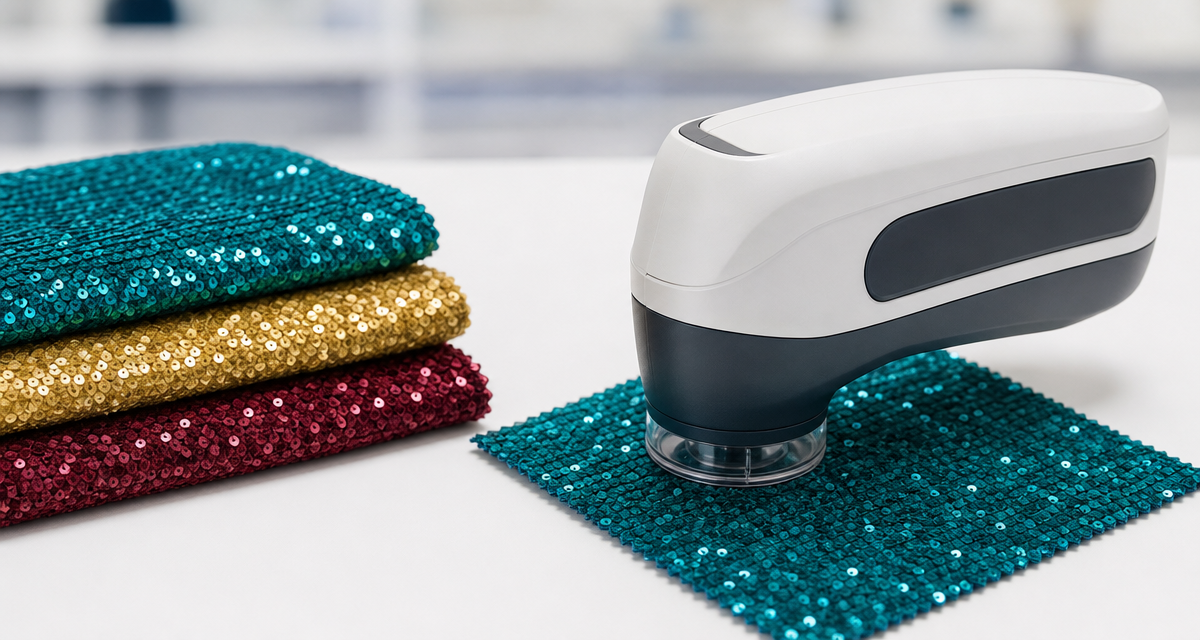
Instrumental measurement is worth adding to visual grading on dark and saturated palettes. A spectrophotometer reading before and after the care cycle quantifies a shift that the eye may only register as “slightly flatter”. Numeric evidence also gives the supplier an unambiguous target to correct against, which shortens the loop between complaint and fix. Our quality control resources explain how these readings are integrated with the rest of the inspection report.
Fixing Bleeding After It Happens
Post-production remedies are limited and should be treated as damage control rather than repair. Rewashing at low temperature with a dye-transfer inhibitor can reduce surface staining on a small number of pieces, but it cannot restore the original contrast across a bulk order.
The realistic options are sorting, where affected pieces are separated from clean goods, and re-embroidery of critical panels. Both are expensive, which is why the fastness test belongs at the sampling stage. When a failure does occur, gather the evidence, define the affected roll or batch numbers precisely, and agree the remedy before shipping rather than after arrival. Photographs with roll identification and elapsed time are far more persuasive than a written description.
Buyers sourcing embroidered and embellished textiles from China can reduce risk by working with a factory-direct partner such as Yunfan Textile on Alibaba that runs fastness checks on the composite and reports results with the shipment.
FAQ: Embroidery Color Bleeding
Why did my embroidery bleed only after the second wash?
Unfixed dye is released gradually. The first wash removes the loosest material, and the second attacks dye that is bonded more weakly than the rest. A single wash test is therefore not sufficient evidence of fastness.
Is bleeding caused by the thread or the fabric?
Either can be responsible. Dark base cloth under a pale thread causes back shadow, while a poorly fixed dark thread causes cross-staining. Testing the composite identifies which component is at fault.
Can colour bleeding happen without washing?
Yes. Warm, humid storage or transit conditions allow unfixed dye to migrate between layers. Moisture barriers and dry packing are genuine preventive measures, not just logistics detail.
Which colours are highest risk?
Deep saturated shades, especially navy, black, deep red and bright turquoise, carry the highest migration risk, particularly next to white, ivory or pale pastel grounds.
How can I test fastness cheaply before bulk?
Build a small sample on the production ground with the production backing, wash it at the intended care temperature with a white fabric layer beside it, then inspect the white layer and the pale areas for transfer.
Conclusion: Test the Contrast Before You Sell It
Embroidery color bleeding is predictable, testable and almost entirely preventable, provided the risk is assessed while the design is still a sample rather than after the container has sailed. Map the contact points, test the composite, freeze the lots and control storage.
Ready to validate a high-contrast design on the fabric you intend to buy? Request Sequin Fabric Samples and tell us your thread palette and care instructions.
Contact Morris at morris@yunfantextile.com, or message WhatsApp: +86 156 3752 5803 or +86 175 1619 6727. Our marketplace storefront is yunfantextile.en.alibaba.com.