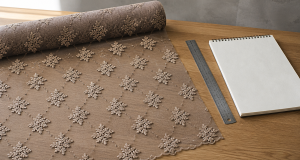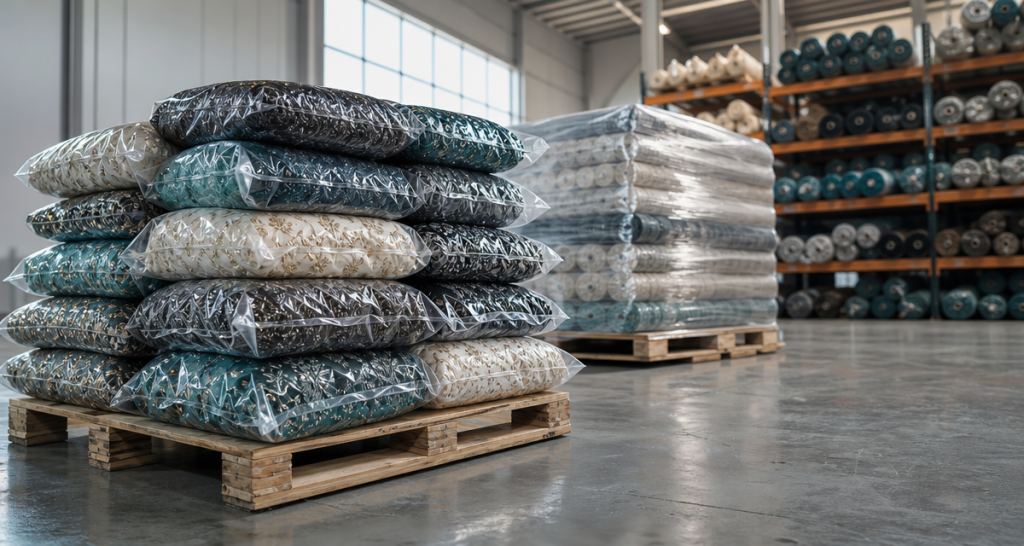
Decorative fabric packaging standards define how a roll is wound, wrapped, labelled and loaded so that an embellished or decorative textile arrives in the same condition it left the inspection table. For B2B buyers, the practical baseline is a firm roll wound on a rigid core with the face protected, a moisture barrier inside, a printed label carrying roll number, width, length, shade and batch, and a packing list that matches the shipment. Everything beyond that baseline is a response to climate, transit mode or the sensitivity of the decoration.
This guide sets out the roll specifications, labelling fields, protection layers and inspection checks that prevent transit damage on decorative fabric orders.
What Are Decorative Fabric Packaging Standards?
Decorative fabric packaging standards are the agreed set of requirements that govern how fabric is prepared for storage and shipment. They cover four areas: roll formation, protection materials, identification and unitisation.
Roll formation covers core type and diameter, winding tension, roll diameter and the direction of the face. Protection covers the inner liner, outer wrap, end caps and moisture barrier. Identification covers the roll label and the carton or bale mark. Unitisation covers how rolls are stacked, palletised, strapped and loaded into the container.
Standards matter more for embellished and decorative fabric than for plain goods because the decoration is fragile in specific ways. Sequins snag on rough surfaces and press marks appear under heavy stacking. Embroidered surfaces can be crushed or abraded by adjacent rolls. Foil and coated finishes mark permanently when the face rubs against a hard edge. Packaging is therefore a protective engineering step, not an afterthought.
Key Takeaways
- Winding tension must be light and even; tight rolls cause permanent creasing and set marks on sequin and embroidered fabric.
- Use a rigid core, a moisture barrier and a face-protecting liner on every export roll.
- Label every roll with number, width, length, shade, batch and gross weight; label accuracy is a buyer right, not a courtesy.
- Match the packaging specification to the transit mode, seasonal humidity and container loading plan.
- Inspect packaging as a separate line on the pre-shipment report, with photographs of every roll end.
Roll Specifications That Protect the Goods
The roll is the first defence. Four parameters do most of the work.
Core type and diameter. A rigid kraft or plastic core prevents the roll collapsing under its own weight. Larger inner diameters reduce the curvature set that develops in the outer layers, which matters for stiff decorative fabric and for laminated constructions.
Winding tension. Light, even tension keeps the fabric relaxed. Over-tensioned rolls develop crease lines that survive steam and reappear in the finished product. Under-tensioned rolls telescope and damage the selvedges during handling.
Face direction. Decide whether the decorative face is wound inwards or outwards and keep it consistent. Inward winding protects the face but increases surface friction on stiff goods; outward winding suits delicate sequins that must not rub against the core.
Roll diameter and weight. Keep rolls within a weight that a single person can handle safely and that fits the packing case without pressure points. Oversized rolls look efficient on paper and generate damage in practice.
Where a decorative fabric contains a laminated layer, add a note that rolls must not be stacked flat for extended periods. Adhesive layers can creep under sustained pressure, producing a visible ridge along the fold line. For base cloth and construction context, see our sequin fabric library.
How to Build a Packaging Specification
Use these steps to define the packaging specification for any decorative fabric order.
- State the destination and transit mode. Sea freight, air freight and road transport each impose different moisture and handling risks.
- Define the roll configuration. Core material and diameter, winding tension, face direction and maximum roll weight.
- Select protection layers. Inner liner against the fabric face, moisture barrier, outer wrap and protective end caps.
- Set the labelling format. Agree the exact fields, language, label material and placement on the roll end.
- Define the unitisation plan. Pallet size, stacking orientation, strap positions and container loading diagram.
- Add the inspection requirement. Packaging checked as a separate item on the pre-shipment report with photographic evidence.
- Approve a packing sample. Have one roll packed to specification and approved before bulk packing begins.
Packaging Layer Comparison
| Layer | Purpose | Typical Material | Failure If Omitted |
|---|---|---|---|
| Inner liner | Protects decorative face | Soft tissue or non-woven | Surface abrasion and snagging |
| Moisture barrier | Blocks humidity during sea freight | PE or VCI film | Mildew, spotting, dye migration |
| Outer wrap | Holds the roll and resists dirt | Woven PP or heavy PE | Edge damage and contamination |
| End caps | Protects selvedge and roll ends | Rigid board or foam | Crushed ends, unusable first metres |
| Pallet and straps | Stabilises the load | Export-grade pallet, PET strap | Shifting, pressure marks, claims |
Buyers shipping to humid or monsoon-season destinations should add a desiccant policy and specify that container doors are not opened during transit. Condensation inside a sealed container can do more damage in two weeks than a year of warehouse storage. Our sourcing guide covers how to align packing requirements with the shipping schedule.
Label and Data Requirements
A roll without a label is unverifiable on arrival. Require the following fields on every roll.
| Field | What to Record |
|---|---|
| Roll number | Unique reference linked to the inspection record |
| Article / style | Buyer style code and supplier article code |
| Width | Measured width in centimetres |
| Length | Measured length in metres or yards |
| Shade / lot | Dye lot or shade band reference |
| Batch | Production batch and date |
| Gross weight | Weight of the packed roll |
| Care and handling | Keep dry, do not stack flat, handle by core |
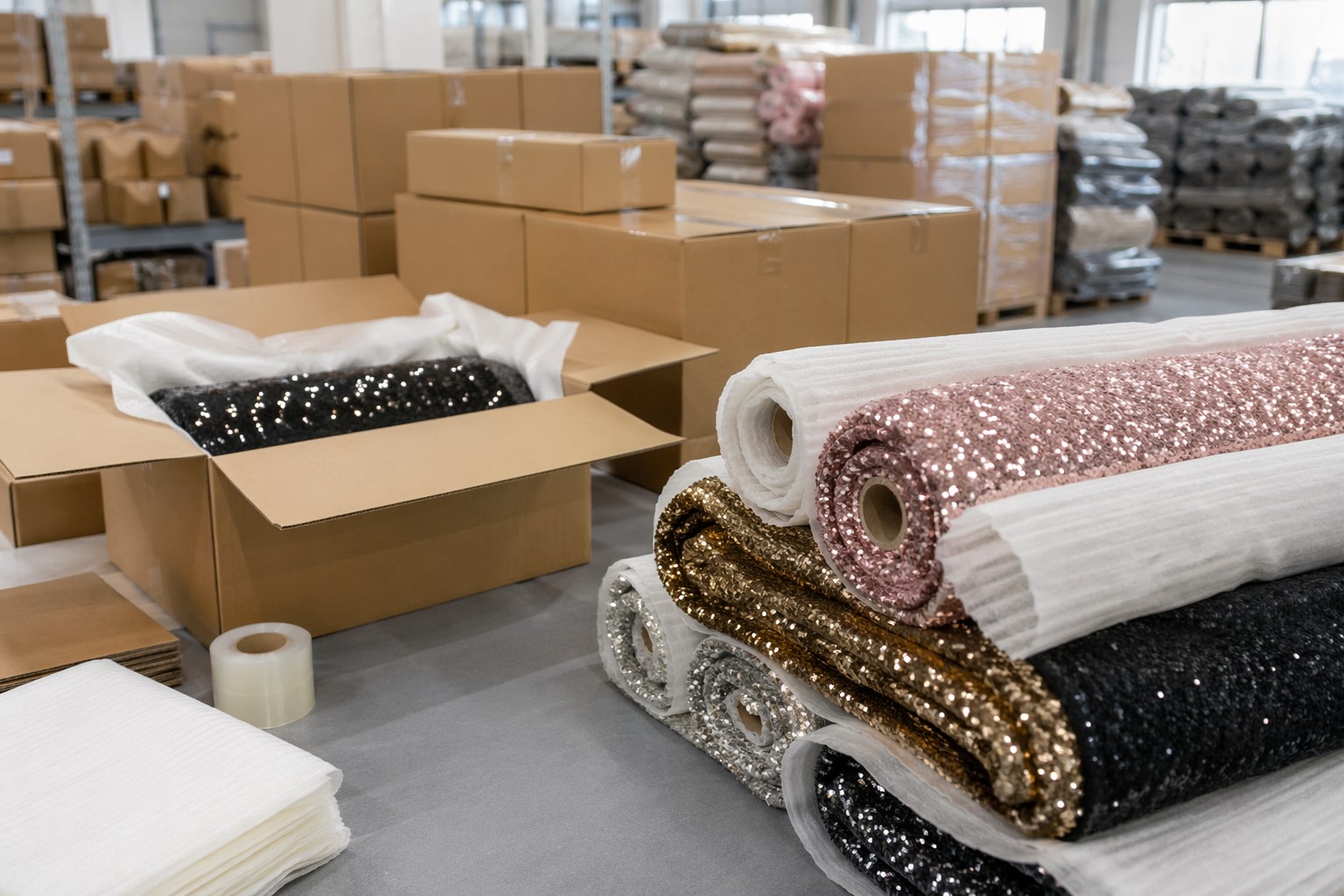
Label accuracy deserves a specific inspection line, because mismatched length or shade data is a commercial problem rather than a visual one. A roll labelled 50 metres that measures 47 metres will be discovered at the cutting table, when the schedule has already been set. Measuring every roll at packing and recording the true figure is a simple control that prevents this entirely.
Packaging Inspection Checklist
Add the following checks to the pre-shipment inspection and record pass or fail against each roll.
- Core is rigid, dry and free from splitting or contamination.
- Roll is wound evenly with no telescoping, slack layers or protruding selvedge.
- Face is protected and shows no press marks, snagging or abrasion.
- Moisture barrier is intact and correctly sealed at both ends.
- End caps are fitted and undamaged.
- Label is present, legible and matches the packing list.
- Measured length and width agree with the labelled figures.
- Pallet build matches the approved loading diagram.
- Photographs taken of roll ends and the loaded container.
Two environmental checks complete the picture. Confirm the packing area humidity at the time of packing, and confirm the container was dry and odour free before loading. Moisture damage and odour contamination are extremely difficult to remedy after arrival. For buyers sourcing decorative textiles from China, a factory-direct partner such as Yunfan Textile on Alibaba can pack to a documented specification and supply the photographic record with the shipment.
FAQ: Decorative Fabric Packaging Standards
Should decorative fabric be rolled or folded?
Rolled, for almost every decorative and embellished fabric. Folding creates permanent crease lines and, on laminated or coated goods, visible set marks that do not recover.
What is the best moisture protection for sea freight?
A sealed polyethylene or VCI liner around the roll, plus desiccant where the route passes through humid conditions and the container will not be opened until arrival.
How heavy should a roll be?
Heavy enough to be stable, light enough to be handled safely by one or two people. Agree a maximum weight with your supplier and keep it consistent across the order.
Do I need different packaging for air freight?
Air freight is faster and drier, so the moisture barrier can sometimes be lighter, but handling is rougher. Keep the rigid core, outer wrap and end caps in place and reduce only the desiccant.
How should packaging defects be recorded?
Photograph every roll end, note the roll number, and record the defect as a separate inspection item rather than folding it into general quality comments. Clear evidence supports a claim far better than a summary sentence.
Conclusion: Packing Is Part of the Product
Decorative fabric packaging standards decide whether an order arrives sellable. Specify roll formation, protection layers, labelling and unitisation in writing, inspect packaging as its own quality line, and keep photographic evidence with every shipment.
To review roll formats and protective packing options for your own product, Request Sequin Fabric Samples and include your destination port and transit mode.
Contact Morris at morris@yunfantextile.com, or message us on WhatsApp: +86 156 3752 5803 or +86 175 1619 6727. Our marketplace storefront is at yunfantextile.en.alibaba.com.