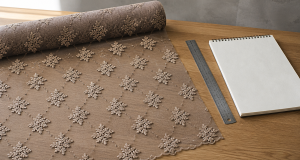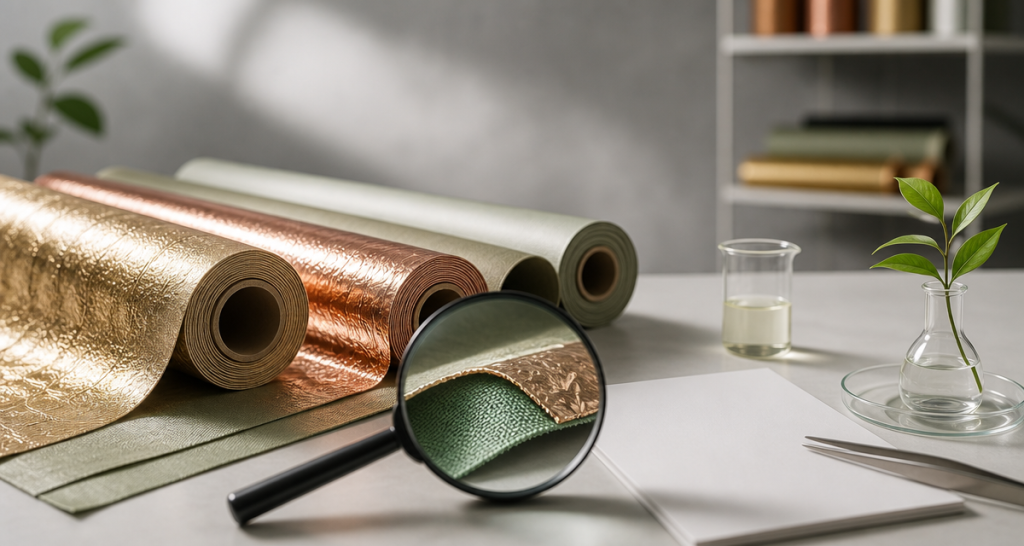
Sequin fabric lamination bonding is the process that joins sequins, foil or a decorative film to a base cloth using heat and adhesive instead of stitching. The practical answer for B2B buyers is straightforward: specify the adhesive chemistry by end use, require a peel and wash test on the production combination, and confirm bonding strength on the first, middle and last roll of every lot. A bonded construction that passes at sampling but fails after three washes is almost always a process control problem, not a design problem.
This guide explains the main bonding routes, the parameters that decide durability, and the checks that protect a bulk order.
What Is Sequin Fabric Lamination Bonding?
Sequin fabric lamination bonding is a finishing process in which a decorative layer is attached to a base cloth with a heat-activated adhesive film, powder or web. The adhesive is melted under controlled temperature, pressure and dwell time, then cooled to form a permanent bond.
It differs from embroidery or stitching in three important ways. First, there is no thread, so the decorative layer is held by adhesive rather than mechanical attachment. Second, the bond is continuous across the surface rather than localised at stitch points, which changes drape and hand feel. Third, failure modes are different: instead of thread breakage, buyers see edge lift, bubbling and delamination after laundering or dry cleaning.
Three bonding systems dominate in commercial embellished textiles. Hot-melt film bonding uses a thermoplastic film that melts and re-solidifies, offering clean edges and controlled thickness. Powder bonding applies a scattered adhesive powder through a dot or random pattern, which is softer but needs careful coverage. Web bonding uses a non-woven adhesive web, common where breathability matters. The correct choice depends on the decorative layer, the base cloth and the care instructions the finished product will carry.
Key Takeaways
- Bonding strength is set by four parameters: temperature, pressure, dwell time and adhesive weight.
- Specify one adhesive system per style and freeze it; switching adhesive mid-order is the most common cause of delamination.
- Require peel and wash tests on the exact composite, not on the adhesive alone.
- Bonded sequin fabric is stiffer and less breathable than stitched sequin fabric, which changes drape and comfort.
- Inspect every roll for edge lift, bubbles and adhesive strike-through before shipping.
Why Bonding Quality Decides Returns
A bonded embellishment fails in service, not in the warehouse. Edge lift appears first, usually at the boundary of a motif or a cut panel, where the adhesive has the least material to grab. Then the film curls, catches on clothing and eventually peels away.
Laundry exposure accelerates every weakness. Heat softens a marginal adhesive, mechanical action works the corners, and detergent chemistry attacks a poorly matched system. Where care instructions permit washing, the bonding specification must be validated against that wash route rather than against a gentle hand wash.
Bonding also changes the fabric itself. A continuous adhesive layer restricts movement, so drape becomes firmer and stretch reduces. For a structured shoulder or a rigid decorative panel this is an advantage. For a flowing garment panel it is a defect, and buyers who treat bonding as a pure attachment step often discover the drape change too late. Our sequin fabric resources explain how base cloth selection interacts with bonding for each product family.
How to Specify Sequin Fabric Lamination Bonding
Work through these steps before confirming any bonded style.
- Define the end use and care route. State whether the product will be hand washed, machine washed, dry cleaned or used without laundering.
- Choose the adhesive system. Select hot-melt film, powder or web according to the decorative layer, base cloth and care route.
- Set process parameters. Record lamination temperature, roller pressure, dwell time and cooling conditions.
- Run bonding trials. Produce at least three trial panels at the top, middle and bottom of the operating window.
- Test peel strength. Measure bond strength at room temperature and again after the specified care cycle.
- Assess hand feel and drape. Compare the bonded composite against the unbonded base cloth and confirm the change is acceptable.
- Freeze and document the specification. Attach the parameters, adhesive reference and trial report to the purchase order.
Bonding Method Comparison
| Method | Strengths | Limitations | Typical Use |
|---|---|---|---|
| Hot-melt film | Clean edges, even thickness, strong bond | Firmer hand, needs tight process control | Precision motifs, panels, foil effects |
| Powder | Softer hand, good breathability | Variable coverage, lower peel strength | Lighter decorative layers |
| Adhesive web | Flexible, breathable, easy handling | Lower bond strength, lint risk | Soft furnishings, light drape |
Whichever route is selected, the composite must be tested as a system. An adhesive that performs well on one base cloth can under-perform on another because surface energy, moisture content and finish chemistry all change how the bond forms. Our manufacturing notes describe how bonding trials are scheduled alongside embroidery in a single production plan.
Bonding Quality Checklist and Data Fields
| Field | What to Record |
|---|---|
| Decorative layer | Sequin type, film thickness, foil or flock reference |
| Base cloth | Construction, weight, finish, colour and lot |
| Adhesive | Chemistry, weight in grams per square metre, supplier reference |
| Process window | Temperature, pressure, dwell time, cooling method |
| Peel test | Method, force result and pass limit |
| Wash test | Care cycle applied and result after cycling |
| Hand feel | Comparison against unbonded reference |
| Visual standard | Edge lift, bubble and strike-through limits |
| Roll identification | Batch and roll numbers with inspection result |
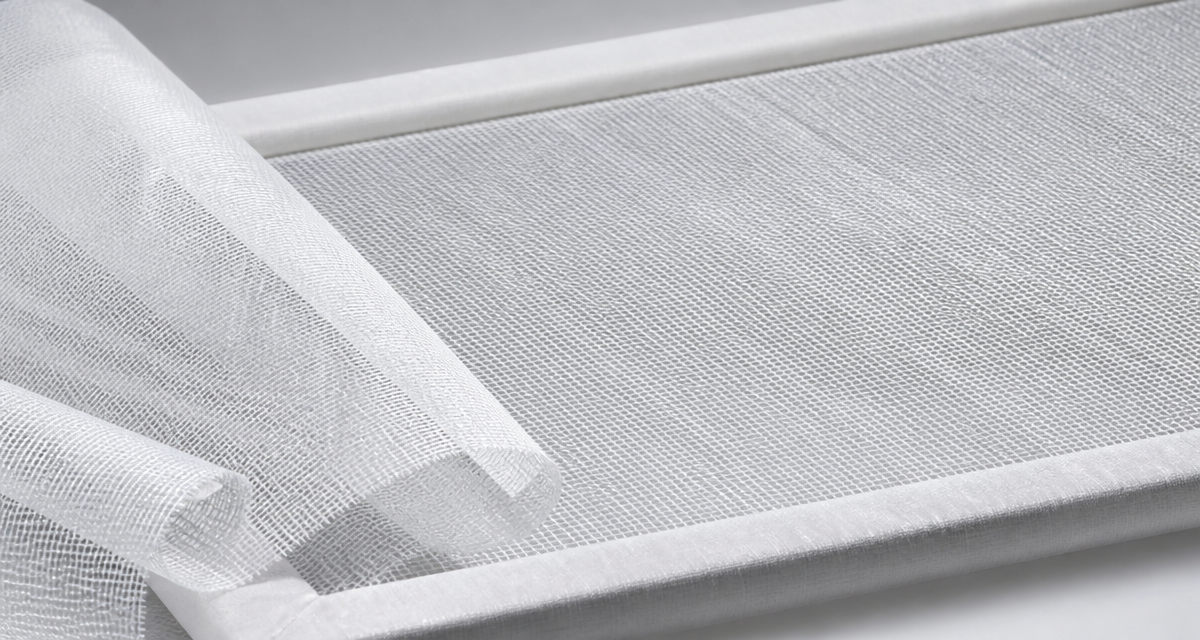
Three inspections catch most failures. First, check the roll surface for bubbles immediately after cooling. Next, inspect the cut edge. A clean edge indicates a fully cured bond, while a frayed or lifting edge points to under-curing. Finally, examine a folded panel after twenty-four hours. Adhesive that is still migrating will show a visible ridge along the fold.
Common Failure Modes and Fixes
Edge lift. Usually under-curing or insufficient pressure at the roller edge. Increase dwell time slightly, verify roller crown and pressure distribution, and re-test.
Bubbles and blisters. Moisture trapped in the base cloth or adhesive. Pre-dry the base cloth, control ambient humidity in the bonding room, and check the adhesive storage conditions.
Adhesive strike-through. Too much adhesive weight or too high a temperature. Reduce adhesive weight, lower temperature, and confirm that the base cloth weight suits the selected system.
Peel failure after washing. Incorrect chemistry for the care route. Switch to a wash-resistant system or amend the care label, and re-run the wash test on the new combination. Our quality control material explains how these results are documented for shipping.
Working With a Bonding Partner
Ask three questions before you place a bonded order. Which adhesive suits this base cloth? What did the trials show across the process window? How is the bond checked on every roll? A supplier who answers with data is easier to work with. Therefore, always ask for the retained trial panels. A physical reference is the only reliable way to compare a later batch with the approved composite.
- Confirm the adhesive chemistry in writing.
- Keep trial panels from the top, middle and bottom of the process window.
- Re-test after the specified care cycle, not only before it.
FAQ: Sequin Fabric Lamination Bonding
Is bonded sequin fabric as durable as stitched sequin fabric?
For surface coverage, a well-controlled bond can be very durable, and it avoids needle holes in delicate films. For very high flex areas, stitched construction is generally more forgiving. The right answer depends on the end use and the care route.
Can bonded sequin fabric be washed?
Only if the adhesive system was chosen for washing and the wash test was run on the finished composite. Where the care route is unclear, specify dry clean only and validate that route instead.
Does bonding affect drape?
Yes. A continuous adhesive layer stiffens the base cloth and reduces stretch. Always compare the bonded composite against the unbonded base cloth before approving the style.
How do I check bond strength without a laboratory?
A controlled manual peel at a cut edge, plus a fold test after twenty-four hours and a wash test where applicable, will reveal most weaknesses. Formal peel testing is still recommended for high-value orders.
Can bonding be used with embroidery on the same panel?
Yes, but sequence matters. Complete bonding before embroidery where possible, so the embroidery is not exposed to bonding heat and pressure. Re-test the composite after both processes are finished.
Conclusion: Bond the Spec, Not Just the Fabric
Sequin fabric lamination bonding is only as reliable as the specification behind it. Define the care route, choose the adhesive system to match, control temperature, pressure and dwell time, and verify bond strength after the care cycle the customer will actually use.
To compare bonded and stitched constructions on your own base cloths, Request Sequin Fabric Samples and share your care instructions with the enquiry.
Contact Morris at morris@yunfantextile.com, or message WhatsApp: +86 156 3752 5803 or +86 175 1619 6727. Marketplace buyers can also reach us at yunfantextile.en.alibaba.com.