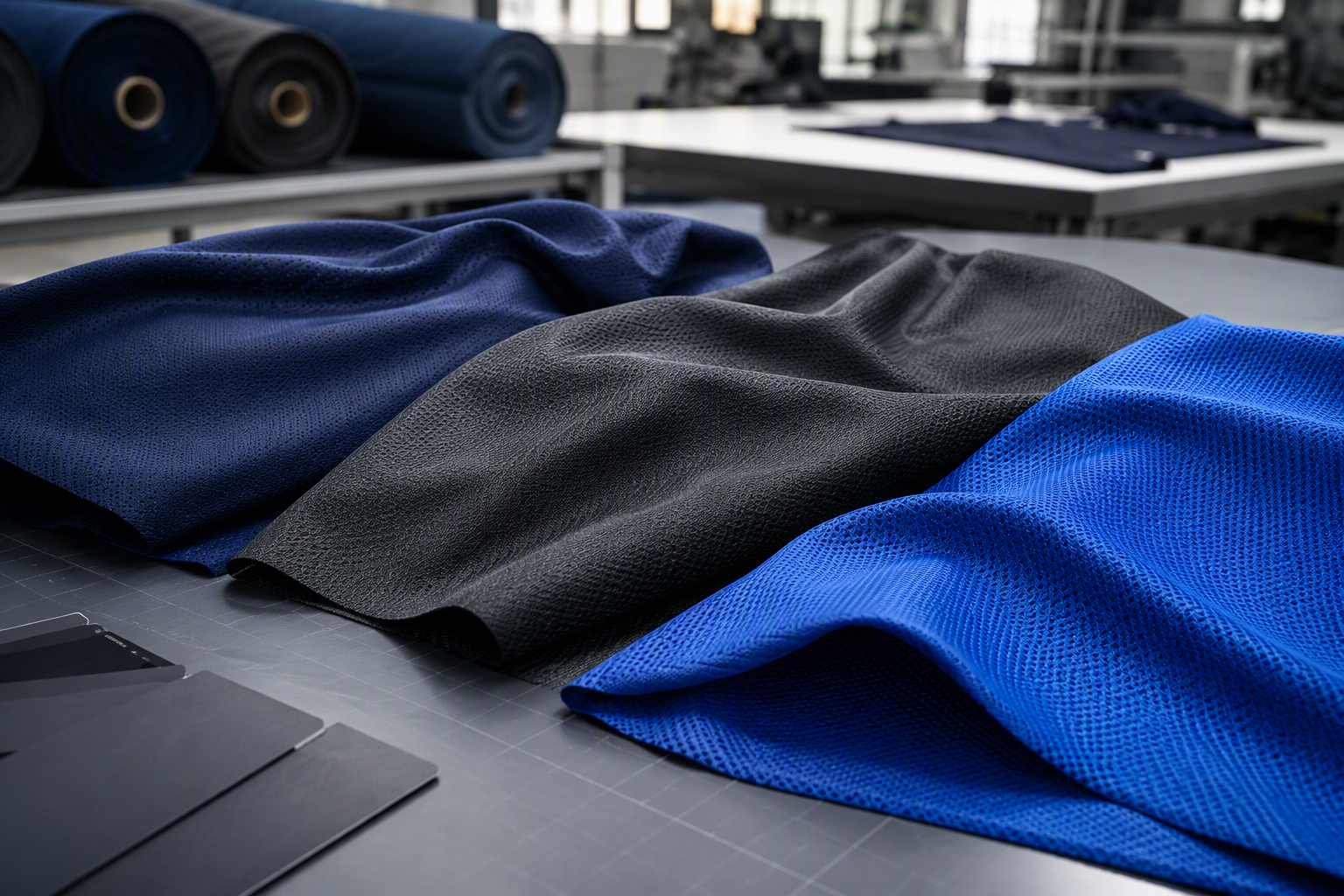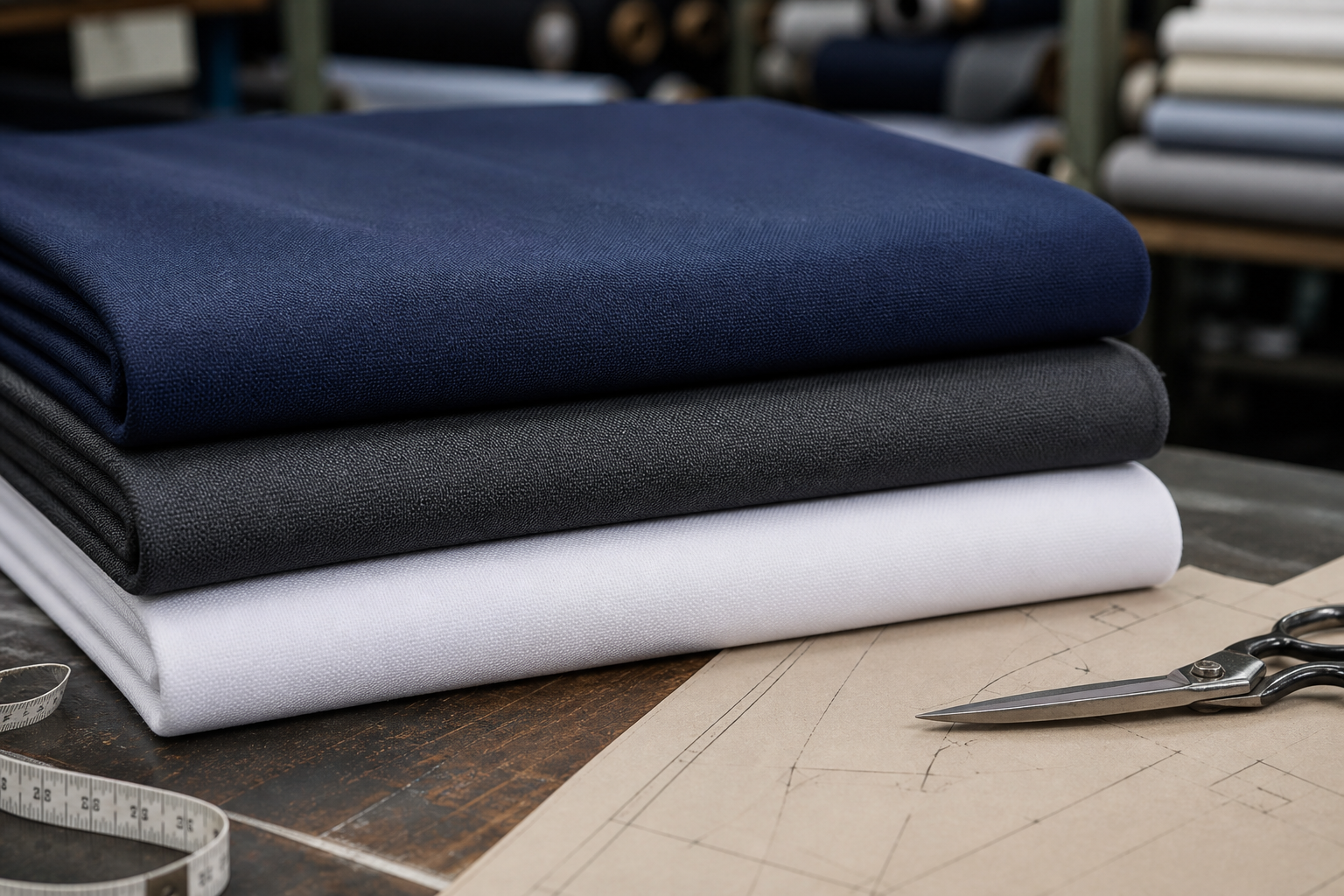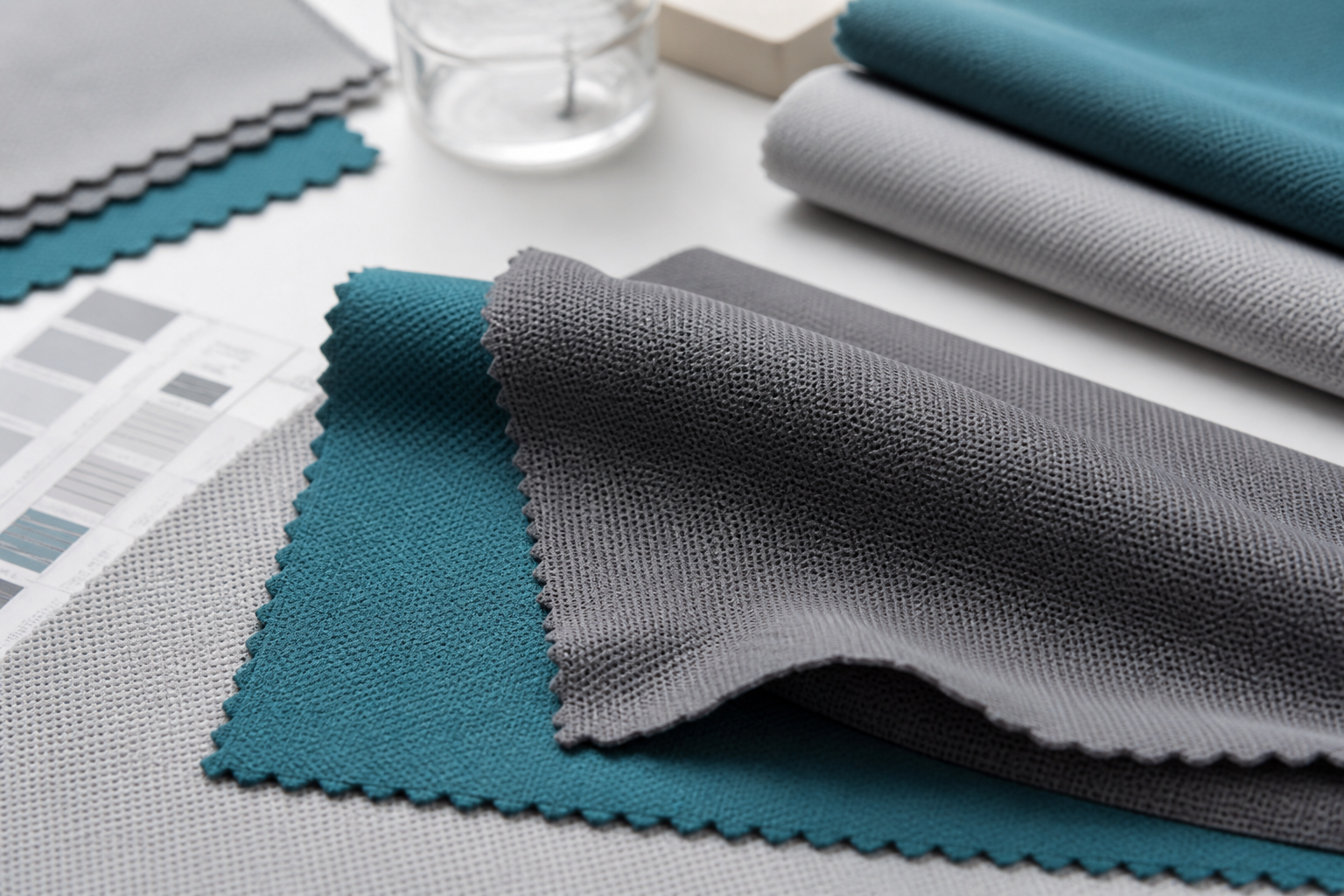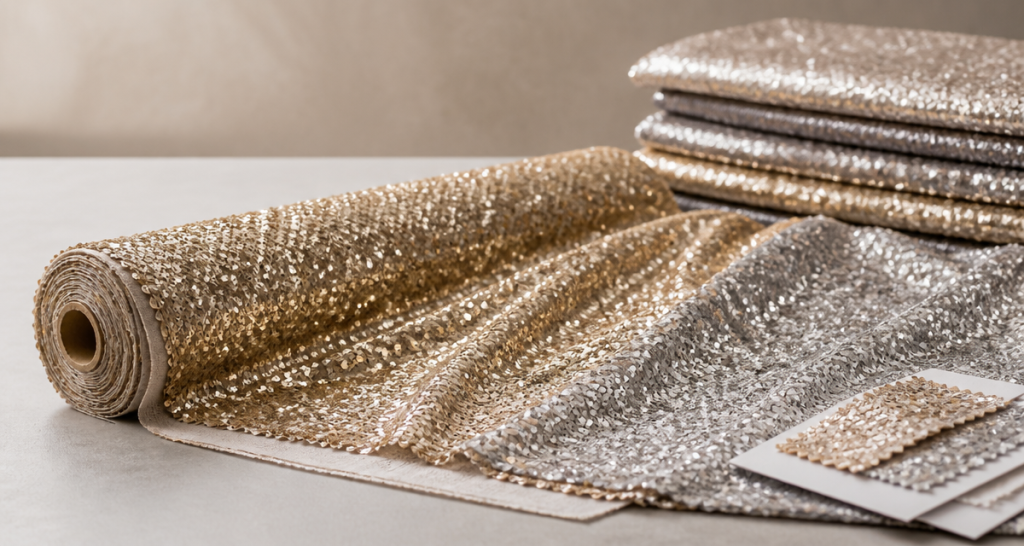
Fabric grainline alignment is the relationship between the warp and weft threads of a decorative fabric and the pattern piece placed on it - and getting it wrong is one of the most common causes of a garment or furnishing product that hangs badly after all the fabric checks have passed. If the yarns are not square, panels twist, seams ripple and prints run off register even when the fabric itself meets every other specification. For B2B buyers, fabric grainline alignment is verified with two simple tools and one written tolerance: a steel rule and a square for measurement, and a maximum bow and skew allowance on the purchase order. This guide covers the definitions, the measuring method, the acceptance fields and the controls that keep grainline alignment reliable at bulk volume.
Key Takeaways
- Grainline alignment is measurable - bow and skew are expressed as a percentage of fabric width, not judged by eye.
- Off-grain fabric wastes usable yield because pattern pieces must be shifted to avoid the distorted area.
- Decorative and stretch fabrics show grain faults faster than plain wovens because distortion affects drape and print register.
- Alignment can shift during dyeing, finishing, heat setting and after washing, so it needs measuring more than once.
- A written maximum bow and skew figure is what turns a complaint into a claimable non-conformance.
- Checking at roll intake is far cheaper than discovering the fault on the cutting table.
What Is Fabric Grainline Alignment?
Every woven or knitted fabric has a grain: the direction of the lengthwise warp yarns and the crosswise weft yarns. Grainline alignment describes how close those two yarn systems are to a right angle, and how straight each system runs relative to the selvedge. When both are true, the fabric is on-grain. When they are not, the fabric is off-grain.
In production, pattern pieces are laid so that a marked grainline runs parallel to the warp. That instruction only works if the fabric is square. If it is not, the finished piece twists in wear or in use, hems and borders run out of line, and matched patterns shift. Decorative fabric amplifies the problem because embellishment, embroidery and pattern repeats are all laid out relative to the grain.
Two measurements matter in practice. Bow is the curvature of the weft yarns across the width - the yarns follow an arc rather than a straight line. Skew is the angular deviation, where the weft meets the selvedge at something other than ninety degrees. A fabric can have either fault, or both at once.
Why Grainline Alignment Matters for Decorative Fabric
- Drape and hanging: an off-grain panel hangs asymmetrically, which is immediately visible on drapery and on flared garment shapes.
- Print and pattern register: prints and embroidery repeats skew with the grain, so motifs drift against seams and borders.
- Usable yield: distorted edges must be trimmed away, which reduces the usable width you are paying for - the same yield logic covered in our guide to checking fabric width and usable yield.
- Stretch behaviour: diagonal stretch is highest off-grain, so garments cut on a skewed fabric can grow in wear.
- Product consistency: two rolls with different bow and skew produce two different results from the same pattern.
How to Check Grainline Alignment: Step by Step
The check is quick, repeatable and requires no laboratory. What it does require is that you run it before cutting, and again after any finishing or wash stage.
- Condition and relax the roll. Let the roll relax flat for at least the time agreed with your supplier, because tension from winding distorts the measurement.
- Measure the actual usable width. Record it, since bow and skew are usually expressed as a percentage of width.
- Find the weft line. Pull a single weft yarn across the full width, or use a fluorescent thread laid along a weft line, to expose the true crosswise path.
- Measure bow. Take the maximum deviation between the weft line and the straight line joining the two selvedge points, then divide by the width to express it as a percentage.
- Measure skew. Measure the distance between the weft and a true square line at both selvedges and take the difference.
- Repeat at three positions. Check at the beginning, middle and end of the roll, because alignment can vary along the length.
- Compare to the agreed tolerance. Typical commercial allowances for decorative fabric sit in a low single-digit percentage of width; confirm the figure in writing.
- Re-check after finishing and after wash. Heat setting, printing and laundering all move the grain. Our note on decorative fabric stretch recovery testing explains how to pair this with elasticity checks.
Grain Faults Compared
| Fault | What it looks like | Main cause | Effect on production |
|---|---|---|---|
| Bow | Weft yarns arc across the width | Uneven tension and drying during finishing | Pattern pieces drift; borders run wavy |
| Skew | Weft meets selvedge at an angle other than 90 degrees | Uneven stenter or tenter control | Garments twist in wear |
| Off-grain | Warp and weft are not perpendicular overall | Weaving or finishing distortion | Poor drape, reduced usable yield |
| Twisted panel | Cut panel spirals when hung or worn | Combined bow and skew, plus stretch | Returns and rework on finished goods |
| Spirality in knits | Knitted tube or panel rotates | Yarn twist and knit structure | Seam displacement in soft garments |
Buyer Checklist: Grainline Fields for Your Purchase Order
| Field | Example value | Where to verify |
|---|---|---|
| Maximum bow | Low single-digit percentage of width | Roll inspection record |
| Maximum skew | Low single-digit percentage of width | Roll inspection record |
| Measurement position | Start, middle and end of roll | Measurement sheet |
| Conditioning time | Roll relaxed flat before measuring | Procedure note |
| Post-finishing re-check | Measured after heat setting or printing | Finishing record |
| Post-wash re-check | Measured after the agreed care cycle | Test report |
| Declaration | Supplier states measured values per lot | Lot certificate |
Common Mistakes That Hide Grain Problems
- Measuring a tensioned roll. Winding tension disguises both bow and skew, so the reading looks better than the real fabric.
- Checking one position only. Alignment often changes along a roll, particularly on the last metres.
- Using a visual check. A small skew is hard to see on a single layer and obvious once three hundred layers are cut.
- Ignoring the finishing stage. A roll that measures clean at intake can be distorted after heat setting or printing.
- No tolerance in the specification. Without a written figure there is nothing to measure against, and nothing to claim against either.
- Forgetting edge condition. A distorted edge and a skewed grain often travel together - check both, as described in our guide to checking decorative fabric edge quality before cutting.
FAQ: Decorative Fabric Grainline Alignment
What is a normal bow and skew tolerance?
For most decorative wovens, a low single-digit percentage of usable width is a workable commercial allowance, with tighter figures for printed and matched-repeat products. The exact number matters less than agreeing it before production and measuring against it consistently.
Can grainline alignment be corrected after weaving?
Partially. Re-stentering and re-setting can pull a fabric closer to square, but the correction is limited and can introduce other problems such as width change or altered hand feel. Prevention at the finishing stage is more reliable than correction afterwards.
Does grainline matter for sequinned and embroidered fabric?
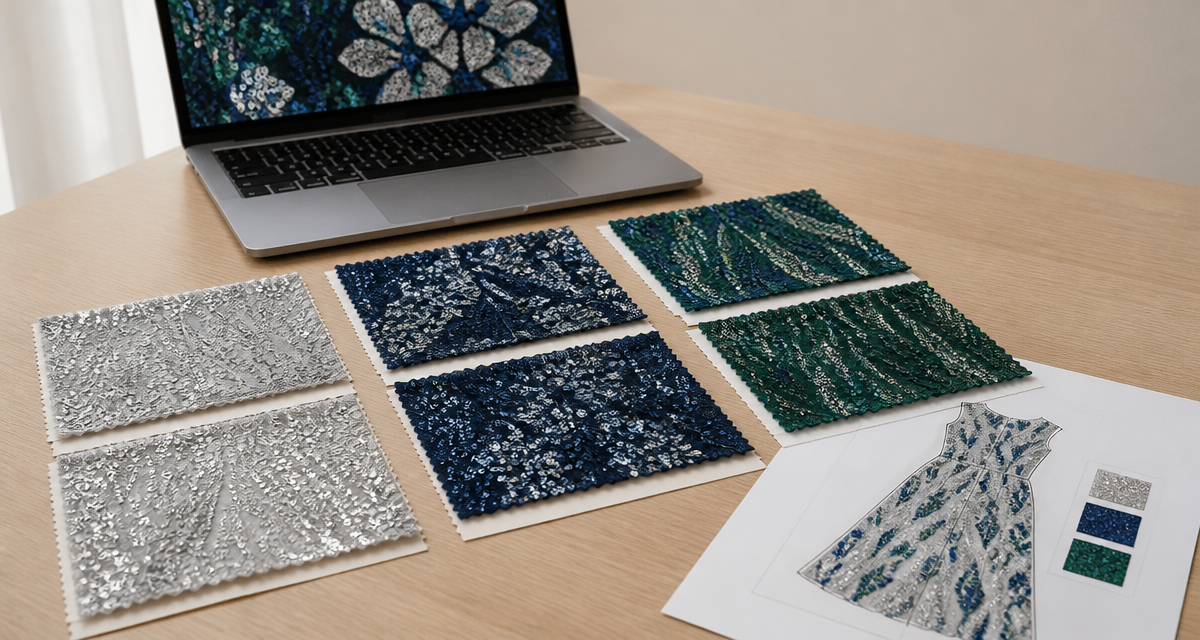
Yes, and often more than for plain fabric. Embellishment sits on a woven or knitted ground, so any distortion in the ground carries the sequins or embroidery out of line with it. It also interacts with panel orientation, which is why fabric panel direction should be specified alongside grain tolerance.
Should I measure grain before or after washing?
Both. Measure at intake to confirm the delivered fabric, then again after the agreed care cycle, because laundering can move the grain noticeably. If the fabric is garment washed, the post-wash measurement is the one the customer will experience.
Conclusion
Fabric grainline alignment is a cheap check with an expensive failure mode. Agree a bow and skew tolerance in writing, measure on a relaxed roll at three positions, re-check after finishing and after washing, and record the values per lot. That single discipline prevents twisted panels, drifting prints and wasted yield - and gives you a defensible basis if a shipment arrives off-grain.
Request Sequin Fabric Samples
Send us your end use and required grain tolerance and we will prepare decorative fabric and sequin swatches with measured bow and skew values so you can approve the construction with confidence.
Contact: Morris | Email: morris@yunfantextile.com | WhatsApp: +86 156 3752 5803 | WhatsApp: +86 175 1619 6727
Browse the full factory-direct range on our Alibaba International storefront.