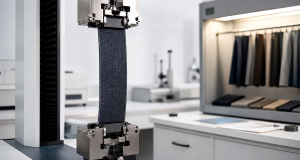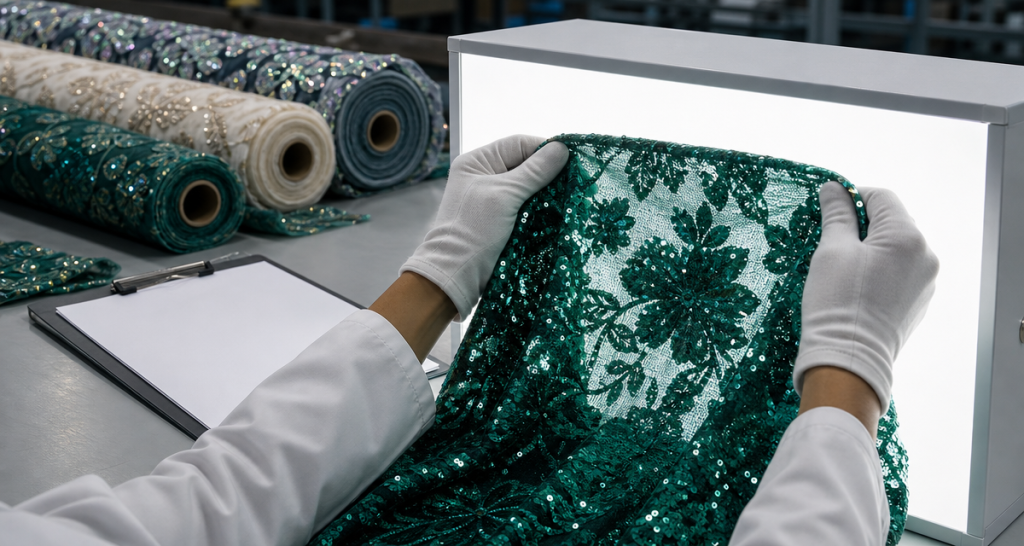
Sequin fabric abrasion resistance is the fastest way to predict whether an embellished garment, cushion or stage costume will still look premium after weeks of real wear. For B2B buyers, the practical rule is simple: specify 25,000 Martindale rubs or more for apparel and 30,000 to 50,000 rubs for upholstery and event textiles, then confirm that result on a pre-production sample before you commit to bulk. Below roughly 15,000 rubs, film coatings scuff, sequins dull and loose paillettes shed during ordinary handling.
This guide explains how the test works, which figures belong in a purchase order, and how to keep sequin fabric abrasion resistance stable across every roll in a container.
What Is Sequin Fabric Abrasion Resistance?
Sequin fabric abrasion resistance measures how well an embellished fabric resists surface wear caused by rubbing, folding and friction. Two surfaces are involved: the sequin itself, usually a coated PET or PVC film disc, and the base cloth that carries it, commonly a 40D mesh, chiffon, satin or tulle.
Wear appears in four distinct ways. Scuffing creates a dull, cloudy film surface. Coating loss rubs the mirror finish away until the sequin turns matte. Sequin detachment happens when thread or adhesive fails and the disc falls off. Base cloth fuzzing pulls broken filaments up through the surface. One number cannot describe all four, which is why experienced buyers pair a standard laboratory test with an in-house handling test.
It also helps to separate two buying scenarios. Decorative use, such as a backdrop or a table runner, is handled gently and rarely flexed at a seam. Wearable use, such as a bodice, a sleeve or a dance costume, sees constant friction against skin, zips, bags and seats. The same sequin fabric abrasion resistance figure can be perfectly adequate for one and clearly inadequate for the other, so the application must be stated on the enquiry.
Key Takeaways
- Target 25,000 Martindale rubs minimum for apparel, and 30,000 to 50,000 rubs for upholstery and contract textiles.
- Sequin material drives abrasion performance more than sequin size; coated PET film outlasts soft PVC film in most rub tests.
- Stitch density, thread type and base cloth weight decide whether a sequin stays attached after the film has already worn.
- Always test the exact base cloth plus sequin combination you intend to buy, never a similar-looking swatch from another supplier.
- Write the test method, rub count and pass or fail limit into the purchase order so the result is enforceable.
Why Abrasion Resistance Drives Return Rates
Returns are expensive for branded buyers because the cost is not the fabric alone. A single failed batch means rework labour, expedited freight, lost shelf space and a damaged trading relationship. In embellished categories, surface wear is one of the most common complaints, and it usually appears after two or three weeks of retail use, long after the goods have left the warehouse.
There is also a visual threshold. Sequins are bought for reflection, and reflection collapses quickly once the surface is scratched. A dulled sequin does not simply look older, it looks cheap, and shoppers read that as a quality failure rather than normal wear. That is why a rub test is a commercial tool, not a laboratory curiosity.
Finally, abrasion interacts with other specifications. A heavier base cloth improves rub performance but adds weight and reduces drape. A tighter stitch improves attachment but can stiffen the hand feel. Buyers who understand these trade-offs can brief a supplier precisely instead of accepting whatever the mill happens to run. For a wider view of specification writing, see our quality control resources.
How to Test Sequin Fabric Abrasion Resistance
Follow these steps to generate a result you can defend with your supplier and your customer.
- Define the end use first. State whether the fabric will be worn, sat on, washed or used as decoration. The end use sets the pass or fail limit before any testing begins.
- Select the test method. Choose Martindale for apparel and drapery, Taber for rigid or laminated surfaces, and Wyzenbeek where a US contract specification is required.
- Condition the sample. Let the swatch rest under standard textile conditions for at least four hours so humidity does not distort the result.
- Run the rub cycles. Test to a fixed cycle count and inspect at intervals rather than running to a single failure point.
- Grade the damage. Record surface change, coating loss, sequin loss count and any base cloth damage separately.
- Repeat on three rolls. Test the first, middle and last roll from a batch to capture variation, not just an average.
- Lock the result into the order. Attach the test report to the purchase order and to the approved sample.
Test Method Comparison
| Method | Best For | Typical Report Unit | Buyer Action |
|---|---|---|---|
| Martindale | Apparel, drapery, decorative panels | Rubs to surface change | Set a minimum rub count |
| Taber | Laminated and rigid surfaces | Wear index / cycles | Compare against abrasion wheel grade |
| Wyzenbeek | US contract upholstery | Double rubs | Match to contract specification |
For comfort and fabric weight comparisons that often sit beside abrasion data, our sequin fabric library explains how base cloth choice changes performance.
Abrasion Resistance Buying Checklist
Before you issue a purchase order, confirm every field below and keep the answers in one document.
| Field | What to Record |
|---|---|
| End use | Wearable, upholstery, event decoration or display |
| Test method | Martindale, Taber or Wyzenbeek, with standard reference |
| Target result | Minimum rubs or cycles required to pass |
| Sequin material | Coated PET, soft PVC or foil, with thickness |
| Attachment | Thread type, stitch density, adhesive if bonded |
| Base cloth | Mesh denier, weight, finish and colour |
| Sampling plan | Number of rolls tested per batch and where they are taken |
| Documentation | Test report, approved swatch reference and inspection standard |
Two more practical questions belong on the checklist. First, will the goods be washed? If yes, abrasion testing should follow a wash cycle so the result reflects the customer experience. Second, will the fabric be cut on a tight curve or a sharp corner? Sharp geometry concentrates stress and can fail earlier than a flat panel, even when the roll itself passes cleanly.
Keeping Abrasion Resistance Stable in Bulk Production
Variation, not average performance, is what causes disputes. Two rolls can both pass an inspection while behaving completely differently after three weeks of use. The leading causes of drift are a change in sequin film supplier, a change in thread lot, a change in stitch density to hit a delivery date, and humidity differences between the embroidery floor and the packing area.
Control measures that work in practice include freezing the film and thread specification in writing, recording stitch density per style, running a rub test at the start and end of every production lot, and storing finished rolls in a dry, flat position before packing. Our manufacturing notes explain how these checkpoints are scheduled on the production floor.
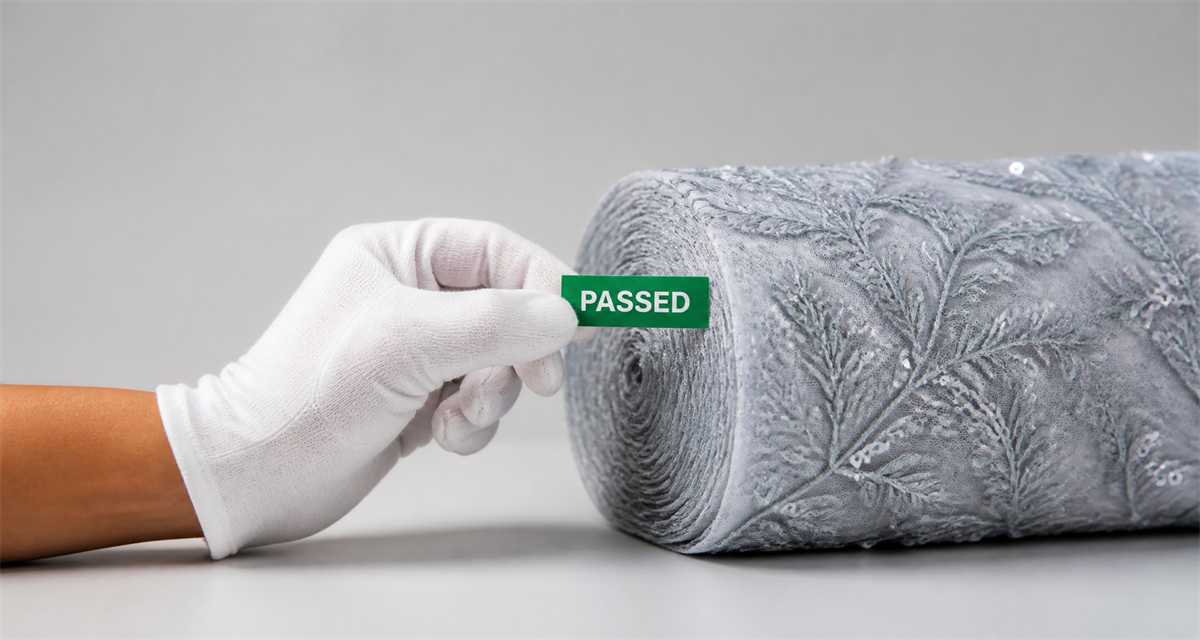
Where several embellishment styles sit on one order, split the inspection by style rather than treating the container as a single unit. A weak style can hide behind a strong average and only surface once the goods reach the customer.
For buyers who order embellished textiles from China, factory-direct partners such as Yunfan Textile on Alibaba can run rub tests against a stated application before bulk is confirmed, which removes most of the risk from the specification stage.
FAQ: Sequin Fabric Abrasion Resistance
What is a good Martindale result for sequin fabric?
For apparel and accessories, treat 25,000 rubs as the working minimum and 30,000 rubs as a comfortable target. For upholstery and contract decoration, aim for 30,000 to 50,000 rubs. Anything under 15,000 rubs should be reserved for items that will barely be touched.
Does sequin size change abrasion resistance?
Size matters less than film quality and attachment method. Large paillettes expose more surface area and tend to show scuffing sooner, while micro sequins concentrate stress on the stitch line. Both can pass, provided the film grade and stitch density are specified for the application.
Can abrasion resistance be improved after production?
Rarely. A protective top coating can slow surface dulling, and better packing reduces transit scuffing, but neither fixes a weak film or a loose stitch. Correct specification at the sampling stage is far cheaper than remediation.
Why does the same fabric pass in one order and fail in the next?
Almost always a raw material change. A new film lot, a different thread, a denser or lighter stitch, or a faster embroidery speed can shift results without any visible change in the swatch. Re-test at the start of every production lot and keep approved reference samples.
How many rolls should be tested per batch?
Test at least three rolls per batch, taken from the beginning, middle and end of production. For high-value or visibly variable orders, test every roll and record the result against the roll number.
Conclusion: Specify the Number, Then Verify It
Sequin fabric abrasion resistance is not a laboratory detail, it is the commercial line between a product that photographs well and a product that still looks good after a month. Decide the end use, choose the test method, set a numeric limit, and put that limit in the purchase order next to the approved swatch.
Ready to compare film grades, base cloths and stitch densities against your own application? Request Sequin Fabric Samples and we will match a swatch set to your abrasion target.
Contact Morris at morris@yunfantextile.com, or message us on WhatsApp: +86 156 3752 5803 or +86 175 1619 6727. If you buy on marketplaces, see our storefront at yunfantextile.en.alibaba.com.