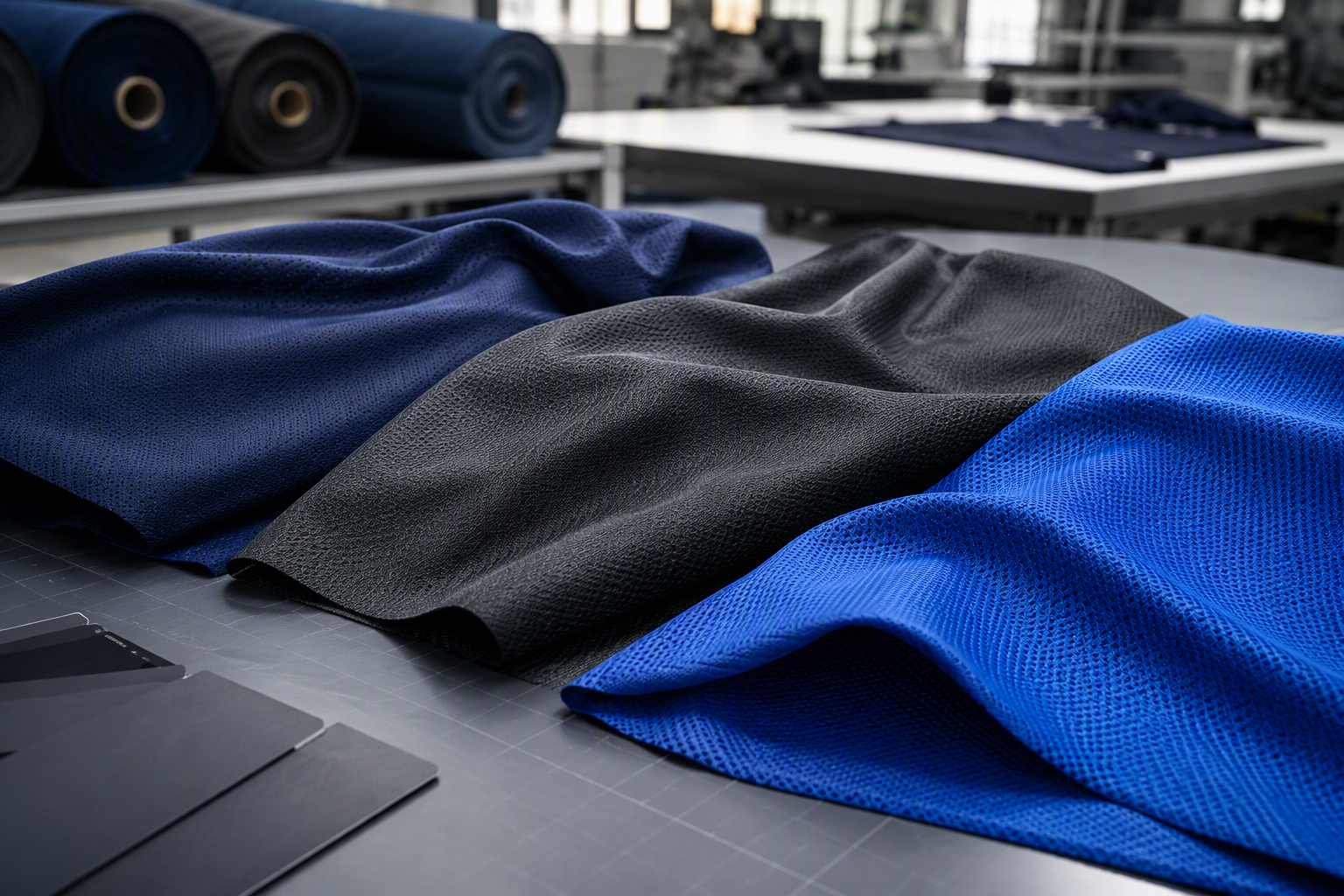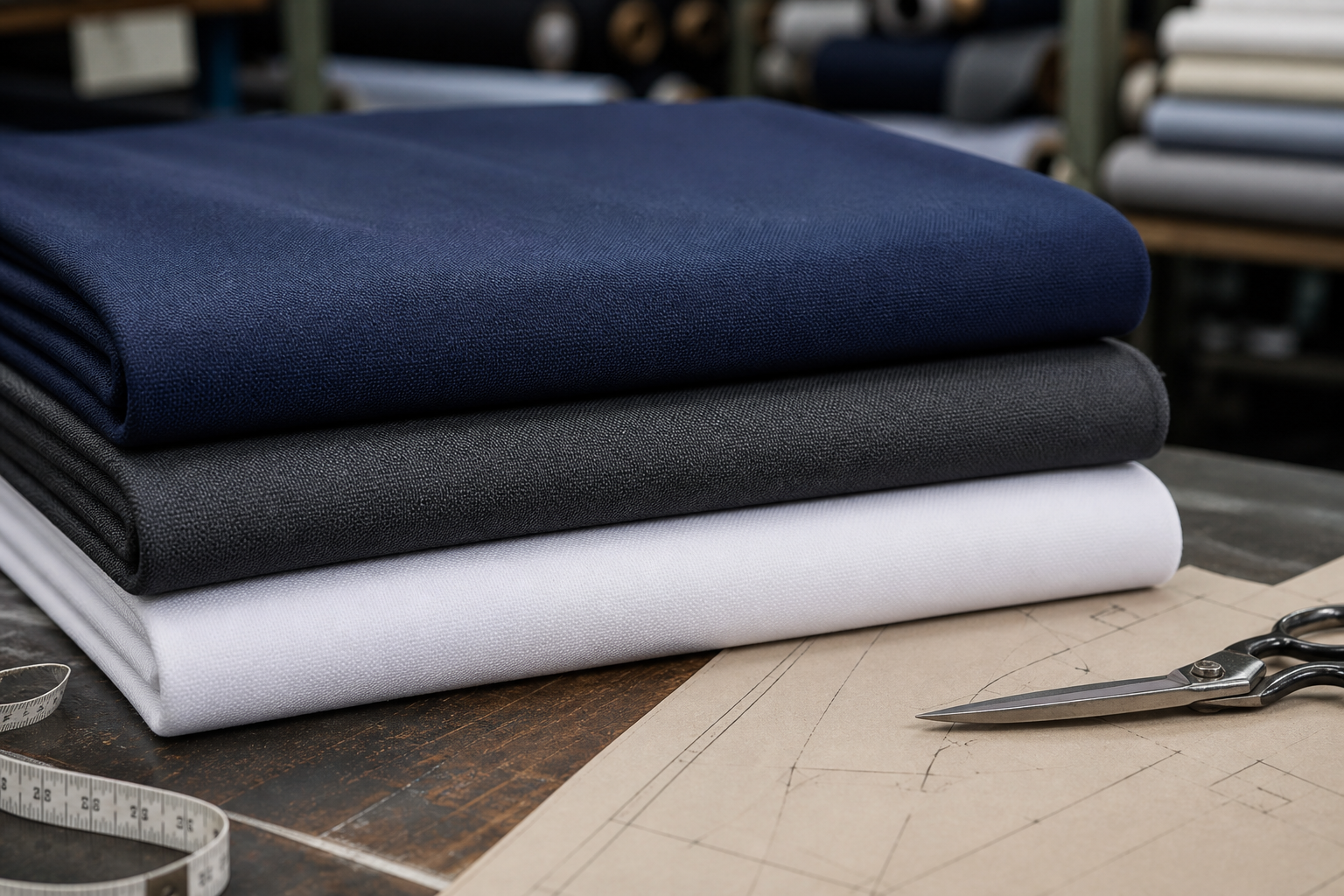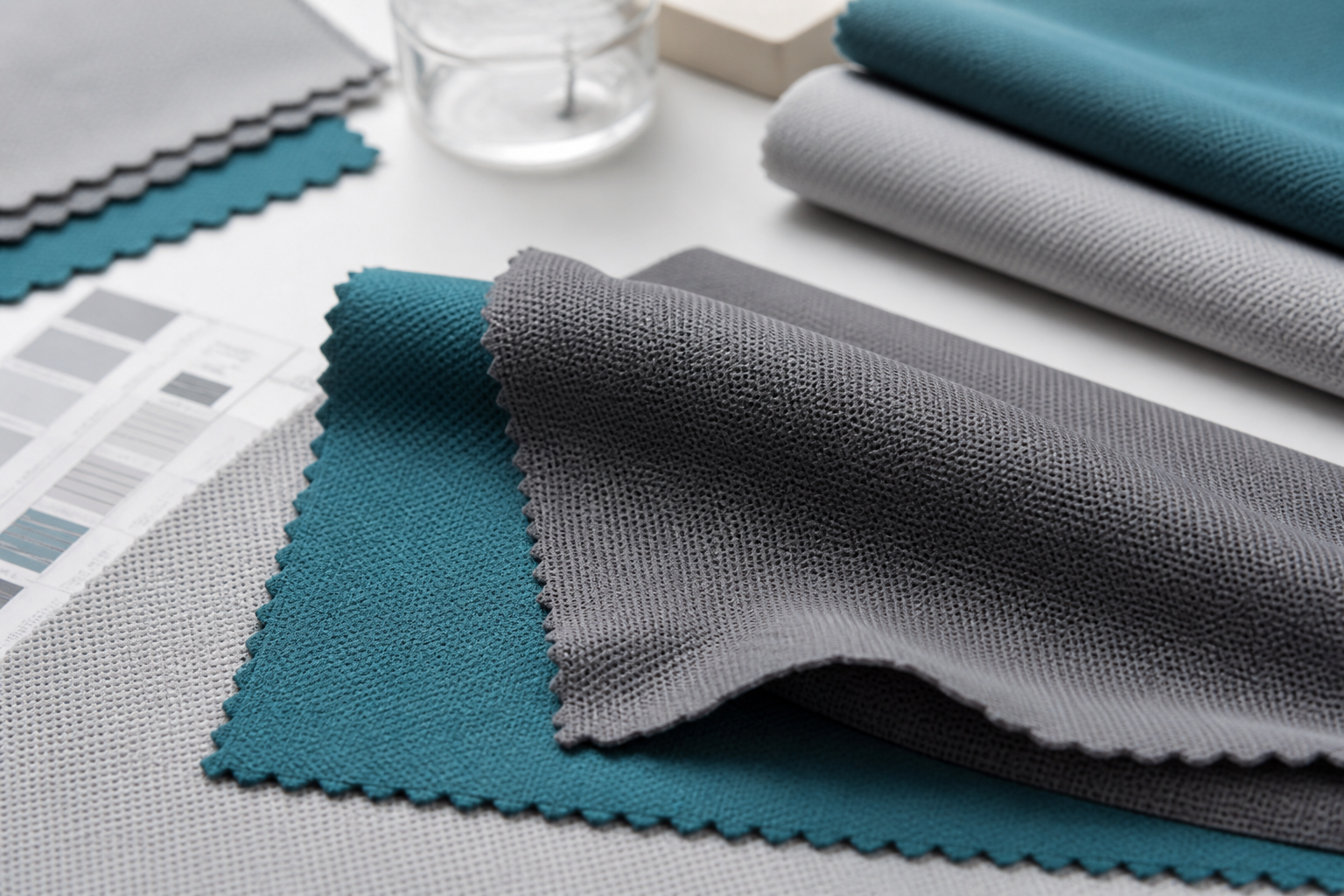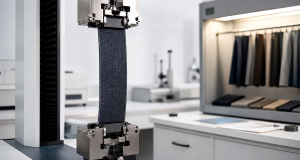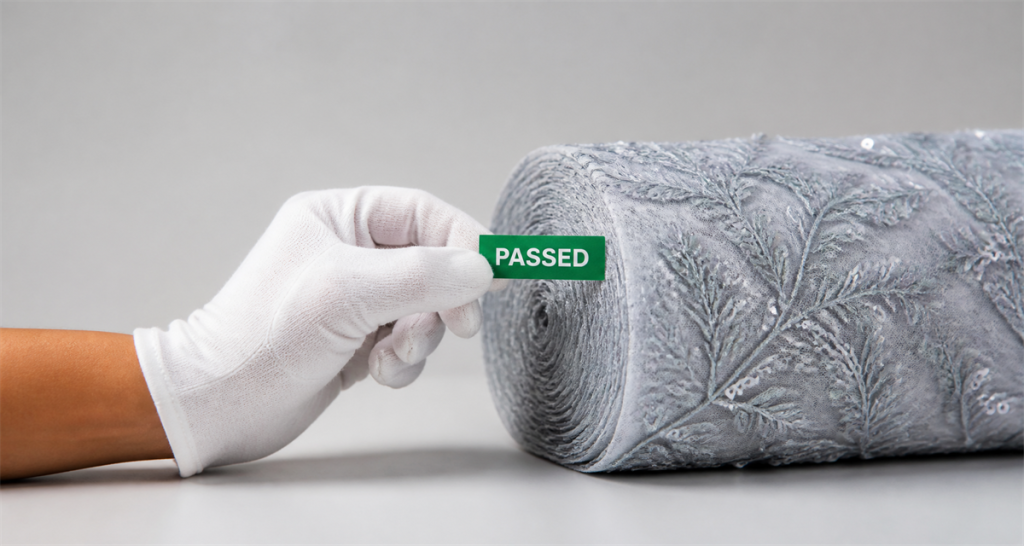
Decorative fabric bow and skew are the two most common weave distortion defects in decorative textiles, and both are invisible on a folded swatch. Bow means the weft curves in an arc across the roll; skew means the weft runs diagonally instead of square. The practical answer for B2B buyers is to cap both at 2 percent or less of usable width, measure them on a flat inspection table at the start, middle and end of every roll, and reject any roll that exceeds the limit before cutting begins.
This guide explains what causes bow and skew, how to measure them correctly, and how to write limits into a purchase order so the defect never reaches your cutting room.
What Are Decorative Fabric Bow and Skew?
Bow and skew describe how the weft yarns sit relative to the warp yarns. In a perfect roll, every weft pick crosses the warp at 90 degrees. Bow pulls the weft into a curve, so the middle of the fabric trails behind or ahead of the selvedges. Skew, sometimes called bias or bowing, shifts the weft diagonally, so the pattern runs off-square from one selvedge to the other.
Both are measured as a percentage of fabric width. A 150 cm roll with a 3 cm deviation at the centre is not acceptable; the same 3 cm on a 300 cm roll is closer to the limit but still worth reviewing. Because the measurement is proportional, never accept a verbal statement such as "slight bow" without a number.
The effects differ by product. In plain decorative fabric, bow and skew affect grainline and drape, so curtains hang unevenly and table linen looks skewed. In printed or jacquard decorative fabric, the defect shows up as pattern distortion, where a stripe or a motif visibly angles across a panel. In embellished fabric, sequins and embroidery are placed on the distorted grid, so the decoration bends with it and the fault becomes twice as visible.
Key Takeaways
- Set a written limit of 2 percent maximum for decorative fabric bow and skew unless the customer specifies tighter.
- Measure on a flat, well-lit inspection table, never on a rolled or folded length.
- Record values at the head, middle and tail of every roll rather than testing one point.
- Jacquard, printed and laminated decorative fabrics are far less tolerant of skew than plain weaves.
- Bow and skew cannot be corrected after cutting, so the fault must be caught at goods-in inspection.
What Causes Bow and Skew?
Most cases trace back to tension imbalance during weaving, finishing or handling. The most frequent root causes are:
- Uneven warp tension at the loom, so one selvedge feeds faster than the other.
- Poor weft insertion on rapier or air-jet looms, leaving the pick loose at one side.
- Uneven heat setting during finishing, where one selvedge shrinks more than the other.
- Tenter frame misalignment, which lets the fabric drift while it is dried or stentered.
- Rolled storage under pressure, which sets a curve into the goods before inspection.
- Lamination or coating tension, where a bonded layer pulls the base cloth off-square.
Because several of these causes look identical in the finished roll, diagnosis depends on the pattern of the defect. A constant skew across the whole length points to loom setup or finishing tension. A skew that changes from head to tail points to handling or storage. A bow that appears only at the centre usually indicates uneven weft tension rather than a warp problem.
How to Measure Decorative Fabric Bow and Skew
Use the same procedure every time so results are comparable between shipments and suppliers.
- Unroll at least three metres of fabric onto a flat inspection table and allow it to relax for two minutes.
- Fold the fabric once across the width so the two selvedges align, then check whether the fold line meets neatly at both edges.
- Measure the deviation between the aligned weft line and the actual weft line at the centre of the width.
- Divide the deviation by the fabric width and multiply by 100 to express bow or skew as a percentage.
- Repeat at head, middle and tail of the roll, and on at least ten percent of rolls in the batch.
- Photograph every failure with a tape measure in frame so the supplier can verify the finding.
- Record the result on the roll card and hold the roll for a supplier decision before cutting.
Defect Limits at a Glance
| Defect | Common Buyer Limit | Typical Cause | Corrective Action |
|---|---|---|---|
| Bow | 2 percent of width maximum | Uneven weft tension | Re-tension loom, re-test lot |
| Skew | 2 percent of width maximum | Finishing or storage drift | Re-check tenter frame, re-roll |
| Pattern distortion | 1 percent on printed goods | Printing register drift | Reject roll, review print lot |
| Selvedge waviness | Visual, no waviness over 3 mm | Heat setting imbalance | Adjust stenter, grade roll |
These limits are starting points. Apparel, curtain and contract upholstery markets each apply their own tolerances, and some retail programmes publish tighter figures that override general practice. Always confirm the customer standard before quoting a limit. Our sourcing guide covers how to translate customer tolerance into supplier language.
Inspection Checklist and Data Fields
Capture the following data for every roll inspected. Consistent records are what make a claim stick.
| Field | What to Record |
|---|---|
| Roll number | Supplier roll reference and internal batch code |
| Fabric width | Actual measured width in centimetres, both selvedges |
| Bow value | Millimetres of deviation and percentage of width |
| Skew value | Millimetres of deviation and percentage of width |
| Sample points | Head, middle and tail readings |
| Pattern check | Motif or stripe alignment against approved reference |
| Defect map | Position and size of every scored defect |
| Decision | Pass, pass with concession, or reject |
Two additional fields save arguments later. Note the storage conditions between finishing and inspection, because a roll that sits compressed for a week can develop a set curve. Also note the ambient temperature and humidity at inspection, since relaxed fabric measures differently from fabric pulled straight off a warm finishing line.
Preventing Bow and Skew Before They Happen
Prevention is cheaper than inspection. Include the following requirements in the supplier agreement.
- Specify maximum bow and skew percentages in the purchase order, not in an email thread.
- Require head, middle and tail readings with each shipment, signed by the inspector.
- Ask for the loom and finishing settings to be frozen for repeat orders of the same style.
- Require fabric to be relaxed and re-rolled before final inspection, not immediately after finishing.
- Agree the remedy in advance: replacement roll, credit, or concession with a price adjustment.
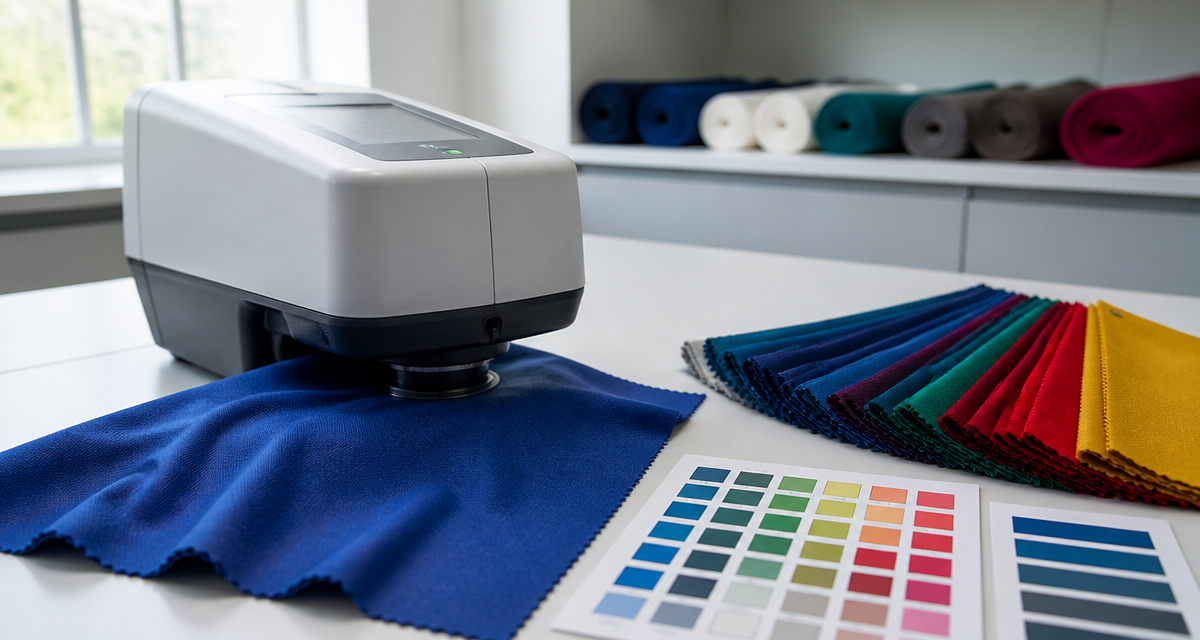
Handling deserves particular attention with decorative fabric. Rolls should be stored upright on a clean, dry surface or on a supported cradle, never stacked flat under heavy weight. Fabric that is dragged across a rough floor edge can pick up a permanent diagonal set that no amount of re-rolling will remove.
For buyers sourcing embellished and decorative textiles from China, a factory-direct partner such as Yunfan Textile on Alibaba can inspect bow and skew against your stated limit and issue the readings with the shipment, so the data arrives with the goods.
FAQ: Decorative Fabric Bow and Skew
What is an acceptable bow and skew percentage?
Two percent of fabric width is a widely used commercial limit for decorative textiles. Printed goods and contract programmes often require one percent or tighter. Always confirm the figure your customer will apply at final inspection.
Can bow and skew be fixed after weaving?
Only in limited cases. Re-stentering under controlled tension can reduce mild skew, and re-rolling can release a storage set. Genuine loom-induced distortion cannot be corrected, so the only safe route is rejection at goods-in.
Why does skew appear worse on jacquard fabric?
Jacquard patterns are built on a strict grid. A small diagonal shift breaks motif alignment across the width and becomes obvious in a way that a plain weave would hide. Patterned fabric therefore needs tighter limits and more frequent measurement.
Does lamination cause skew?
It can. If the base cloth and the bonded layer are fed at different tensions, the composite will pull off-square. Laminated decorative fabric should always be measured after bonding, not only before.
How many rolls should be inspected?
At least ten percent of rolls in a batch, always including the first and last roll produced, plus any roll flagged during the supplier inspection. High-value orders justify full inspection.
Conclusion: Square Fabric, Clean Cuts
Decorative fabric bow and skew are simple defects with expensive consequences. Because they cannot be corrected after cutting, they must be controlled by a written limit, a consistent measurement method and a documented inspection record on every roll.
Set your limit, demand the readings, and verify on arrival. To benchmark decorative base cloths and embellished options against your tolerance, Request Sequin Fabric Samples and specify the end product.
Contact Morris at morris@yunfantextile.com, or reach us on WhatsApp: +86 156 3752 5803 or +86 175 1619 6727. Buyers who prefer marketplaces can order through our storefront at yunfantextile.en.alibaba.com.