

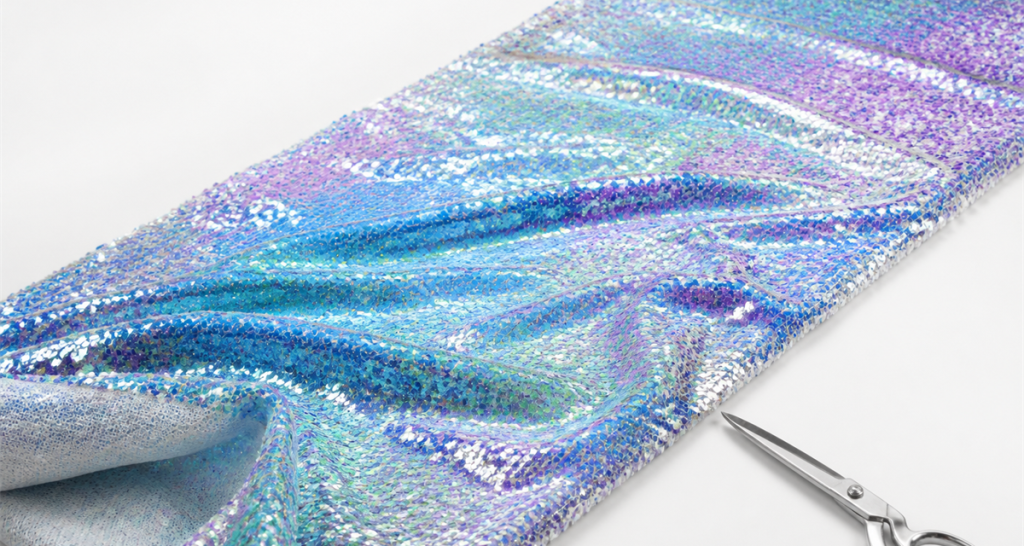
Sequin fabric static electricity is the surface charge that builds up on polyester and nylon sequins, mesh and lining during handling, cutting, sewing and washing. Left uncontrolled, that charge makes panels cling to machine beds and to each other, attracts lint and dust, shocks operators, and distorts stacked cut parts. For B2B buyers, sequin fabric static electricity is a specification problem with a specification answer: define an antistatic or conductive treatment on the face cloth, request a surface-resistivity reading at lab-dip stage, and lock the care and packing instructions before bulk production begins. This guide gives you the causes, the test methods and the exact fields to write into your purchase order.
Key Takeaways
- Antistatic performance is a finishing decision, not a random fabric defect - so it belongs in the purchase order, not in the complaints file.
- Test surface resistivity in ohms and static decay half-life in seconds, not the vague impression that a swatch "feels less clingy".
- Polyester sequins on polyester mesh generate the most charge; conductive yarns, durable antistatic finishes or controlled humidity reduce it.
- Humidity swings in the cutting room change results more than most buyers expect, so the test environment must be fixed.
- Re-test after every wash, heat, print or laminate process, because topical finishes wash out.
- Record the readings per roll and attach them to the inspection report so repeat orders stay comparable.
What Is Sequin Fabric Static Electricity?
Static electricity on sequin fabric is a triboelectric charge: friction between two materials moves electrons from one surface to the other, and because polyester, nylon and the PVC or PET film used for sequins are poor conductors, that charge cannot drain away. It sits on the surface until it finds a path to earth - often through an operator, a metal machine part or a packaging film. The result is cling, spark, dust attraction and unpredictable feeding.
The charge itself is measured in two practical ways. Surface resistivity tells you how easily the fabric dissipates charge and is expressed in ohms (Ω). Static decay half-life tells you how quickly a charge falls to half its starting value and is expressed in seconds. A fabric sold as "antistatic" without either number is an unverified claim.
For decorative and embellished textiles the problem is amplified because the surface is a mosaic of conductive and insulating materials. A metallic-coated sequin may drain charge locally while the polyester ground mesh holds it, which produces patchy behaviour: some panels behave, others cling. That inconsistency is exactly why bulk buyers should test more than one position per roll.
Why Sequin Fabric Static Electricity Matters in Bulk Production
Static is a commercial risk long before it is a technical one. In a cutting room, charged panels lift off the table, shift under the blade and produce off-grain parts. On a sewing line, cling drags fabric under the presser foot and distorts seam allowance. In light shades such as champagne, ivory and silver, charge-driven dust pickup shows as a grey film that only appears after shipping. In packing, cling slows folding and can pull finished garments out of shape.
- Yield loss: shifted panels mean re-cut parts and wasted metres.
- Sewing faults: puckering, wavy seams and needle deflection on dense sequin grounds.
- Contamination: lint and dust bonded to the surface during finishing and packing.
- Operator discomfort: repeated shocks reduce line speed and increase handling damage.
- Returns and claims: cling complaints that surface only after the garment is worn.
Because these costs land downstream, buyers who ignore static at sampling usually pay for it at inspection. Pairing this control with a solid sequin fabric quality check before bulk ordering catches the problem while rolls can still be re-finished.
What Causes Static Charge on Sequin Fabric
Five mechanisms drive almost every static complaint we see in bulk sequin and decorative fabric orders.
- Triboelectric friction. Sequins rubbing against each other, against the mesh ground and against machine guides transfer charge continuously.
- Low humidity. Below about 40 % relative humidity, moisture films on fibre surfaces disappear and charge has nowhere to go. Winter cutting rooms are the classic failure case.
- Insulating substrates. Polyester mesh, nylon tulle and PET sequins are all poor conductors, so charge accumulates instead of draining.
- Finishing and drying. Heat-set drying and tumble drying strip moisture and can volatilise topical antistatic agents.
- Packaging. Polythene bags and cling film hold charge against the fabric, which is why a roll can measure clean in the lab and still cling when the buyer opens the carton.
How to Test Sequin Fabric Static Electricity: Step by Step
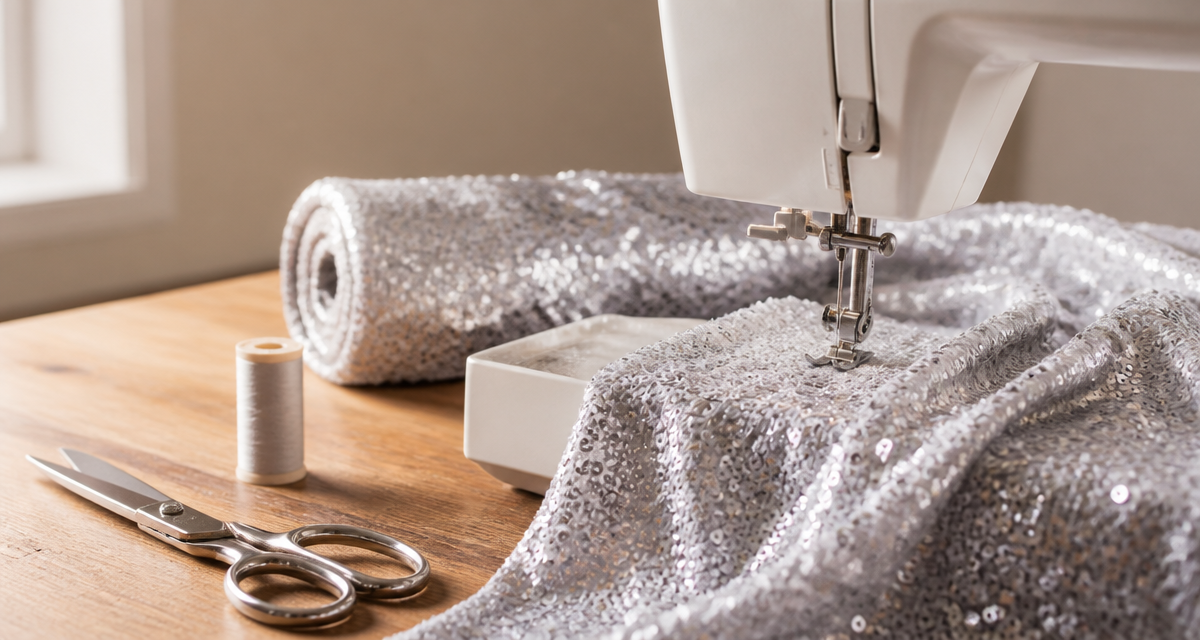
Build the test into the sampling stage rather than the inspection stage. The following sequence is the one we recommend for any bulk sequin or decorative fabric order.
- Set the acceptance metric in writing. Typical targets are surface resistivity at or below 1 x 10^10 Ω and a static decay half-life at or below 2 seconds. Agree the number before the lab is booked.
- Fix the test environment. Condition samples at 25 °C ± 2 °C and 50 % ± 5 % relative humidity for at least 24 hours. Testing in an uncontrolled office invalidates the reading.
- Sample five positions per roll. Test face and back at the left selvedge, centre and right selvedge so you capture the patchy behaviour typical of metallic sequins.
- Measure surface resistivity with a calibrated meter. Use a concentric-ring or two-point probe and record the exact instrument and voltage used.
- Measure decay half-life. Charge the surface and time how long it takes to fall to half. This is the number that predicts real handling behaviour.
- Repeat after care simulation. Run five home-laundry cycles or one dry-clean cycle, re-condition and re-test. If the readings collapse, the finish is topical and will not survive the customer.
- Record everything on a lot sheet. Attach the readings to the pre-shipment inspection checklist for sequin fabric so the next order can be compared roll for roll.
Antistatic Options Compared
There is no single best answer. The right option depends on whether the garment will be washed, dry-cleaned or simply hung, and on how tight the budget is.
| Option | How it works | Durability | Cost impact | Best for |
|---|---|---|---|---|
| Durable antistatic finish | Chemistry bonded into the fibre surface during finishing | High - survives multiple washes | Low to medium | Washable fashion and dancewear |
| Conductive yarn in ground mesh | Carbon or metal-blend yarn creates a drainage path | Permanent | Medium | Performance and stagewear |
| Topical antistatic spray | Surface coating applied after production | Low - washes out | Very low | Event decor and backdrops |
| Moisture conditioning | Raising regain so charge can dissipate | Temporary | Very low | Short-term cutting room relief |
| Factory humidification | Keeps the whole room above 55 % RH | Continuous process control | Capital cost | Any high-volume sequin line |
Buyer Checklist: Static Control Fields for Your Purchase Order
Copy these fields into your specification sheet. Each one is verifiable at a defined stage, which is what makes a claim enforceable.
| Field | Example value | Where to verify |
|---|---|---|
| Surface resistivity | 1 x 10^10 Ω or lower | Third-party lab report |
| Static decay half-life | 2 seconds or lower | Third-party lab report |
| Test environment | 25 °C, 50 % RH | Test report header |
| Finish type | Durable, wash-resistant antistatic | Supplier technical data sheet |
| Care simulation | 5 wash cycles, one dry clean | Test report |
| Packing | Poly bag plus antistatic liner | Pre-shipment photographs |
| Line control | Ioniser or conductive brush fitted | Factory SOP and audit |
Common Mistakes That Reintroduce Static
- Approving on hand feel. A treated swatch can feel identical to an untreated one and still measure ten times worse.
- Testing at the wrong humidity. A reading taken in a dry air-conditioned office can be meaningless.
- Ignoring the ground fabric. Treating sequins but not the mesh leaves the charge with nowhere to drain.
- Mixing treated and untreated rolls. One untreated roll in a shipment creates inconsistent behaviour across the whole order.
- Forgetting downstream processes. Heat setting, digital printing and lamination can strip the finish after the lab test has passed.
If your design also relies on a bonded or laminated construction, read our guide to sequin fabric backing selection - the same finishing steps that affect static also change how a backing behaves.
FAQ: Sequin Fabric Static Electricity
Does washing remove static from sequin fabric?
It can. A topical antistatic spray is usually gone after one or two home laundry cycles, while a durable antistatic finish bonded during finishing typically survives five or more. This is exactly why we specify a care simulation in the test protocol: if the reading collapses after washing, the finish was cosmetic.
Can an antistatic finish survive dry cleaning?
Only if the finish and the solvent are compatible. Some perchloroethylene cycles strip topical agents completely. Tell your supplier that the garment will be dry-cleaned and ask for a dry-clean followed by a re-test rather than a general "wash resistant" claim.
Is static a quality defect I can claim against a supplier?
It is only a claimable defect if the specification and the test method were written into the purchase order before production. Without a numeric target, an agreed test environment and a defined sampling plan, static remains an opinion rather than a measurable non-conformance.
Do darker sequin colours show static dust pickup more?
Light shades show lint and dust physically, while very dark, high-gloss shades show it optically as a dull film under directional light. Both need the same control; the inspection lighting simply has to match the end use. Our sequin fabric wash care protocol covers how to build that into the care label.
Conclusion
Sequin fabric static electricity is manageable, but only if it is treated as a specification item with a number attached. Decide the target surface resistivity and decay half-life, fix the test environment, sample several positions per roll, re-test after care simulation, and record the results per lot. Do that and cling, dust pickup and sewing faults stop being surprises in your next bulk order.
Request Sequin Fabric Samples
Tell us your end use, colour and target market and we will prepare sequin fabric swatches with the antistatic option you need, plus the test data to confirm it. Send your specification and we will come back with a sample pack and a quotation.
Contact: Morris | Email: morris@yunfantextile.com | WhatsApp: +86 156 3752 5803 | WhatsApp: +86 175 1619 6727
Browse the full factory-direct range on our Alibaba International storefront.






