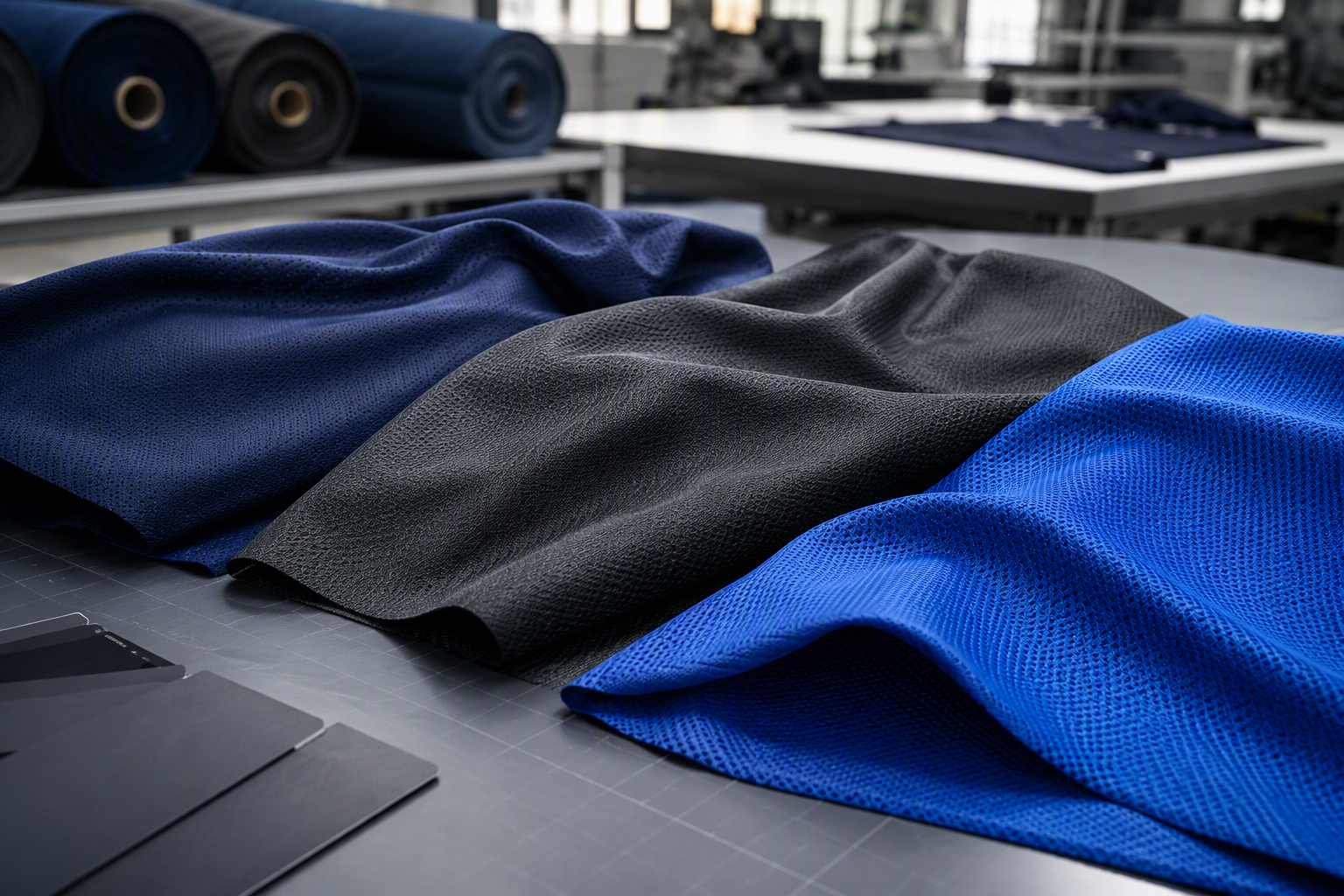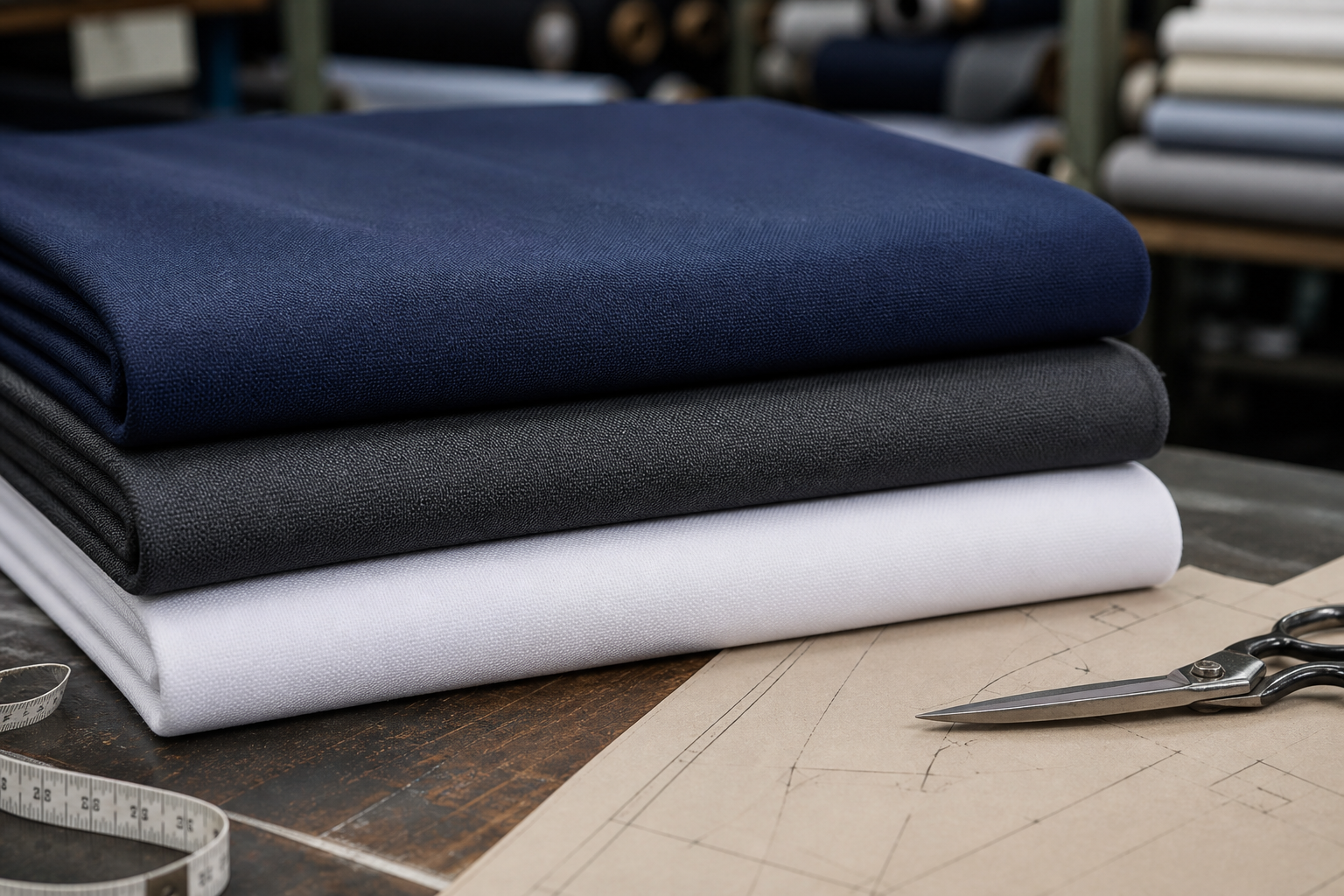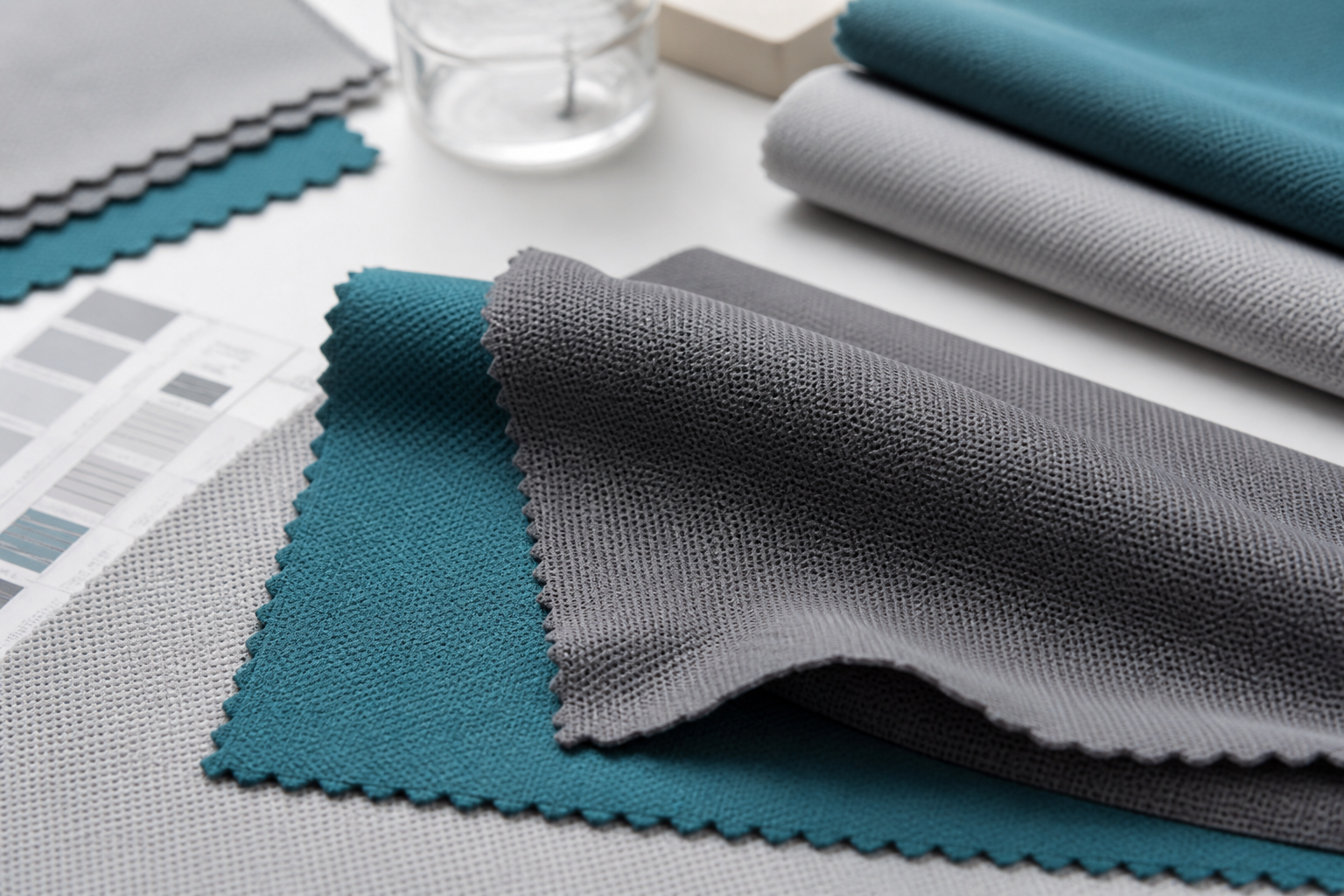
Fabric edge curl prevention is the control of selvedge roll, where a mesh base cloth curves along its cut edge. Buyers prevent it by stabilising the edge, balancing the weft tension, and choosing the right backing. When the edge stays flat, the fabric feeds cleanly and the seam line stays true. This guide explains why mesh edges curl, how to correct it, and the fields to approve before bulk cutting.
Key Takeaways
- Mesh base cloth curls because it is light and lightly tensioned.
- A curled edge causes skipped stitches and uneven hems.
- Edge stabilisation is the fastest fix on the cutting table.
- Backing choice changes how the edge behaves after washing.
- Heat setting reduces curl but must match the base fibre.
- Write an edge flatness limit into the order spec.
What Is Fabric Edge Curl in Mesh Base Cloth?
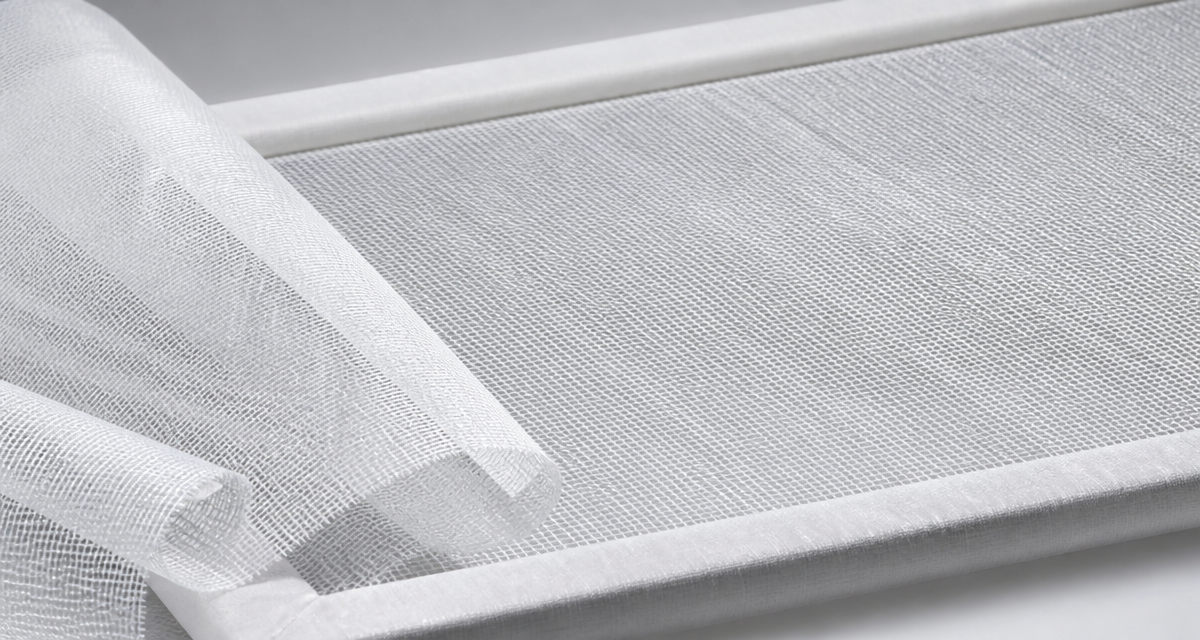
Fabric edge curl is the rolling or wavy distortion of a fabric edge, and it appears most often on mesh and other open-weave base cloths. The mesh has low stiffness, so stored tension finds release at the cut edge. Therefore, the edge curls toward the tighter side of the cloth.
Curl is not the same as fraying. Fraying loses yarns, while curl keeps the yarns but bends the edge. In addition, curl can appear during cutting, after embroidery, or only after the first wash.
Why Edge Curl Costs Decorative Orders
A curled edge disturbs feeding at the machine. The presser foot climbs the roll, so the stitch skips and the seam wanders. Moreover, a rolled hem is hard to correct after sewing, because the fabric has already set in that shape.
Yield loss follows. In addition, operators trim away curled metres to reach usable fabric. As a result, the order consumes more material than planned, and delivery dates slip.
How to Prevent Fabric Edge Curl: Step-by-Step
Work from the roll to the finished piece, and check the edge at every stage.
- Relax the roll before cutting, so stored tension releases evenly.
- Cut with a sharp blade to avoid pulling the edge yarns.
- Stabilise the edge with a light fusible tape or a stitched stay.
- Set the spreading and feeding tension low on light mesh.
- Choose a backing that matches the base fibre and the end use.
- Test the edge after washing, because some curl appears late.
- Record the approved edge treatment for repeat orders.
Comparison Table: Edge Curl Risk by Base Cloth
Use this table to set your control level, then confirm on real samples.
| Base cloth | Curl risk | Main cause | Prevention focus |
|---|---|---|---|
| Fine polyester mesh | High | Low stiffness | Edge stabilisation |
| Diamond mesh | Medium | Open structure | Low feed tension |
| Tulle | High | Light yarn | Fusible tape |
| Mesh with backing | Low | Supported edge | Keep backing matched |
Procurement Checklist: Edge Quality Fields
- Base cloth reference and GSM.
- Maximum edge curl limit.
- Recommended edge stabilisation method.
- Backing type and wash behaviour.
- Feeding tension range.
- Approved edge sample reference.
- Wash test requirement before approval.
How Buyers Verify Edge Flatness with a Supplier
Ask the supplier to cut and wash a one-metre sample, then photograph the edge before and after. Then compare that record with your own test on arrival. In addition, keep the approved sample so both sides judge the same standard.
For related reading, see our guides on embroidery fabric edge fray control and decorative fabric creep and recovery. You can also review decorative fabric seam strength to protect the finished edge.
Common Fabric Edge Curl Prevention Mistakes
Cutting with a dull blade is the first mistake. A dull blade drags the edge yarns and starts the roll before the piece is even sewn. Therefore, change blades on a fixed schedule.
Skipping edge stabilisation is another common error. A light mesh has little stiffness, so the cut edge curls as soon as the tension releases. In addition, an unstabilised edge disturbs feeding at the machine.
Setting feeding tension too high is a third mistake. Extra pull stretches the mesh and makes the curl worse. Consequently, keep tension low on light base cloths.
Finally, many buyers approve an edge on the bench only. Yet some curl appears after washing, so a dry sample cannot prove the treatment works. Therefore, always include a wash test.
Edge Curl Prevention: Cost, Sampling, and Lead-Time Factors
Edge curl raises cost through trimming and rework. Operators cut away curled metres to reach usable fabric, so each roll yields less than planned.
Sampling protects the order. When the supplier cuts and washes a one-metre sample, the buyer can approve the edge before bulk cutting begins. In addition, a clear sample avoids late arguments about flatness.
| Cost factor | Effect on price | Buyer action |
|---|---|---|
| Trimmed curled edges | High | Approve a washed edge sample |
| Extra edge tape | Medium | Choose one stabiliser |
| Slower feeding speed | Medium | Plan realistic cut time |
| Rework of rolled hems | High | Test after washing |
How to Run an Edge Curl Trial Before Bulk
An edge trial is quick, and it prevents surprises on the cutting table. Run it on the exact mesh you ordered.
- Relax the roll before cutting the sample.
- Cut one metre with a sharp blade.
- Apply the planned edge stabiliser to half the sample.
- Wash the sample using the intended care method.
- Compare the treated and untreated edges after drying.
- Measure any curl along the full edge.
- Approve the better treatment, and store the sample.
Cutting Room Conditions and Order Documentation
Room conditions change how a light mesh behaves. Dry air makes some base cloths stiffer, while humidity relaxes others, so keep the cutting room stable. In addition, keep the table clean so the edge does not snag.
- Base cloth reference and GSM
- Maximum edge curl limit
- Edge stabilisation method
- Backing type and wash behaviour
- Feeding tension range
- Approved edge sample reference
Standard orders start at 200 yards per color, and the edge sample should be approved before the roll is cut.
Working with a Supplier on Edge Quality
Ask the supplier to keep an approved edge sample and to attach its photo to the order file. Then any new roll can be judged against the same standard.
In addition, agree a simple rule for edge tape. One approved stabiliser keeps the result repeatable across dye lots and seasons.
With a washed sample and a written limit, light mesh stays flat and workable from the first metre to the last.
How to Compare Two Supplier Edge Reports
Two suppliers can report the same edge very differently. Therefore, ask both to use the same cut, the same stabiliser, and the same wash method. In addition, request the raw measurement, not a simple pass or fail.
A clear report lists the curl value after washing and names the base cloth and GSM. Moreover, it states the feeding tension used on the cutting table. As a result, you can compare like with like.
When the results differ, check the base cloth first, then the treatment. A light mesh curls far more than a backed cloth, so set a limit for each fabric type.
Final Edge Check Before Shipment
A last check protects the delivery. Cut and wash one sample from each dye lot, then compare the dried edge with the approved sample.
- Base cloth and GSM on the report
- Curl value after washing
- Stabiliser used and its method
- Feeding tension on the table
- Approved edge sample reference
Source direct on Alibaba - request bulk pricing, specifications, and production details in one place.
View Yunfan Textile on AlibabaFAQ
Why does mesh base cloth curl at the edge?
Mesh has low stiffness, so stored tension releases at the cut edge and rolls it toward the tighter side.
Can edge curl be fixed after sewing?
It is difficult. Prevent curl before sewing with edge stabilisation and controlled tension.
Does washing make edge curl worse?
Yes, on some base cloths. Always include a wash test in the edge approval.
What is the best edge stabiliser?
It depends on the fibre and end use. Test a light fusible tape and a stitched stay, then approve the better result.
Conclusion: Stabilise the Edge Before You Cut
Fabric edge curl prevention keeps a light mesh base cloth flat and workable. Therefore, relax the roll, cut cleanly, and stabilise the edge to match the end use. Then feeding stays smooth, and the finished panel holds its shape.
Request Sequin Fabric Samples
Send your fabric type, target GSM, color reference, and order volume. Our team will prepare a sample set for review before you commit to bulk.
Yunfan Textile B2B Contact
Contact: Morris
Email: morris@yunfantextile.com
WhatsApp: +86 156 3752 5803
WhatsApp: +86 175 1619 6727