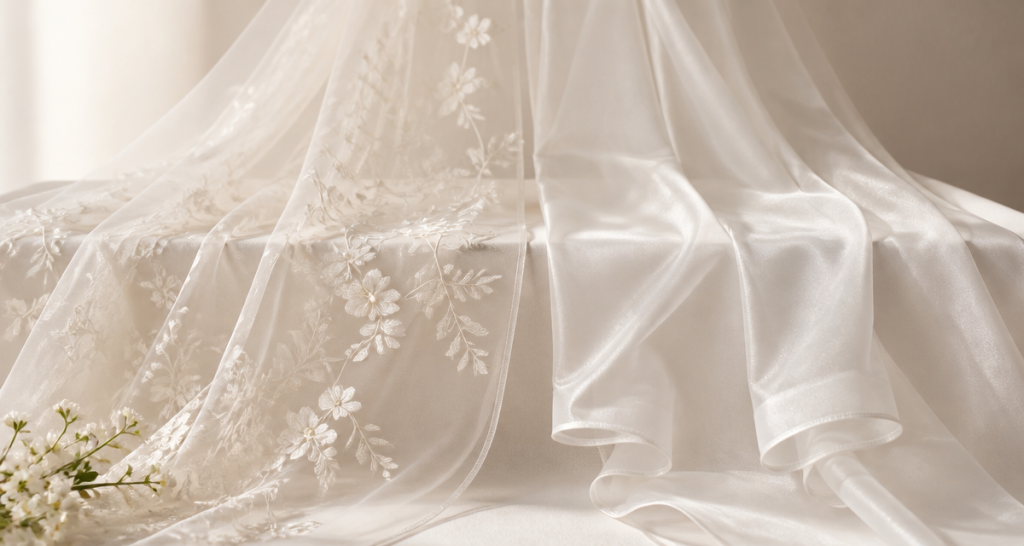
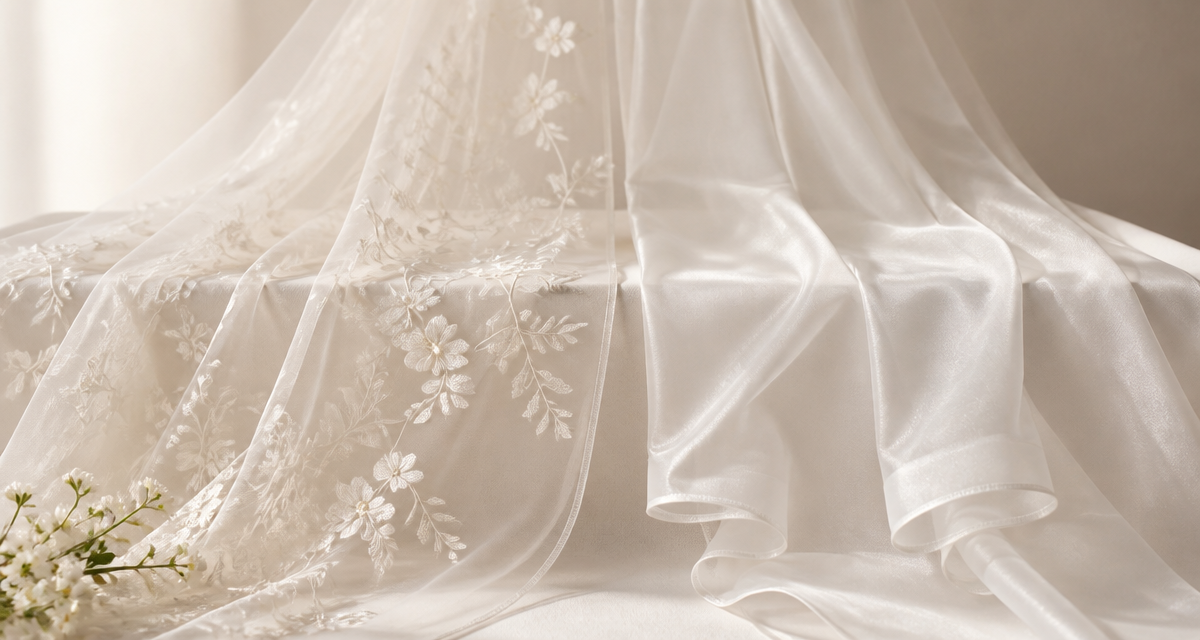
Embroidery backing residue removal is the step that decides whether a sheer organza design looks clean or cloudy. Leftover backing shows through the fabric, stiffens the hand, and creates a foggy halo around the motif. This guide explains how to choose backing and remove residue without harming sheer cloth. Follow it, and your organza keeps a soft hand and a clear look. First, match the backing to the base. Then choose the right removal method. Finally, inspect in backlight before a 200-yard run.
What Is Embroidery Backing Residue Removal?
Embroidery backing residue removal is the process of taking out the stabilizer that supports stitches during embroidery. On sheer organza, the backing is essential during sewing, because the fabric is too light to hold dense stitches alone. After embroidery, however, that backing must go.
Two main types exist. Tear-away backing pulls off by hand, while wash-away backing dissolves in water. Each one leaves different residue, so the choice matters on sheer goods.
Key Takeaways
Use these points on any sheer embroidery order.
- Sheer organza shows every bit of leftover backing.
- Wash-away backing suits dense, visible motifs.
- Tear-away backing works for light, open designs.
- Warm water and gentle motion remove residue best.
- Backlight the fabric to find hidden residue.
Which Steps Remove Backing Cleanly?
Removal is a sequence that protects the cloth. Follow these steps.
- Choose wash-away backing for dense or detailed motifs.
- Trim the excess backing close to the design.
- Soak the panel in warm water.
- Agitate gently so the fibers do not distort.
- Rinse until the water runs clear.
- Lay the panel flat to dry in shape.
- Backlight the fabric to check for residue.
- Repeat the soak if any haze remains.
As a result, the motif stays crisp and the organza stays soft. For related control, see our guide on water-soluble embroidery backing.
Backing Type Comparison
| Backing | Removal | Best for |
|---|---|---|
| Wash-away film | Dissolves in water | Dense, sheer designs |
| Wash-away fiber | Softens and rinses | Delicate organza |
| Tear-away | Pulled by hand | Open, light motifs |
| Cut-away | Trimmed, stays intact | Heavy, non-sheer goods |
However, cut-away backing rarely suits organza, because it stays in the cloth and shows through.
Buyer Checklist and Order Fields
| Field | What to confirm |
|---|---|
| Backing type | Wash-away or tear-away |
| Removal method | Soak, rinse, or tear |
| Water temp | Warm, controlled |
| Residue check | Backlight inspection |
| Hand feel | Soft and clean |
| Order size | 200 yards minimum |
In addition, request a washed sample so you can confirm the final hand. Pair it with your embroidery puckering control checks.
Common Residue Defects and Their Fixes
Residue problems fall into a few groups, and each one has a fix.
| Defect | Symptom | Fix |
|---|---|---|
| Cloudy halo | Haze around the motif | Longer soak, warmer water |
| Stiff hand | Hard, boardy feel | Full rinse, softer backing |
| Torn organza | Small holes after tearing | Switch to wash-away |
| Residue lines | Streaks in the sheer | Even drying, gentle motion |
For example, a cloudy halo means the backing did not fully dissolve. Therefore, a longer soak in warm water clears it. In addition, tearing a dense motif on organza can pull yarns, so a wash-away backing protects the sheer base.
How to Specify Backing Removal in Your RFQ
State the finish you expect after embroidery.
- Name the base, such as sheer organza.
- Request a wash-away backing type.
- Set the water temperature range.
- Require a full rinse until clear.
- Ask for a backlight residue check.
- Confirm the order quantity, starting at 200 yards.
As a result, the sample arrives soft and clear, not stiff or cloudy.
Quality Control Checks Before Shipment
Confirm the final hand and clarity.
- Backlight each panel for residue.
- Feel the hand for softness.
- Inspect for pulled yarns or holes.
- Check that motifs stay crisp after wash.
- Compare against the approved sample.
Moreover, keep the rinsed reference panel, because it defines the standard for later runs.
Cost and Lead-Time Factors
Wash-away backing costs a little more than tear-away, and rinsing adds a step. Yet clean removal prevents rejects and rework. Therefore, the extra step pays off on sheer goods. In addition, a proper rinse protects the motif, so fewer units are scrapped. Volume helps too, because a steady soak and rinse process repeats across a 200-yard order with less labor per yard.
Working With Your Supplier
Ask which backing suits your base, and request a rinsed sample. A supplier who tests on the real organza gives you a reliable result. You can pair this with your jump stitch trimming checks. Finally, confirm the rinse method before bulk, because cold water may leave residue that warm water removes.
How Residue Affects the Finished Product
Residue changes how sheer fabric looks and feels. A cloudy halo dulls the motif and stiffens the hand, so the garment loses its soft drape. In addition, leftover backing can crack in wear and show as white specks. Therefore, buyers who remove residue fully get a clean, premium finish. Meanwhile, a proper rinse protects the fibers, which keeps the organza smooth and clear.
Sample Approval Workflow for Residue Removal
Approve the washed sample, not the raw one.
- Request a rinsed sample of the sheer base.
- Backlight it to check for residue.
- Feel the hand for softness.
- Inspect for pulled yarns or holes.
- Archive the sample as the standard.
Moreover, confirm the rinse temperature, because cold water may leave residue behind.
Key Terms for Backing Removal
Wash-away backing
Wash-away backing dissolves in water. It suits dense motifs on sheer fabric.
Tear-away backing
Tear-away backing is pulled off by hand. It fits light, open designs, not dense sheer work.
Backlight check
A backlight check holds the fabric against a light. Any haze reveals leftover backing.
Storage and Handling After Backing Removal
Once the backing is gone, handle the sheer fabric gently.
- Dry panels flat, never hung wet.
- Roll with tissue between layers.
- Keep away from damp and direct sun.
- Label each roll with the motif and order.
- Store loosely to avoid pressure marks.
Therefore, careful storage keeps the organza clear and soft. In addition, loose rolling prevents folds that show through the sheer.
Overlooked Details That Decide Clarity
A few habits keep the finish clean. First, trim excess backing before soaking, so fewer fibers float free. Next, agitate gently, because hard motion distorts the weave. Then rinse until the water runs clear. Finally, dry flat in shape, so the panel holds its size after the wash.
Additional Buyer Considerations for Residue Removal
Removal interacts with the whole design. A denser motif needs more backing support, yet it also needs a fuller rinse. In addition, a dark organza hides light haze, while a pale shade reveals it, so test in your final color. Meanwhile, water hardness affects how cleanly the backing dissolves, so check your local supply. Finally, keep the rinse method consistent, because a change in temperature can leave residue behind.
Next Steps for Buyers
Begin with a rinsed sample on your exact sheer base. Then backlight it and feel the hand. After that, confirm the rinse temperature and method in writing. Once approved, apply the same routine to the 200-yard order. That approach keeps every panel clear and soft.
A Note on Repeat Order Consistency
Clarity must repeat across every run. Therefore, record the backing type, water temperature, and rinse time in one file. Then wash a small sample from each new lot before the bulk order. If a haze appears, extend the soak before the panels are packed. In addition, dry every panel the same way, because uneven drying can leave light streaks. Finally, share the record with the embroidery floor, so the next 200-yard order keeps the same clean, soft finish.
Source direct on Alibaba - request bulk pricing, specifications, and production details in one place.
FAQ
Why does residue show on organza?
Organza is sheer, so any leftover backing catches light. That is why full removal matters more here.
Can I remove backing after the garment is sewn?
It is better to remove it first. Washing a finished garment may distort seams and trims.
Which backing leaves the least residue?
Wash-away film usually rinses cleanest on dense, sheer motifs.
How do I check for leftover residue?
Hold the fabric against a light. Any haze shows the backing. See our usable width guide for related checks.
Conclusion
Embroidery backing residue removal makes or breaks sheer organza work. Match the backing, remove it gently, and inspect in backlight. Do that, and your motifs stay crisp and your organza stays soft.
Request Sequin Fabric Samples
Send your artwork, target colorway, and order size. We reply with a clear plan, then ship samples so you can approve before bulk production. Our minimum order is 200 yards.
- Contact: Morris
- Email: morris@yunfantextile.com
- WhatsApp: +86 156 3752 5803
- WhatsApp: +86 175 1619 6727
- MOQ: 200 yards