Quick answer: Decorative fabric transparency is the amount of light that passes through a cloth and the amount of the surface behind it that stays visible. Buyers control it with three levers: the openness of the base construction, the denier of the yarn, and whether a lining or second layer is added. Test all three behind the same light source before you approve a bulk order.
Key Takeaways
- Transparency is a range, not a switch. Mesh, chiffon and organza sit at different points on the same scale.
- Yarn denier and weave openness matter more than colour, although darker shades always read as more opaque.
- Lining changes transparency more than any single fabric change, so decide the layer structure first.
- Photograph every transparency sample against the same background under the same light.
- Record coverage on the spec sheet as a percentage of visible background, not as a word such as “sheer”.
What Decorative Fabric Transparency Means
Decorative fabric transparency is the degree to which a decorative cloth transmits light and reveals whatever sits behind it. It is described on a scale from fully opaque to fully sheer, and it is judged on the finished garment or panel rather than on a flat swatch.
Two cloths can look identical on a table and behave differently on a body. That is why transparency always has to be reviewed in the layer structure the customer will actually wear.
How to Control Transparency: Five Steps
- Set the target. Decide how much of the background should remain visible, using a reference photograph.
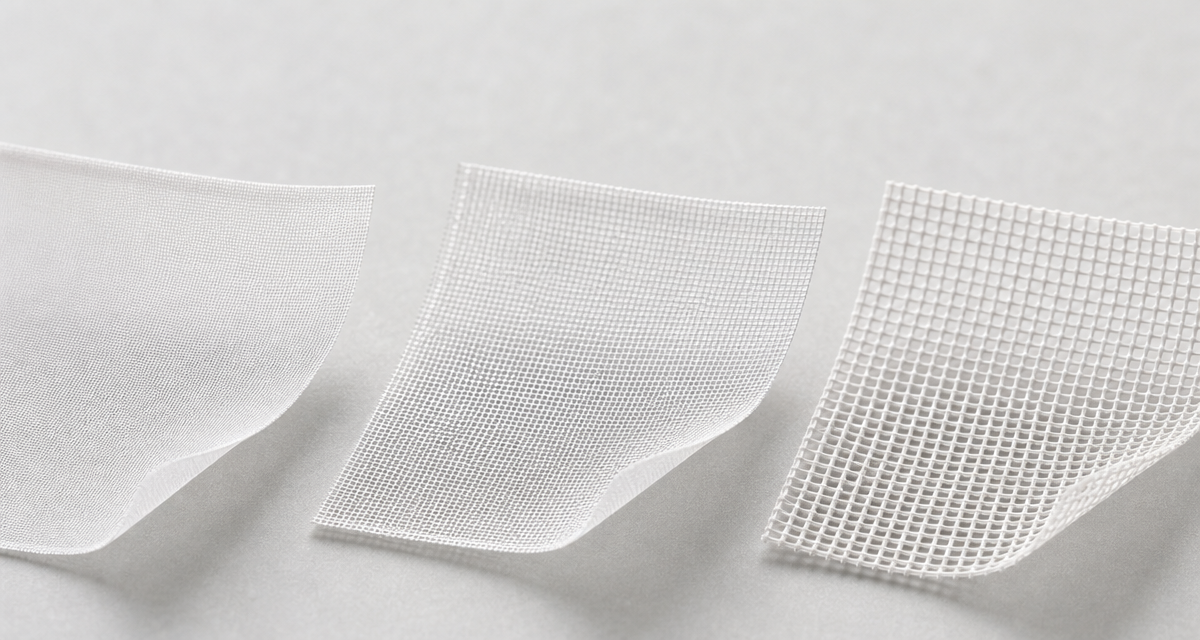
- Choose the base construction. Move between closed weaves, mesh and open knits to shift the starting point.
- Adjust the yarn denier. Thicker yarn fills the same grid and reduces light transmission.
- Decide the layer structure. Add a lining or a second panel only after the base is fixed.
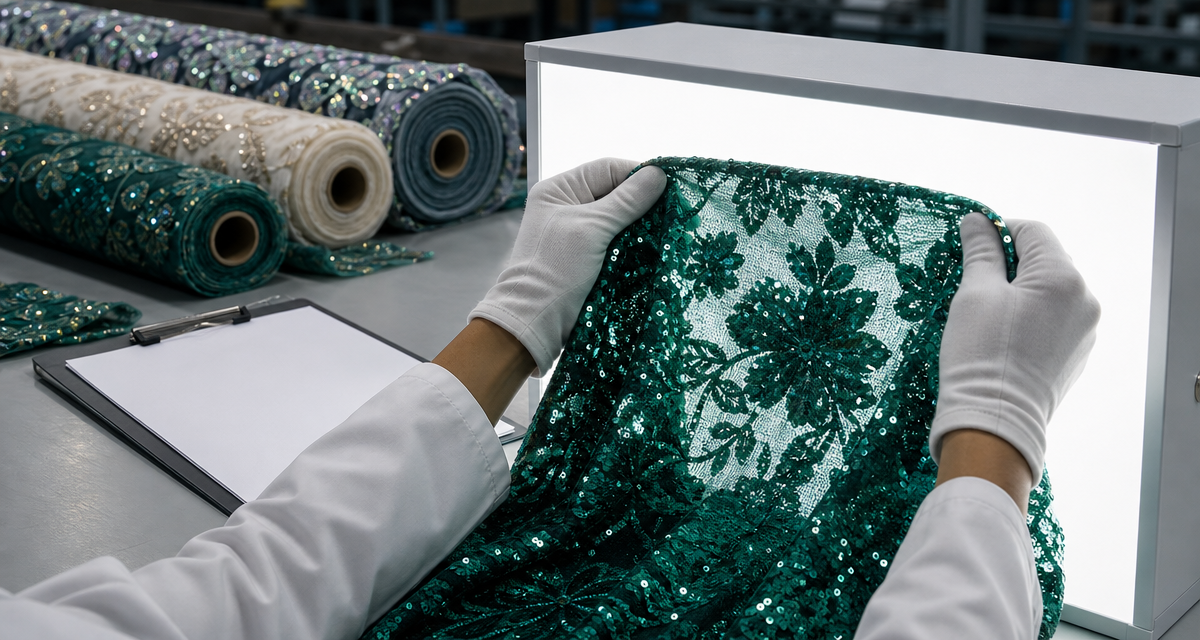
- Test behind light. Hold the assembled sample against a light source and photograph the result at a fixed distance.
Working in that order prevents the most common mistake: solving transparency with an extra layer when a base change would have been cheaper.
Transparency Comparison Table
| Construction | Typical transparency | Best suited to | Buyer note |
|---|---|---|---|
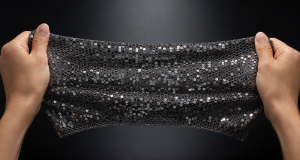
| Open mesh | High — background clearly visible | Overlays, sleeves, dancewear panels | Coverage moves with the stretch of the panel |
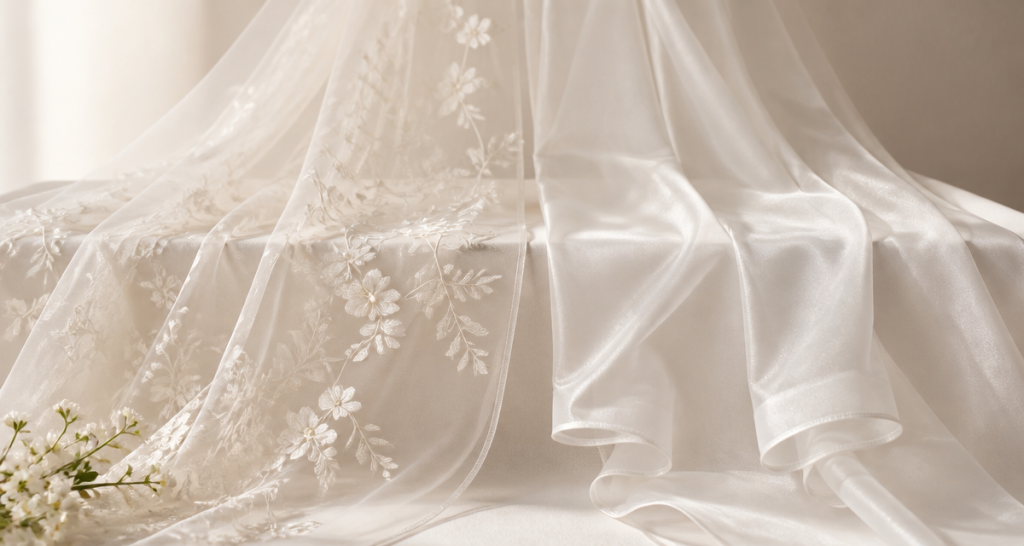
| Chiffon | Medium to high | Soft layered eveningwear | Falls in narrow folds that hide the body line |
| Organza | Medium | Structured silhouettes and trims | Holds shape, so edges stay crisp |
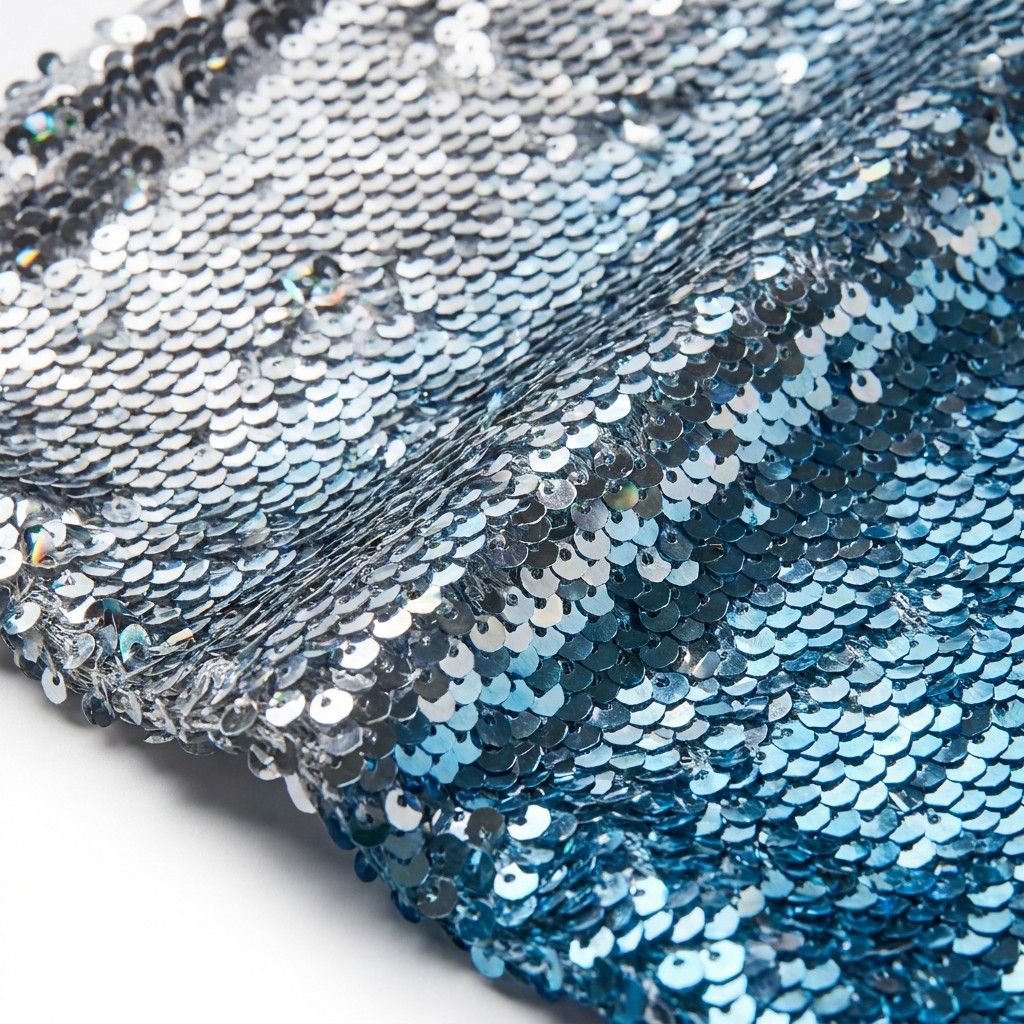
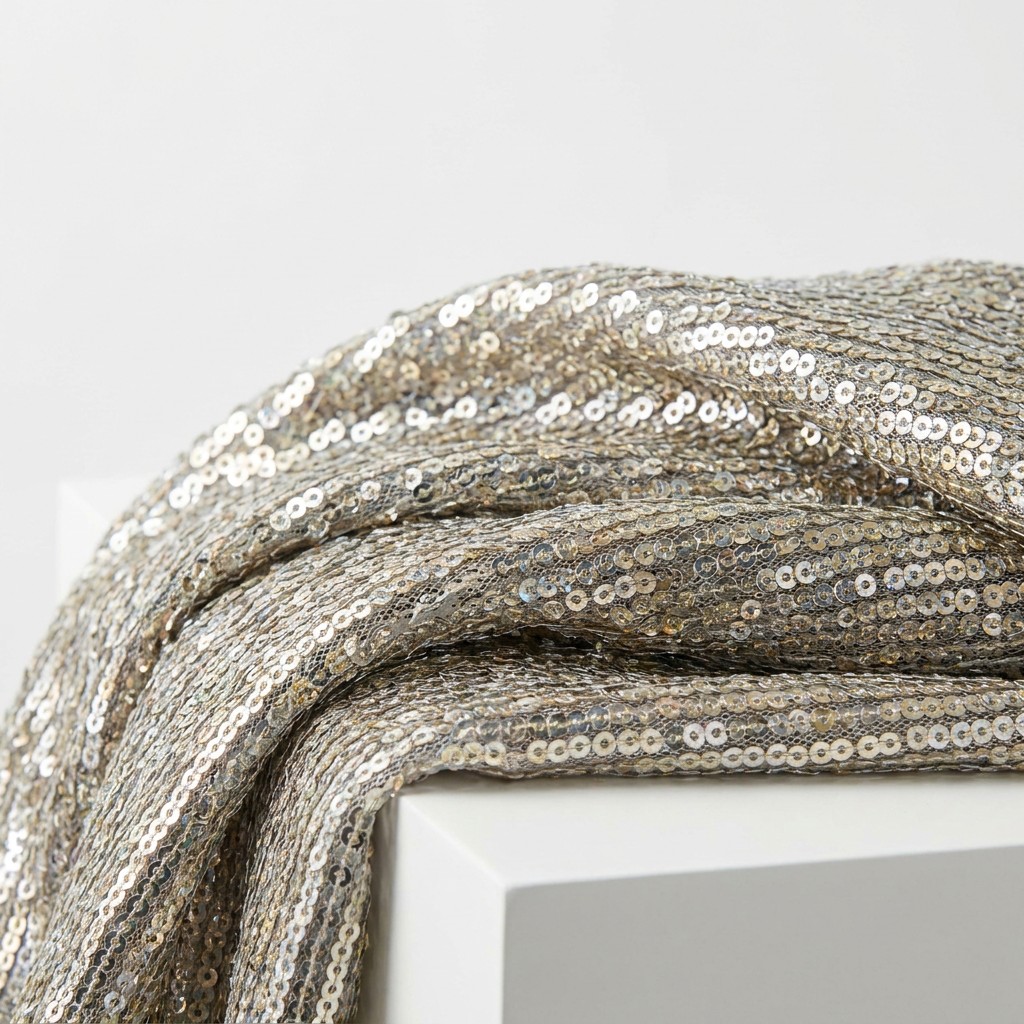
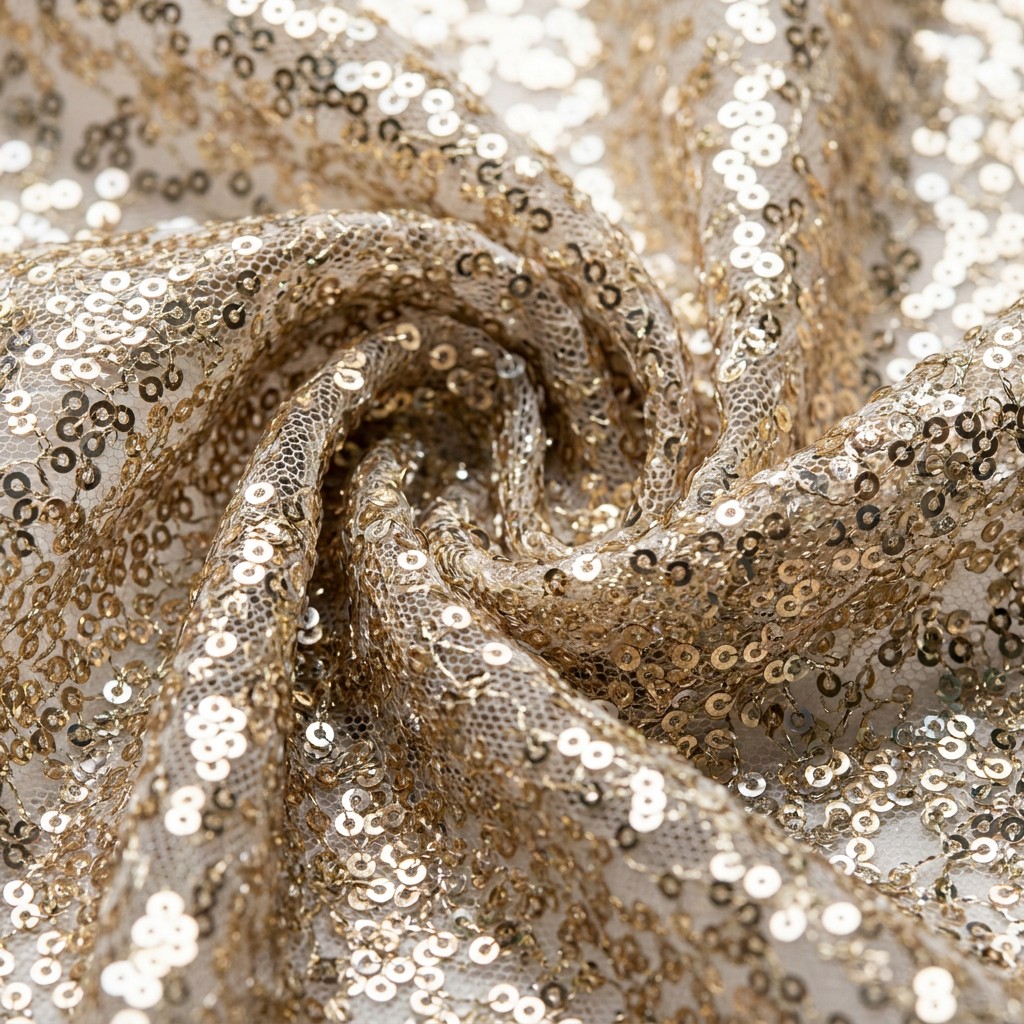
| Sequin on mesh | Variable — sequins block light | Statement garments and backdrops | Coverage depends on sequin spacing |
| Lined decorative cloth | Low to none | Bodices, cushion fronts, upholstery | Lining choice sets the final reading |
How Mesh, Denier and Sequin Spacing Change Coverage
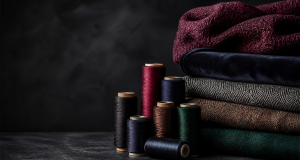
Denier and thread thickness
A finer yarn leaves more empty space in the same grid, so the cloth reads as more transparent. A coarser yarn fills the grid, blocks more light and reads as denser. Compare deniers on the same construction to see the effect clearly.
Sequin size and spacing
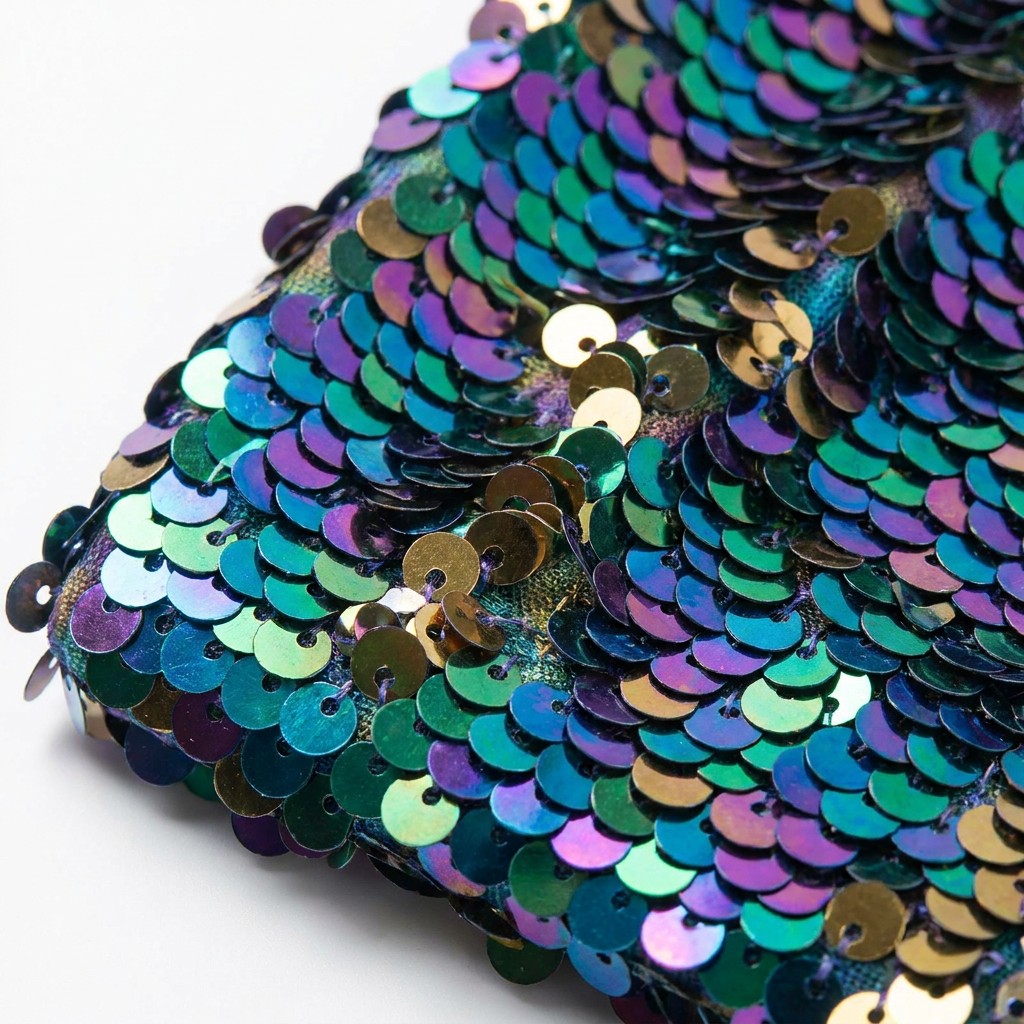
Sequins are opaque discs. Wider spacing keeps more open mesh visible between them, which raises transparency. Tight spacing covers the base and pushes the cloth towards opaque. Reviewing sequin fabric colour under different lighting alongside spacing helps, because the same sequin reads differently over a bright background.
Layer structure and lining
The fastest way to change transparency is to add or remove a layer. A lining turns a sheer shell into an opaque garment in one step. Plan the layers before you choose the shell, as set out in our guide to lining and layering for sequin garments.
Checklist: Reviewing a Transparency Sample
- Background: plain, mid-tone and clearly defined.
- Light: one fixed lamp at one fixed distance.
- Panel: at least 40 cm wide so the pattern repeat is visible.
- Layer: review the shell alone first, then with the lining.
- Photograph: one image against the background, one against a window.
- Record: visible background as a rough percentage, plus the reference image.
- Stretch: check coverage with the panel eased, not only flat.
For lightweight layering options, see our guide to choosing lightweight mesh and decorative fabrics for layering, and for a seasonal view of sheer constructions, read about lightweight sequin mesh and sheer embroidery.
Compare transparent and layered decorative fabrics
Request mesh, chiffon and sequin panels in one sample set and review coverage under your own lighting.
Transparency Testing: Building a Repeatable Record
Transparency is easy to agree on in conversation and hard to prove later, because sight is the only instrument most buyers carry. A written record solves that problem.
Standardise the background
Choose one background card and keep it. A mid-tone grey shows both pale and dark cloths without flattering either one. Photograph the card once, then photograph every sample against it.
Standardise the light
One lamp at one distance. Daylight shifts through the afternoon, so a window is a poor reference unless the panel is photographed at the same hour every time.
Standardise the panel
Cut every sample to the same width and length. Different panel sizes change how much background shows, which is exactly the variable you are trying to measure.
Record the reading
Note the visible background as a rough percentage and attach the photograph to the sample record. Two reviewers looking at the same image will agree far more often than two reviewers handling cloth in separate rooms.
Recheck after every change
Transparency moves when the layer structure changes, when the base construction is substituted, or when a care test has been run. Add the recheck to your approval steps, alongside the fields in our fabric sample review sheet for B2B approvals.
Common mistakes to avoid
- Judging a sample against a bright window and calling it opaque.
- Comparing two samples photographed at different distances.
- Testing the shell only, then adding a lining without retesting.
- Approving on a flat swatch when the garment will be eased or stretched.
- Recording the result as a single word instead of a percentage plus an image.
When transparency must be guaranteed
Some projects cannot tolerate a surprise. Hospitality curtains, costume overlays and childrenswear linings all carry a visible cost if the cloth reads differently from the approved sample. For those orders, ask for the transparency reading to appear on the inspection record next to the other measurements, so the person checking the shipment is checking the same number you approved.
Frequently Asked Questions
How do I make decorative fabric less transparent?
Add a lining, choose a denser base construction, or increase the yarn denier. Lining is the fastest and most predictable of the three.
Does colour affect transparency?
Yes, though it is a secondary effect. Dark shades block more light than pale shades on the same construction, so always compare samples in the colour you intend to buy.
Can I test transparency without a laboratory?
Yes. A plain mid-tone background, one fixed lamp and one fixed panel size give a repeatable result. The important part is keeping the setup identical between samples.
Why does my sheer fabric look opaque in photographs?
Backlight is usually the cause. A sample photographed against a bright window can appear fully opaque, while the same cloth against a matt background reads sheer. Fix the background before you judge the cloth.
Does transparency change after washing or pressing?
It can. Heat and tension can close an open knit slightly, and sequins can shift. Always recheck the panel after a care test. Our guide to keeping sequin fabric quality consistent in repeat orders shows how to log those changes.
Request Sequin Fabric Samples
Request Sequin Fabric Samples in several transparency levels so your team can compare them under the same light. Orders start from 200 yards, and sample sets can combine mesh, chiffon and lined options.
Send your reference photograph, target coverage and layer plan to Morris at morris@yunfantextile.com. For a fast reply, message us on WhatsApp: +86 156 3752 5803 or +86 175 1619 6727. Tell us the background your customer will see, and we will match the construction to it.
Conclusion
Decorative fabric transparency is decided by construction, denier and layers, in that order. Fix the layer plan, move the base construction to set the starting point, then fine-tune with denier and sequin spacing. Test behind one fixed light, record the visible background, and the cloth your customer receives will read exactly as the sample did.